Baptist to the Future

Setting aside their smartphones and MAGA hats for a moment, the Southern Baptist Convention voted to exclude women pastors this week.  The photos seem to show a rather dour delegate pool that seems ready to head to the apothecary for some leeches to take care of this headache.  The conservative mind is a curious place.  I can understand wanting to slow change down—it is moving at a scary pace, leaving many of us concerned and confused.  Yet the idea that nothing has changed in two millennia isn’t only demonstrably wrong, it’s something that history demonstrates is a relatively recent, and reactionary, idea.  The fundamentalist brand of religion that elevates the Bible to godhood has only been around for about a century.  It’s a reaction to a hundred-year-old modernism that, in spite of all the evidence, closes its eyes.

Fear is natural enough.  Some of us actually watch horror movies voluntarily, after all.  But when fear overtly drives your religion isn’t it time to stop and ask what you’re doing?  The Southern Baptist Convention ejected its largest church, Saddleback, which had achieved national influence under Rick Warren.  According to the New York Times, Warren himself addressed the Convention citing none other than Billy Graham in his defense of women pastors.  The convention overwhelmingly voted to excise its most successful church for fear of that dreaded slippery slope of liberalism.  We’re fixated at some sexual level, it seems, and afraid of what might happen if we admit that even as AI is taking over our world, things may have changed.  At least a little.

The Bible is a sacred document with a context.  That context was patriarchal and it held considerable sway for about two millennia.  Power is difficult to relinquish.  When you get to call all the shots you don’t want to be reminded that those shots are wounding and killing innocent people.  “It was just better that way,” people think, ignoring the very Bible they worship.  It’s a point of view I understand, having grown up in it.  I remember reading with the juvenile furrowed brow of some tender twenty years how C. S. Lewis simply couldn’t see how women could be priests.  And then noticed how Baptists and other Protestants embraced Lewis although they condemned his idolatrous Anglicanism.  Sometimes it’s difficult to believe we’re actually in the twenty-first century with AI knocking at the door.  And we still can’t get over women wanting to be in the pulpit.

What would Roger Williams say?

Last Baptist?

The Southern Baptist Convention is the largest Protestant denomination in the United States.  It’s the core of a powerful voting bloc that gave electoral (but not popular) victory to Donald Trump.  It’s also the location of an attempted takeover by a fascist faction that wants to make Christianity the most oppressive religion in the history of the world (moreso than it has already been).  This past week the Convention narrowly avoided this by electing a moderate president for the year.  The struggle was real and the consequences very deep.  The true cost of Trump’s presidency will continue to emerge for years to come.  Permission was given for extremists to be vocal and validated and bad behavior was relabeled as “Christian.”

Roger Williams’ first Baptist church (in the country)

We, as a society, have a bad habit of ignoring things we don’t believe in.  Just because many educated people have come to see the lie behind much of what “Christians” say, they assume they don’t need to pay attention to them.  Years of ignoring the insidious actions of many conservative Christian groups has led us to a political precipice where many months after the fact some people who can’t count still believe 232 is greater than 306.  While some may wonder how we’ve come to this point the answer is obvious—there are groups of “Christians,” organized and well funded, who’ve been active in politics for many decades.  The Southern Baptist Convention wanted, in some sectors, to make that official.  They wished to be Trump’s own party.  They wanted white supremacy to be the norm, women to be chattels of men, and those whose sexuality differs to be criminals.  And they nearly won.

We ignore religion at our peril.  A recent study by the British Academy has shown that in the United Kingdom the study of religion is in decline.  I know of no similar study this side of the Atlantic, but anecdotal evidence suggests the same, if not worse here.  Those who study religion from within other disciplines such as sociology, history, or psychology, don’t really address the question of what religion truly is.  People experience religion as extremely urgent.  Misguided leaders instruct them that their version of God has endorsed the very tactics the Bible itself excoriates.  When the largest Protestant denomination is nearly taken over by political extremists, we should be paying attention.  A troubling template was, despite the majority vote, forced upon us in 2016.  So much so that it feels like it was a decade ago and we suffered from it for longer than we have.  And the kettle is still boiling, only this time those dancing about it claim to be Christian.


What Lies Ahead

Things change. You’d think the fact that we all now carry the internet around in our pockets would’ve demonstrated that. What did President Nixon ever tweet? Conservatives, however, want it both ways. They want to pretend nothing has changed, but they still want to keep and reap the benefits of that change. This was shown most clearly by the ouster of Paige Patterson from his presidency of Southwestern Baptist Theological Seminary. Seminaries don’t make national news without a good scandal. (And some good scandals are never discovered.) This one involves demeaning statements made about women in Patterson’s long storm track through the Southern Baptist Convention, of which he was past president.

Journalists seem to only now be catching on to the fact that “conservative” is a codeword for misogyny. Thus it has always been. The fact that it would take nearly two millennia before women could take leadership roles in Christianity (and in some very large sects they still can’t) should’ve been a hint. It’s the old frog in the slowly heating kettle thing. Nobody notices until it’s too late. Since conservative Christianity has always downplayed the worth of women, it didn’t come to public notice until the #MeToo moment. Enough women had to speak up before society took notice of the obvious. Many men feel theologically entitled. Entitled to run things, and they live by the lie that things haven’t changed since Jesus strolled out of that garden tomb a couple thousand years ago. Well, apart from the fact that men no longer wear dresses and keep their hair short, in Roman style. But let’s not call it that, let’s say Evangelical style.

You see, the way you say things matters. Said a certain way, a misrepresentation of the truth is called a lie. It’s considered one of the greatest sins possible in the conservative lexicon. In another way, however, the same statement becomes doctrine, and that’s a whole different way of looking at things. Make it the fault of the Big Guy up there and the other big guys down here are off the hook. After all, the Almighty’s a bachelor. Such a theology has no possibility of treating women equally. Theologians say God is sexless. What’s that like? We have trouble imagining it. English has no neuter gender so we use the masculine pronoun and once we do thoughts go back to sexual features. It’s deeply ingrained. That doesn’t mean it’s the truth, however. After all, Mr. Patterson will still be kept on as theologian in residence. The more things change, the more they stay the same.


Going In, Coming Out

Being primates, perhaps it is no surprise that we are fascinated by who is doing whom. We, literally, by nature, find sexual alliances fascinating. Despite the fact that close observation of nature has indicated that homosexuality is indeed natural—it has been observed in many species, and isn’t even limited to mammals—we can’t help but make it a deciding factor in what an individual is. Two unrelated news stories over the past week have focused on homosexuality as the overwhelmingly defining trait of a person. In the first story, the Evangelical Lutheran Church of America (ELCA) has elected its first openly gay bishop. (Gay bishops, even in the pre-Reformation church, have not been exactly an endangered species.) The Rev. Dr. Guy Erwin, however, is so much more than a partnered gay man. He is a highly educated person who had held that most rare of positions—a bona fide academic position in higher education. He is also a member of the Osage Nation. His election as a Native American or as an academic would not be newsworthy. His orientation, well, that’s a whole different story.

Meanwhile, across the planet, the Southern Baptist Convention (SBC) is cutting its ties with the Boys Scouts of America because the BSA has decided to make honest men of its boys. BSA has recently voted to allow gay boys to remain in the Scouts, something that the Mormons had no problem accepting. Quite apart from the misguided SBC move, I was saddened to see CNN’s inaccurate headline, “Baptists plan exodus from Boy Scouts.” The story does not indicate that the Baptist brand of Christianity has withdrawn, so to speak, from BSA, but the Southern Baptist Convention. Baptists are much more broad-minded than the SBC brotherhood (I use the phallocentric collective intentionally) would indicate. All Baptists, it seems, are guilty by association.

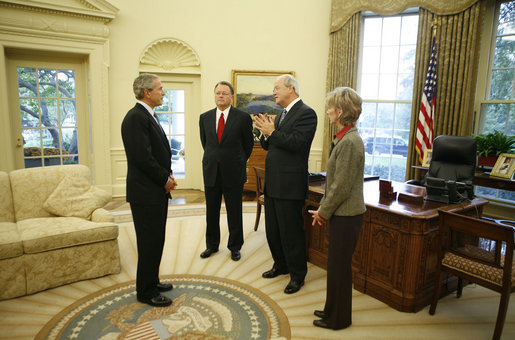
SBC in the White House

SBC in the White House

People are complex. Putting them into neat categories is unfair to who a person really is. The category “gay” is notorious for subverting all other qualifiers for decent human beings. As the National Socialist Party recognized, the easiest way to build a case against a people is to put them together in a class that “deserves” our fear, mistrust, and hatred. Don’t look at the individual beneath the label. You might be forced to change your mind. Did that individual overcome the difficulties of being a “minority” in his or her own native land? Did that individual work hard to climb through the educational system to attain an advanced degree? Did that individual commit his or her life to another person, no matter what the social stigma? None of that matters, as long as we can talk about his or her “orientation.” It is society itself that requires reorientation.


Ebenezer

Providence has been on my mind lately. Most obviously, traveling to Providence for my niece’s graduation from Brown brought the city back to mind.  A book I’ve been reading has been referencing H. P. Lovecraft, a person readily associated with Providence as well.  And who can forget the Baptists?  While in Providence we visited First Baptist Church, widely considered to be the actual first Baptist church in America.  Portions of the commencement ceremony are held here, but between times it was open for the curious.  I guess I qualify.

Baptists are a widely diverse group.  In the United States they are often guilty by association with the shenanigans of the Southern Baptist Convention, and given the numeric force of the Baptist Church that can appear a little intimidating.  Nevertheless, Baptists were (and generally are) great defenders of religious tolerance.  Their own non-hierarchical tradition allows considerable freedom within the denomination itself.  Houses of worship (originally meeting houses, not churches) were plain and devoid of symbolism.  That is still a hallmark of most Baptists today.  Inside First Baptist, I was surprised to see a symbol.  A chunk of rock, an Ebenezer, rested on the table at the back of the meeting house.  The origin of a “stone of help” (an adequate translation of “ebenezer’) is certainly biblical-the reference goes back to the story of Israelite victory over the Philistines in 1 Samuel 7.  Samuel is reputed to have set up the stone as a memorial of the unanticipated victory.  After that story, the stone never reappears in the Bible.

The Baptists have always been concerned with idolatry. They do make a point that some Christian traditions rely very heavily on trappings to get the message across.  They are also correct in that early Christianity was a much simpler faith than the densely layered, extremely complex, imperfectly blended varieties of religion that today claim the title “Christian.”  It isn’t a copyright-protected brand and there is little that all Christians could be said to have in common.  As I touched the stone of help, I realized not even all Baptists share the stringent standards of no symbolism in their churches.  That is probably a good thing, because that, in itself, is symbolic.


R-e-s-p-e-c-t A-l-l

Every great once in a while a politician makes a statement consonant with the principles of the nation. Over the weekend Robert Menendez, one of New Jersey’s U.S. senators, make a public announcement of his support for the Respect for Marriage Act. Admitting that 15 years ago he voted for the Defense of Marriage Act, which would not recognize homosexual unions, Menendez has searched his conscience (a rare commodity among elected officials) and has come to realize this “Defense” Act for what it is: legislated immorality. It is immoral for a government to deny rights to committed couples based on the gender of either party. Gender is a social construct that may or may not align with sex—even the concept of two completely distinct sexes is now seriously questioned by biologists. The old measuring rod of ability to procreate together just does not match reality: infertile couples are granted the same rights as other married couples, so why not same “gender” couples? As Americans we often like to vote without thinking too deeply about the topic.

The value of procreation is obvious. Birds do it. Bees do it. Even educated fleas do it. (Cole Porter knew what he was writing about.) When did we become so fixated on this one aspect of sexuality that we let it become the sole purpose of sexual behavior? Many religions recognize sexuality for what it is, a form of human interaction. The end result may be a new child, but it is not so as the result of the vast majority of couplings. Christianity (in some quarters) early on took a dim view of sex, and soon began to relegate it to procreational necessity only. Even then you were supposed to try hard not to enjoy it. The Catholic Church even relegates the biblical siblings of Jesus to the role of step-siblings; children of Joseph from a prior marriage, despite what the Bible says. Such distortion of nature could only come at the interference of religion. And as long as we’re busy regulating sex, let’s add a few statements about the only appropriate outlets for that committed relationship. Never mind who gets hurt. It’s all gonna burn.

I, for one, salute Senator Menendez for his willingness to open his mind. Too often the “government for the people” is excised from Lincoln’s Gettysburg address. When did we the people pass to the government the right to decide whom we might love? The agenda set by the Religious Right is religious wrong, and too many tax-paying citizens are the heirs of its paranoia. It is time the government began serving the entire electorate rather than just the Southern Baptists and their friends. Nobody is attempting to regulate their sex lives, as Ted Haggard, Jimmy Swaggart, and Newt Gingrich will gladly attest. Keeping the zipper firmly up is not the strong suit of televangelists or politicians. If we’re going to have double standards here, let’s at least open the game to same-sex marriages. Those who feel threatened by the fair treatment of others need to gaze long in the mirror and ask why.


Silent Fright

Baylor University has begun to make quite a showing in the non-sectarian academic world of late. Knowing of the school’s Baptist heritage, I’d always been somewhat suspicious of any scholarship susceptible to doctrinal poisoning. I freely admit that my fear goes back to a hyper-evangelical college roommate. Even at the conservative bastion of Grove City College, John would lament the sorry religious state of the school and repeatedly thought of transferring to Baylor. (I need not fear that John will ever read this—he avoided liberal dribble like it was Planned Parenthood.) By association, Baylor became something in my mind that it apparently is not. When the administration recognized the direction the Southern Baptist Convention was going, they took steps to protect themselves from a takeover (something I’d witnessed at a much smaller school some distance north). The university press has been producing intriguing books, and the sociology department has been cranking out some fascinating studies of religion.

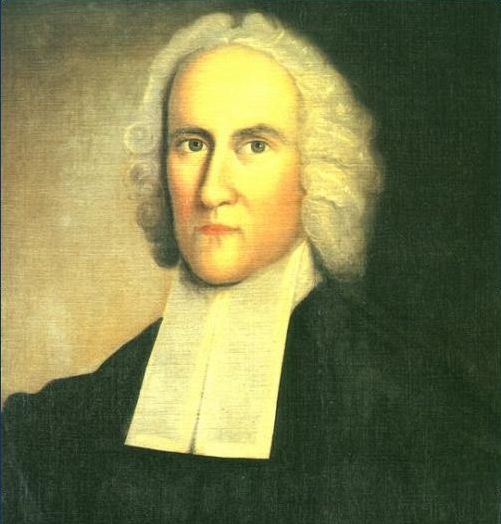
One of the more recent religion in America surveys from Baylor indicates that a correlation exists between the image of God presented by a version of Christianity and that contentedness of believers. More specifically, churches that promote a judgmental image of God (think Jonathan Edwards and his spiritual bedmates) tend to be anxiety-ridden and compulsive. Churches that teach a loving God have more balanced believers. Brimstone and hellfire, in other words, produce the expected results. What the Baylor study shows is not so much surprising as it is scientific. Well, softly scientific. As a social science, sociology relies on statistics and analysis to draw its conclusions. We now have a means of measuring religions outcomes.

Religion is, in many ways, self-fulfilling prophecy. By preparing believers for a literal Hell of a future, it cranks out automatons who’ll do anything to flee from the wrath to come. Herein lies its danger as well. Although some politicians may be naïve about the veracity of belief, many of them realize something their more liberal compatriots don’t—religion motivates. The religion of a loving God who has no Damoclesian sword hovering perilously over the heads of the faithful won’t get them to the polls. The god with believers on a skewer above the everlasting barbeque pit will. Baylor has shown us the data. If we ever hope to redress the damage constantly visited by politicians claiming God has told them to run for office, to invade Iraq, to commit war crimes in the name of the prince of peace, we must act on good information. If religion is a psychological anomaly, it pays to learn a little applied psychology. Otherwise the wrath of an angry god will consume us all.