Perhaps More?

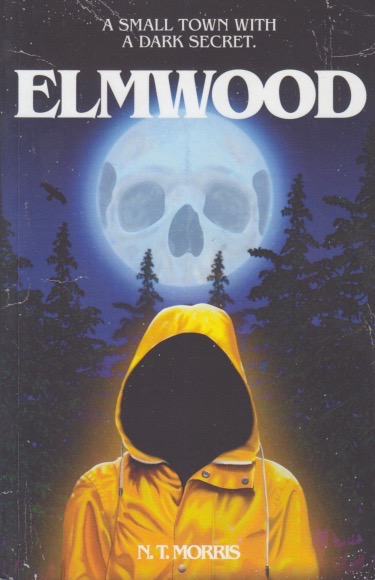
Publishers use the term “deep backlist” to refer to titles that they published long ago.  That’s always the phrase that comes to mind when I browse my “to read” list.  That list was started, in its current online repository, a decade-and-a-half ago.  When I delve into the “deep backlist” of items I placed on the list years ago I sometimes can’t remember where I learned about them.  Such was the case with N. T. Morris’ debut novel, Elmwood.  Someone recommended it years ago and I finally came into possession of it.  A moody tale about a town haunted by a cult, it is a nice effort as a self-published horror novel.  If you read a lot of fiction you start to notice some of the signs with self-published work (and there are many good reasons to go that route).  Morris offers a well-designed and aesthetically pleasing book.  The story does end with some loose threads, however.  There may be spoilers below.

Aidan Crain finds the victim of what appears to be a serial killer.  His difficulty coping with it leads his wife Laura to suggest that they get away from it all in the little town of Elmwood.  They rent out a house she found online, but it turns out to be haunted.  The people of Elmwood aren’t terribly friendly to strangers, but since the goal is to get away from city life, the young couple doesn’t much mind.  Except the ghosts in the house are accompanied by a dark presence in the woods that keeps calling to Aidan.  One of the tricky bits for me was determining what were dream scenes and how they related to waking scenes.  This is often part of speculative fiction, but a solid editor would lead you in the right direction in such situations.

The story tries to fit a lot in, leading me to think—rather uncharacteristically—that it needs to be longer.  The house was owned by a serial killer who’s part of the cult that killed the victim Aidan found many miles away.  The cult has been culling both locals and visitors for years and the police department appears to be complicit.  As do some local business owners.  The darkness in the woods, which is defined more or less as evil itself, seems to control the cult and it wants Aidan to join.  Some of the loose threads at the end suggest that Morris’ next novel will be a sequel to this one.  I can’t recall how I learned about Elmwood, but I’m glad to have finally read it.  It’s a good shot at becoming a horror writer from my personal deep backlist.

Them Apples

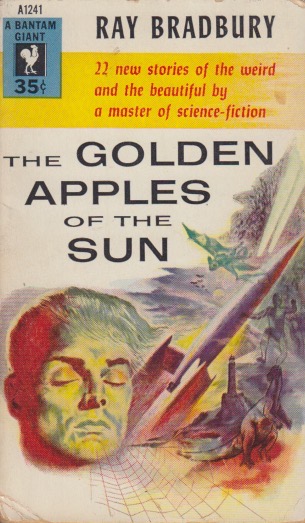
Although I’ve had this book as long as I can remember, I’d never read it.  Not the whole way through, until now.  As I kid I read Ray Bradbury when I could.  I’m sure I read a story or two in Golden Apples of the Sun, but I didn’t approach the entire collection.  I was drawn in at this late age by “The Fog Horn.”  This is the story that lay behind The Beast from 20,000 Fathoms, that classic of Harryhausen, the other Ray.  It’s been years since I’ve seen the movie, but the story was on my mind and I kept going.  Some of Bradbury ages well, while other stories, not so much.  The designation of his tales also changes over time.  As Stephen King says in Danse Macabre, Bradbury didn’t so much write science fiction (as the cover of this edition declares), even if the people occasionally get into rockets.

I realized as I read just how much my early writing style was influenced by Bradbury.  My stories were vignettes like these, not as accomplished, of course, but without lots of violence.  And with horror elements.  But it kept coming back to me how Bradbury’s characters, even the time-traveling ones, are stuck in the button-down forties and fifties.  I naturally overlooked this as a child but all these decades later and the strict binaries of, for example, men’s and women’s worlds, comes through on every page.  When women are the main characters, they’re usually not very flatteringly drawn.  The same goes for caricatures of races, although Bradbury is sympathetic he also uses stereotypes.  And many of the stories in this collection are just about everyday events, not a speculative element in sight.  Maybe I did try to read it through as a kid, but lost interest.

Writers struggle against irrelevance.  Those who look to the future sometimes get it right but often don’t.  And some reflect a present that we’d rather not acknowledge.  Of course, when I’m writing fiction I tend not to think in these terms.  The story simply takes you over and you can’t help being a refugee from the year in which you were born.  This is especially evident when Bradbury casts a rosy lens back toward childhood years.  As a child myself I had no idea that Bradbury was a time traveler from the twenties and thirties.  His childhood was nearly over by the time my mother was born.  It was a different world.  Some of his stories managed to transcend time and its for those that I keep reading him.


Not Kid’s Stuff

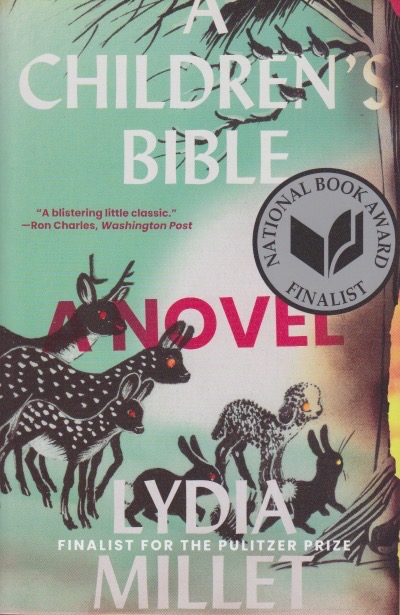
Sometimes when I go into a bookstore I don’t find anything on my list.  (My list is pretty strange, and it includes many older titles.)  I feel strongly about supporting bookstores, however, and I search for something I would like to read.  So I found Lydia Millet’s A Children’s Bible.  I hadn’t previously heard of it but it was in the speculative section and it wasn’t 400 pages or more.  It turns out that it’s set at an indefinite time but it seems to be not too far in the future, when global warming has really kicked in.  A group of kids whose parents are affluent, but not ultra-wealthy, are spending the summer at a large house on the coast.  You get the sense that this house is a lot further inland than the present east coast.  The parents are childlike in their hedonism, whereas the kids really despise their constant drinking, drug use, and general lack of care.  The kids are independent and try to make their own way, but then a massive hurricane hits.

In the aftermath, the kids run away.  Society has broken down, however, with bands of roving armed men breaking in and taking whatever supplies they want.  They find the compound the children are using, setting this almost as a horror story.  I won’t say anything more about the plot because that might give too much away.  Astute readers know that it isn’t possible to say definitively what a book is about, but I would say this is almost a parable about global warming—it has “parable” written all over it.  Irresponsible adults have let this happen and the children have to figure out solutions.  And yes, there is a Children’s Bible in the story and it plays a part in the plot.  I have to admit the the title is what first caught my attention.

I don’t know Lydia Millet’s other work, but this was not exactly an enjoyable novel, it seems like an important one.  I’m glad to have read it.  The kids in the novel, the older ones, are skeptical of the Children’s Bible when it’s introduced.  Two of the younger kids, see it as providing direction on how to survive in science-versus-nature world.  All of the kids here are incredibly prescient and precocious.  The adults are unable to adjust to the changing world and although the Bible remains with the children it leaves the reader with the haunting question of what comes after Revelation.  This is a book that would benefit from serious pondering.


Witching Season

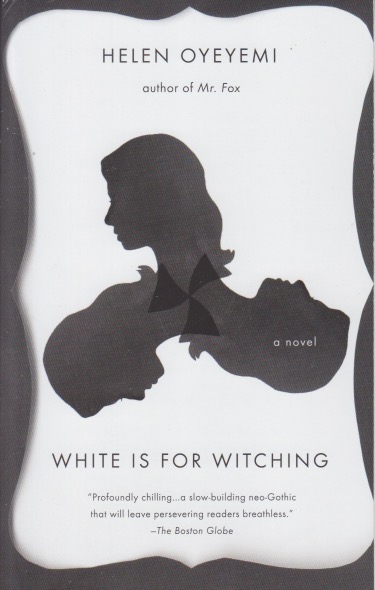
I can’t be sure I understood White Is for Witching, but Helen Oyeyemi’s novel grew on me once I started to piece together what was happening.  A long sit in a waiting room finally got me hooked.  This is an odd story that’s quite a bit about atmosphere.  Miranda Silver and her twin brother Eliot, live in the Silver family house (through her deceased mother’s side) with their father.  They run it as a bed and breakfast, but Miranda’s ill.  She suffers from pica—a disorder where a person eats indigestible items rather than food.  Her mother, who died young, and her mother, and grandmother, continue on in the house, but not as ghosts proper.  They are more a controlling presence guiding the way for the lost daughter who, it seems, is destined to join them.

Miranda’s not an unreliable narrator because she’s never the narrator.  Sometimes it’s her brother, other times it’s her girlfriend, and other times it’s the house itself.  Oyeyemi’s writing is compelling, and she’s great when she takes the narrative thread and runs with it.  The fault is entirely mine, of course, but I prefer a straightforward story where I’m not confused from the start.  I recently put a book down because I was confounded about the issues raised.  I’m flummoxed enough by life itself so that when I want to sit down and read I prefer something that makes sense.  Or that I can follow.  The novel has a wonderful gothic atmosphere and the tragic young woman definitely has shades of Poe.

My compulsion to read appropriate books in October led me to White Is for Witching.  It’s set in England, however, and having lived in the United Kingdom for three years I know autumn there is not the same as fall in North America.  That’s not the fault of the story, of course.  The tale is textured and complex, exploring avenues of madness and isolation (it’s set in Dover and Cambridge).  The part where Miranda falls in love with Ore, at college, becomes quite gripping.  There’s some confusion as to why her twin brother acts as he does, with one of the narrators suggesting that he’s unreliable.  There are speculative elements but no ghosts seen clearly.  And race is obviously an issue.  It’s not the central issue (beyond the author perhaps suggesting something by the title).  There’s a lot going on here.  Normally I don’t read synopses before reading fiction, but this is a case where that might be helpful before indulging in this moody, thoughtful tale.


Making Meaning

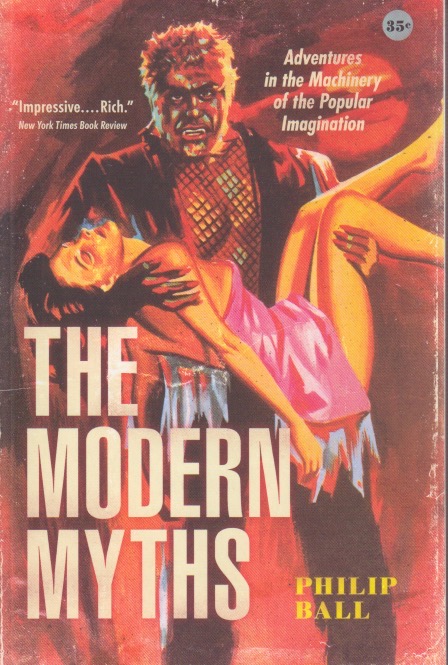
The last book I slipped in under the wire of 2022 was Philip Ball’s excellent The Modern Myths: Adventures in the Machinery of the Popular Imagination.  It would be easy enough, if judging by the cover, to suppose this to be a book about horror, but it’s not.  At least not wholly.  Ball is actually addressing the idea, in his wonderful writing style, that certain myths in modernity can be traced to various speculative tales, mostly from the nineteenth century.  Not intended to be comprehensive, this study makes brilliant cases for several stories that offer meaning, which is what myths really are.  The first such myth analyzed is Daniel Defoe’s Robinson Crusoe.  This novel led to the modern tope of being stranded on an isolated island and we see it everywhere from Gilligan’s Island to Lost.  Ball isn’t offering an encomium to the literature—in fact, he points out the problems with the stories and their writing and indicates that this is part of the mythic process.  Along the way we learn about the authors and their lives, as well as the afterlives of their stories.

Similar treatments are offered for several culturally significant speculative stories that many people have never read but nevertheless know.  Mary Shelley’s Frankenstein, Robert Louis Stevenson’s Dr Jekyll and Mr Hyde, Bram Stoker’s Dracula, H. G. Wells’ War of the Worlds, Sir Arthur Conan Doyle’s Sherlock Holmes tales, and the twentieth-century phenomenon of Batman are all given similar treatment, leading to insight after insight.  The book also gives the reader the distinct sense that ours isn’t the final word on anything.  We’re part of a tradition and those who produce speculative material—future myths may not be anchored in literature—and those who analyze us will also, in their turn be analyzed.

One such mythology currently under development, Ball suggests, is the zombie myth.  Grounded more in movies than any literature, the canonical traits of how it goes are widely recognized and have been taken in several directions, including parody.  Of course, projecting which stories will be future myths, outgrowing their original settings to provide cultural meaning, is something we can’t do with accuracy.  We all know, however, what it means to be a Jekyll and Hyde, or what to expect during a zombie apocalypse.  Such stories tend to come from speculative genres because those are what people tend to like.  We read and gravitate toward science fiction, horror, super heroes, etc.  And we do so, Ball makes a great case for, because they contain the stories that explain our world.  And given this world, some explanation is definitely necessary.


Locally Speaking

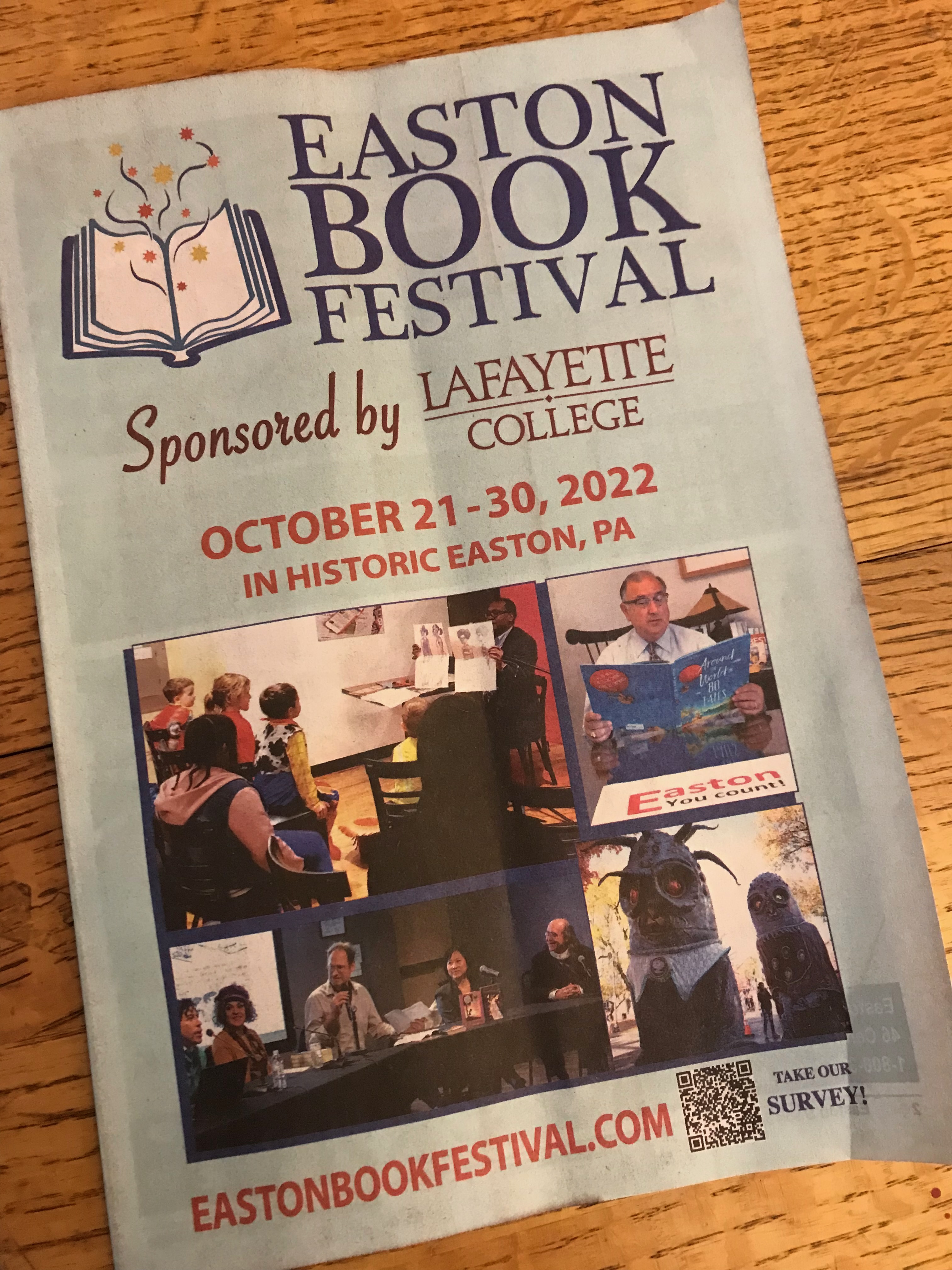
One of the weird things about moving is that you don’t know many people in your new location.  Ah, but who am I kidding?  As an introvert I knew few people in my last two decade-long locations.  So when I blog my readers tend not to be local.  Those I know locally tend not to read what I write.  This is the way of things.  Nevertheless, I make bold to mention the session I shared with Robert Repino and Andrew Uzendoski at the fourth annual Easton Book Festival yesterday.  The session was recorded and may be found here.  The topic is speculative writing.  While speculative writing may encompass nonfiction, it is generally considered to be fiction about things most people consider not to be real, such as science fiction, horror, and fantasy.

The slippery word there is “real.”  There’s a great deal of philosophy to that word.  How we determine reality is hardly a settled matter.  It involves more than the physical, as much as we might want to deny it.  In the case of future-oriented fiction “it hasn’t happened yet.”  Even if it comes true, such as George Orwell’s 1984.  In the case of the past, such as Game of Thrones, it never really happened.  For horror, itself not easily defined, it may range from gothic ghost tales to bloody accounts of carnage, generally set in the present.  Speculative often involves the supernatural.  The supernatural, however, may be real.  Who’s the final judge of that?

If I had a local readership I would add a plug for the Easton Book Festival.  It started strong in 2019 but was nearly choked by the pandemic.  I’ve had the honor of being involved in some way for all four years although I’m a minor author with perhaps the poorest sales figures of any who participate.  The Lehigh Valley is a major population center of Pennsylvania, but there’s wonderful greenery and woods between Easton, Bethlehem, and Allentown.  I live here but work in New York City and there’s no question who gets the lion’s share of time.  Publishing is a mystery to many.  How does it work, and how do you find a publisher?  And once you get published how do you get your books noticed?  And perhaps more relevant to more people, how do you get to know your neighbors?  Apart from the chance encounter across the lawn, we’re hermetically sealed in our houses, living lives on the web.  Unless you happen to venture to your local book festival where you’ll find like-minded individuals.  It goes on through the weekend, so if you’re nearby check it out.


When Autumn Starts

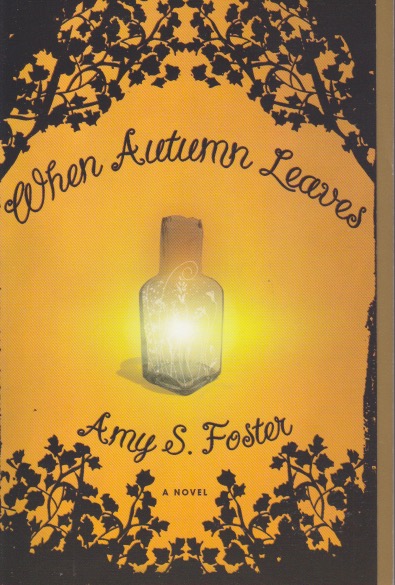
Some books catch my attention and I’m not sure why.  Knowing myself, the title When Autumn Leaves, invoking my favorite time of year with its intriguing syntax, probably did it.  I’m always on the lookout for books that capture the spirit of autumn.  Although she’s quite well known as a lyricist, Amy S. Foster’s name wasn’t familiar to me.  The cover looked autumnal and I knew it was about witches.  It came out quite a few years ago, so my recollection of why I’d marked it then had faded by the time I finally got to it.  The title is a play on both autumn and leaves.  The main character of the ensemble cast is Autumn and knowing that changes leaves from those on a tree to a verb of action.  I’ll try not to put any spoilers here since there’s plenty to say without giving away the ending.

Autumn is a good witch.  Well, the book doesn’t out and say so directly.  Being magical realism there’s some room for interpretation.  She’s the matriarch of Avening, an island city off the west coast.  Those drawn to Avening tend to have some kind of magical powers, whether or not they know of them.  The story unveils the various women coming to be aware of their special talents, but generally they’re unsure what to do with or about them.  Autumn is the one to help them.  She’s been in Avening as long as anyone can remember, but, as the novel opens, she learns it’s her time to leave (thus the title).

Before she can go, however, Autumn has to select a replacement.  This is what introduces us to the various characters in the story.  We hear of the magical powers of some of the thirteen in quite a bit of detail, and others more incidentally.  Many of them don’t know they have these powers.  They know there’s something special about Avening and that they were drawn there, but they don’t know why.  So it’s a tale of female discovery.  Some of the vignettes are difficult to read, dealing with serious subjects, but they reflect realities in women’s lives.  It’s not really an autumnal story, spinning as it does through the wheel of the year, beginning with the winter solstice and ending up at Samhain.  It doesn’t dwell on Halloween, however.  It’s much more a character-driven story.  It creates a wondering image of Avening and what might happen if women were in charge.  And in that respect it’s very compelling indeed.