Spider Thoughts

Spiders know.  Spiders are aware of when they’ve been seen.  I’ve been noticing this for some time now.  You can verify this yourself, but it may take some resolve, depending on your level of arachnophobia.  You walk into a room first thing in the morning and see a spider placidly hanging from its web.  If you intentionally look at it, it knows.  Leave the room for at least ten minutes and then come back.  The spider will be gone.  When you first stare at it, it won’t move.  Nature’s flight, fight, or freeze response has a clear winner here.  Spiders play it cool.  This happened recently on a weekend.  I had my wife verify this for me.  I pointed out the spider (I’d already stared at it) and told her I was doing an experiment.  She’s been married to me for thirty-five years, and such things no longer come as a surprise.
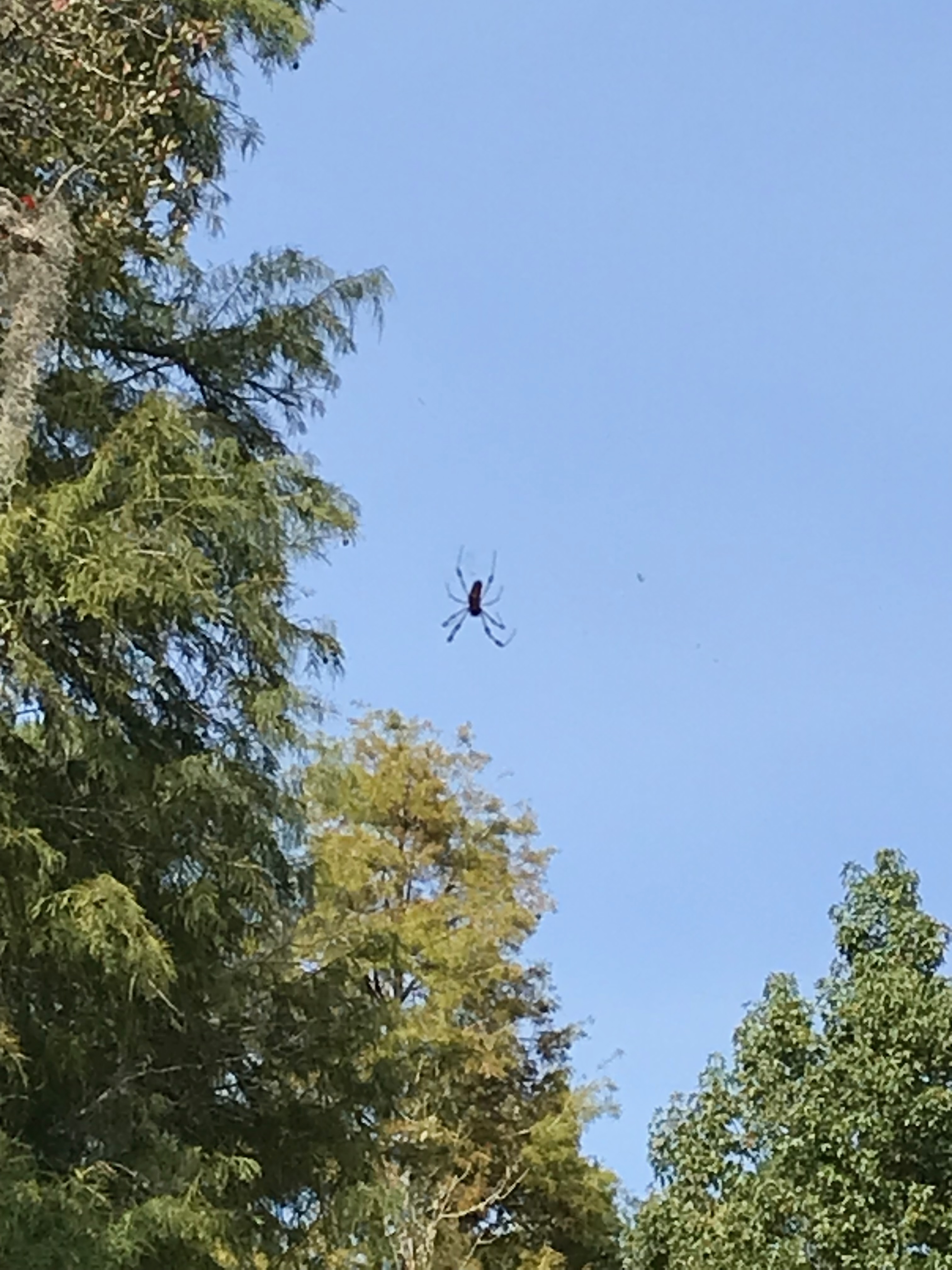
I told her my thesis and suggested we both just get breakfast ready as normal.  The spider didn’t move, even with clatter of bowls and spoons.  When my wife went to take her bowl to the sink several minutes later, the spider had vanished.   (This doesn’t seem to apply to spiders actively descending on a web in front of your face, I’ve noticed.  They’re too busy with their spider thoughts.)  Animals are smarter than we give them credit for being.  Who ranks spiders on their list of smart critters?  But they are.  And I wonder what they think of me.  If a spider crawls on me, I run away.  Like a spider I won’t return to the same place where it happened, at least not for some time.  All of this brings Rupert Sheldrake to mind.

Sheldrake has been summarily wiped off the table by other scientists, in part because he has explored the sense of being stared at.  Materialistic science tells us there can be no such thing since being seen is passive and we have no sense organs to detect it.  We have all, however, had the experience of turning around to find that someone has indeed been staring at us.  As so often happens with materialism, we’re told simply to discard it as fantasy.  But that’s not the way it feels.  So I look at my most recent spider—I know there will always be more—and know that s/he knows they’re being stared at.  When you’re small running may not get you away swiftly enough.  Freezing makes more sense.  Freezing and waiting.  The thing you fear (for a spider it’s me) will generally go away on its own, looking for something more material, I suspect.

Secular Sacred

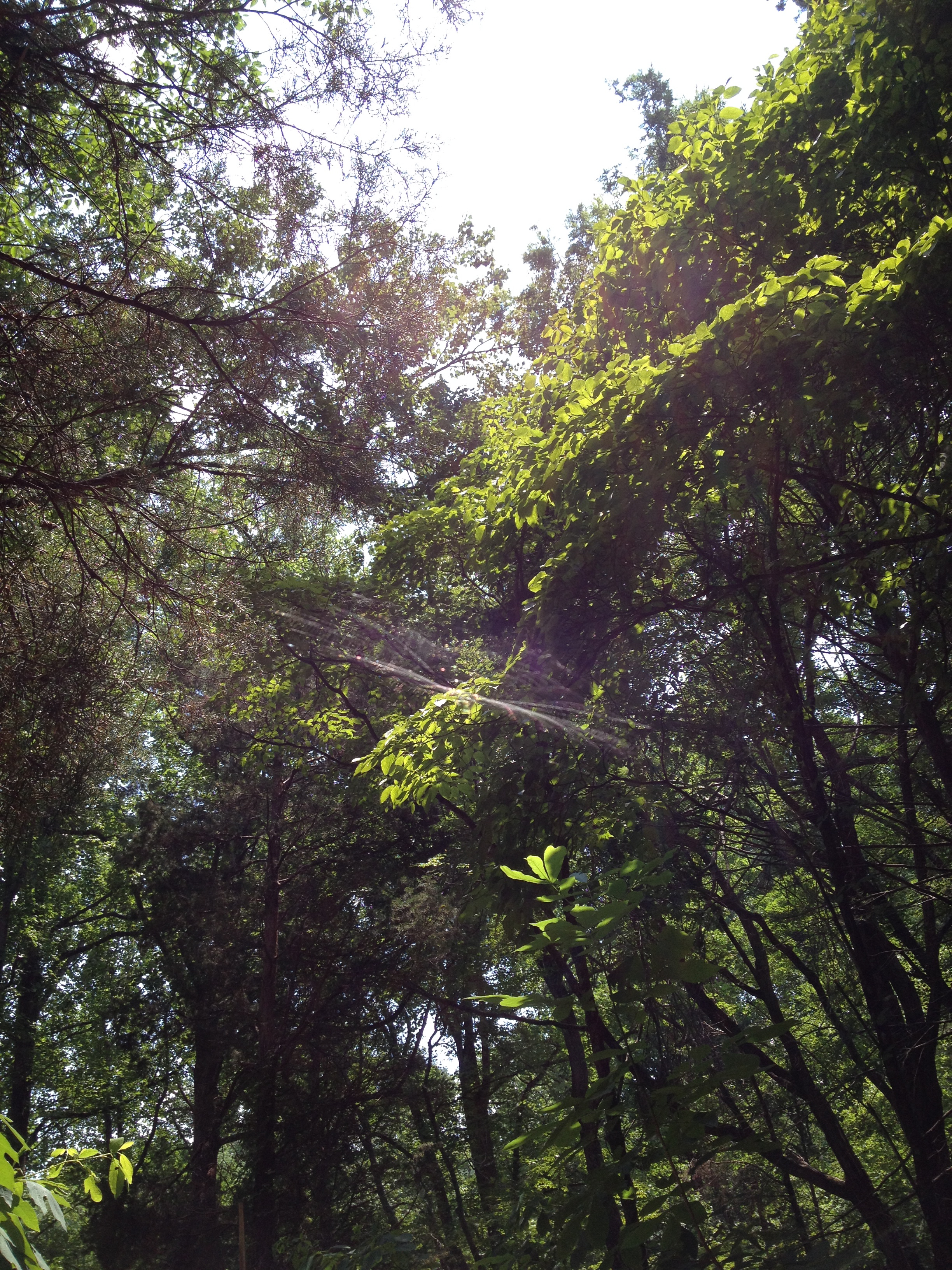
IMG_1472On a family walk in the woods, along came a spider. Actually, the spider had already been there quite a while, given the amount of work that its web represented. Few sing the virtues of spider brains, but there is a captivating symmetry here, an aesthetic that nature endows on the work of one of its most feared yet skillful creatures. As I ponder this web, I can’t help but to consider the word sacred. Oh, I don’t suppose the spider is worshipping an eight-legged, arachnid deity, but there is something more than simply utilitarian about its creation. And I wonder why the sacred is so often shuffled off to the realm only of the religious. Increasingly scientists and philosophers are using the word sacred for a trope when superlatives fail. They don’t mean a guy with a beard on a throne in the sky, but rather those things that give us pause in a busy life to stop and think that something more is going on than just the electro-chemical storm in our heads.

At the risk of offending some, the sacred need not be tied to the gods at all. It is, rather, a sense of reverence toward the amazing world in which we find ourselves. Yes, this web can be measured with precision. Its arachnid host captured and studied. We can count the number of insects it catches as a measure of its efficiency. All this and we still won’t have encapsulated the web in its entirety. The sacred is like that. I don’t know why it is that I find some places special. Why it is I linger outside where my childhood homes once stood, or on the hill where stood the hospital in which I entered the world. Although I’m not divine, these places are sacred. So I pull the car to the side of the road and stare at that lot where our house once stood. It was a web. Fragile and necessary. And it was on the edge of the woods.

A walk in the woods is a form of rebirth. Some of my earliest memories are wandering among the trees. I was, like many children, terrified of spiders. No doubt there were thousands of them here. And yet I cannot keep away. Perhaps it is because nearly every day of the week I trundle to Manhattan and there is nothing around me that doesn’t bear the scars of artificiality. I don’t recall the last time I saw a spider in New York City, apart from a man in a blue-and-red costume pretending to be one. I’m sure they’re here. I’m sure they spin their webs and there are those who marvel at how complex and beautiful they are. The unexpected spider will always frighten me, I suppose. That doesn’t mean, however, when I come upon a web, that I haven’t met the secular sacred once more. Especially if it’s on a stroll in the woods.