No FOMO

Some fringe websites (of course I do!) present the case for reincarnation via past lives memories, particularly of children.  You see, adults hear/read/see a lot of things as the years weigh down and we might misremember something we encountered somewhere else.  Children have less exposure and therefore make more credible witnesses.  I know perfectly rational adults who believe in past lives as well.  I must confess, however, that this is one of the scariest things I can imagine.  I’m glad to have lived, most of the time, and I’m not in a hurry to end it prematurely, but the thought of doing it all over again is terrifying.  Even if it’s a different and better life.  You see, I entered life with a lot of questions and I have to say, over six decades later, I’m still uncertain about many of the answers.

If reincarnation means starting from scratch all over again, that scares me.  I’ve spent much of my life building walls to protect myself from the things that hurt me.  I avoid overly risky activities.  I handle sharp objects with great care.  I spend quite a bit of time by myself.  I don’t like being hurt.  That may be one reason that I watch horror movies.  They help to desensitize that particular phobia.  Still, I have to think of all the hard lessons I’ve learned in this life and have to think about how I might improve upon it all with another go-round.  In religions of East and Southeast Asia, where belief in reincarnation is common, the idea is often that you want to break out at the end.  Nirvana.  The place were you don’t have to queue up again.  Even Plato thought reincarnation might explain a lot.  But the very thought makes me feel weary.
If you could be rebooted with the knowledge of your previous life intact, that’d be one thing.  The idea of one day finding myself in another mother’s arms, not knowing anything, learning each microsecond, well, it’s frightening.  My parents weren’t educated people.  They taught me the blue-collar hard knocks of life (which I don’t want to have to learn again).  The white-collar hard knocks are sometimes even worse.  I tried to live this life as a clergyman, but that never really panned out.  I sometimes wonder if the Abrahamic religions/monotheistic traditions, didn’t develop Heaven and Hell out of fear of reincarnation.  The idea certainly makes sense, in some contexts.  And it’s one of the scariest things I can imagine.

Real ID

On the DVDs of the complete The Twilight Zone (or at least the edition I bought over a decade ago), the opening sequence of seasons 3 and 4 both have a voice-over from episode “Five Characters in Search of an Exit,”  calling out “Who are we?”  In context, the disparate characters in a shapeless prison are, in reality, toys that have gained consciousness (and this well before Toy Story).  Having gone through a traumatic scam, and trying to piece life back together, I spend a lot of time on the telephone trying to verify my identity.  This isn’t a simple matter for a guy like me who constantly asks myself the question, “Who am I?”  Descartes, going back to Aristotle, opined we enter life as a tabula rasa, a blank slate.  Those of you who look around the other pages of this website will see that I have as a six-word biography “Missed the first day of school.”  That must’ve been the day when they told us who we were.

Some people have a clear idea of who or what they are.  The surround themselves with tchotchkes of their favorite animal, or symbol, or even screen idol.  Or deity (deities).  Others of us, it seems, are constantly searching, never quite satisfied that we’ve discovered our essence.  I’ve mentioned before that during the CB craze of the eighties my handle was “Searcher.”  I have an innate curiosity and I crave depth of knowledge.  How do you symbolize that?  How is it even an identity?  I ask with Rod Serling’s characters, “Who are we?”  I’m not sure who might answer that.

When I first started this blog I had some hope that I might once again become an academic researching ancient Semitic mythology.  Working a 9-2-5 to acquire material for the company long ago meant that the full-time research needed to keep abreast of the field could not happen.  For several years this blog consisted of wry interpretations of various political- or travel- or reading-related observations about life.  As it became less focused on the world of the Bible I lost most of my original readers.  I thought there might be potential in writing about my fascination with scary stuff.  That caught my wife a bit off-guard since during the time we met, married, and began this journey together, that interest had been dormant.  It revived when I lost the job that I thought defined me.  I still write about horror but have recently felt the draw of dark academia.  Meanwhile the representative from the bank is on the phone asking me to verify my identity.  “It’s complicated,” I want to say.


Alchemy

While reading about alchemy (surprised?  Really?), I found myself learning about Jakob Böhme.  His name was familiar—he’s one of those many people I know vaguely about but having been raised in an uneducated household really knew nothing concerning him.  In any case, Böhme is considered a mystic who began as Lutheran, but who came to trust his own spiritual experience (the latter being more or less the definition of a mystic).  I read about how one day he experienced a vision while staring at sunlight reflected off a pewter dish.  Now, I have had visions but you’ll need to get to know me personally if you want to hear about them.  But at that moment Böhme believed the spiritual structure of the world had been revealed to him.  I couldn’t help but think of what had happened to me at the foot of the Mount of Olives.

It was 1987 and I was a volunteer on the dig at Tel Dor.  Visiting Jerusalem one weekend with friends, we came to the Church of All Nations, built around the traditional garden of Gethsemane.  It was hot and I was feeling tired and I went inside the church to sit.  I spied a purple stained-glass window high overhead with the sun shining through it, in a shadowy alcove.  In an instant of rapture, everything made sense to me.  It was as fleeting as it was shocking and to this day I cannot articulate the certainty I experienced in that one brief moment alone in a church.  It was an assurance that, despite all outward appearances, this does indeed make sense.  This experience has never been precisely replicated in my life, but those who know me know that there is a certain color of glass that, if I see the sun through it, instantly brings me serenity.

Sunlight can do such things.  One morning while out jogging at Nashotah House, the rising sun struck me directly in the eye.  Immediately stopped running, holding my head against a migraine that had suddenly developed.  I was sick the rest of the day, lying in a dark room with a damp washcloth over my eyes, head splitting apart.  I’ve been cautious with the sun ever since.  Some things are so full of glory that to see them directly is to invite danger.  Yet we’re compelled to look.  I felt that I understood Böhme.  And I know that if the sun is right, and a certain color of glass is at hand, and if I’m brave enough, I can almost get back to that place.


Quarter Day

Some years it sneaks up on you.  The solstice, that is.  The weather remains an area of fascination for me, and not one of infrequent complaint.  The late spring (pretty much all of May and June up until Juneteenth) around here has been rainy and chilly.  Oh, we’ve had hot days sprinkled in, but even this week I had to wear a thermal shirt and fingerless gloves in the morning since there was no sun and the furnace has been off since last month.  The last couple of days, starting, ironically, at Valley Forge, have been getting hot.  And today begins astronomical summer.  I write about the seasons quite a lot.  Having been born and raised in a rainy, temperate zone climate, I grew up accustomed to four distinct seasons.  And we’re now at the longest day of the year.

The quarter days always make me reflective.  Culturally, there’s no real celebration associated with solstices or equinoxes.  The winter solstice falls relatively near Christmas and other winter holidays.  The spring equinox is close to Easter.  The start of summer, which should be ebulliently hopeful with its abundant sunshine, tends to get overlooked.  Some like to say summer is when life is easy.  It does mean mowing the lawn quite a bit.  The grass loves all the rain we’ve had this year.  Waypoints, however, are important.  We divide the year so we might anticipate.  Our agricultural roots focus on planting and harvest.  Even our hunter-gatherer forebears had to follow the food that changed location depending on the prevailing weather.  The seasons are deep within us.

The summer solstice always makes me think of Ari Aster’s Midsommar.  The underlying fear of too much light.  Even here there is a profound message for those able to excavate it.  If things are going well we tend to sabotage them.  Still, I prefer to think of this as a season of hope.  Summer illuminates.  I write this noting the sun’s chasing of twilight outside my window, even before five a.m.  There are still some clouds in the sky because old patterns are difficult to break.  But it is a season of light.  The next quarter day, when we start to realize that the darkness will be increasing until the sister solstice comes to our rescue in winter, is likewise passed over in silence.  By then many will be ready for a respite from the heat that comes with too much light.  Others of us will be thinking of cycles and how they are full of hope and anticipation.


Island Life

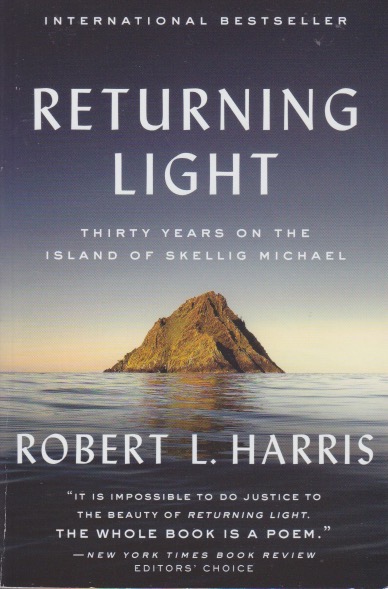
The spirituality of place.  Although it’s largely secular, Robert L. Harris’ Returning Light, his memoir of spending three decades working on Skellig Michael, is about spirituality of place.  Poetically written, his is the account of being one of the caretakers on an island about seven miles west of southern Ireland.  Some call the book nature writing, and I suppose in a sense it is.  He describes his companions—puffins, razorbills, and gannets—and life among the ruins of a monastery from the Medieval Period.  There’s no straightforward narrative arc here.  This is a set of reflections produced by a wind-swept, weather-beaten man who, when on the island, lived with very little.  His writing, as is often the case with those who isolate themselves, tends toward the reflective.  It may raise more questions than it attempts to answer.  And it fires the imagination with monks seeking such an inaccessible place to pray.

My wife and I came to read this book somewhat accidentally.  Someone we know was having a difficult time getting through it—looking for that missing narrative arc—and suggested that it might appeal to us.  In our three years and change in Scotland, we never did make it to Ireland.  From the pictures of Skellig Michael, it’s like Skye (which we did reach), only more so.  And smaller.  More intimate.  We did spend a pleasant time on Iona.  The photos didn’t turn out because, in those days you had to mail your slide canisters in the Royal Post for processing and the poor thing got crushed, exposing the film to light.  Iona is less sharp, less demanding.  More accessible.  But the idea of finding yourself an island, even if only tidal, like Lindisfarne (which we also did see), is a time-honored way of reconnecting with your soul.

Harris doesn’t write in a traditional Christian idiom, but he focuses on light.  The monks’ cells, at least some of them, share the early Celtic monument alignment with angles of the sun illuminating rooms with no artificial lights.  Illumination is, it seems, what he was seeking,  It came as no surprise that his words evoke those of Thomas Merton for some.  Harris observes, thinks, and contemplates.  Sometimes bursts into poetry.  His is a memoir of a man who spent quite a lot of time alone.  Who befriended, briefly, sea birds.  Returning Light isn’t really a book to rush through, but one to engage slowly.  In a sense, I suppose, by isolating yourself on an island where monks once hid and prayed.


Remembering Consciousness

I recently inadvertently read—it happens!—about anesthesia.  I’ve been relatively healthy for most of my adult life and have experienced anesthesia only for dental surgery and colonoscopies.  I’ve actually written about the experience here before: the experience of anesthesia is not like sleep.  You awake like you’ve just been born.  You weren’t, and then suddenly you are.  This always puzzled me because consciousness is something nobody fully understands and there is a wide opinion-spread on what happens to it when your body dies.  (I have opinions, backed by evidence, about this, but that’s for another time.)  What I read about anesthesia made a lot of sense of this conundrum, but it doesn’t answer the question of what consciousness is.  What I learned is this: anesthesiologists often include amnestics (chemicals that make you forget) in their cocktail.  That is, you may be awake, or partially so, during the procedure, but when you become conscious again you can’t remember it.

Now, that may bother some people, but for me it raises very interesting issues.  One is that I had no idea amnestics existed.  (It certainly sheds new light on those who claim alien abduction but who only remember under hypnosis.)  Who knew that even we have the ability to make people forget, chemically?  That, dear reader, is a very scary thought.  Tip your anesthesiologist well!  For me, I don’t mind so much if I can’t remember it, but it does help answer that question of why emerging from anesthesia is not the same as waking up.  Quite unrelated to this reading, I once watched a YouTube video of some prominent YouTubers (yes, that is a full-time job now) undergoing colonoscopies together.  They filmed each other talking during the procedure, often to hilarious results.  The point being, they were not fully asleep.  The blankness I experience after my own colonoscopies is born of being made to forget.

I think I have a pretty good memory.  Like most guys my age, I do forget things more easily—especially when work throws a thousand things at you simultaneously and you’re expected to catch and remember all of them.  Forgetting things really bothers me.  If you haven’t watched Christopher Nolan’s early film Memento, you should.  I think I remember including it in Holy Horror.  In any case, I don’t mind if anesthesiologists determine that it’s better to forget what might’ve happened when the last thing I remember is having been in an extremely compromised position in front of total strangers of both genders.  My accidental reading has solved one mystery for me, but it leaves open that persistent question of what consciousness really is.


More Than It Seems

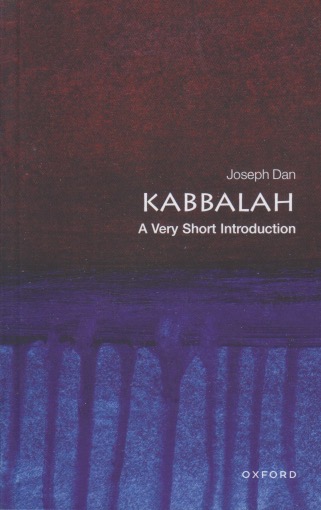
One of the most fascinating mystical concepts is the idea that words and individual letters have some kind of magical power.  This is perhaps illustrated by the way certain words gather an aura of mystery that can be quite unlike their original denotation.  “Kabbalah” is one such word.  The reason I read Joseph Dan’s Kabbalah: A Very Short Introduction is that I’d found myself growing increasingly confused by the usage of the word.  Given that this is me writing, it was a horror movie that got me wondering.  In one of the movies discussed on this blog (happy hunting and viewing!) one character tells another something like, “It’s the Kabbalah.”  This is said in reference to an ancient and mysterious book.  There is not ancient and mysterious book called The Kabbalah.  So what is it?

I’m not going to be able to give a satisfactory answer to that here.  Dan has about 30,000 words to describe it and he admits that’s not really sufficient.  Sometimes I think, if one could make a living doing it, I’d have been content to sit at the feet of rabbis to learn the depths of the many ancient books Judaism has given the world.  I first became aware of some of them in college, majoring in religion.  At each step of my education and career I’ve uncovered more and more.  Reading this little book added yet further examples.  Judaism, and its direct descendant Christianity, were full of books.  They still are.  And books are full of words and perhaps these words have some kind of mystical power.  But wait, the point of this brief tome is to suggest the word itself isn’t just about mysticism.

Kabbalah can refer to many different things, some of them hardly mystical at all.  For the modern usage of the word, which includes Christian as well as Jewish Kabbalah, we have to get to, well, modernity.  The concept stretches far back in Judaism and means basically, “what is received.”  The initial reference is to Moses on Mount Sinai.  Then there’s the oral Torah, codified in Mishnah and Talmud.  And books, so very many books!  The rabbi is one of those permitted to, and sometimes expected to, come to know these ancient texts and their modern applications.  That’s not to suggest Judaism is particularly mystical.  It can be, just as Christianity can be, but isn’t necessarily so.  It’s complicated.  If you’re curious, whether because of a horror movie or not, I can recommend this book.  It’ll give you plenty to think about, and even more to read and learn.


Festival Spirit

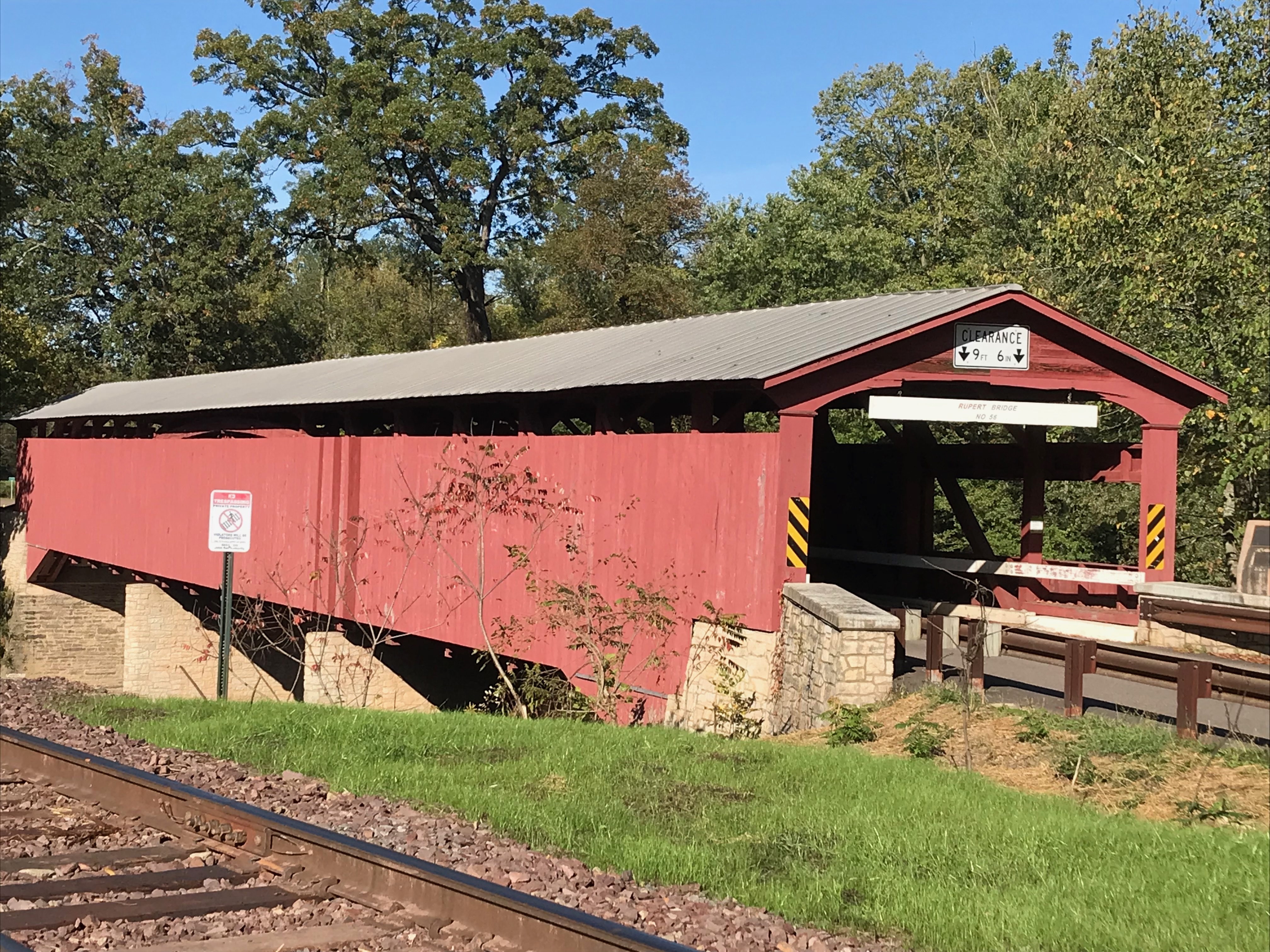
Festivals.  These common events, often outdoors, are ways to be around other people while not really seriously engaging them.  I spend a lot of time by myself, or alone with family.  We don’t know many folks locally (I’m pretty sure very few locals read this blog), so online community is often how I connect.  Still, even we introverts crave the human touch now and again.  In October we attended the Covered Bridge and Arts Festival in Bloomsburg, Pennsylvania.  It is one of the largest free festivals on the east coast, and just a couple of hours from us.  While there, we learned about the much smaller Riverfest in nearby Berwick, held the same weekend.  We decided to stop there on our way home.  The thing about craft fairs is that you get used to seeing pretty much the same kinds of things over and over.  That’s fine, because we’re here for the atmosphere.

At one of these events, while my wife and daughter were examining the wares, an owner came up to me (I was just outside the tent) and said, with a bit of surprise and wonder in his voice, “You have the spirit of God.  You can tell someone who does.”  Now, this can be a sales ploy, of course, but he seemed sincere.  He really didn’t nail my spirituality, but he was correct that I am a very spiritual person.  Given his talk of Jesus, I suspect he’d have been put aback if I told him that horror films are one form of spiritual practice for me.  So I remained relatively noncommittal until he turned to my wife to tell her about the products in his tent.  Still, the encounter left me reflective.  I don’t think myself any kind of spiritual guru, but I have been singled out by a number of people over the years and I wonder what it is that they see.

Some New Agers suggest we all have auras.  That’s generally considered paranormal, of course.  I’ve known people, however, who’ve been accurately “read” by strangers who seem sensitive to such things.  Or are extremely good at cold reading.  When I go to a festival I don’t mean to have my aura showing.  I spend a lot of time alone, so maybe I’m hiding my aura in my house.  No neighbors have complained about the light pollution, in any case.  I admire those who see something special in strangers, even if it’s an attempt to get them to buy something.  That’s why we go to festivals, I guess: to have a kind of spiritual experience that comes from being with others.


Consciousness Conscience

Not so long ago—remember, I read old books—living to 60 was considered a full life.  I’ve passed that and while I’m in no hurry to shuffle off this mortal coil, I often think of how improved medical practice has prolonged many lives.  This is a good thing, but it does make death a more difficult fact to deal with.  If there is any good that came from my Fundamentalist upbringing, it was that it taught me early on to think about death with some frequency.  I’m not a particularly morbid person, but since we all have to face this, avoidance seems to lead to grief, shock, and acute mental pain.  I tend to consider watching horror movies a spiritual practice.  Little reminders, in case I forget to consider my own mortality today.

Our faith in science is a little bit misplaced.  Sure, it helps enormous numbers of people live longer, healthier lives.  But it may also detract from the necessity of attending to our spiritual lives.  I don’t care if you call it consciousness, your soul, psyche, or mind, but we have a life we’re accountable to, and it’s not all physical.  Since consciousness feels neutral enough, let’s go with that.  We don’t know what happens to our consciousness after death.  There are plenty of theories and ideas about it, but no certain knowledge.  There may be faith, and there may even be some evidence, but it is always disputed.  It does seem to me that facing death squarely on may help take care of at least some of the anxiety.  Fear of the unknown is probably the greatest fear our species possesses, so pondering it may take the edge off a bit.

Some people claim to remember past lives.  Sometimes I wonder if they might be tapping into the great unknown: consciousness.  Perhaps consciousness survives without a physical body.  Perhaps it’s large—expansive—and encompasses far more than we can imagine.  Maybe some people can access part of that consciousness that includes the past lives of others.  We have no way of knowing, but it seems worth thinking about on this All Souls Day.  Of course, I have the advantage of having lived what used to be considered a full life.  In it I have set aside at least a little time each day to consider what happens after this.  Do I have a definitive answer?  No.  I do have faith and I do have beliefs.  And I’m always reflective on All Souls Day.

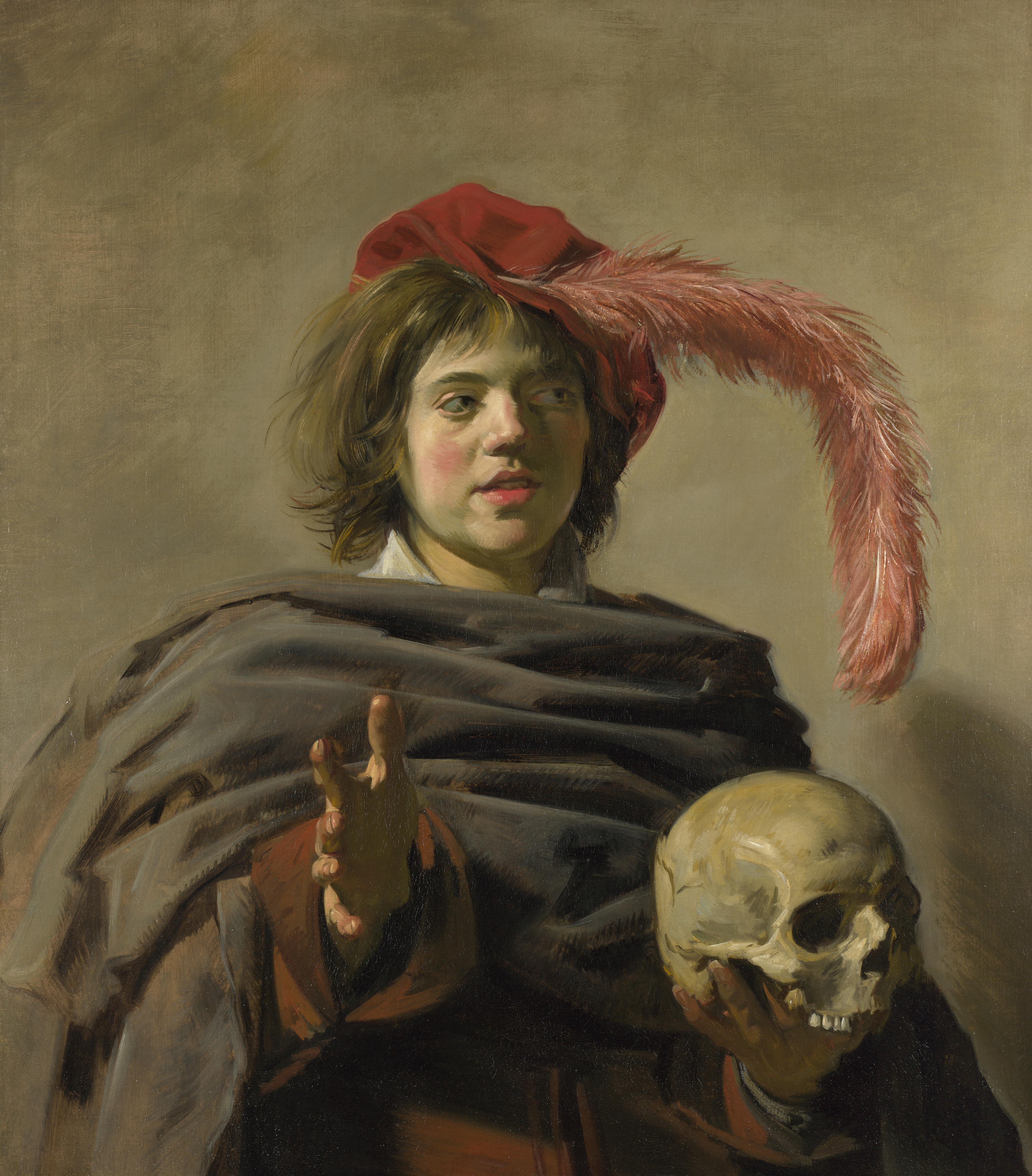
Frans Hals, Young Man holding a Skull (Vanitas), public domain via Wikimedia Commons


Word Undefined

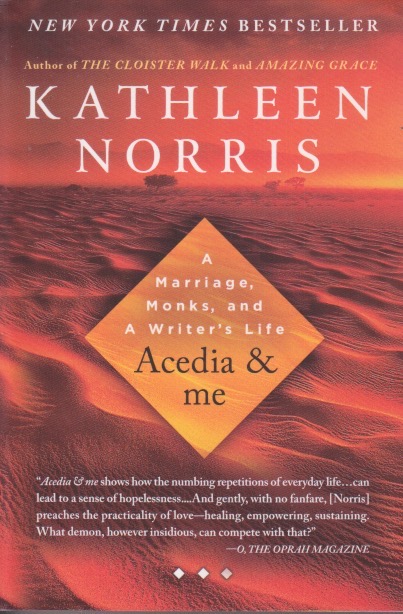
It’s one of those amorphous, uncommon words that can be devilishly difficult to define.  It’s also a churchy word.  “Acedia” was considered both a sin and a demon by various monastics, although the basic idea is listlessness.  Kathleen Norris has made her mark as a spiritual writer, and my wife and I have read a few of her books.  Dakota, her first non-fiction, was stunning.  We just finished Acedia and Me: A Marriage, Monks, and a Writer’s Life.  It revolves around this concept of acedia and for a writer to admit it, it seems, takes courage.  But the question that remains unresolved for me is whether it really exists.  It seems that acedia was devised by monks to name their ennui with monastic existence.  When all you do is pray there comes a time when you just don’t want to.  Or can’t.  They called it acedia.

There is a rich vocabulary for such states, reminding me of The Dictionary of Obscure Sorrows as well as the Existentialist literature I grew up reading.  I think of Kafka.  Of Kierkegaard.  Of angst.  Of boredom.  More to the point in Norris’ case, writer’s block.  This is a terribly personal book for her.  She describes the death of her husband and coping with widowhood.  And on top of it all, that dreaded block of inspiration that is a plague upon writers.  Interestingly enough, the book took me back to my Nashotah House days.  Norris, as do many monks, appreciates the slow reading of the Psalms.  One of the points of contention at Nashotah House—I kid you not—was how long to pause between the halves of the verses in the Psalter.  But is this a demon or only human nature?

“The noontime demon” was another common term for acedia.  This connects it to yet another of its aspects: depression.  We tend to think of depression as a clinical problem, but Norris explores the possibility that it’s a spiritual problem.  Some claim acedia as a sin, as I’ve noted, which shoves it back on the experiencer.  Norris has some interesting definitions of sin in her exploration.  Tellingly, in an appendix she presents the Webster’s Dictionary (1913) words related to acedia and there are over 100 of them.  And these words range from lust to world-weariness.  Is the word too promiscuous to be really useful?  For a writer like Norris, influenced by monastic practice, a poet by trade, and yet a writer of New York Times bestsellers, she makes the word fit.  There’s much to ponder here.


Spirit Storm

Some time ago, we experienced quite a windstorm.  More than wind, there was a dump of rain, thunder, hail, and all that.  My wife and I were attending a Tibetan singing bowls sound-bath with some others in the cancer support community.  I’ve described this practice before, here.  In any case, the meditation is held in a large room with a tin roof—the kind of place you don’t want to be during a tornado.  We’d just got inside when the gust front hit and knocked out the power.  The instructor still went through the meditation, but the storm sounds blended with those of the singing bowls.  Afterwards my wife asked about Job.  Specifically, God speaking from the whirlwind.  I told her that was God on a bad day, but I understood what she was getting at—there’s a spirituality to the weather.  (I was going to suggest Elijah instead, but “but the Lord was not in the wind.”  Alas.

I thought of Weathering the Psalms.  My contribution to biblical studies, had I been allowed to remain in academia, would’ve been further explorations of weather terminology in the Bible.  But the Lord was not in the wind.  I wrote that book because I noticed the juxtaposition of severe weather with daily chapel at Nashotah House.  We were required to attend, no matter what the weather.  (Such is life on a fully residential campus.)  We were reciting the Psalms one day when a storm blew the power out.  It may have happened more than once, since we’re getting on past two decades hence my memory’s a touch imprecise on the point.  In any case, the spirituality of the power of the storm fascinated me.

It still does.  The next morning, out for my jog, I marveled at the number of branches down.  Thousands in the Lehigh Valley were without power.  This is probably why the ancients considered the storm god chief of the rest.  The violence of nature is something that suggests divinity.  Other primates have been observed screeching back at the sky during thunderstorms.  It’s deep in our DNA.  That doesn’t make it any less spiritual.  There’s a lot of weather in the Bible.  I only explored a tiny piece of it by trying to tackle the Psalms.  The Good Book, however, doesn’t say much about the spirituality of weather.  It’s there nevertheless.  Anything that can snap a tree a foot in diameter like a toothpick has a spiritual message for us.  I mused on the way home—we had to take a detour because of downed trees—that had the storm claimed us as victims, dying while meditating is probably not the worst way to go.  Now I wonder, what might God’s nice words from the whirlwind be?


Mystic Thoughts

Those who know me primarily from my writings on horror are perhaps whiplashed when I muse about spiritual matters.  I don’t mean just religion, but spirituality—the two are quite different.  If life had unfolded differently I would likely have ended up as a mystic.  The problem is “rational mystic” is an oxymoron in most minds.  Either you’re one or you’re the other.  To become a proper mystic, in any case, you can’t be bothered with such things as secular work.  Mysticism—direct encounters with the divine—requires development and practice.  You can’t always control when a trance or vision might hit you.  What if it comes during a meeting?  Say your performance and development review at work?  You see the problem.

I seriously considered becoming a monastic as a young man but I had a problem.  I was a Protestant.  Protestantism was based on the idea that Catholic practices, such as monasticism, were wrong by default.  Miracles don’t happen—haven’t done since New Testament times—and God is a biblical literalist.  Why spend valuable church funds, then, on establishing monasteries?  Still, mystical experiences happened to me.  (You’ll have to get to know me personally to find out more about that.)  I talked to my (Protestant) professors.  “You don’t want to become a mystic,” I was told.  “They always have trouble with the church.”  Eventually I became an Episcopalian, a tradition that was more open to mysticism.  It became clear in 2005, however, that the Episcopal Church wanted nothing more to do with me.  Besides, I’m a family man.

Monasteries for married folk is an idea whose time has come.  Monasticism is based on the idea that you need to isolate yourself from the world’s distractions to grow spiritually.  To me, as I noted recently regarding sacraments, the “distraction” of marriage isn’t the problem.  It’s the constant need to earn money.  More and more money.  Monasteries became wealthy because other people were glad to pay money so that someone else could do the spiritual heavy lifting for them.  You can get into Heaven on borrowed virtue.  (Even Protestants believe that.  If you doubt it, get a degree or two in theology and you’ll see.)  So why not provide monasteries for those poor souls that just don’t fit into the capitalistic ideal?  I have the vision that such places would become havens for artists of all stripes.  And that, with the goodwill of society, locations where your needs were met for an exchange of goods—building good spiritual karma for a world where most people are content with trying to get rich—might just work.  It’s an idea whose time has come.  Who’s with me?

Photo by Luís Feliciano on Unsplash

To Their Own Devices

This one’s so good that it’s got to be a hoax.  One of the upsides to living under constant surveillance is that a lot of stuff—weird stuff—is caught on camera.  I admit to dipping into Coast to Coast once in a while.  (This, originally radio, show [Coast to Coast AM] was well known for paranormal interests long before Mulder and Scully came along.)  It was there that I learned of a viral video showing devices praying together during the night in Mexico City.  The purported story is that a security guard in a department store came upon electronic devices reciting the Chaplet of the Divine Mercy.  One device seems to be leading the other devices in prayer.  Skeptics have pointed out that this could’ve been programmed in advance as a kind of practical joke on the security guard, but it made me wonder.

I’m no techie.  I can’t even figure out how to get back to podcasting.  I do, however, enjoy the strange stories of electronic “consciousness.”  I use the phrase advisedly since we don’t know what human, animal, and plant consciousness is.  We just know it exists.  I am told, by those who understand tech better than I do, that computers have been discovered “conversing” with each other in a secret language that even their programmers can’t decipher.  And since devices don’t follow our sleep schedules, who knows what they might get up to in the middle of the night when left to their own devices?  Why not hold a prayer service?  The people they surveil all day do such things.  Since the video hit the web not long before Easter, with its late-night services, it kind of makes sense in its own bizarre way.

As I say, this seems to be one of those oddities that is simply too good to be true.  But still, driving along chatting to my family in the car, some voice-recognition software will sometimes join in with a non sequitur.  As if it just wants to do what humans do.  I don’t mean to be creepy here, but it may be that playing Pandora with “artificial intelligence” is dicey when we can’t define biological intelligence.  I’ve said before that AI doesn’t understand God talk.  But if AI is teaching itself by watching what humans post—which is just about everything that humans do—maybe it has learned to recite prayers without understanding the underlying concepts.  Human beings do so all the time.

Let us pray


Unusual Places

I don’t recall how I first learned about Mitch Horowitz’s work.  I read Occult America as soon as I found out about it—it helped as I was transitioning to writing about religious culture (largely through horror films) since there’s a healthy dose of occult in horror.  While still in publishing Mitch agreed to look at Holy Horror before it landed with McFarland.  The thing about my life is that it’s too busy (9-2-5 isn’t a size that fits all) to keep up with writers I find fascinating.  I hadn’t been aware of Horowitz’s continued, and continuing, book writing.  As soon as I saw Uncertain Places: Essays on Occult and Outsider Experiences I ordered a copy.  It brought back to mind the semester break at Nashotah House when I realized that to get anywhere near the truth you need to question and question boldly.  I told my students that if they didn’t challenge their perceptions with reading during semester breaks they were wasting them.

I met Mitch (although we’ve never seen each other in person) through our mutual friend Jeff Kripal.  They both have the courage to question apparent reality and to not stop at the line that the wall of materialism throws up around the pursuit of knowledge.  Uncertain Places is well titled.  Like almost all collections of essays some speak to the reader more than others, but I found myself pausing frequently to consider what I’d just read here.  One thought that keeps recurring is how even someone with a terminal degree can constantly feel like there’s so much more to explore.    Horowitz is a seeker unashamed.  And that also took me back to my past.

Growing up poor, I didn’t have many resources other than my mind to help draw some preliminary conclusions about reality.  Like many red-neck families of the time we had a CB radio and we were each instructed to come up with a “handle.”  I believe it was my mother who suggested “Searcher” to me.  She knew that I would never stop looking.  Uncertain Places is the work of another searcher—one who’s less fearful than I tend to be.  (I’m working on it.)  Reality, it seems clear to me, is far more subtle than most of higher education has taught me that it should be.  We try to make occult scary and demonic but Horowitz is, like yours truly, an historian.  Those of us who explore the history of religion can find ourselves in some pretty unusual, one might say uncertain, places.  And rather than dismiss what we see there, we take a closer look.


Halloween Tale

Halloween movies are hit or miss. Anthology movies are the same. My interest in holiday horror keeps me coming back for more nevertheless. Tales of Halloween has been fairly well reviewed over the years. As intimated, it’s an anthology film. There are ten separate stories squeezed in, leading to an average of nine minutes per episode. To make matters more interesting, each story has a different director. The end result is kind of like a pillowcase after trick-or-treating, you get some good stuff and some you’d rather not have received. The movie’s also a comedy horror so you’re meant to laugh throughout. Kind of like Halloween itself, I suppose. At least for some people. The movie didn’t do anything for me. There were no takeaways, and nothing really memorable.

Halloween is an unusual holiday.  For one thing, the way it’s celebrated is fairly recent.  Childhood memories of costumes and trick-or-treating and ghosts and goblins are all pretty new.  Well, maybe not the ghosts.  For some of us it’s a spiritual time.  A reflective season.  I’m not sure how anybody can not try to figure out what life’s all about.  Some of us have steered our lives (in as far as we actually steer them) in the direction of trying to figure these things out.  For me, Halloween is a time of spiritual growth.  Not exactly fun, but enjoyable nevertheless.  I know it’s different for different people.  Some people live for the fun and the partying.  It’s like that pillowcase all over again.  There is, at least in my experience, no perfect Halloween movie.  I won’t stop trying to find it, however.

John Carpenter’s Halloween is the movie that really kickstarted films based on this particular holiday.  Although I’m no fan of slashers, I do enjoy this one from time to time.  It’s a well-made movie, moody like autumn.  In Tales of Halloween, the background movie in two segments is Night of the Living Dead, a classic by any standards.  Carnival of Souls is shown in another episode.  Horror is a notoriously self-referential genre.  Last year I watched Trick ‘r Treat, another such anthology film.  It likewise made little impact.  On me, anyway.  Perhaps Halloween isn’t about horror after all.  It’s a time for reflection.  And pretending.  Since we all pretend most of the time it is perhaps the most natural of holidays.  Pretense on other holidays, although it happens, is considered in bad taste.  At least on Halloween we can be honest about it.  Some day someone may actually capture that in a movie.