Dr._Strangelove_poster

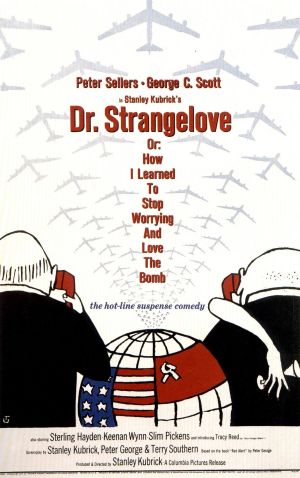
In honor of the fifty-year anniversary of the release of Dr. Strangelove this past week, my wife and I sat down to rewatch the movie this weekend. Psychologically, as Kubrick found out, dark humor was the only way to deal with the sense of doom that pervaded the world into which those of my generation were born. Nuclear weapons had been developed and the Cold War was in full swing. Somehow, even in small-town America, I didn’t find Communism to seem so awful. After all, I grew up reading the Bible and it sounded quite a bit—at least in theory—like the arrangement the apostles had made in the book of Acts. The idea of private property, the very spine and muscular system of capitalism, was considered a sure way to lead to God’s kingdom not being established on earth. Nevertheless, that is the way, as the phrase goes, that the money went. And Communism threatened the right of one percent to horde all the money, so we were ready to annihilate all human life for it. Talk about taking your marbles and going home! No child should grow up knowing the meaning of the phrase “mutually assured destruction.”

Dr. Strangelove has held up well for the half-century since its release. Despite the thawing of the Cold War, the big chill isn’t over yet. And humor still seems the only way to keep sanity and deal with the state of the world. There are still many General Turgidsons out there (some of whom have held very high government offices, and this is no joke). There are at least, as far as we know, fewer General Rippers. So we hope. As the bomber crew nears its target, Major Kong goes over the contents of the government issued survival kit, among which is a comically small Russian Phrase Book and Bible combined. Kubrick, a master of satire, has the godlessness of Communism thrown time and again across the lips of the hawks. It is better to kill everyone than to allow the godless to rule. Even the Bible, however, shares space with the Russian phrasebook, making us wonder whether it is a tool of conversion or an admission of inevitability. Still the bomber, piloted by a Texan, flies on.

Perhaps the biggest moral dilemma we face is our ability to destroy hope. Capitalism promises opportunity to all. Like many who grew up poor, however, I have found lies hidden in plain sight. It is not easy to move ahead if you choose to mire yourself in debt to get an education. In fact, if you lose a job in higher education you can easily find yourself adrift for a decade or more, not earning any retirement money and being frequenly sought out by your local universities as an adjunct instructor. In fact, at many points your career might look like the end of the world. So it is that I take great comfort in settling down to watch Dr. Strangelove again. At least it is an honest movie, and that hasn’t changed in the past half-century. And I think I may have been wrong about how few General Rippers there really are.


Earthbound

Major news outlets have been raving over Interstellar, the new Christopher Nolan film. I’ve not seen it yet, and it hasn’t had the same kind of hype that Noah received earlier this year. It isn’t, after all, biblical. Still, the reviews for the movie borrow liberally from religious language. One of the obvious reasons is that the vastness, the incomprehensibility—I think I’m safe to say it here—the impossibility of space, almost demand such language. Ironically, it is considered unsophisticated to say similar things of religion, that fall-back for those of weak intellects who, well, believe the impossible. Whether science or religion, we are faced, when we look at interpretations of reality, with something we barely comprehend. Even by conservative measures, on the scale of the universe, we are somewhere around the level of a sub-atomic particle to an earth-sized universe. And yet, with great confidence, indeed, at times arrogance, we claim that we have it all figured out. God? Not possible. Science, less than a millennium old? We’ve got it all figured out. And we haven’t even stepped beyond our own satellite yet.

Having grown up in a rural setting, I was used to seeing stars at night. From a young age astronomy fascinated me. My high school, built during the era around Sputnik, had a working planetarium (and this was not an affluent community). I took astronomy as a junior elective and ran into my teacher at a weekend retreat for lay preachers. A man of science who looked at the universe and came away with wonder. On clear winter nights, away from the light pollution that has become my daily bread here in the orbit of New York City, I would shiver and look upward, knowing that I was reaching both the limits of what the earthbound could see, but also infinity at the same time. The vastness of space still weakens my knees. Even more than my age does naturally.

hs-2003-10-i-large_web

In at least one of the many interviews, Nolan admits to having been influenced by 2001: A Space Odyssey. It was the genesis of the believable space movies, giving Star Wars a jump start and we’ve been exploring deep space in our celluloid fantasies ever since. The constant in all of this is the humility of humanity. “Humility” derives from Latin humilis, literally, “on the ground.” It is no accident when the concept of divinity began to emerge that the human, or perhaps porto-human, gaze was cast upward. The gods, whatever else they might be, weren’t down here with us. They have access to up there. And even a scientist can get away with calling the sky “the heavens.” This journey of Interstellar began long before Kubrick, and we are flocking in numbers to see what the latest rendition might be. Wonder might just be what the doctor calls for on a dark night, when the hope of humanity could use a little humility.


Lola Lolita

LolitaAs a father, Vladimir Nabokov’s Lolita is difficult to read. With Banned Book Week upon us, however, and with my wife suggesting I read Reading Lolita in Tehran, I figured I’d better read Lolita in New Jersey first. It’s not the kind of book you want to be seen reading on the bus. As is well known, the novel is written from the sympathetic point of view of a pedophile. It is distinctly creepy and yet also strangely sincere. Effacing the distinctions between love and lust and healthy and ill psyches, the story draws you into the life of a single-minded Humbert Humbert and his twelve-year-old obsession. I had been prepared for the end of the story, having seen Stanley Kubrick’s cinematic version some years ago, still, this tale distresses. Banned books take us to places we’d rather not be, and cause us to linger there. This is part of their secret appeal. These authors are honest enough to make us question assumptions. You have floated out of sight of land.

Lolita, through euphony, if not something more, reminds me of “Lola.” The Kink’s hit. I first heard “Lola” while I was in seminary, although it had been released a decade and a half earlier (I tend to run a little behind the times). When I listen to songs I pay attention to the lyrics, and I was disturbed to find that “Lola” was a catchy tune with a (to me, at the time) disturbing message. I confessed to a friend that I liked the song, but wasn’t sure that I should. We ban songs just as we ban books, because they bring us to a place where we question what we thought we knew. In my case, it often doesn’t take much. My friend Dave gave sage advice not to overthink the whole thing. If you like a song, you like a song. Let the music play on.

“You say you’re afraid for children,” Ellen Hopkins’s second stanza of “Manifesto” begins. (I confess to following a different scansion of the poem, call it poetic license.) I believe, however, our fear is for ourselves. We know that we could have a monster lurking inside. Lolita does not encourage pedophilia. Like many social crimes, pedophilia is the manifestation of an illness that some people, like sociopaths, unfortunately suffer. The lack of empathy for others is a frightening thing indeed. It makes for some of the scariest movies, and headlines, that I have ever seen. We do ourselves no favors, however, by pretending it doesn’t exist. I know little of the life of Nabokov, but I know that he died in Montreux. I know that he could afford to live there at least in part because of the royalties from Lolita, a novel whose manuscript he had once attempted to burn. And I know that in Montreux “some stupid with a flare gun,” well, you know the rest.


Room for One More

Room_237_(2012_film)

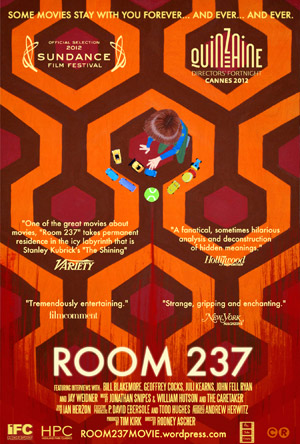
Conspiracy theories have a definite attraction. In a world where governments are more known for keeping secrets than for carrying out the will of the people, they are often easy enough to believe. Elected officials are, of course, human. Humans have recourse to prevarication from time to time, but we do expect that a corporation that takes its secular tithe from our income should be honest about its doings. So it is that I find Room 237 endlessly fascinating. Room 237 is a documentary about Stanley Kubrick’s The Shining. Winter is also an appropriate season to watch The Shining, so I took the ersatz experience of Room 237. This documentary, besides featuring some interesting conspiracies, also shows how religions may come to be.

Stanley Kubrick, as common knowledge goes, was a genius. In a day when movies are often pure escapism, much of it brainless, it might be surprising to consider a film-maker a literal genius, but anyone who’s watched one of Kubrick’s mature films is left in no doubt. The Shining, although based on the Stephen King novel, takes the story in very different directions, and there is much more going on in the film than first meets the eye. Room 237 interviews true Shining affectionados who find the “real” story line to be the genocide of Native Americans, the holocaust, a retelling of the minotaur myth, the faking of the filming of the moon landing, and a variety of other perceptions beyond the norm. Kubrick, known for the care he took in arranging every shot, clearly put subtexts into this film. What really caught my attention, however, was when one of the commentators said that he had his first real religious experience while watching 2001: A Space Odyssey.

2001 has always been one of my favorite movies. Simple and sometimes psychedelic, even with the novelization it is almost impossible to understand. With that haunting monolith, so like an outgrown iPhone, I found myself as a child believing in the evolution Kubrick suggested as a higher power led from ape to space in the instant of a bone toss. The majesty of that film that never lets humanity claim any true superiority still has the power to conjure nightmares that The Shining can’t. With the grand soundtrack of the opening of Also Sprach Zarathustra (himself the founder of a religion), I can understand how this might be a numinous experience. Movies function as modern myths, and, I contend, that is one reason that religious themes emerge so readily in great films. In Room 237 none of those interviewed considered any religious elements for The Shining, but no doubt, if an ape can walk on the moon, they’re there.


Let It Shine

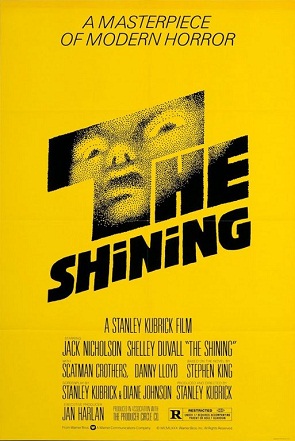
Stanley Kubrick was not the most prolific of movie makers, yet his efforts often create striking impressions. I saw 2001: A Space Odyssey at a young age, and it has remained one of my favorite films ever since. Although I’ve watched horror movies since my college years, I shied away from The Shining until about five years ago. By that point I’d seen enough clips and parodies to kind of know what to expect. Since finally viewing the original, it has become one of my most admired movies as well. Kubrick films may not be easily slotted into a genre, and The Shining is not a typical horror movie. There always seems to be something more going on in addition to the growing menace of Jack Torrance’s insanity. I’ve been hearing about Room 237 for a few months now, and I’m eager to see it. Room 237 is admittedly a movie about a movie, an exploration of how The Shining has inspired multiple interpretations of what most consider to be one of the scariest movies of all time.

The_Shining_poster

An article by Jay Kirk in the June edition of Harper’s Magazine examines this movie of a movie. Kirk is the cousin of Tim Kirk, the producer of Room 237, and offers a personal introspective of a mind under the spell of Kubrickian influence. The article, “The Shining Path: Room 237 and the Kubrick cult,” not surprisingly, keeps turning back to religion. It may be fallout from the Kirk cousins both being children of clergy, or it may be that effective horror films are, as I’ve maintained before, inherently religious. Even the meeting of the Kirk cousins takes place at Gaudi’s Sacred Family cathedral in Barcelona. It seems that there’s no way to get at The Shining without involving religion. Not that it’s a religious movie, but it may take some religion to understand it.

No doubt Stanley Kubrick was a deep man. Even those who try to interpret his movies end up adding a kind of hidden message of their own to the plethora of ideas he eloquently shot. I know nothing of Kubrick’s religious convictions, if any. Any film with the gravitas to inspire continuing hermeneutics over three decades after its release, however, will surely open itself to a kind of sanctification. The penultimate section of Kirk’s introspective focuses on Proverbs 3.5-8, a passage underlined in his grandmother’s Bible. To understand the genius behind The Shining, it seems, religion will have to be part of the discussion.


Like Clockwork

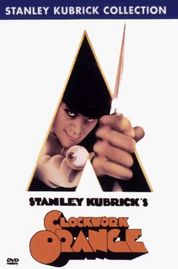
It is probably safe now to reveal something that occurred at Grove City College over a quarter of a century ago. I often feel I must justify my choice of college, but I was a first-generation college student who knew nothing about higher education. I was raised with a Fundamentalist orientation, Grove City was a “Christian college,” and it was only about 30 miles from home. I do give Grove City credit for shaking me out of my Fundie way of thinking; as a religion major I met some genuine honest thinkers in the department who let me question the inconsistencies of Fundamentalist beliefs. I broke free in my own time. One of the literature professors, however, insisted that we both read and watch the movie version of A Clockwork Orange. It was my senior year and I felt ready to handle it. As I watched the movie again over the weekend, the first time since college, I was shocked that the institution Grove City College has become would have ever allowed such a movie to be shown. Although there is Kubrickian nudity, the movie was initially given its rating because of the violence, which, by today’s standards, is somewhat tame.

Anthony Burgess’ book is so well known that I don’t need to summarize the story here. What struck me in a new way was the religious element in the plot. While Alex is in prison, and wanting to be reformed, it is the prison chaplain who advises him against it. Undergoing the famous movie treatment, Alex indeed proves docile after testing, leading the priest to declare, “He has no real choice, has he? Self-interest, fear of physical pain, drove him to that grotesque act of self-abasement. Its insincerity was clearly to be seen. He ceases to be a wrongdoer. He ceases also to be a creature capable of moral choice.” Of course, the government is satisfied with this kind of morality, the sort that upholds appearances at any price to humanity.

What I find particularly disturbing is Burgess’ prescience. A Clockwork Orange was published fifty years ago, and since that time we have seen politics shift from care of the citizen to the ultimate window dressing of courting the Moral Majority to make it look as if all governmental decisions are moral. The Tea Party seeks to underscore that charade, claiming that all who would argue for Alex’s humanity deserve the fate that he so wrongfully dispensed before his “reform.” This view of the world suffers for its lack of complexity. Humans do not come in black and white. Ironically, Burgess chose to make the clergyman the only the objector to the inhuman treatment imposed on Alex. This is the kind of dilemma on which Stanley Kubrick thrived, but it has become even more poignant in the decades since his movie was released. True, Kubrick’s film is based on the apocopated American version of the novel, perhaps obscuring the intended meaning of Burgess. But isn’t that exactly what he was attempting to do?


Two Ghosts

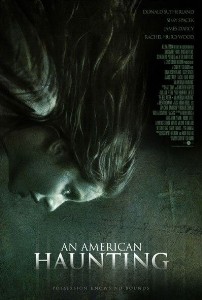
To escape the harsh realities of a fractured career, I turn to celluloid. Lest Hollywood distract me too much, I strictly limit my movie viewing to weekends when I can let down, for a few moments, my constant anxiety. Since my religious antennae are always prickling, I notice implications sometimes in unexpected places. So this weekend’s fare included two ghost stories. Both of them utilize religion to resolve the haunting, but in very different ways. An American Haunting purports to be based on real events involving the putative “Bell witch” of Tennessee. The movie takes many liberties with this scant folktale, including a church condemning a seemingly upstanding member and a Bible being dismembered as the angry spirit attacks the Bell family. In the end, the plot is confused by a revelation of family abuse and the viewer wonders who it is that tears apart Bibles.

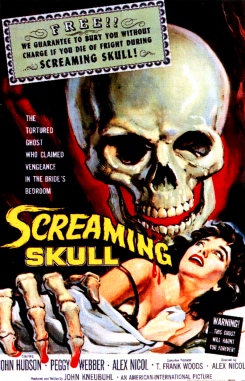
The second part of my double-feature was The Screaming Skull, a 1958 horror film that fails to raise a single follicle in fear. Nevertheless, the moody movie does provide the Dies Irae for Stanley Kubrick’s opening theme of The Shining as well as a sense of isolation that would also inform the latter exemplar. The religious element comes in the form of a priest who is a close friend to a clandestine murderer. With the help of a ghostly screaming skull, the priest is the one who eventually solves the murder and rescues the intended victim of our erstwhile protagonist.

Nearly half a century separate these two ghost stories, and the role of religion in them has reversed. In the 1950s the clergy were society’s protectors. Even though Rev. Snow is the only main character who does not actually see the ghost, he is a safe haven for the victims of evil. Fifty years later, it is the church that sets up the haunting of the Bell family by its unyielding laws. The family quotes the Bible at the spirit and the ghost tears the Bible apart. There is no sanctuary here. Films, no doubt, reflect social attitudes. When the foundations have lost their hold, confusion results. Who is to blame for the suffering of Betsy Bell? The movie leaves that up to the viewer. There is no solid Rev. Snow to whiten the sins of this world. Only ghosts remain.