Star Tracks

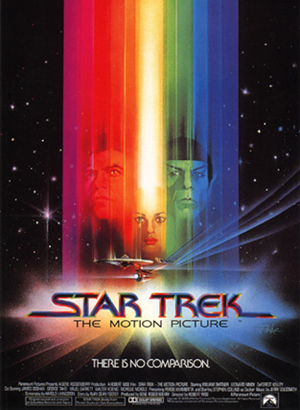
Star_Trek_The_Motion_Picture_posterLong ago in a galaxy far away—1979 in rural western Pennsylvania, to be precise—the local inhabitants were surprised to learn that James T. Kirk was now an admiral. Two years earlier Star Wars had thrilled us with special effects first mastered in 2001: A Space Odyssey but a more accessible plot. Robert Wise, who had not only given the world The Sound of Music, but also The Day the Earth Stood Still, took the helm for the new Star Trek: The Motion Picture. Star Trek geeks, of which crowd I do not count myself, hadn’t really taken their cliched role in the emerging high tech society, and CGI was still a few years off. Nevertheless, rumors in school had it that the movie featured a bald woman and had boldly gone where no man had gone before. The original crew was all there. So on a Friday night I dutifully made my way to the Drake Theater to watch and left saying, “is that all?” Star Wars was action-packed and fun, filled with archetypes and wise-cracking robots. Star Trek had Voyager 6, like E.T., trying to phone home. In a word, the movie was forgettable.

On a tour of the original Star Trek world, I finally sat down to watch The Motion Picture, with its grandly archaic-sounding name, last night. I shuddered to think I’d last seen it 35 years ago—that makes me as old as the crew was starting to look—but this time I was able to see things I hadn’t before. Spoiler alert! Voyager 6 is looking for God. The original Voyager 1 reached the end of our solar system a couple years back, but in 1979 there was no reason to suppose that we wouldn’t try again and again to reach out to parts unknown. We were rapidly become materialistic, and the universe could be a known quantity. Three centuries in the future, Voyager 6 is headed home, having been rebuilt into an unstoppable living machine. When the creator—humanity—doesn’t pick up the phone V’ger poises to wipe out the carbon-based infestation until it learns how to physically, biologically merge with a human being (cue the bald lady and otherwise superfluous Captain Decker). Lots of colorful lights and we can all go home.

Even now I can’t muster the courage to say the movie is profound, but it does touch on an issue that has only grown over time—we have voluntarily left our deities behind. In our rush to reduce the world to the least common denominator, we have pulled the plug on the cosmic phone. The Voyager program ran out of steam as the Cold War was heating up down here on earth and we were being told we were all just a bunch of atoms fooling around anyway. The machines, in the meantime, had come to believe. I probably won’t survive another 35 years to watch Star Trek: The Motion Picture again, but I do hope that in that time we may become more aware of our humanity. And I do hope that if someone divine does happen to call, that we’ll at least pick up the phone.

Voting Vicissitudes

“Remember, remember, the fifth of November, the Gunpowder Treason and plot. I know of no reason, why the Gunpowder Treason, should ever be forgot.” Election day fell on November fifth, and as I watched V for Vendetta again, I was reminded how true it rings. Religious leadership takes over government, the common person becomes an enemy of the state, and criticism is treason. Tea, anyone? I’ve always had a soft spot for dystopias, but the world of V is entirely too plausible at times. I have watched rational people transformed by fear and the certainty of religious dogma into those who will do what they are told without question. The movie always gives me a profound hope that the human spirit is larger than the powers that be. V can also stand for Vote.

I cast my ballot knowing that a vote against a governor who enjoys the bully image was indeed close to a lost cause. People are enamored of power. In my deepest Jedi dreams, however, I know that the most powerful moment in Star Wars is when Obi Wan turns off his light saber to allow himself to be struck down. There is a power, one upon which entire religions are premised, in the self-sacrificial act. It’s not that I have anything against Parliament; I saw it just this past year and enjoyed the experience in a way that Guy Fawkes could perhaps not have appreciated. As Evey says, “this country needs more than a building right now. It needs hope.” I guess we can hold on another four years. V can also stand for five.

“He’s a deeply religious man and a member of the conservative party. He has completely single-minded convictions and has no regard for the political process. Eventually, his party launches a special project in the name of ‘national security’.” So V tells Finch concerning a dictator who could be wearing any number of political masks in our world. We hand power over to those who encourage our fears rather than those who inspire our imagination. Camelot died in 1963. It is not so difficult to imagine a world so much better than the one we’ve constructed, but plutocracy does prevail when people do not take the implications of their religion seriously. When we only glance at the surface, the deeper message gets lost in the mythology of it all. November fifth is a myth that still has the potential to change the world. If we would allow it.

VoteV


Final Frontier?

Stay away from the dark side. That’s generally good advice. Ironically, new religious movements (NRMs, in the biz) have come up in my conversations quite a bit lately. Some of my friends have suggested that I start a new religion—job security would no longer be an issue. I’ve been studying religions my whole life, and at times I’m sorely, sorely tempted. Meanwhile a friend pointed me to a story on Details.com about Jediism. Yes, there is a religion based on Star Wars—actually, I shouldn’t be too hasty here. There is at least one religion based on Star Wars; likely there are many. The question that is indubitably raised is okay, so do these people actually believe this stuff? Don’t they know Star Wars was written by George Lucas? How can it be a religion? I can only respond with: Have you ever heard of Scientology? Religions do not have to be believable to be believed in. History has shown that time and again.

StarWars

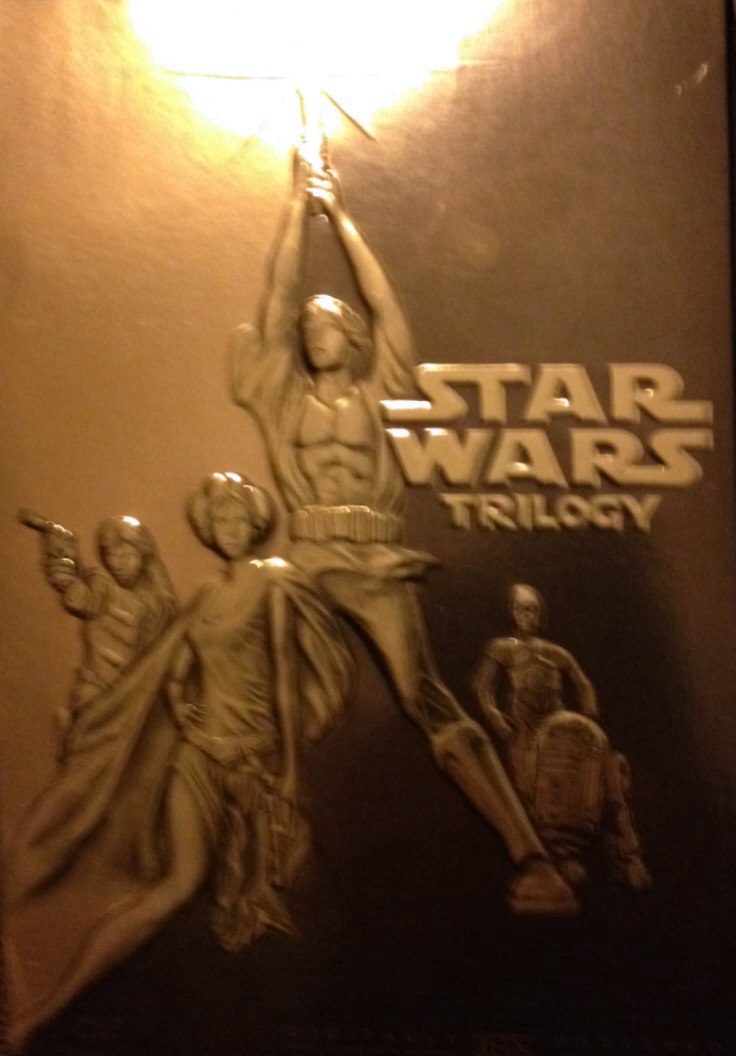
Jediism is based on the teachings of saints like Yoda and Obi Wan Kenobi. What they are teaching is straight Joseph Campbell. Served neat. Good versus evil. A sense that a cosmic force surrounds us. The hero’s journey. The same thing can be found in the Bible. Wrap it up in a Jedi cloak or in a Galilean robe and the end result isn’t much different. I’ve seen bumper stickers suggesting that Obi Wan died for my sins. Just as long as good wins out in the end, who’s to complain? Does it really matter if it happened a long time ago in a galaxy far, far away or just away in a manger?

The problem with religion is that we lack a proper definition. Christianity clearly uses the word to describe itself. When looking at those who thought differently (adherents of Judaism, Roman paganism, the great goddess of Syria) early Christians had to call them something. If Christianity is a religion, so must they all be. Some religions, however, are not based on belief, but practice. To be is to do. Some religions are based on historical people, some on fictional people. Some are very serious while others are difficult to tell. Some religions are ancient, but looking at the state of the world it’s hard to say that they’ve been terribly successful. So when a bunch of sci-fi fans think they’ve discovered the truth in the mind of George Lucas, who’s to argue? And I really do mean that about keeping away from the dark side.


Campbell’s Swansong

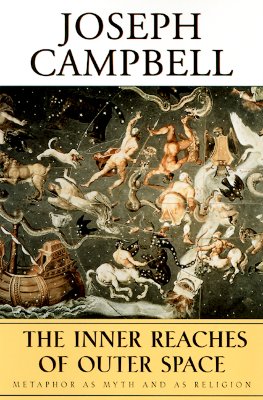
InnerReachesofOuterSpace Joseph Campbell may not be the best reading for the bus. Despite the many signs and placards gently suggesting to passengers both in the Port Authority Bus Terminal, and on the buses themselves, that keeping quiet is courteous, we are a people in love with noise. We are used to annoying electronic beeps, squawks, and farts. People find it difficult to sit more than 20 minutes without talking. I’m trying to read. At the Hunterdon County Library Book Sale I picked up Joseph Campbell’s last book, The Inner Reaches of Outer Space. It requires some concentration. Campbell was a brilliant comparative mythologer. I was reared in the scholarly hermeneutics of doubt, however, especially when it comes to comparing myths from different cultures. Campbell has a great appreciation for Jungian concepts, and soon minor details are blurred and the similarities stand out in stark relief. Still, as I always do with Campbell, I came away with plenty of rich concepts over which to mull.

Campbell, the great inspirer of Star Wars, the original series, was that rare breed of scholar who appreciated without participating. He is recorded as stating he was no mystic, and certainly not any kind of conventional religionist, but he couldn’t get enough of mysticism or mythology. Religion, he implies, is just mythology taken literally. He is, I believe, very close to the truth here. What we know of indigenous peoples today is that they don’t have that sharp and hard line between literal reality and story that marks much of western civilization. We tend to think fact and fiction cannot be of a kind. Looking around, we find no gods, so our choices are not to believe, or to believe too literally. And those who believe literally differently, we tend to want to kill. This is the history of religion in the western world, in a Campbellian nutshell.

Apart from the little gems I located scattered throughout The Inner Reaches of Outer Space, the main theme I found applicable was the driving force of chapter two, Metaphor as Myth and Religion. Metaphor is our way of interacting with a reality we just can’t experience directly. As human beings, we experience the physical world through the mediation of our senses, filtered by our brains. If there is something deeper, more profound than nature, we are even further removed. Our experience of meaning is metaphor. Joseph Campbell may have been a little too swift to spot congruities that are probably best left apart, but he clearly recognized the fact that our religions are not so different from our mythologies, and that both are narrated in the form of metaphor. This is not to devalue them, for metaphor is one of the most potent substances in our chemistry set. Now if only I could find the vial that has the stuff to make people want to keep quiet on the bus, we might all be able to get a bit more reading done.


The Force

A long time ago in a galaxy far away, or so it seems, I began studying religion not knowing where it would land me.  One of the great things about studying religion is the perpetual refreshing of religious thought that grows with human culture.  Anthropologists and philosophers and sociologists have difficulty defining exactly what religion is.  It is clearly a belief system of some description, but in many parts of the world religion is not so much reflective and reflexive—doing the ancient rituals and getting on with life.  Every great once in a while I learn about a new religion.  Those who don’t spend too much time thinking about it might be surprised to learn that new religions emerge quite frequently, and sometimes with the most unlikely of inspirations.  Consider Scientology.  While reading about new religions recently I discovered Jediism, or Star Wars religion.  Like Scientology, it is based on science fiction.  For those of us alive in another universe in 1977 it is difficult to convey to more recent hominins just how impressive Star Wars was.  Life-changing, in some instances.  Jediism takes the concept of the Force and makes it a central tenet of a belief system for the twenty-first century.
 
Having witnessed the impact of Avatar in even more recent lightyears, perhaps we should not be surprised that fantasy worlds spawn new religions.  After all, although death and suffering pervade even the most pristine of human-concocted galaxies, good ultimately wins over evil in these realms.  It is something worth hoping for.  Maybe even believing in.  Some people question how serious those who call themselves “Jedi” on religious surveys really are.  There are online Jedi sanctuaries, and even humor can be a part of a serious religion—consider the craze of Christian clowns that was going around in the 1980s.  For those of us from long ago, religions just don’t seem authentic without some antiquity to them; they should’ve been started centuries ago by founders who can be mythologized to sainthood or divinity.  We have more facts about the life of Yoda than we do of Jesus.


The thin line between fact and fiction grows more effaced every day.  Can religions be based on fictional founders?  Of course they can!  Without any means of determining objectively which religion is right (if any), we are left with only a person’s word about what s/he believes.  If I choose to believe that Sherlock Holmes was a real person what harm does it do?  It may even benefit the estate of Sir Arthur Conan Doyle.  As Matt Rossano points out in his book Supernatural Selection, religions are about perceived relationships.  Many people have relationships with fictional characters, sometimes falling in love with one or fantasizing about being one.  Basing a religion on a fictional character may be the greatest sign of trust.  After all, we can’t even define religion in a way on which all specialists will agree.  Religion itself may be the ultimate fiction.  May the Force be with you, just in case.


Chris-myth

Mythology is beyond any single individual. I was reminded of this recently while discussing Joseph Campbell with a colleague. Joseph Campbell was an unconventional academic who exploded to public prominence largely through the immense influence of Star Wars, the original episode. George Lucas had famously latched onto Campbell’s Jungian use of archetypal imagery as the basis for good story-telling, and thus, by extension, good movie-making. With his books written at a level that is accessible to the average reader, Campbell assured his fame in a world starved for mythology. Others have interpreted mythology quite differently, but often more quietly. The fact is, mythology is alive and well in our culture. We simply fail to recognize it.

Joseph Campbell, mythographer

We are in the midst of the Christmas season, a period of intense mythopoeia in modern American culture. As can be seen in the Christmas Complex essay under the Full Essays section of this blog, the growth of Christmas characters and stories has been intense over the past several decades, and it shows no sign of slowing. Although not everyone will recognize Heat Miser or Zwarte Piet, many cannot imagine Christmas without Frosty the Snowman or Jack Frost, although they are not specifically associated with the holiday. This is the nature of mythology – it grows to encompass the many concomitant features of its immediate culture. Northern European and northern American experience of Christmas includes the snows of winter, so they become part of the Christmas myth.

While many this year, and every year, protest leaving the “Christ” out of “Christmas,” they fail to recognize that the snowballing Christmas myth has rolled far beyond the control of Christianity. The origins of Christmas predate Christianity, and the birth of Jesus is yet another element that has adhered to the mythology of the winter solstice. As the days grudgingly grow longer, and light begins to return into the chillingly crystalline days of January in the northern part of the northern hemisphere, mythological souls everywhere breathe a sigh of relief. Our fear of the long, dark, cold night is primal and very deep. C. S. Lewis, another mythographer, at least got it right with the Narnian concept of winter without Christmas being a kind of hell to northerners. The mythology of Christmas in the southern hemisphere is another complex mythopoeia in the making. How it grows will be an interesting exercise in the ongoing human quest for meaning as summer’s heat is just beginning.

C. S. Lewis, mythographer