Pondering Origins

I’m not a numbers guy.  I never had any interest in statistics, and I tremble when I see my accountant’s number pop up on my phone at tax time.  But exponential sequences have an inherent fascination.  Think about your ancestry (I recently wrote about genealogy and that got me pondering).  You have two parents.  And they each had two parents.  By the time you get back to ten generations (eight greats before grandparents) you have 1,024 ancestors of roughly the same generation.  That’s a lot of people just to make one individual.  Think of all the circumstances that might’ve led to any two of them having been kept apart—then where would you be?  Of course the numbers double each generation which is where my reasoning capacity shuts down.

At some point, doesn’t it seem, that there wouldn’t be enough people available to make you?  I know that’s not true—you’re reading this and that proves this false—but it does make each individual life a thing of wonder.  Or even at the level of your own parents.  If you have siblings you know how different even biologically similar people can be.  And there are many others who could’ve been conceived instead of you or me.  The chances are astronomical that we’re here at all.  I often wonder if such circumstances are why our minds seek religious answers.  People are meaning-seeking creatures.  And against such long odds, it seems that maybe we’re a miracle after all.  Naturally, a driving force behind it all suggests itself.

Photo credit: NASA

Science has been a real boon for the billions of us alive today.  There’s no doubt that dispassionate, rational thought can lead to amazing outcomes.  At the same time, the doubt creeps in that this is the only explanation.  It occurs to me when watching the birds in the spring.  How do they know their own species and with whom to mate?  Is all of this driven by that notorious fudge factor we call “instinct”?  I have no answer to what the source of that will to keep life going is.  Biology tends to be among the slipperiest of sciences.  Life is difficult to define when we don’t even know everything that’s out there in our infinite but expanding universe.  The numbers are just too massive.  All I know is that by the time you get back to twenty generations (eighteen greats) it took over a million people to make just one of us.  And that’s by the numbers.


Numbers Game

I once asked a movie expert—this must’ve been when I was regularly on a campus somewhere, but not Nashotah House—how many movies had been made.  He sighed and said “There’s no way to know that.”  What I was thinking at the time was the Motion Picture Association of America (now the Motion Picture Association) number that comes near the end of the credits.  I wondered how many of those there were.  Of course, the number keeps changing.  It doesn’t account for television movies or straight to video, although, I see it does now include Netflix.  In any case, I was really interested in the statistics.  I still am.  I may not be a math person, but big numbers are intriguing.

The more I read about movies, and I seem to be moving in that direction, the more I realize how nobody can be an expert on all of them.  Even those of us with decades of experience watching horror can’t keep up with that genre.  Many of the books I’ve read are by authors whose families don’t like horror, so they have to carve out time alone to see the films.  This is on top of their jobs, which for some, admittedly, is film analysis—perhaps they’re the lucky ones.  I selected many films to discuss in Holy Horror.  There’s no index of the Bible in films, as useful as such an index would be.  As I continue to watch, and sometimes rewatch, I keep finding more and more material.  At some point, however, you just have to say “what I have written, I have written.”  But how many movies actually engage the Good Book?  There may be a way to know that, but it will take a lifetime of research.

Speaking of large numbers, the stats for how many Bibles are sold each year is a phenomenon unto itself.  It seems inevitable that it would find several of the cracks in American culture and leak in like rain water.  At times it’s the antidote to horror, while at others it’s the dote itself.  Holy Horror was never intended to be comprehensive.  It limited itself in intentional ways.  As I was writing it my naive question kept coming back to me.  When I research a topic I like to read as much written on the topic that I possibly can.  Of course, I spend over eight hours a day for most of the year doing something else.  The number of days like that, I suspect, is frightfully large.


WHO Knew 2?

According to Mark Twain’s taxonomy there are lies, damned lies, and statistics.  Right now about all we have are in the last of these categories under the most statistical administration in history.  Still, if we want to get out of the house once in a while we need to look for some facts.  I keep coming back to the World Health Organization daily situation report here.  That’s because I trust WHO.  It’s an ethical, international organization not in the rear pocket of the self-proclaimed genius that puts that pocket beneath his holy posterior in the Oval Office.  In fact, just this week said genius threatened to make the United States’ contributions to WHO disappear forever unless they met his demands.  China, on the other hand, upped their contribution by a couple billion.

I don’t have the time, or certainly the numerical capacity, to read the entire report daily.  Nor to internalize all the vast numbers of cases and deaths worldwide.  It’s too much.  Still, I stop to check the places I know, including the one in which I happen to live.  There may be a time delay here since I check the reports early, and since the data from which I’m drawing came from yesterday, but still I have to wonder.  According to the stats provided by our grand ole US of A, there were no new COVID-19 cases on Wednesday.  We went from 1,477,459 to zero in one day.  Actually, the day before (Tuesday) we reported 31,967 cases.  Don’t believe me?  Go ahead and check; I’ll wait.

Not born yesterday (not by a long shot), I know that numbers sometimes have to be adjusted.  I receive a salary, so I know that well.  At the same time, we have a statistician-in-chief that had only days before threatened—blackmail is what we used to call it, if the other party had actually done something wrong, which doesn’t really apply—to remove all funding in saecula saeculorum.  Can I get an amen?  Many of us, perhaps even most, learned early in life that you don’t get what you want by throwing a tantrum.  Of course, most of us didn’t grow up filthy rich.  Most of us can’t afford to buy the presidency.  Heck, most of us have trouble making the rent or mortgage.  So we have this great statistical anomaly whereby one spoiled kid says if you don’t play by my ruse, I’ll take my marbles and go home.  And I’m not lying.


Lies, Damn Lies, and Statistics

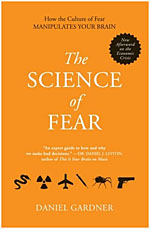
“The fear of the Lord is the beginning of wisdom,” so the books of Psalms and Proverbs agree. It must be true. Religion and fear walk happily along hand-in-hand. Some have suggested that religion began as a human response to fear. So this week I felt a little conflicted as I read Daniel Gardner’s The Science of Fear: How the Culture of Fear Manipulates Your Brain. The book had been recommended to me by one of my brothers. As a child fear defined me—it seemed that in a world where God was meant to be feared (for I was a literalist) that fear was the basic operating system for life itself. Gardner’s book is a fascinating exposé of the culture of fear. Gardner doesn’t really suggest that fear should be eliminated, but he does show how many of those in power manipulate fear into a faulty perception of risk management, for their own advantage. Beginning with 9/11 he demonstrates how the irrational responses of people to the tragedy led to even more deaths that quickly became buried in the white noise of everyday society. Comparing Bush’s response to FDR’s “the only thing we have to fear is fear itself,” Gardner demonstrates that the United States emerged from the depression and Second World War weary but confident and strong. After Bush’s two terms, the country is cowering and weaker. Why? The Bush administration heavily mongered fear.

Funnily enough, the release from fear comes from two main sources: statistics and psychology. Statistics reveal the true odds of common fears—these can be inflated so as to create an atmosphere of threat. People, as herd animals, will gladly give more power to the alpha male when serious treat is perceived (don’t kid yourself, politicians have long known this). Psychology enters the scenario because people think with both reason and emotion. Our immediate, visceral response (the “gut reaction”) is instantaneous and powerful, developed from millennia of evolution. It is, however, irrational. Reasoned responses, often better for us, take longer and people do not like to force themselves to think hard. We have a whole educational system to prove that. Faced with hard thinking or quick solving, which do you prefer? Be honest now!

Ultimately The Science of Fear is an optimistic book. Being made aware of the problem is half the struggle. Garden-variety fear is fine. Systemic fear paralyzes. Religion is often defined as one of the building blocks of culture. Instead of offering release from fear, religions frequently add their own ingredients for recipes of even greater fear. The concept of Hell is a great example: think of the worse thing you possibly can. Multiply it by several orders of magnitude. Repeat. And repeat. You’re still not even close to how bad Hell is. There’s your motivation right there. Place that religion in the midst of a society rich with natural resources and led by schemers who know that xenophobia increases power, and voila! Paradise on earth for some, a life of fear for the rest. Manipulation characterizes both the evolution of religions and societies. Gardner doesn’t directly address the religious side, but that’s the beauty of reason: he doesn’t have to. The cycle can be broken; think of Mark Twain’s words I’ve selected as a title. Think hard.