
What’s not to like about Aphrodite? Hesiod’s first Olympian, she represents the exuberance of life itself in the pursuit of love. In our patriarchal world her erstwhile consort Cupid has come to represent that strange and compelling force that drives so much of what mere mortals spend their time on. A colleague has pointed me to a new documentary that is being produced on Aphrodite (trailer available on YouTube). In addition to fascinating footage illustrating modern Cypriot rituals to the goddess, the film contains what many would consider a sacrilege: on Cyprus the virgin Mary and Aphrodite are viewed by many as two forms of the same entity.
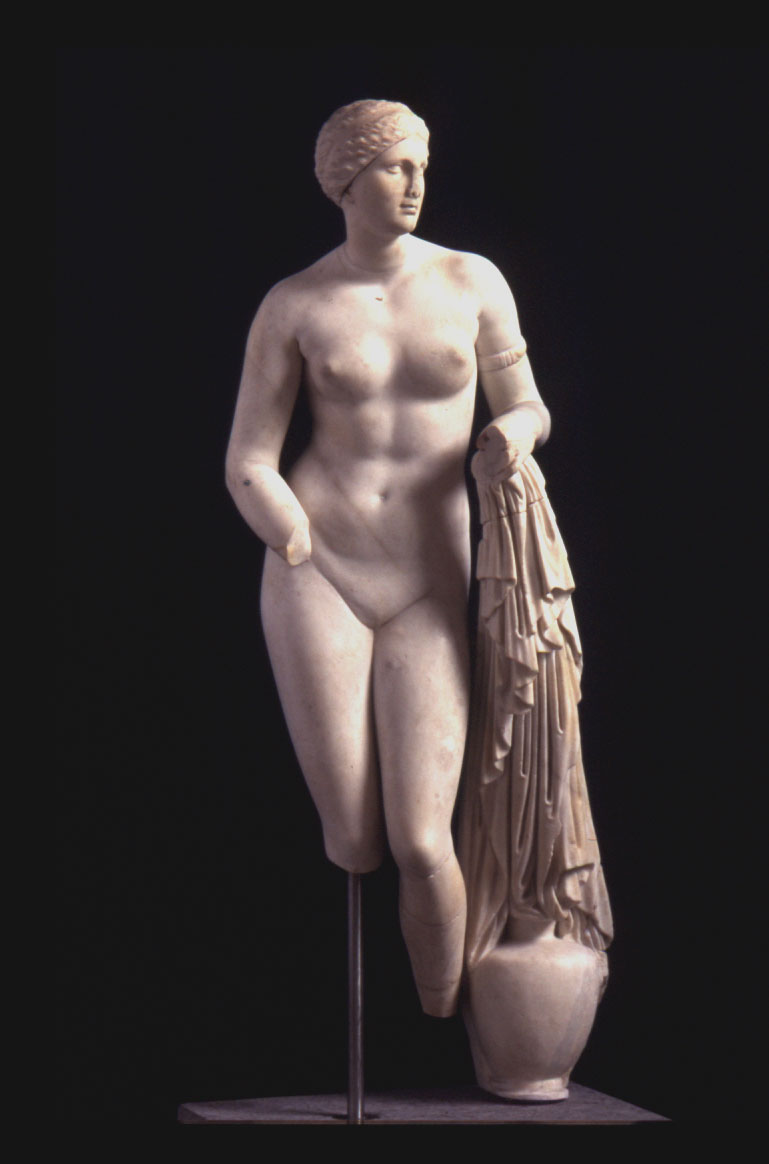
While the modern, monotheistic sensibility bristles at any notion of shared divinity, it seems perfectly natural that when the “mother of God” was introduced to the island that gave the world its Venus, “its desire,” a mental connection became inevitable. Unlike many “virgin goddesses” of the ancient world, Aphrodite had no false modesty regarding matters of love. Even the mighty Zeus, so powerful that he might be called simply “God,” was unable to resist her draw. Ancient peoples often celebrated the gift of love without the embarrassment that the Victorian Age has so generously bestowed on much of the western hemisphere.
Pressing the point even further, when monotheism emerged the equality of genders became an impossibility. The one god must, by the standards of all human imagination, possess a gender. And since men dominated the societies that embraced monotheism the divine feminine was lost. Orthodoxy replaced humanity, and thus it remained until only recent years when women finally managed to make their voices heard. Aphrodite, unlike Hera, is not under the control of a lordly king. The film by Stavros Papageorghiou offers viewers a chance to see what has been lost by the western world keeping half of the human race silent.
 Steve A. Wiggins