
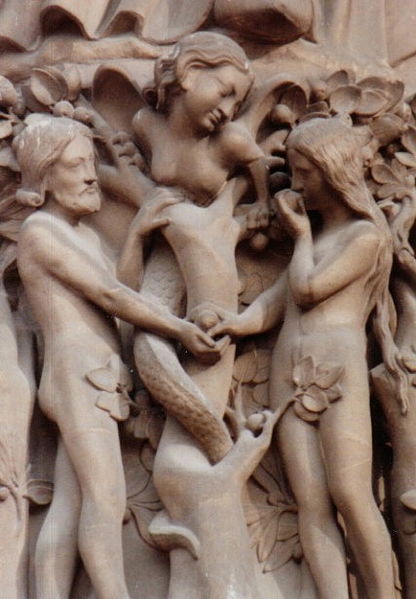
Reading a newspaper film analysis by critic Stephen Witty on film noir, I was intrigued by how he represents the role of the femme fatale. Most produced and directed by men, the classic noir features a dangerous woman. Noting that there are “nice girls” in such movies, Witty states, “they’re not the ones who matter, the ones as essential to the plot as that serpent is to Genesis.” Naturally, this statement evokes the image of Eve, the seductress.
Eve has been much maligned by patriarchal religions. She is a convenient scapegoat for men’s uncontrollable urges, and by making her the gateway to sin itself the male spiritual psyche is unburdened; it is all her fault. It often comes as a surprise that Genesis does not use the word “sin” in the episode in Eden. Interpretations of the tree of knowledge are not universally negative, nor is Eve alone to blame. Scapegoats, however, are much more comfortable than admitting culpability. Religions have stropped this to a high art; the masculine religious establishment can repress the feminine threat with scriptural justification.
Eve is a misunderstood heroine. She is the mother of knowledge. Genesis does not forbid the tree of life; ignorant humanity was free to live forever. Without knowledge. Eve, while perhaps under the duress of temptation, nevertheless took the initiative to find wisdom. And she has been paying the price ever since. Film noir is a reflection of life, as is most art. In a world where men like to think they have the right to rule, the woman who sees a little farther is considered dangerous. All feeble theological attempts to forbid religious leadership to women have Eve to thank for their revisionist hermeneutics.
 Steve A. Wiggins