Bible and Horror

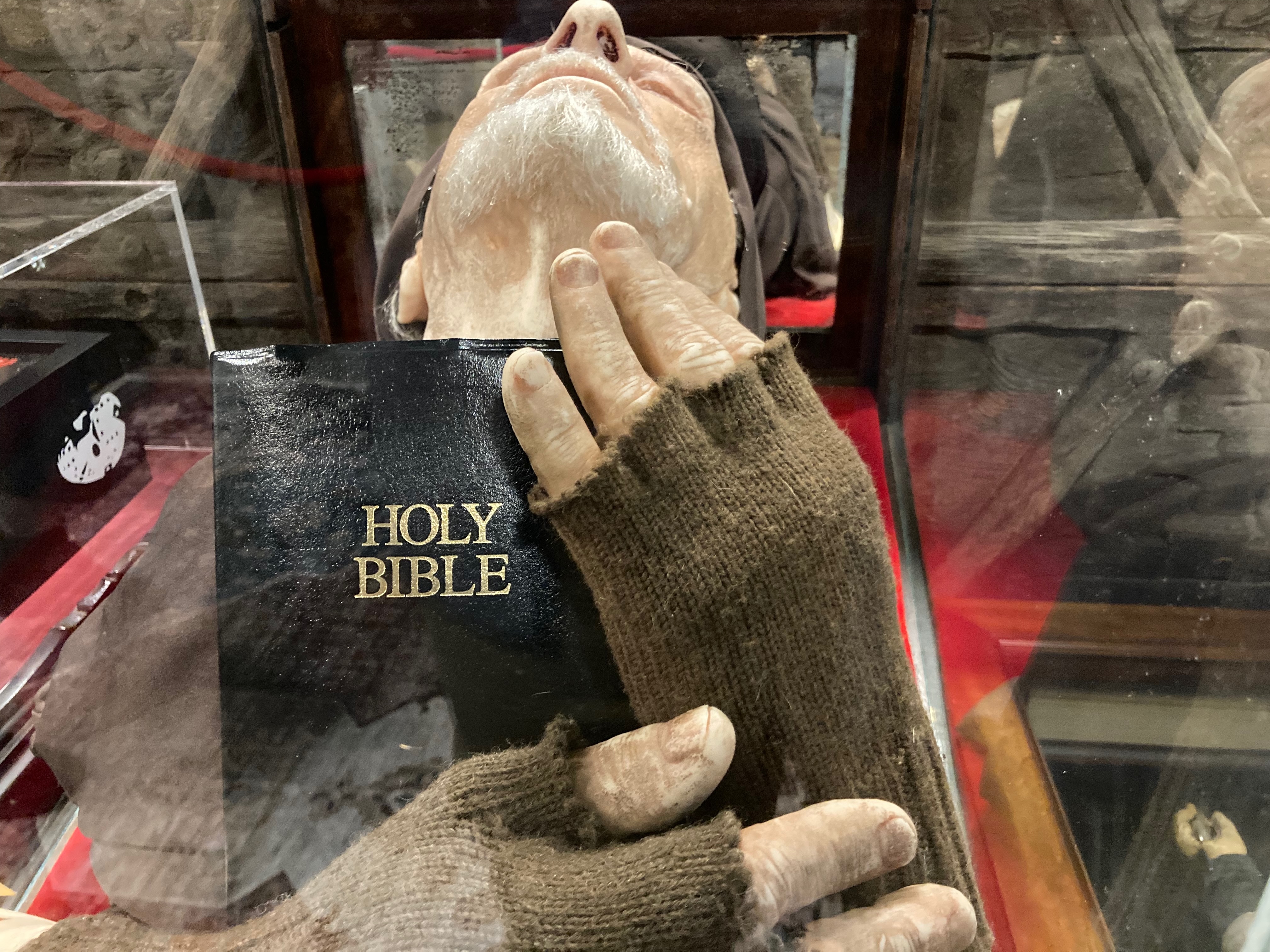
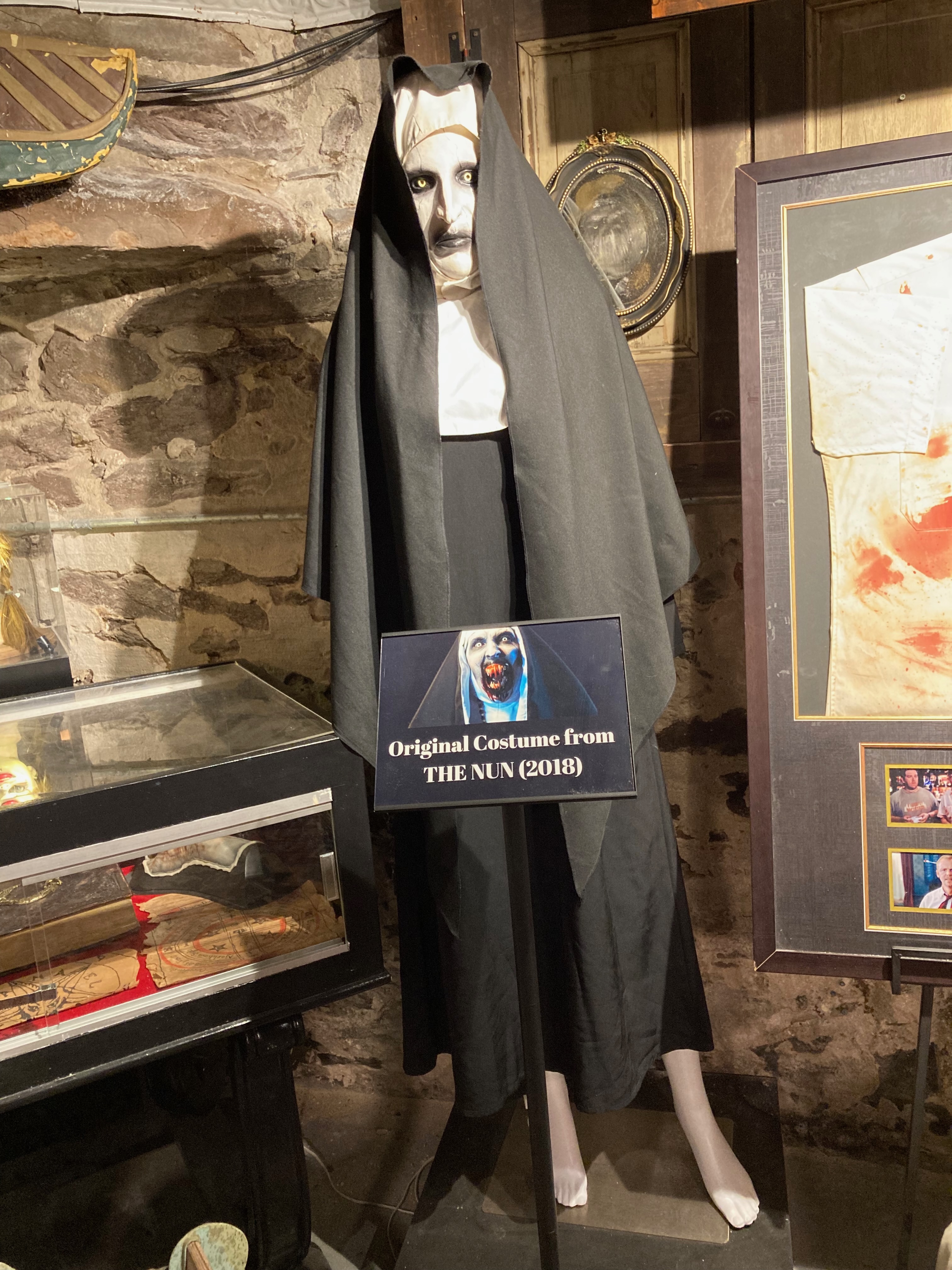
Having written Holy Horror, I keep an eye out for Bibles in horror contexts.  In the context of A Nightmare in New Hope there was the torso and head of Fr. Alameida from Stigmata.  In his hands he clutches a Bible.  Of course, if you’ve seen Stigmata you’ll know that Alameida is already dead at this point, having been so from the start of the film.  Those visiting a horror museum are likely completely nonplussed by seeing a Bible there.  Much of the horror genre builds on religious themes.  Witness The Nun.  The original costume for her is standing over in the corner right there.  If I had enough time (i.e., if I were in an academic post again) I would be spending my time trying to figure out this connection.  I’ve written about religion and horror in four books, in several articles on Horror Homeroom, and in too many blog posts to remember.  There is a connection that only professors have the luxury of thinking time to explore.
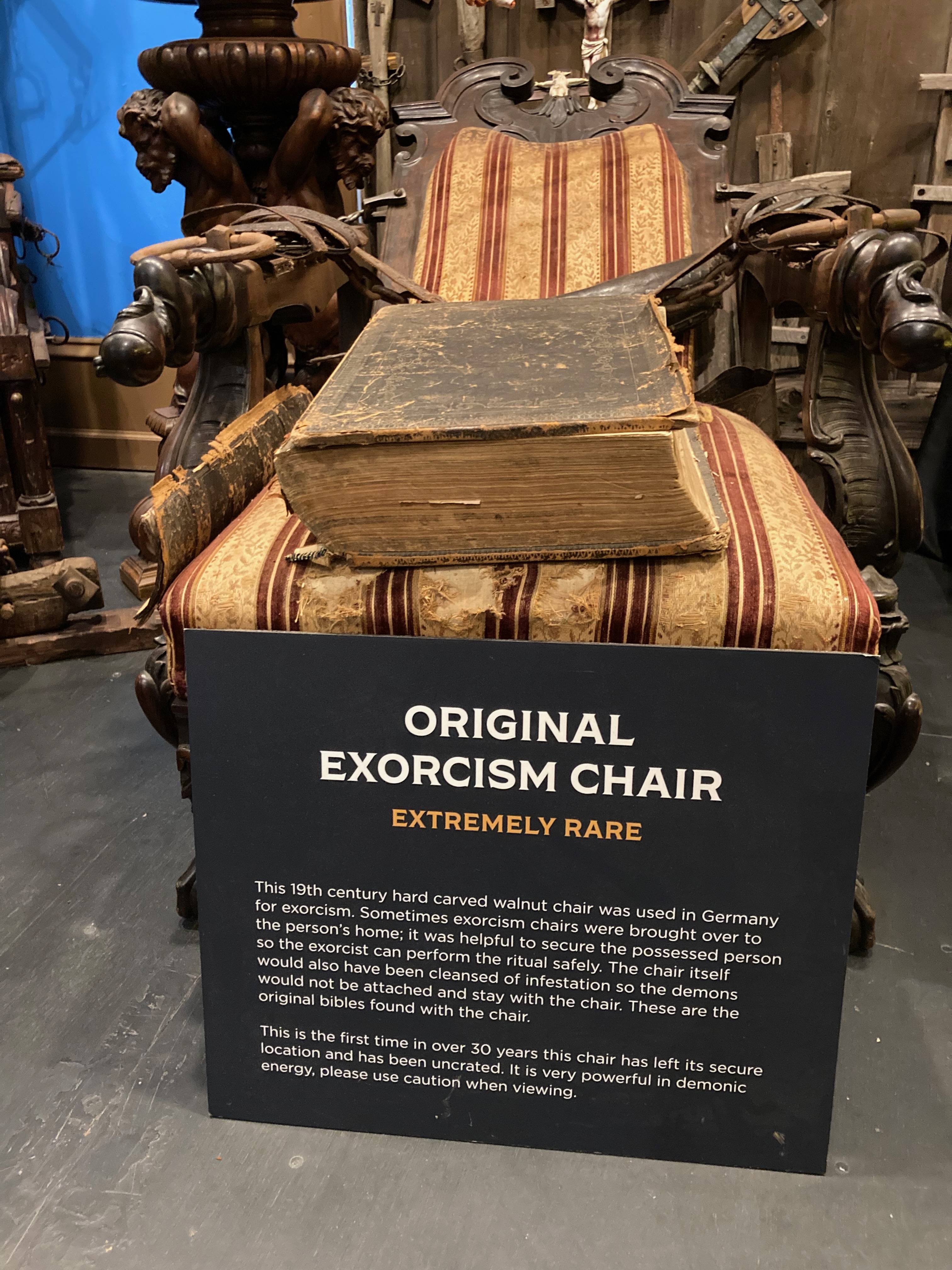
A couple hours later at Vampa, Vampire Paranormal Museum, Bibles were again in evidence.  Indeed, in profusion.  Vampire hunters, it seems, never wanted to be without the Good Book.  Many of the vampire hunting chests (entire chests!) included a Bible.  As noted in a previous post, Michael Jackson owned a vampire hunting kit for a while, until the Jehovah’s Witnesses convinced him he shouldn’t.  In one of nature’s ironies, in the mail when we got back from the museum was a handwritten letter to me from the local JW Kingdom Hall.  Religion and horror.  Vampa also owns a rarity, an exorcism chair.  Things get a bit muddy here since the chair dates from the nineteenth century but exorcism as we know it largely derives from the movie, The Exorcist.  And that takes us back to New Hope.
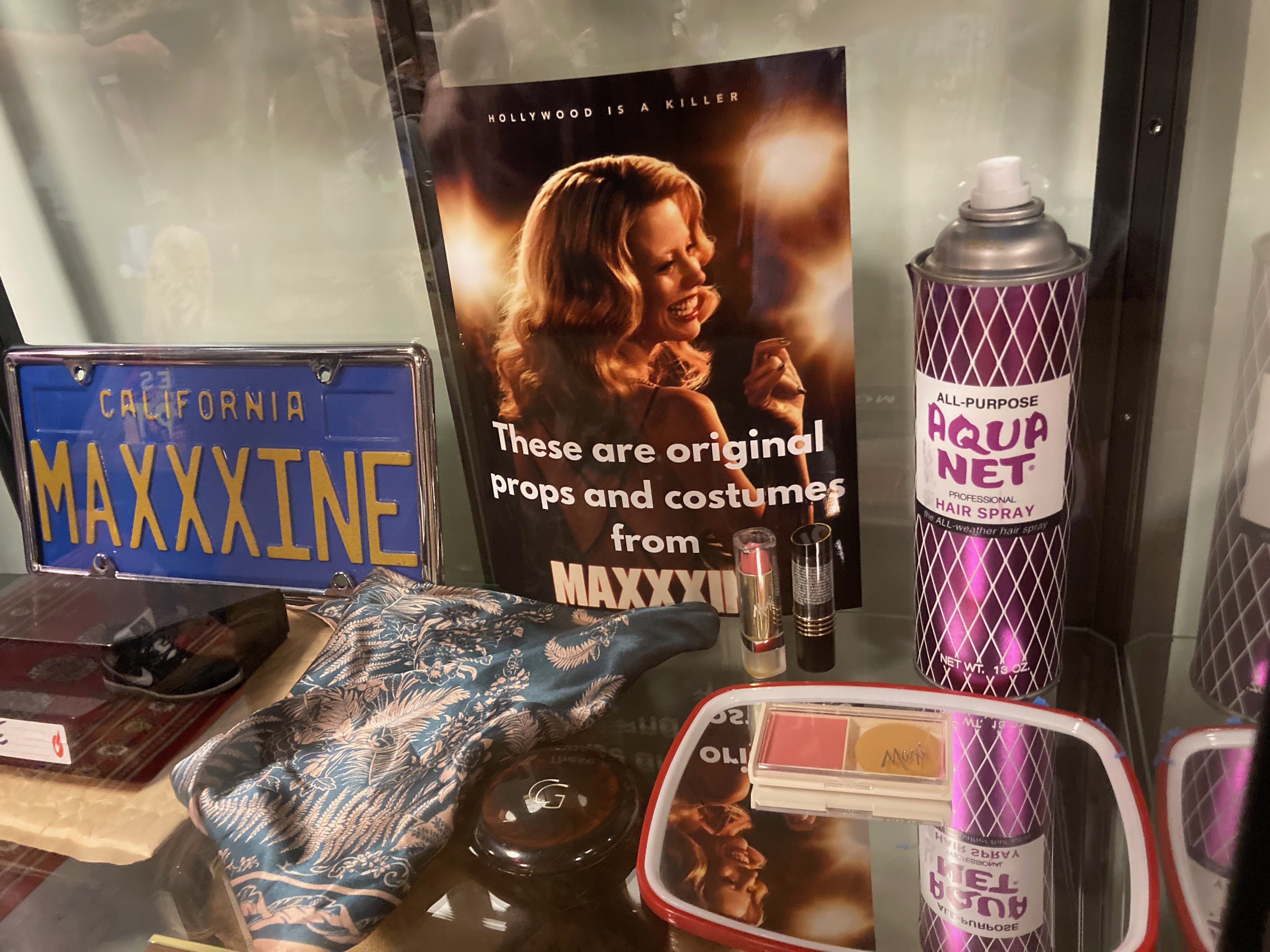
My interest was primarily in artifacts from actual movies.  The Exorcist head of Regan McNeil in Nightmare in New Hope was, I believe he said, a cast.  A horror museum without at least a passing reference to The Exorcist would feel strangely incomplete.  And then there’s Maxxxine.  The entire X trilogy is framed around religion that leads to horror, over a couple of generations.  There’s a connection here and I haven’t found a convincing explanation for it yet.  It’s one of the many books that I’m working on at the moment.  But time is limited.  And Fr. Alameida’s presence in this room, holding tight to his Bible, reminds us that the topic bears exploration.
Zounds Like

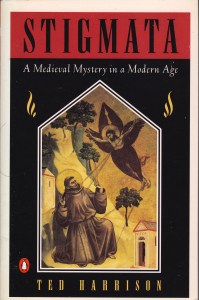
Liberation from the confines of academia allows for the occasional indulgence in taboo subjects. I can’t remember when I first heard of stigmata. I didn’t grow up Catholic, and, like many Protestants, distrusted much of what came from Rome. Still, I was interested in the supernatural. When I learned that people in this modern day and age sometimes developed unexplained wounds corresponding to crucifixion, I was intrigued. Ted Harrison’s book, Stigmata: A Medieval Mystery in a Modern Age, is the first I’ve actually read on the subject. It has some fascinating observations to share. It was some time after seminary that I learned that Francis of Assisi (aka St. Francis) was the first stigmatic. I had admired Francis for turning down wealth to assist the poor and commune with nature—what’s not to like?—but I didn’t realize that he had initiated this rare, but real phenomenon.

Harrison considers the question of why it was only in the 13th century that the stigmata began to occur. They have occurred ever since, in very small numbers, primarily in Italy and primarily among women. But why then? He points out that the church, shortly before this time, began to emphasize the physical suffering of Jesus on the cross. We’re probably all familiar with some of the gruesome images that emerged from the church and its artists at that time. As such images proliferated, people were given a visual focus that directed their devotions. Every great once in a while, this led to stigmata. Why women? As Harrison points out, men with intense spiritual needs could become priests. Women could not. The church would not forbid personal devotion, and if such devotion led to stigmata, well, a person arguably had a direct line to the divine. That was something normally preserved for priests through the Eucharist.

Stigmata have to be understood in the context of mysticism. The more recent cases studied by Harrison include some non-Catholics and some other unexpected candidates for what is, after all, a very intense spiritual experience. What emerges is a thoughtful, one might dare say contemplative, approach to the issue. Some stigmata have been self-inflicted. Some have not. Medical personnel have witnessed and examined these improbable wounds and have not explained them away. Once, during a faculty meeting at the New College of Edinburgh University (I was post-graduate student representative) one faculty member groused after one of my advisors had presented a challenging idea: “you’ve dropped us in a mythological world. I want to get us out.” There it is in a nutshell. Some people can live in a world where stigmata occur. Others have to explain it away. The difference is all in the matter of perspective.


Zounds

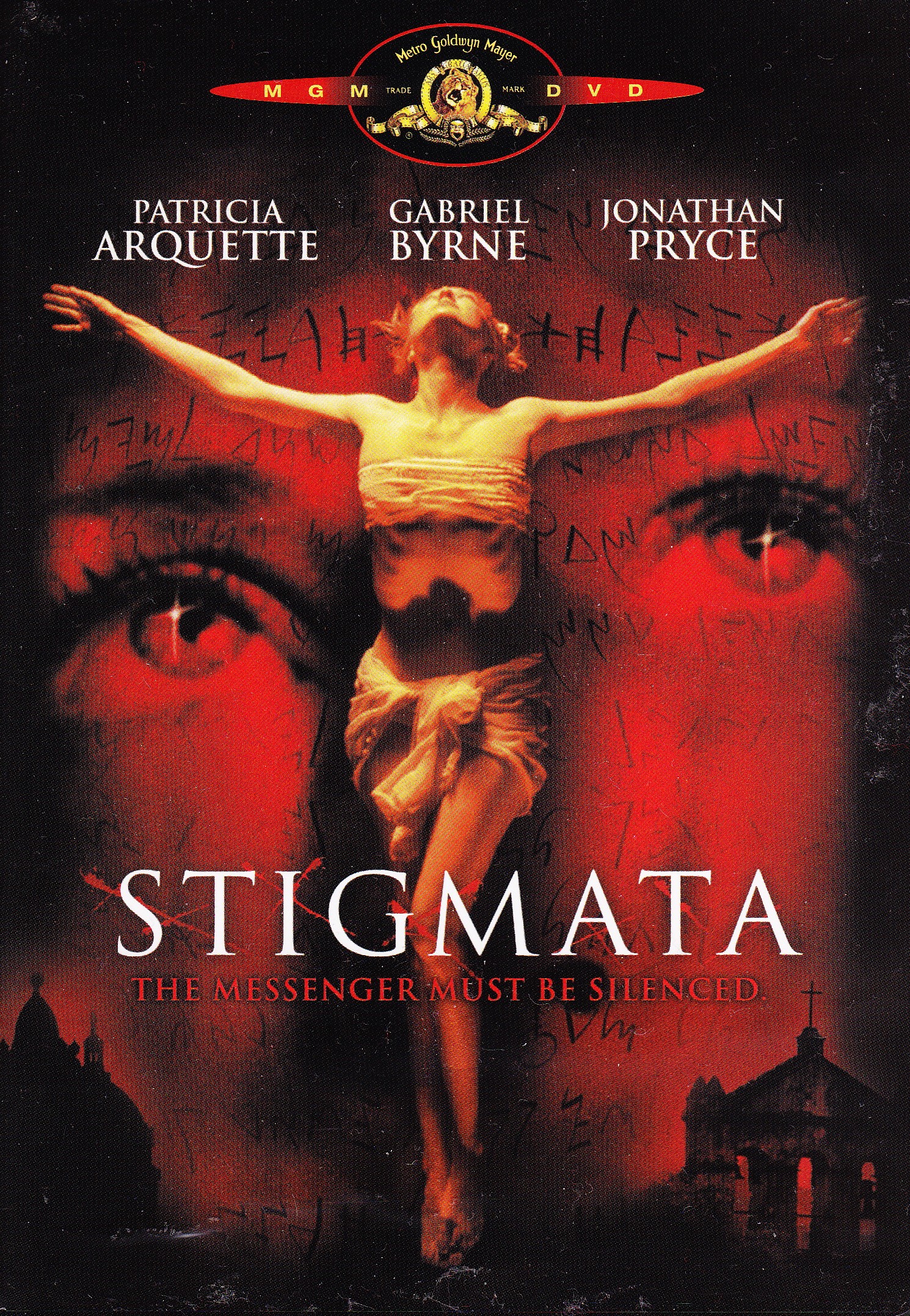
Back in my first exposure to state university life in Wisconsin, I frequently received eager guidance from students on religion in the media. After having taught in a seminary where interest in the world beyond ecclesiastical walls was rare, this exposure to wider interpretation was welcome. One of the movies suggested to me by helpful undergraduates was the then fairly contemporary Stigmata. My interest in horror films was burgeoning again after my nightmarish experience at Nashotah House, so I watched the movie with renewed appreciation for the abuses presented on the part of the established church. I rewatched Stigmata this past weekend and a number of features stood out as apposite for this blog.

As always in movies, liberties are taken with reality. Stigmata presents the Gospel of Thomas as a serious threat to Catholicism. Of course, even the Gospel of Judas made a public splash back in my Oshkosh days, but the great Titanic of the church remained steadily afloat. The contents of the Bible are secure and non-negotiable for the vast majority of Christianity. There is no more room within its black leather binding for further revelations. The movie also presents a woman – an atheist, no less – as being the vehicle for a truth she can’t understand. In the masculine citadel of the Catholic Church she must be silenced, in an overly dramatic way, of course. The message seems to be that religion is unwilling to learn from secular women, even if they bear the truth.

The critics were not kind to the movie, but I found it a strangely religious film. The premise behind it advocates the reality of Christianity, only the Jesus of history is occluded behind a great mask of human tradition. Enamored of power, the church decides what will be revealed to the masses since control is more important than truth. A woman cannot correct the false belief of men, since a masculine god has given manly instructions to a male institution. Underneath it all, however, is a virgin Mary weeping real human blood as half of humanity is simply disregarded by the half that retains its abusive strength. Perhaps the commentary was a little too close to home, even for the (mostly male) critics.