Sacred Geography

Pilgrimage. The concept that certain places are special is deep-rooted in the human psyche. So deeply rooted that we consider it a religious behavior. Even as scientists recognize the need of many animals to return to their birthplaces or areas that they sense beyond the range of human perception, as human beings they feel it too. Even scientists have the urge to revisit that special spot. Otherwise the travel industry would be in great trouble. Pilgrimage is considered a religious behavior, and the sacredness of place has been noticeably in the news this week. MSNBC reported on the find of a skeletal pilgrim to Stonehenge from 1550 BCE. Yesterday the New Jersey Star-Ledger ran a story about a temple/mosque dispute in Ayodhya, India. Both of these stories center on the sacred geography of the region.
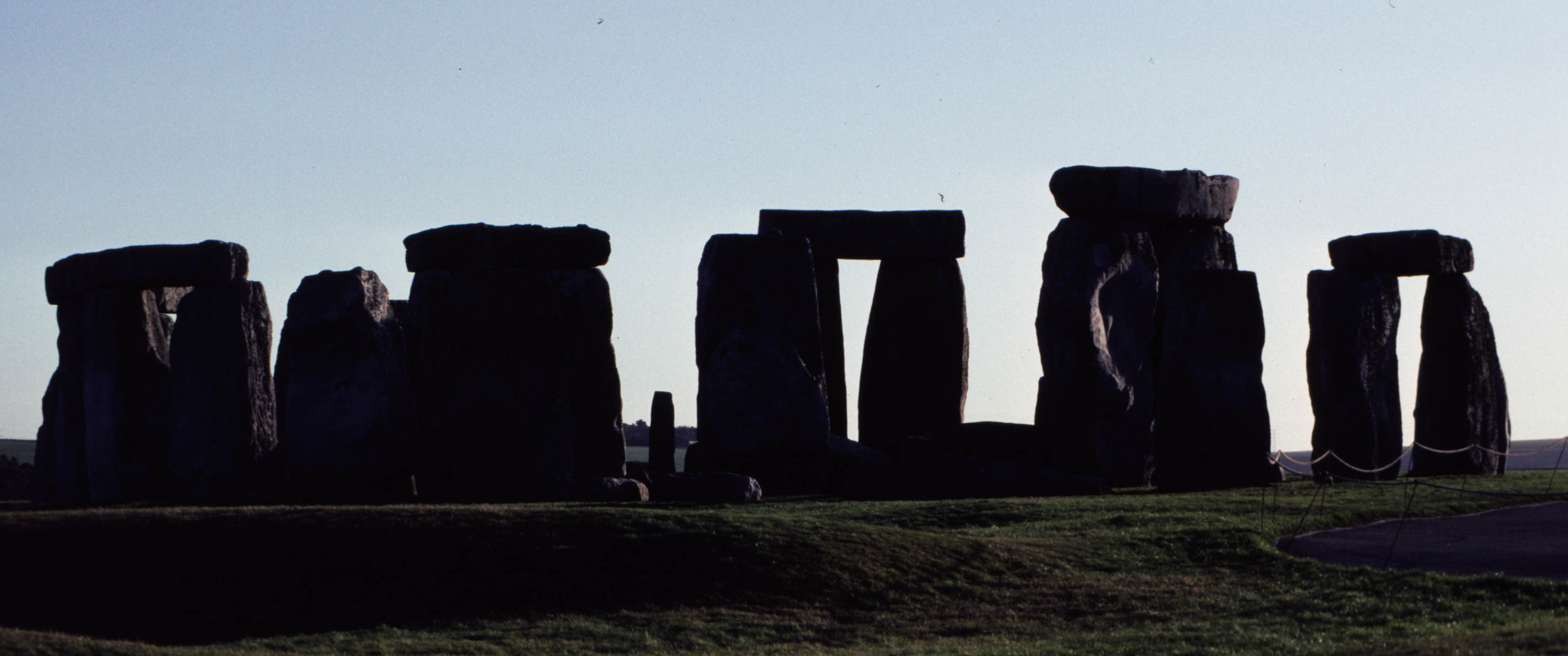
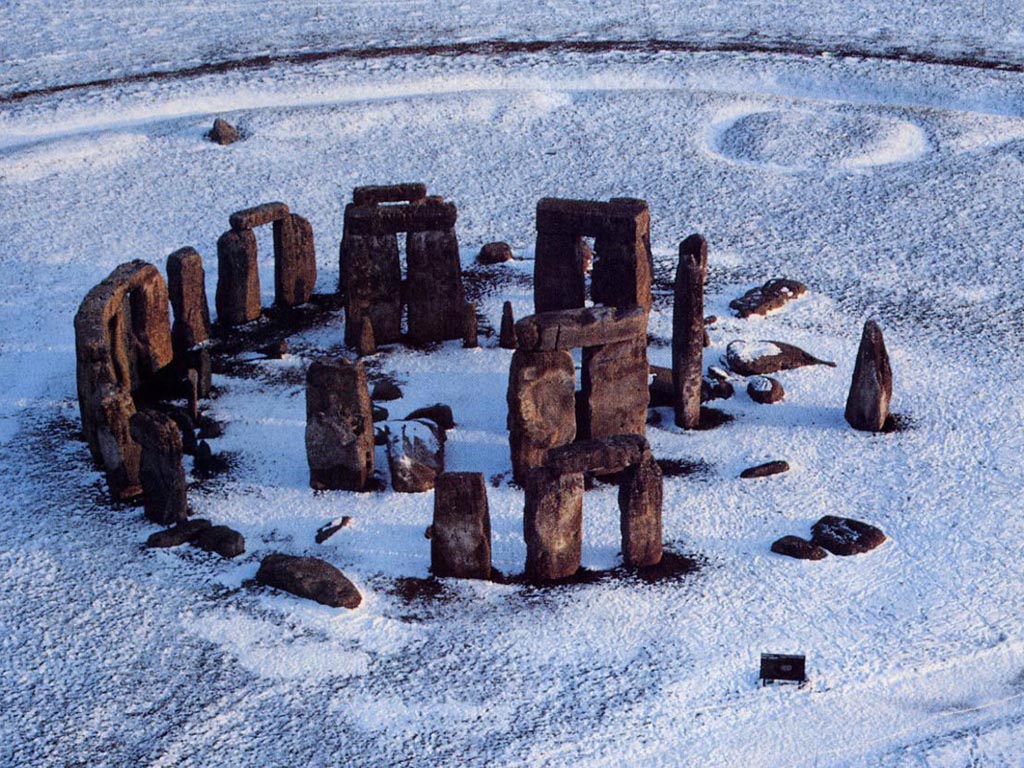
Stonehenge has been a magnet not only for Druids and New Agers, but for anyone with a sense of connection to European prehistory. In the winter of 1990, under a chilly British sky and gusty winds across Salisbury Plain, my wife and I made our pilgrimage to Stonehenge. The low angle of the sun in the sky in a dusky British December only enhanced the experience of standing near a monument that has become an icon of the mysterious and the transcendent for modern domesticated citizens of a straightforward, technological world. The news story states that the skeleton unearthed was of a Mediterranean teenager, far from home, in the shadow of what was already a famous landmark. Even over two decades on, I can still feel the inarticulate sense of longing I felt at Stonehenge, so near the winter solstice, and I understand why that young boy went there to die.

Meanwhile in Ayodhya, the site of a mosque has been declared two-thirds under the ownership of Hindu plaintiffs who claim the site as the birthplace of Lord Ram, a Hindu god. Naturally objecting is the Muslim population that currently has a mosque on the site. Sacred sites raise emotions and tempers readily. Humans want access to their holy places – this is the power of sacred geography. It is certainly palpable in the Bible, and was obviously present the last time I was in Jerusalem. Whether it is hardwired in our biology or simply born of whimsy, sacred geography will never go away. Either we can learn to share it or fight to the bitter resolution, but no matter how much blood might be shed the site will only grow more and more significant because of that very blood.

Older than Stonehenge

MSNBC ran a story yesterday concerning a little-known henge in Dartmoor, England. Images of these remote Dartmoor megaliths transported me back to my years in the British Isles when my wife and I spent every available tuppence traveling around to see antiquities so old that the Roman fortifications along Hadrian’s Wall seemed like throwbacks to the 1950s. With some English friends we met in Edinburgh we drove through the bleak moors of Dartmoor and Exeter, down into the forgotten curiosities of Cornwall, and back to Salisbury Plain to see Stonehenge. One year for my birthday we flew to the Orkneys (on a plane designed like a shoebox with wings) to explore the islands with the highest concentration of preserved prehistoric sites in Europe. Suffering from a killer head-cold, I accompanied my wife on hands and knees into tombs constructed thousands of years before William turned his conquering eye onto the British mainland. Colossal stone rings larger than Stonehenge, but less bulky and lacking capstones, stood out in the middle of a field where the locals barely threw a glance; such monuments had become part of the daily backdrop.

Archaeologists constantly attempt to discern the function of these silent remains. The MSNBC story suggests, based on the remains of porcine bones, that the Dartmoor site may have been associated with funerary rites. Carbon dated to 3500 BCE, they predate Noah’s putative ark (dated precisely to 1657, thank you Bishop Ussher) by more than a millennium. That they may have been associated with death is no surprise – the great feats and structures of humankind seem to be exactly that, efforts to cheat death. To leave reminders that we were here and we had something to say. What exactly they had to say, however, is muffled by the eons of lost communication.

A phenomenon I have noticed for many decades now is that when an unexplained structure or artifact is recovered, first recourse among many archaeologists is to attribute religious significance to it. Religion is the default fall-back when we can’t explain why people were expending tremendous resources to articulate a primal, deep concern in stone or clay. In many respects, the same is true today. Religious leaders still raise funds like no other class of professionals, simply by suggesting that death itself may be cheated of its due. All that money, however, can’t stop the inevitable. Instead of running away, I side with the archaeologists as I poke my head into some dank, dark space no other person has explored for many a month or year. Sitting quietly in an empty tomb left by an ancient society rendered completely mute by high antiquity, you are nevertheless in touch with what it means to be truly human.