End of the Story

You know that feeling?  Like when you’re driving in thick fog and you know you should stop but you’re late and you have to keep going?  There comes a moment as you’re driving when you know that it’s going to end, and probably badly.  Yet you keep on going.  Trump has me thinking of the end of the world quite a bit.  I know there are many evangelicals out there praying for it fervently while the rest of us would like a little more time on this beautiful planet.  I’d be lying if I said I didn’t understand this outlook, because I do.  I grew up with it and I’ve never forgotten the sensation it caused.  And then I pondered that we are story-telling, and story-thinking creatures.  Perhaps other animals don’t think this way, but we constantly tell ourselves stories.

A story has a beginning, a middle, and well, eventually, an end.  We all know, at some level, that we’re mortal.  Life will end, and every completed story has an end.  Why not the world?  It’s a strangely haunting idea, the world continuing on without us here to make it interesting.  Plants will grow in any soil they can find, even microscopic cracks in the pavement.  Every year it’s like one day everything is suddenly green where only the day before we could see the sky through the branches.  And animals continue their quests for food, mates, and shelter.  Some live to hide while others strut.  Each has a role to play and if you watch them closely you’ll find yourself narrating their stories.  That rabbit.  That bluejay.  That fox.  They have a beginning, middle, and end.  If they can’t tell it, we can do it for them.  It comes naturally to us.
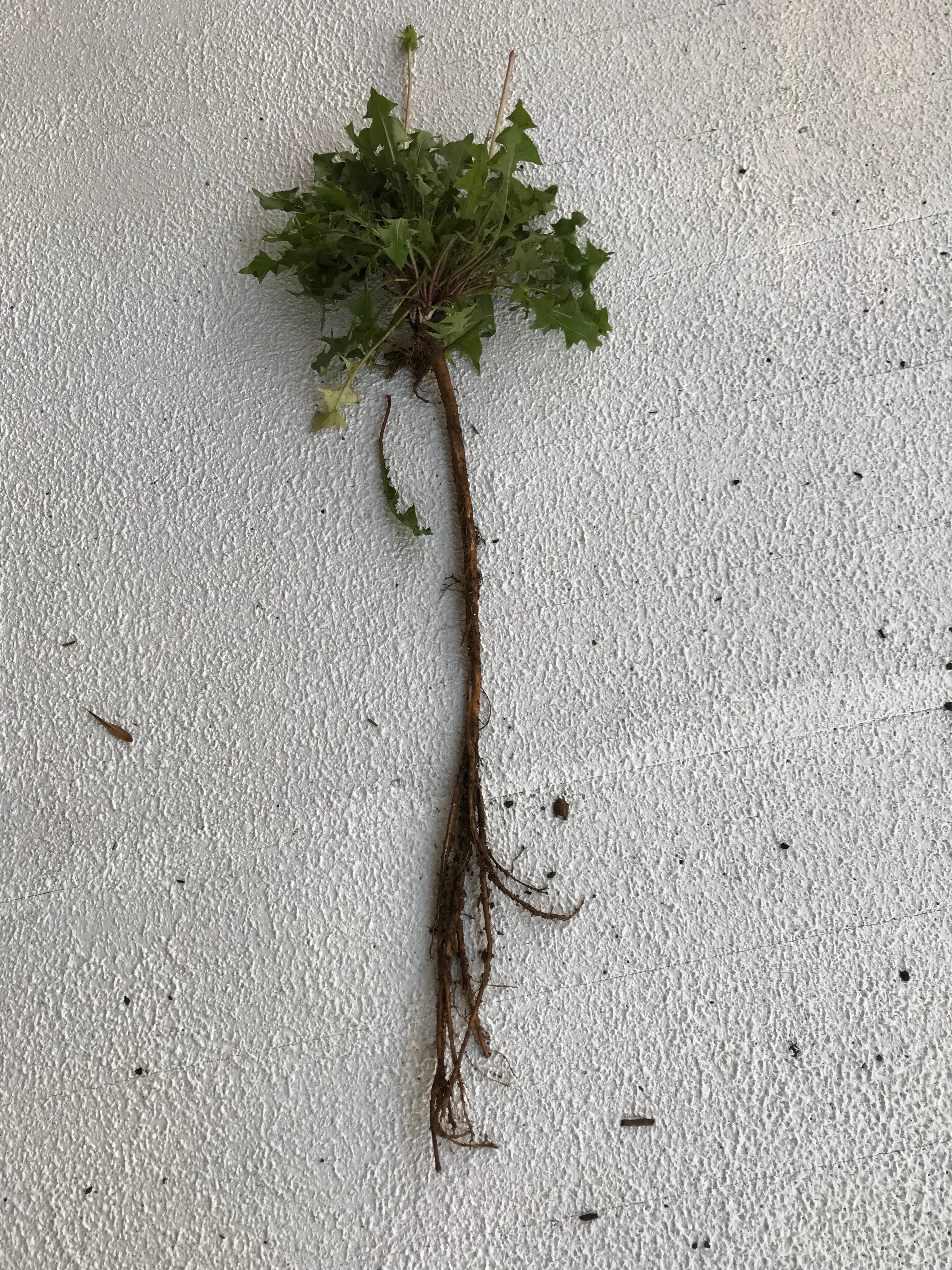
Long ago I learned how one version of Bible interpretation came up with the end of the world as we know it.  I also learned that this was contrived, just as all interpretations are.  This particular one has landed, like a seed, in the cracks of our mind.  It grows, just like that weed in the pavement.  This story must have an end.  We can imagine it no other way.  Even when we grow up and realize that the story was only one we told to children—children old enough to handle it, of course—we still have this certainty that an end is coming.  Like driving in the fog, we just know it.  Even when we realize that in reality we should be putting on the brakes.

Story Power

A story can change everything.  You see, we are story-telling creatures and if you want to sway someone a story is a far better means than a lecture.  I’ve been thinking quite a lot about this because a story, in the form of a movie (it doesn’t matter which one), has been on my mind quite a lot lately.  This got me to thinking about the ways stories we tell ourselves come to define our lives.  It happens on a national as well as an individual level.  We’re engaged by a continuous narrative.  Until some kind of resolution comes we wonder what happens next.  Since my research has lately shifted to popular culture and religion, I’ve had the excuse to watch lots of stories.  Some of them just won’t let you go.

To me there’s no comparison between a well-written movie and one thrown together only for box-office potential.  They do overlap sometimes, but a film where the story is central often has power to stay with you long after you’ve left the theater.  We make sense of life through story.  Our biographies are the stories we tell about ourselves from our own perspectives.  I love to listen to other people’s stories.  I suspect—no, I know there would be a lot less conflict in the world if belligerents would listen to one another’s stories.  The tragedy of politics is those driven to rise to leadership roles often have vacuous stories—the blind ambition to be on top is hardly a tale worth the telling.  We like stories of presidents born in log cabins who had to struggle to get to a position of influence.  They have compelling stories.

Quite often, it seems to me, world leaders today are cut from the somewhat sociopathic model favored by businesses.  No story need be told.  Success is measured by the numbers.  Metrics tell you all you need to know, never mind how your workers feel.  The workers, you see, are telling their stories.  Building their narratives.  It isn’t too difficult to tell story tellers apart from those who climb out of corporate ambition.  The story tellers are much more interesting to listen to.  Even politicians—at least those who’ve not yet lost their souls—can be affected by a story.  It seems strange to me that, given the obvious power of story, we don’t emphasize it more in education.  There’s more to life than getting a job and climbing to the top.  Those on the bottom often have the best stories.


Our Stories

People’s stories are interesting.  The received wisdom is that if you wish to change a politician’s mind, tell her or him a story.  In fact, it seems that we’re hardwired to enjoy stories.  That’s why it’s so unfortunate that we seldom take the time to listen to other people’s stories.  We’re too busy.  For an organization to which I belong, I recently asked that five minutes of each agenda be set aside so that one member could tell her or his story at each meeting.  That way it’s possible to get to know who it is you’re working with, without the tired “one thing nobody knows about you” trope.  The idea was adopted and it seems a worthwhile use of agenda time.  I don’t know that I’ve ever heard someone’s account and found myself anything less than fascinated.

When we reflect back over our lives, we do it in narrative format.  We tell ourselves a story about our life.  And these stories intersect with other people’s stories.  Some of those people may be famous or wealthy or ordinary, but each is unique.  Considering that there are billions of us on this planet, that’s a lot of tales.  There’s not so much a lesson to be learned from this than there is a simple reminder—it is worthwhile to listen to others.  I’ve run into a few people who are household names in my time.  Some of them are routinely criticized in the media, by people who never met them.  Who don’t know them.  Who don’t know their stories.

Much of our time at “work” is really time trying to earn money for a company.  It may involve dealing with other people, but not closely enough to really know their story.  I think of this every time an author and I could engage in a conversation about our experience of the academic life only to have to keep the discussion to “the business at hand.”  The human element, it seems, is unimportant.  I would read other people’s stories all day, if I could.  We crave a narrative, but getting one’s not a paying position.  How have we come to this place where we have time for only disconnected memes and not the stories behind them?  Bookstore owners know a perennial selling genre is the biography.  We’ll pay to know a famous person’s story.  The fact is each of our lives is also a tale worth telling.  We would all benefit from listening to each other’s experiences.  Tell your story, I’m listening.


The Reboot

It lied to me.  My computer.  Don’t get me wrong; I know all about trying to save face.  I also know my laptop pretty well by now.  It was running slow, taking lots of time to think over fairly simple requests.  A lull in my frantic mental activity led to the opportunity for me to initiate a reboot.  When it winked open its electronic eye my screen told me it had restarted to install an update.  Untrue.  I had told it to restart.  I gave the shutdown order to help with the obvious sluggishness that suggested to this Luddite brain of mine that my silicon friend was working on an update.  There’s no arguing with it, however.  In its mechanical mind, it decide to do the restart itself.  I was merely a bystander.

Technology and I argue often.  Like JC says, though, authority always wins.  I should know my place by now.  I’ve read enough about neuroscience (with thanks to those who write for a general audience) to know that this is incredibly human behavior.  We are creatures of story, and if our brains can’t figure out why we’ve done something they will make up an answer.  We have trouble believing that we just don’t know.  I suppose that will always be a difference between artificial intelligence and the real thing.  Our way of thinking is often pseudo-rational.  We evolved to get by but machines have been designed intelligently.  That often makes me wonder about the “intelligent design” crowd—they admit evolution, but with God driving it.  Why’d our brains, in such circumstances, evolve the capacity for story instead of for fact?

As my regular readers know, I enjoy fiction.  Fiction is the epitome of the story-crafting art.  Some analysts suggest our entire mental process involves construing the story of ourselves.  Those who articulate it well are rewarded with the sobriquet of “author.”  The rest of us, however, aren’t exactly amateurs either.  Our brains are making up reasons for what we do, even when we do irrational things (perhaps like reading this blog sometimes).  Stories give our lives a sense of continuity, of history.  What originally developed as a way of remembering important facts—good food sources, places to avoid because predators lurk there—became histories.  Stories.  And when the facts don’t align, we interpolate.  It seems that my laptop was doing the same thing.  Perhaps it’s time to reboot.