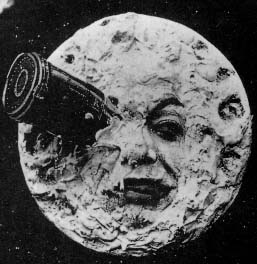
Storytelling

Those who know me personally say that I’m a good storyteller.  My own head houses, however, my harshest critic.  Since I tend to work alone this creates an inherent conflict.  This is most evident in my fiction.  I finished a draft of my eighth novel earlier this year, but it still needs work.  (No, really it does—not just harsh critic speaking.)  Part of the problem is obviously time.  My morning writing period is frequently held hostage by my moods.  Some of my past novels are, I think, publishable.  I’ve tried repeatedly with one of them, getting as far as having a signed contract, but things collapsed after that.  It sits brooding on my hard drive.  Another—I think it may be number four or five—seems publishable but it requires reworking with magic pixie dust.  Sometimes my supply of it runs low.  (Moods again.)

I sometimes wonder if I read too much nonfiction.  I’m a curious sort of chap, interested in the world around me.  When that world seems to be falling apart, however, fiction is my friend.  I’ve been reading a lot of novels and I’m often struck by the beauty of the prose.  Head critic says, “why can’t you do that?”  Then I recall the writing advice that I picked up from Stephen King’s nonfiction, On Writing.  Adjectives may be bad for your health.  Just tell the story.  With style.  My current novel (eight) tells an interesting story, I think.  If I’m honest I’ll say that I started working on this before any of the other completed novels (except number one, and that was a throwaway).  It was an idea that just wouldn’t go away.  I knew the beginning and the ending, and part of the middle.  I even found a potential publisher, but it has grown too long for them.

About three chapters from the end I realized that I hadn’t tied things up as well as I’d initially thought.  What I need is time away from work to think about it.  Thinking time is rare, even in the time I manage to wrestle from the 9-2-5.  There’s always more to be done, trying to stay healthy and out of the weather.  And really, maybe I should be reading even more fiction.  But what about the “real world” out there, which requires nonfiction to face it boldly and with informed decisions?  It’s dramatic, isn’t it?  Like a protagonist (hardly a hero) on the edge of a cliff.  How does the story end?  Perhaps an actual storyteller might know.

Beastly Story

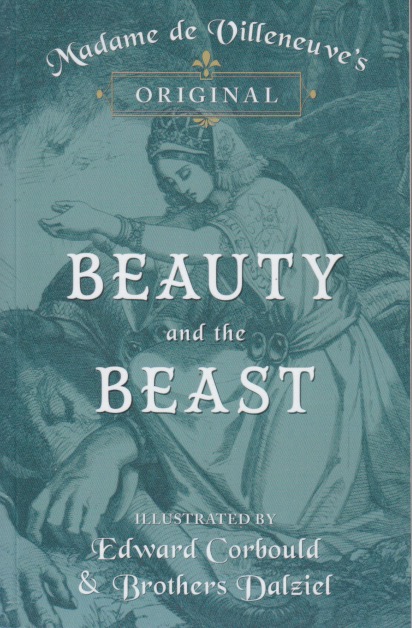
You think you know a story.  You know, you’ve heard it before, or seen it in a movie, so you think you know how it goes.  I’m not the biggest Disney fan in the world, but I have seen many of their movies.  Occasionally those movies are my first introduction to a story.  That was the case with Beauty and the Beast.  I saw this when my daughter was young, and in general found it a good story.  I’ve seen it a couple of times since, and I thought I knew how it went.  I got curious, however, regarding the origins of the tale.  Was it Grimm?  Other ancient folklore?  The reimagining of a classical tale like Pygmalion?  Well, it turns out it was a story from the eighteenth century written by Gabrielle-Suzanne Barbot de Villeneuve.

I decided to read it.  The story is quite different than the Disney version, as is to be expected.  To begin with, Beauty has eleven siblings.  Her father is a merchant rather than an inventor.  The beast is described as having an elephant’s trunk and scales, not fur.  Once Beauty agrees to move into his palace in place of her father Beast is nothing but polite, if somewhat dull.  In broad outline the same action takes place—beauty falls in love with the beast and magically he transforms to a handsome prince.  Any story, as it’s retold, is re-envisioned.  There’s no such thing as the literal retelling of any tale.  As the Italians say, “translators are traitors.”  (Of course, I didn’t read the story in its original French, having had the aid of a traitor.)

As was perhaps the style back then, once the happy ending came the story had to be fully explained.  Indeed, this constitutes half its length, telling, not showing, the backstory.  To Disney’s credit, they do all this in a minute or two of animation time.  The modern reader, unless obsessed with the rules under which fairies operate, and the power struggles among them regarding those rules, will likely find this add-on a bit tedious.  But that’s often the way with original texts.  Think The Iliad.  Think the Bible.  Modern writers seldom explain things fully.  Ambiguity is valued among the literati.  Still, stories have origins.  They start someplace.  Those of us who are curious about those origins are inclined to dig, it seems.  Disney has become our storyteller for children.  It’s a good idea to look behind the curtain now and then, just to see what the original creator wrote.  To see how the story really goes.


Movie Moving?

If you don’t know me personally, you may not realize how frequently I quote movies.  On a daily basis, films I’ve seen—particularly multiple times—are the source of some of what I say.  Films have tremendous impact.  Some theorists have even argued that they are the new mythology.  So imagine my distress when an opinion piece in the New York Times suggested that movies are losing their relevance.  Media comes in so many varieties that we can take our choice.  YouTube and TikTok have given television its first real competition in my lifetime.  Our local CD store is a rather sad place, and does anybody even remember Blockbuster?  But movies—the media of entertainment for over a century—irrelevant?

What of the movie star?  It doesn’t matter which one.  The phenomenon of it.  The person recognized as a household name.  Now we seem to be losing yet one more frame of reference.  There’s no firm ground left for culture, it seems.  Is this why things are falling apart?  Movies weren’t the only glue, of course, but I wrote three books on movies.  The larger implications are sobering.  Media, of course, is always changing.  Movies are but a modern form of story-telling.  Already decades ago the weight for this began to swing towards what we used to call video games.   The younger generation prefers stories where their actions decide the ending.  To a point.  Someone had to program this thing and has predetermined possible outcomes.  Like a movie, it’s a story.

Stories are probably the oldest form of human entertainment.  The nonfiction books that sell the best are those with a narrative arc—they tell a story.  Nonficionados may be reluctant to admit that they’re drawn to stories, but we all are.  It’s human nature.  While I prefer books to movies, there are times I just can’t settle down to read.  And also, horror novels don’t quite scare the same way that horror movies do.  Movies have their place.  They can be tremendously expensive to make and many now have so much CGI that actors are disguised beneath layers of code.  Kind of like The Matrix.  Even so, they are telling stories in a format that has become a huge industry that ties culture together with common references.  Can you image a world where there was never a Star Wars?  The internet has perhaps blurred the line a bit and movies are evolving.  As long as we tell one another stories, however, we’re still human.

Image credit: Georges Méliès