Discussing Demons

So I was discussing demons with a friend, as you do, and I was looking for a free movie.  One that my streaming service recommended was Succubus.  There are other movies by this title, so this was the 2024 version.  Knowing what a succubus is, traditionally, and having just discussed what demons are with a friend, curiosity overcame me.  First of all, I have to say that for a Neo-Luddite like myself, the first half of the movie was a blurry slurry of texts while video chatting while watching the baby monitor that I wondered how people really into the internet get anything done in real life.  Sorry, IRL.  I’ve had a few people try to initiate chats with me on the few socials I use, but I only respond once a day in the brief window in which I use social media.  It just doesn’t appeal to me.
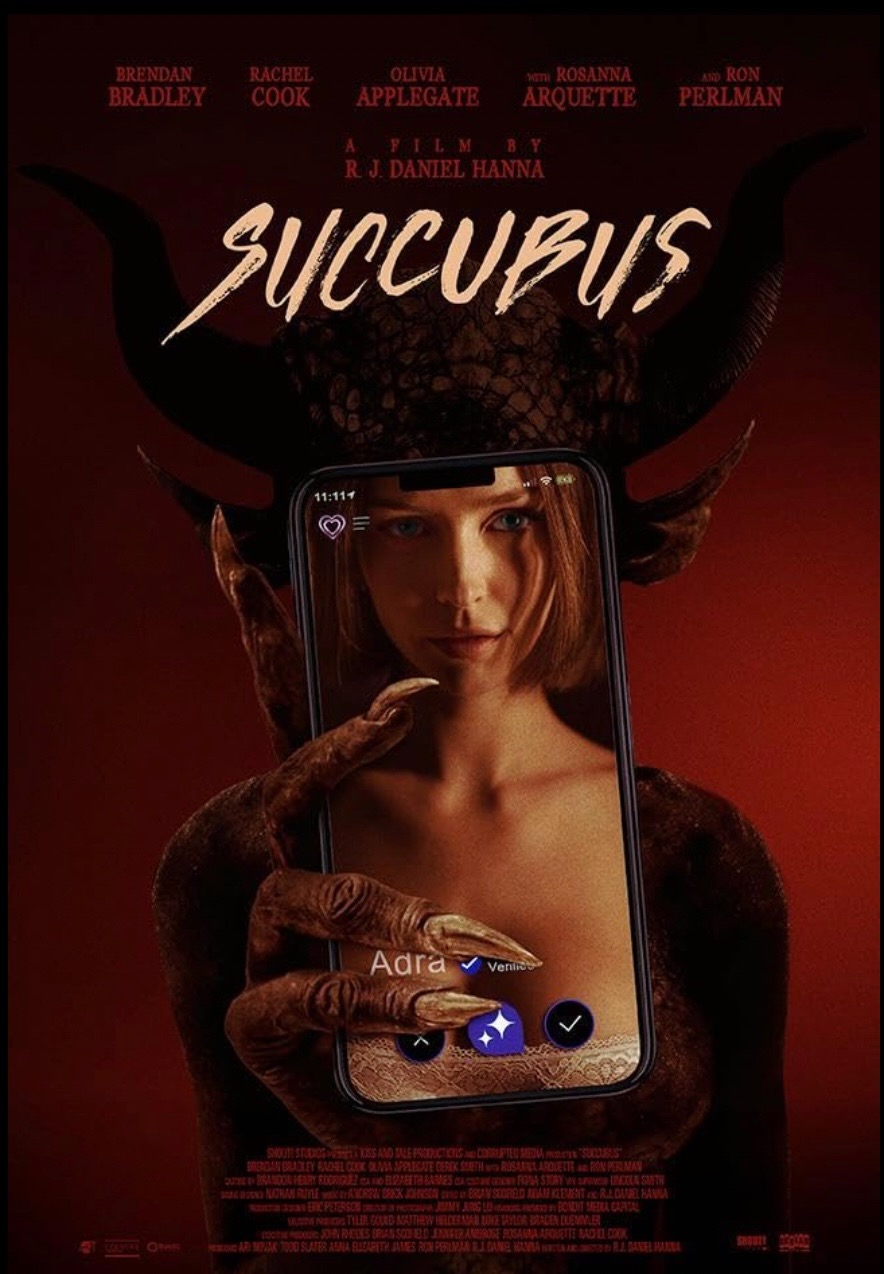
Still, Succubus held a number of triggers for me.  But first, a summary.  Chris, having a trial separation from his wife, meets Adra, a succubus, on a dating app.  She traps him by having him kiss her through the computer and meanwhile kills his best friend who visits her location physically.  Meanwhile a physicist, a former victim, is heading to Chris’ house to try to bring him back from limbo, and, failing that, to kill him.  The succubus wants a body, of course, and when Chris realizes this, he castrates himself when he and his wife get back together, to prevent the succubus from inhabiting their children.  The triggers for me had nothing to do with the demonic aspect, but with the fact that Chris at first is concerned Adra is a scammer.  Having fallen for a scam myself, that aspect was scarier than the entire rest of the movie.

As a horror film it kind of works.  I’m not really a fan of movies that take place on devices, but about halfway through that part gets dropped.  What was of particular interest was only briefly suggested and was worth thinking about.  As Chris tries to research the physicist online, he discovers that he’s a researcher in dark matter.  The implication, never spelled out, is that dark matter is demonic.  This could make an interesting trope, if it hasn’t already been done.  Dark matter and dark energy make up a large part of the universe, we’re told.  Think about it.  It also kind of addresses the question of how spiritual beings make their way into a physical form.  Of course, that’s what succubi are all about, isn’t it?

P.S. Sometimes I swear I need a handler. This post was queue up on December 15 but I forgot to click “Publish.” If a day goes by without a post, somebody feel free to poke me…
Night Terrors

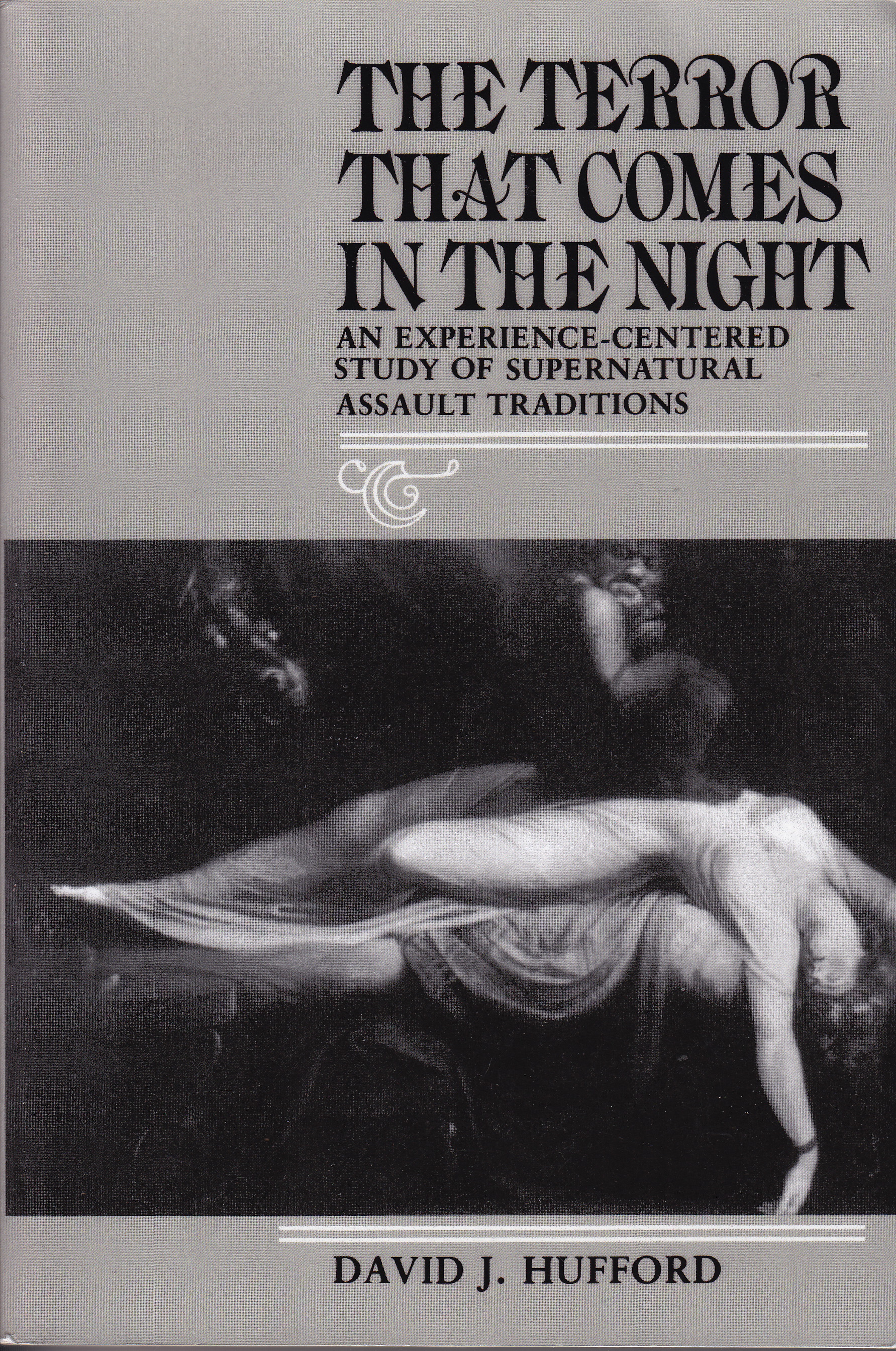
TerrorInTheNightNightmares are the stuff dreams are made of. Or maybe I’ve got that the wrong way around. Having grown up subject to frequent nightmares, I still occasionally have them. I suppose it is easy enough to assume someone who reads about monsters and watches horror films should not find this unexpected, however, I’m not sure they’re related. My nightmares visit issues that horror films avoid, and most of my monster reading is, well, academic. Surely the scientific study of nightmares has advanced since David J. Hufford’s The Terror That Comes in the Night: An Experience-Centered Study of Supernatural Assault Traditions, but it remains a very important book. As someone familiar with the phenomenon, I found Hufford’s study somewhat therapeutic, and it certainly does raise some interesting questions.

Apart from the unfortunately, inherently sexist, folk-title “the old hag,” Hufford is addressing a universal experience of people of all ages. Using his original setting in remote Newfoundland where his work began, Hufford collected tales of what might technically be called sleep paralysis with a specific hypnogogic hallucination of being attacked. A designation, he acknowledges, that is quite awkward for repeated use. Back in the early 1980’s, when the book was published, these accounts of nighttime attacks—a person waking up, or not having yet fallen asleep, sensing a presence in the room, finding her- or himself unable to move, and sometimes seeing or hearing an entity and feeling it on his or her chest—were rarely discussed. Especially in scientific literature. They seem a kind of embarrassing medievalism related to the ancient concepts of incubi and succubi, and even vampires. Having “the old hag” (a moniker relating to witches) is what the experience is known as in Newfoundland. Hufford, taking these accounts seriously, investigated what the sufferers had experienced. Unwilling to judge whether the event “actually happened,” Hufford’s scientific objectivity is truly admirable. Since the time of his book, the concept has become widely known and the argument is often made that having heard of sleep paralysis episodes feeds those with hypnogogic hallucinations the idea of a supernatural oppressor. In other words, now that we know about it, we don’t have to take it seriously.

Hufford is one of a small number of academics that is willing to engage with the supernatural on its own terms. Religion scholars do, of course, but we are generally dismissed from the starting block anyway. Most scientists disregard the possibility of anything beyond deluded brains and say nightmares are normal. Just deal with it. Those who’ve experienced the nighttime attack know that it feels very different than a garden variety nightmare. You can tell when you’re awake. Of course, we’re of the generation who’ve seen The Matrix and Inception, and we know that, at least in popular thought, reality has become negotiable. Nobody is much surprised any more by the idea of such an attack in the night. Waking nightmares have become as common as the headlines. If only more scholars would take human experience as more than just “old wives tales” we might all be surprised at how just rolling over can change everything for the better.


Dangers de la nuit

Sex&Paranormal Some books require extra clothing on the bus. When I saw the title of Paul Chambers’ Sex and the Paranormal, I noted the juxtaposition of two aspects I’ve frequently argued are intimately related to religion. There can be no question that religions in some way attempt to regulate sexuality. Those forbidden topics loosely collected under the sobriquet of “the paranormal” tend to be only a baby-step or two away from religious beliefs. Often those who are open to religious acceptance also allow for the possibility of the paranormal. So what did these two quasi-religious phenomena have to do with one another? How was I going to read a book with a title like this on public transit? How would I plumb the depths of its wisdom without feeling like a pervert? I found an unused book sock, a kind of colored condom for textbooks, and wrapped in around my questionable interests and read as discretely as possible.

Chambers, a member of the Society of Psychical Research, as well as a scientist, starts the reader off with what he is surely correct in identifying as a combination of sleep paralysis and hypnopompic hallucinations—the feeling of being violated by demons or ghosts in the night. While the reasons are poorly understood (beyond our latent sense of vulnerability while asleep), the fact of sleep paralysis is well documented. As Chambers points out, our over-active, often religiously fueled, imagination fills in the blanks for those who wake up unable to move, feeling a presence in their darkened rooms. This leads Chambers into a discussion of Lilith and succubi and incubi, the molesting demons of ancient lore. Witch-hunts and amorous aliens are strange bedfellows in this volume as well.

Studies like this daringly bring together subjects that have been parsed apart by conventional society. They are also deeply relevant. Many of us remember the (largely mythic) Satanic worship scares that plagued pockets of America, and then Europe, in the 1990s—latter day witch-scares, as Chambers points out—the tremors of discontent that rumble through societies struggling for an overly rational explanation for human behavior. They are present-day reminders that no amount of fiscal solvency and empirical data will ever banish the deep fears from the human mind. Our emotions have often served us very well, and have sometimes abused us, for the entirety of our evolved existence. And although we can hold them at bay in the clear light of day, at night we are surprised to discover that we really believe in monsters after all.