
A long time ago in a galaxy far away, or so it seems, I began studying religion not knowing where it would land me. One of the great things about studying religion is the perpetual refreshing of religious thought that grows with human culture. Anthropologists and philosophers and sociologists have difficulty defining exactly what religion is. It is clearly a belief system of some description, but in many parts of the world religion is not so much reflective and reflexive—doing the ancient rituals and getting on with life. Every great once in a while I learn about a new religion. Those who don’t spend too much time thinking about it might be surprised to learn that new religions emerge quite frequently, and sometimes with the most unlikely of inspirations. Consider Scientology. While reading about new religions recently I discovered Jediism, or Star Wars religion. Like Scientology, it is based on science fiction. For those of us alive in another universe in 1977 it is difficult to convey to more recent hominins just how impressive Star Wars was. Life-changing, in some instances. Jediism takes the concept of the Force and makes it a central tenet of a belief system for the twenty-first century.
Having witnessed the impact of Avatar in even more recent lightyears, perhaps we should not be surprised that fantasy worlds spawn new religions. After all, although death and suffering pervade even the most pristine of human-concocted galaxies, good ultimately wins over evil in these realms. It is something worth hoping for. Maybe even believing in. Some people question how serious those who call themselves “Jedi” on religious surveys really are. There are online Jedi sanctuaries, and even humor can be a part of a serious religion—consider the craze of Christian clowns that was going around in the 1980s. For those of us from long ago, religions just don’t seem authentic without some antiquity to them; they should’ve been started centuries ago by founders who can be mythologized to sainthood or divinity. We have more facts about the life of Yoda than we do of Jesus.

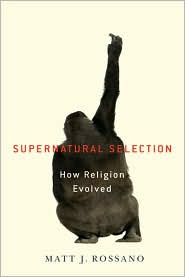
The thin line between fact and fiction grows more effaced every day. Can religions be based on fictional founders? Of course they can! Without any means of determining objectively which religion is right (if any), we are left with only a person’s word about what s/he believes. If I choose to believe that Sherlock Holmes was a real person what harm does it do? It may even benefit the estate of Sir Arthur Conan Doyle. As Matt Rossano points out in his book Supernatural Selection, religions are about perceived relationships. Many people have relationships with fictional characters, sometimes falling in love with one or fantasizing about being one. Basing a religion on a fictional character may be the greatest sign of trust. After all, we can’t even define religion in a way on which all specialists will agree. Religion itself may be the ultimate fiction. May the Force be with you, just in case.
 Steve A. Wiggins