The Sin of Syncretism

Syncretism may not be dead, but it should be.  What is it?  Well, in my field it means a religion that has been “corrupted” by the adoption of some element(s) of another religion.  The term was all the rage while I was working on my doctorate which involved, of course, comparative religions.  By the time I was being edged out of academia, there was a recognition afoot that the concept of syncretism was itself corrupt.  It depends on the idea that there is a “pure” form of a religion and that foreign elements debase it.  There is no pure form of any religion, and the more we learn of the history of religions the more obvious it is that religions influence each other, and have always done so.

What prompts this post is that I increasingly see clergy using the term “syncretism.”  Now, clergy tend to run behind scholars by a fair pace.  Those of us out there trying to figure out what religion is and how it works have a daily duty to analyze and reassess and theorize.  Clergy have many other things to do and read scholarly tomes as time permits.  Syncretism is now only used by conservative scholars who believe a religion (usually the form of their religion that they personally happen to believe) is pure.  Other religions are corruptions.  Ironically, I once heard a Unitarian Universalist minister use the term.  For a religion that accepts all other religions as valid, it struck me as odd.
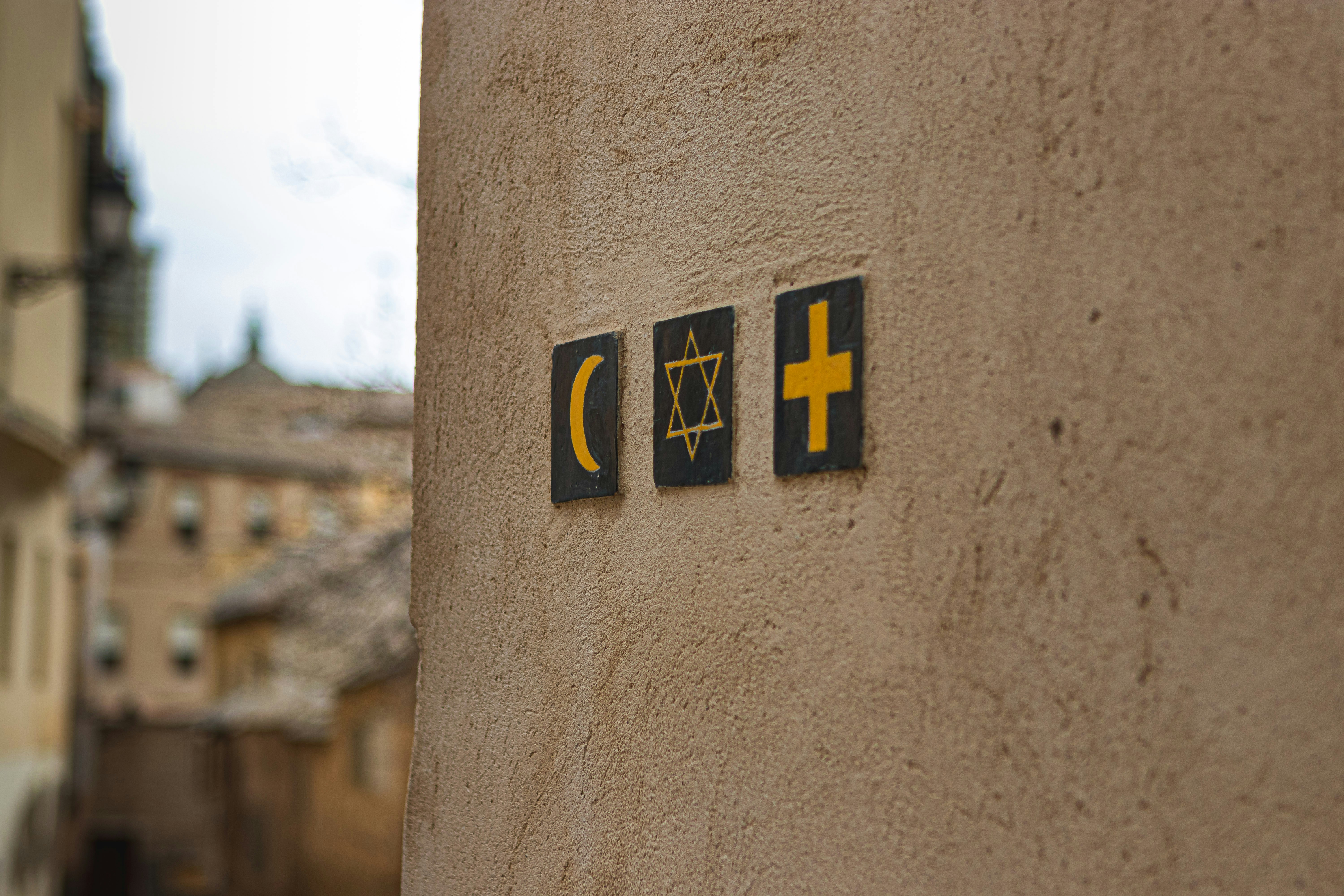
Photo by Noah Holm on Unsplash

As I used to tell my students, nobody knowingly believes “the wrong religion.”  By far the majority of people accept the religion that their parents taught them.  Often without question.  I know I did.  Then I studied religion.  I began to realize things weren’t as simple as “that old time religion” pretended they were.  Fundamentalism borrows from other religions just as much as any other tradition does.  Religions don’t have sharp boundaries.  There are fuzzy edges between them.  Those edges are permeable and quite wide.  Syncretism was a concept that religion scholars used, often in the context of monotheistic religions, to show where impurities entered.  The thing is, impurities were there from the conception on.  If one religion were born fully grown from the head of Yahweh, it would be obvious, wouldn’t it?  The Bible describes the religion of Israel and how it borrowed and adapted from other traditions.  Thus it was in the beginning, is now, and ever shall be.  The world would be a much better place if we made our peace with this and buried syncretism in the graveyard of obsolete ideas.


Foreign Christianity

I’ve been reading about missionaries in Southeast Asia.  One of the things that has become clear to me is that as Christians moved into different cultures they perhaps didn’t realize just how their religion was being blended with a completely foreign worldview.  Catholic missionaries were particularly savvy about accommodating local outlooks.  Add the mass on top of them and you’ve got your converts.  What they were, perhaps unknowingly, doing was changing Christianity.  Yet again.  Monotheism has a myth of the pure religion.  The fact is that as soon as Paul disagreed with Peter Christianity had begun to splinter with each faction believing it had the pure form.  When this protean religion moves into other cultures with other ways of thinking, interesting new forms emerge.

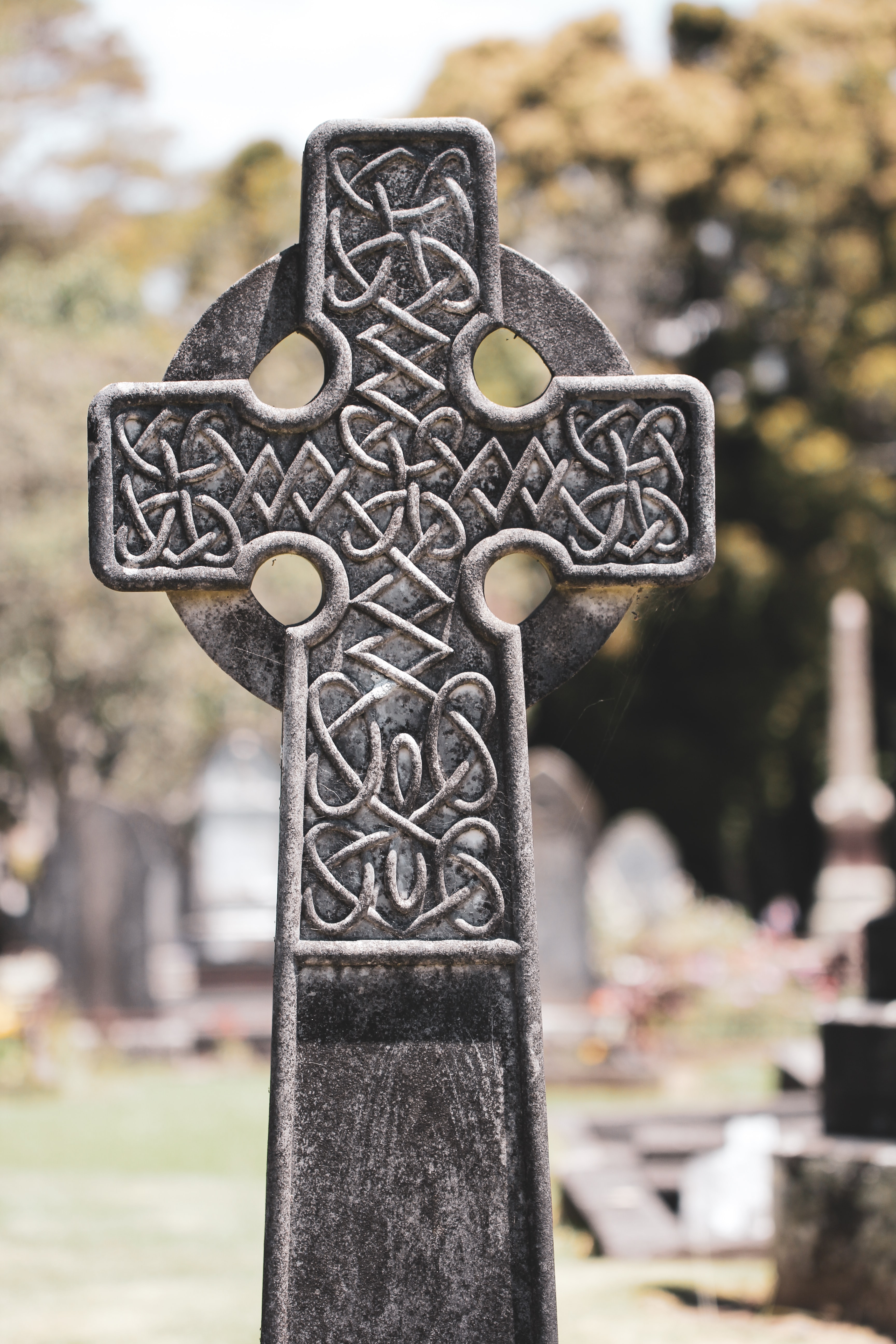
Photo by Sandy Millar on Unsplash

Today there’s a lot of interest in Celtic Catholicism.  This is another example of “if you can’t beat ‘em, join ‘em.”  Christianity, particularly in Ireland, took on a pronounced Celtic flavor.  It doesn’t always play by the rules, but as long as Rome’s okay with that, well, who’s to complain?  What is Catholicism?  What is Methodism?  What is Anglicanism?  It depends on where you join it.  Doesn’t that problematize those absolute truth claims?  Churches are savvy political players.  The rank and file believer has little idea what goes on behind closed doors.  They might be distressed to find out just how much bishops talk about budgets.  Theology is left to the public view.  No organization can survive without money and church leaders understand this.  Missionaries go to under-developed countries and make them capitalists.

People living in different parts of the world view life from varying perspectives.  Many see change as the nature of life where western religions see fixity.  Many religions know we’re reincarnated.  Western religions see one ride per ticket with souls ending up in a final holding place.  When it comes to eternity, people obviously want some security.  Even with reincarnation a badly lived human life can lead to a worse next life.  The question of what happens when such ideas come into contact with Christianity, or Islam, is a fascinating one.  Judaism, the root of monotheistic traditions, never really embraced missionary activity.  When missionaries encounter those whose very ways of thinking about life approach the question from a different direction, creative mixes are bound to occur.  It’s safe to say that when early Christians were sent out to “the whole world” they had no idea how big that world actually was, under the dome in which lived the sun, moon, and stars.  Nor had they any idea what interesting hybrid religions would emerge after their fertile preaching.


No Dolls Required

Moving is a never-ending process.  We’ve had some new neighbors move in next door over the past couple of weeks.  Seeing their boxes reminded me that we have many we still haven’t unpacked and sorted after over two years.  (That’s what attics are for.)  One of the novelties I found while doing so recently was one of those bookstore impulse buys at the checkout counter, “Voodoo Lou’s Office Voodoo Kit.”  This was actually a joke gift given to my wife some years ago.  In all probability it was me that insisted we not throw it out.  Perhaps I was saving it as an object lesson.  One of the religions I very briefly discuss in Nightmares with the Bible is Vodun.  This African diasporan religion is frequently demonized as “voodoo” because of its supernatural beliefs.

Many religions, of course, harbor supernatural beliefs.  The ballots are still being counted on whether such things exist because we can never wrestle them into the laboratory to measure them with instruments designed for physical applications only.  Vodun isn’t the source of evil perpetrated by the cheap (and often exploited by horror) “voodoo doll” narratives.  It is a complex blend of traditional African religions brought into forceful contact with Roman Catholicism.  We shouldn’t treat it as exotic, nor should it be a codeword for evil.  Like most religions vodun is an attempt to navigate the world of the gods and spirits that people everywhere believe in, even if they can’t be quantified.  The religion was mysterious when first noticed by travelers from the United States and it quickly became fodder for horror films.

We tend to judge religions just because they’re different.  One of the more insidious aspects of global religions is that they create the illusion among their believers that they are the “only true religion.”  Those who study religion professionally know that all religions are “syncretistic.”  There is no such thing as a “pure” form of any religion.  Just try getting a Calvinist and Catholic to come to a common understanding of what Christianity is.  Both want to claim their version as the true one.  Religions, however, have developed as ways for people to cope with the world as they’ve experienced it.  Just because fewer people believe one way we can’t assume their religion is inferior.  Vodun, in which I’m no expert, is far more complex and sophisticated as might be suggested by and impulse buy for frustrated office workers.  Still, it works as an object lesson.


Horror Homeroom

With a happy coincidence I discovered a website called Horror Homeroom.  Featuring articles and podcasts and reviews on horror films, I felt its siren call.  Then I learned it is run by a professor at nearby Lehigh University, making it even closer than I initially supposed.  I wanted to be part of the conversation.  You see, after years and years of being a Bible scholar and having to fight to find any kind of interest whatsoever in what I had to say, I’ve found the horror community extremely welcoming.  Perhaps because we all know at some level that horror is considered transgressive—it isn’t unusual to find critics who still claim it’s debased—we find each other.  There’s an aesthetic to horror, and it isn’t about gore and violence.  Horror, when done well, is an excellent marker of what it means to be human.

Life always ends in death.  Many people spend as much time as possible trying to avoid thinking about it.  There is, however, great creativity in facing squarely what you cannot change.  Well, that’s a good sounding excuse anyway.  All of this is by way of announcing my guest blog post on Horror Homeroom.  A few weeks back I was quite taken with The Curse of La Llorona.  Not that it was a great movie, but it had a way of coming back to haunt me.  Part of it has to do with the poorly understood way that local customs blend with imperialistic religions.  Faith is a local phenomenon.  Once you switch off the televangelist, you’ll begin sharing beliefs of your neighbors.  There’s no such thing as a pure religion.  Pure religion is one of the most dangerous myths there is.

Those of us who study religion professionally have been taught to call the blending of religions “syncretism.”  I’ve stopped using that word for it because it assumes that there are pure forms of religion.  Religion always takes on an individual element.  We make it our own when it gets translated into our personal gray matter.  The idea that there is a pure form of any religion requires an arbiter of greater rank than any here on earth.  You can always say “but I think it means…”  Horror, I suspect, latched onto this truth long ago.  Without some hint of doubt about your own individualized belief system, it’s difficult to be afraid.  Horror need not be about blood and gore.  Often it isn’t.  Often it’s a matter of asking yourself what you believe.  And once you answer it, opening yourself to asking questions.


King Hong

When the same religio-historic event is described in three consecutive books I’ve read on diverse topics, I start to consider what strange form of coincidence is operating here. Coincidences are some of the potent spices that give life flavor—the tragic death of Suzanne Hart on Wednesday when an elevator crushed her to death occurred the very day my bus was late and I took the route directly past her building to avoid the crowds on 42nd Street. What was the series of uncanny events that led me to where someone was about to die? It hardly seems within the divine character. So coincidences have been on my mind of late.

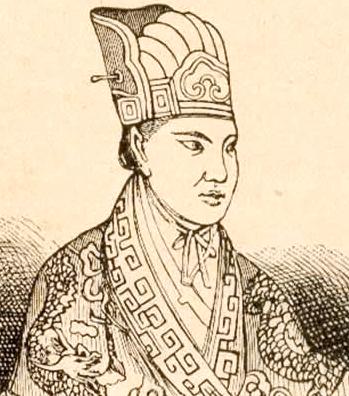
The last three books I read have all discussed the Taiping Rebellion that took place in the mid-nineteenth century. Despite having studied religion all of my life, I had never come across this religiously motivated violence until reading Daniele Bolelli’s 50 Things You’re Not Supposed to Know: Religion. Unrest in imperial China had existed before, but Hong Xiuquan, the leader of the rebellion, was motivated by religion. Xiuquan was a Christian (no doubt the fruit of missionary activity) who came to believe that he was Jesus’ younger brother. His motivation for the rebellion was based on his aberrant version of Christianity that quickly grew into a full-fledged movement calling itself the Heavenly Kingdom. Basing itself in Taiping, the movement adopted the early Christian practice of communal property and came to rule over about 30 million people. The numbers are what is truly stunning about this tragedy. When the conflict with the Qing Dynasty ended, about 20 million people were dead. The number is so high as to shut down comprehension. So many dead because of religion. It has a corporate feel to it.

Religion evolves. When it is spread into new cultures, syncretism takes over. Many religious believers, through faith, insist that their religion is the same as the founder propounded. Such simplistic understanding is not true. Culture, just like biology, lives and grows through evolution. The American Christian dressed in expensive clothes in a phenomenonally costly mega-church with a shining preacher bearing a million-dollar smile is about as far from a property-less, vagabond carpenter from Nazareth as you can get. Yet we still pretend. If that pastor says he is Jesus’ younger brother, chances are good that many will believe him. Stranger things have passed the lips of televangelists. Emotional involvement in religion easily leads the zealous to extreme action. History has demonstrated this time and again. The Taiping Rebellion of the Heavenly Kingdom proves the point, even if we’ve never heard of it. Maybe it is no coincidence after all.


Syncretism Synchronicity

By strange coincidence I had two friends ask about syncretism over the last few days. As generally understood, syncretism refers to the blending of religions. In the ancient world when one culture came into contact with another inevitable sharing resulted. Since all religions at the time were polytheistic, there was no concern about sharing deities too. Ancient people wanted to assure their good fortunes and survival just like modern folk do, and so the safest course of action when you become aware of a new deity is to placate her or him. There are few risks at worshipping additional gods in a polytheistic system, since all deities thrive on adoration. Some ancient societies, such as that of the Mesopotamians, realized that the number of gods could grow well beyond reasonable proportions. After all, many kinds of phenomena had gods, including the natural world, human inventions, and the cosmos. Recognizing overlap between the roles or functions of certain deities they began to draft up lists equating the various gods. Some of these lists are quite extensive.

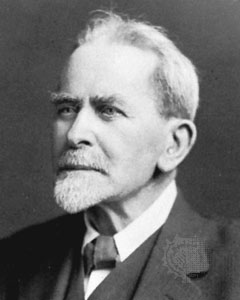
This is the practice of syncretism. Your Yarikh is my Sin, and why offer two sacrifices when one will suffice? Ancient worshippers did not worry about the endless confusion that this would cause for future monotheistic scholars rediscovering their lost civilization. James Frazer, of Golden Bough fame, was a Victorian scholar who saw syncretism everywhere. Ancient cultures became a melting pot with countless variations on every theme. With more sophisticated anthropological methods Frazier’s work eventually fell into disfavor, and syncretism with it. Each ancient culture was distinct, with nuances and subtleties unguessed by rampant blending and blurring of the lines. Some scholars today shy away from the word syncretism since it has such unholy associations.

Fallen Saint James George Frazer

Part of the issue is where our culture stands. We are not the final word in discovery or understanding of our world, and yet monotheistic religions, the majority position in the western hemisphere, make absolute claims. Those of us who examine ancient religions are born into these outlooks, assured that modern-day religion is the true religion and that it, unlike other aspects of culture, will cease to evolve. Religion, however, changes as soon as it leaves its founder’s mouth or hand. The multiplicity of human perceptions and outlooks assures us that each believers’ religion is unique. We may be ashamed by the implications, but syncretism, it seems, will always have the last laugh.