Upstate

Unrequited love is sometimes tragic.  Other times it’s merely sad.  People are attracted to places.  Or at least the idea of places.  I was born in Pennsylvania, but to a wandering family.  I keep looking for roots—my tribe.  I didn’t know my father well growing up, but my mother’s family, before taking on that rootless search for greener pastures, was from upstate New York.  For several generations.  I’ve tried many times to land a teaching post somewhere upstate, but in vain.  Even when I knew the people in the department and had been to campus, like that time at Syracuse University.  It was raining when I visited, back in my Routledge days.  I was taken by what I experienced there, never to be welcomed myself.  My family was from a bit further north, around Albany, the head of the Hudson Valley.
At the time I wasn’t aware that my childhood hero Rod Serling was born in Syracuse.  My daughter was at school in Binghamton, which is where Serling grew up.  That I knew.  Nor did I know that Dan Curtis, creator of Dark Shadows—that other childhood staple—had gone to college at Syracuse.  Something about upstate.  I’ve remarked to my family that when traveling in this part of the country I catch glimpses of familial facial features in some strangers.  A passing glance suggests that they might be distantly related.  My unknown tribe.  Economics, however, have always kept me away.  Even when I explained in my cover letters that I felt that special connection my applications were summarily brushed aside.  Probably by folk who knew who their tribe was.  Probably from somewhere else.

In this world of internet loneliness, we long for connection.  We lived in Wisconsin for over a decade.  The only people I really got to know were those I knew from Nashotah House.  And this was even with years of involvement with the PTO, serving on the building committee, and even being president one year.  People were busy even back then.  I was thinking perhaps I’d found my tribe in Wisconsin. But then…  The move to New Jersey put me close to my ancestral state, but not in it (my mother was born in Jersey).  Economics, that dismal science, dictated that a move had to be back to Pennsylvania, where I was born among strangers.  Our nation is one of many tribes, including those we sought to exterminate to steal their land.  We have plenty of space, but we value economics over belonging.  You may buy the presidency, but you can’t buy your tribe.
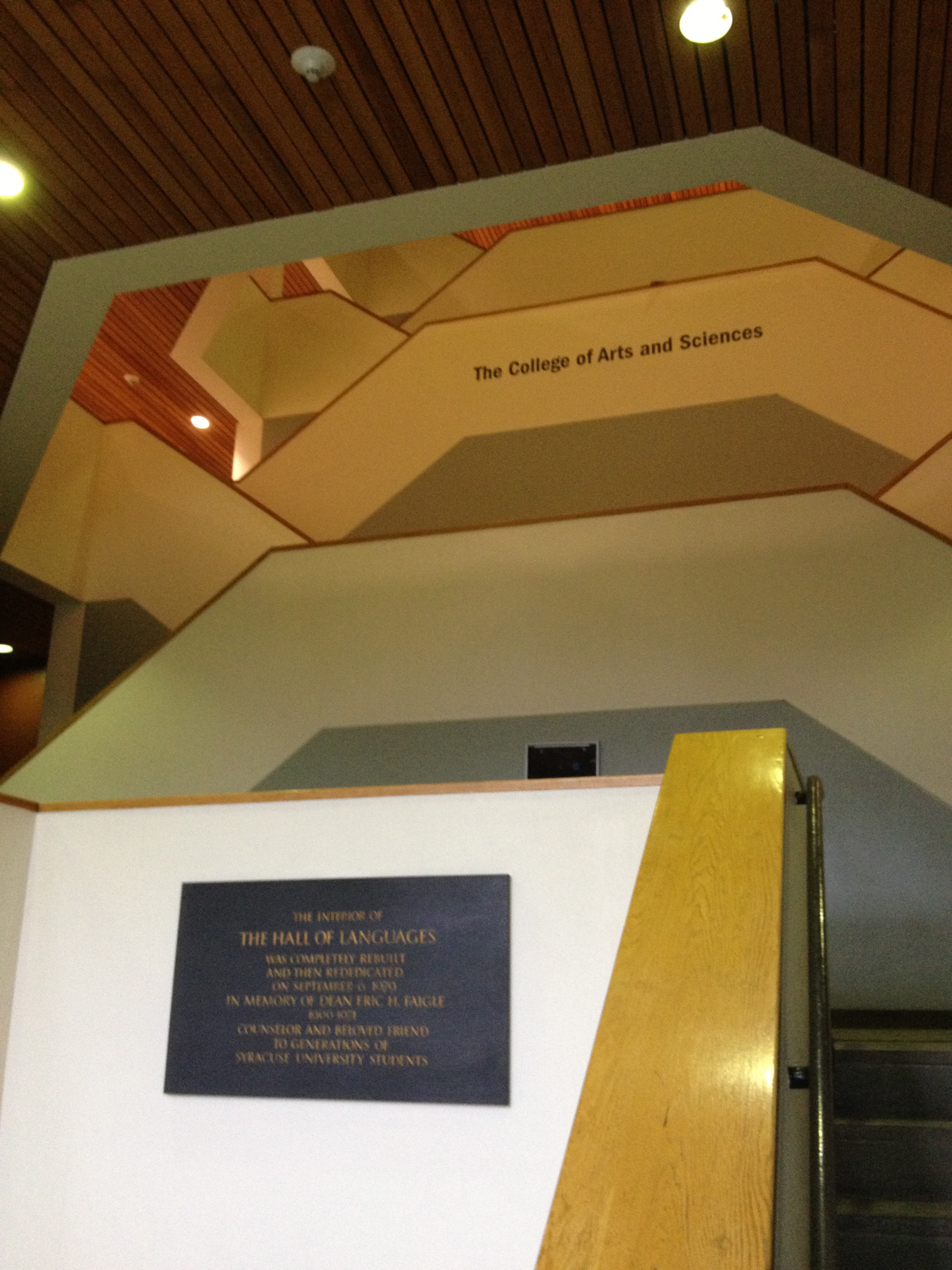

Parochial Education

I’m sitting in King David’s Restaurant in Syracuse, New York. I’ve spent two days speaking with a wide diversity of religion scholars, and I’m realizing religion is not yet dead. A few days ago I wrote about the Burnt Over District and the Second Great Awakening. It occurs to me as I climbed the hill to the Religion Department in the rain, that I am on the trail of that Great Awakening. Syracuse University began as a Methodist school. Today, although affiliated with the United Methodist Church, it considers itself non-sectarian. Yet without those abstemious Methodists, they wouldn’t be here. The Methodists, now primarily represented by the United Methodist Church, owe their explosive growth to the Second Great Awakening. Out on the frontiers—for America was a rural nation—the revivals became showcases of the social, the supernatural, and the salacious. The Methodists and Baptists, in terms of numbers, benefited immensely.

With their enviable population base, the Methodists invested in higher education. Syracuse University, just up the hill, Adrian College, Boston, Central Methodist, Drew, Duke, Emory Universities, Florida Southern College—you could go nearly through the alphabet and not exhaust their schools—all owe their beginnings or present stature in part to those thrifty Methodists. Believers in an educated clergy, they reached out to embrace an educated laity as well. Although many of these institutions grew up and left their religion behind, the Methodists have impressed their stamp on American higher education unlike nearly any other denomination. Even when numbers in the pews decline, the Methodists will have left a legacy on the wider culture through their belief in education. About the only other Christian group invested so heavily in higher education has been the Catholic Church. Even so, the Methodist academic reputation climbs a bit higher.

I spent many happy years among the Methodists. Their way of looking at life, officially, anyway, isn’t extremist. Some aver that John Wesley was an extreme evangelist. Today he’d be snowboarding down the Alps to seek the unsaved, a Red Bull or two in his belly to stoke that restless fire. His followers, via media Methodists, eased into the mainstream—in some ways defined the mainstream. Methodism was good for a kid who needed to fit in. So as I sit in King David’s Restaurant, reflecting over my past that has landed me in this most unusual place, I am thinking about my Methodist roots. I’ve failed to impress those Methodist institutions where I was once courted for a circuit riding future. Now I watch as they educate other people’s kids. It is a safe guess that King David wouldn’t even be here if it hadn’t been for John Wesley and his personal need for assurance. If only more churches took education so seriously.

Climb that hill

Climb that hill


Sterling Serling

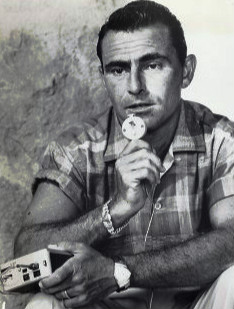
“There is a fifth dimension beyond that which is known to man. It is a dimension as vast as space and as timeless as infinity. It is the middle ground between light and shadow, between science and superstition, and it lies between the pit of man’s fears and the summit of his knowledge. This is the dimension of imagination. It is an area which we call the Twilight Zone.” The words are those of Rod Serling, native of Syracuse and Binghamton, and creator of The Twilight Zone. When I travel to a new place, I like to honor the writers and creators of the region. Yes, there always have been many creators. By my age, Rod Serling was dead, but he had, before that time, created a cultural phenomenon that would stay with the world forever after. It would be difficult to quantify the effect The Twilight Zone had upon me as a child. That opening took ahold of my young mind and convinced me that there was more to life than what appeared on the surface. It is the power of creation.

Rod_Serling_dictating_script_1959

Serling was a fighter. “The angry young man of Hollywood” who used his fiction to protest war and racism, Serling took on many issues in The Twilight Zone that would have been censored had they been presented as fact. Fiction is the vehicle in which truth rides. The bizarre world Serling envisioned captured the imagination to such a point that if I write, “do-do-DO-do, do-do-DO-do” many of you will be able to conjure the theme of The Twilight Zone in your heads. We all know that this is a sign that something strange is about to happen.

There is something about place. I’ve written about sacred geography before, and it is one of the more fascinating aspects of human subconscious life. Something about Syracuse-Binghamton still says “Rod Serling.” Maybe it’s in the low, glowering clouds or the ancient Native American names and traditions that can still be found in this region. Although I’ve never lived in New York, my ancestors did, in the region just east of here. A lifelong wanderer, I sometimes wonder what it is to belong to a place. I have often felt the persistent call of upstate New York, the salmon wisdom whispering me home, perhaps. I’ve never lived here, but maybe I belong here. New York is now proud to claim Rod Serling, and I drive from Syracuse to Binghamton delving deeply into the sacred geography of the region and ponder how such a mind came to be. Even creators, it turns out, have to be created.


Burnt Over

I find myself in Syracuse. Skirting the very edge of the Burnt Over District, Syracuse is only a short distant from Oneida, birthplace of one of the uniquely American religions to have been conceived in this area. Moving further west, several of the religions following the “Second Great Awakening” roared through the state, including the one that was to become the Mormon Church. Looking out over the rugged hills, I wonder what might be in this land that inspires such religiosity. Americans are known world-wide for their religious predilections, and back before the South took the privilege of doling out religious mandates, upstate New York was busy churning out new religions. Of course, this was in the days before the extreme urbanization of culture took hold. Individuals, often isolated from others and struggling to survive in a sometimes harsh climate (they are calling for snow this weekend, still), they turned to God in new and innovative ways.

There must be a point at which religion reaches satiety. How many religions does one nation need? Thus, revivalists found a tired population here in the Burnt Over District. How much energy does it take to build a new faith from scratch? Some flared brightly and burned out (like the Oneida Community), while others flourished to the point of putting forth presidential candidates (I need not say which new religion has offered us a candidate too wealthy to countenance). Something in the soil, perhaps. Something in the mountain air.

Scholars opine that the Second Great Awakening occurred in part, at least, in reaction to the skepticism that was surging through intellectual circles at the time. America has always been good for a backlash or two. While many thinkers were praising the accomplishments of intellect, Smiths and Noyeses were at home brewing up that new-time religion for which Americans thirst. We are great consumers of religion. In the early 1800s revival after revival spread through New York, as well as through the southern states. The south reacted by boosting the Methodist and Baptist populations. New York gave us new religions. Americans aren’t that choosey. In a pinch, just about any religion will do. I stand here in Syracuse, the mid-April snow drifting down about me and wonder what is about to awake in this skeptical age.

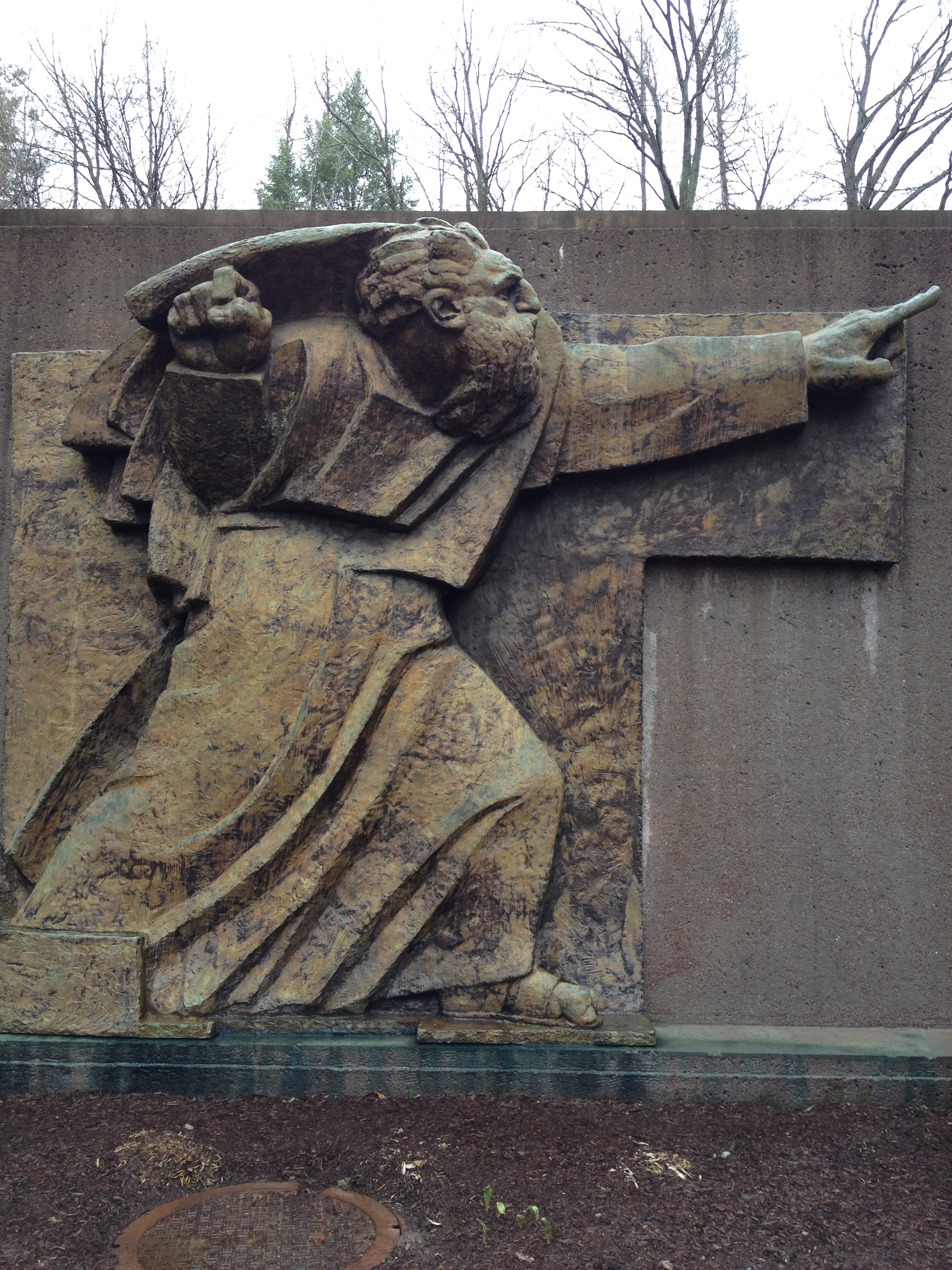
Moses starts a new religion

Moses starts a new religion