Adulting

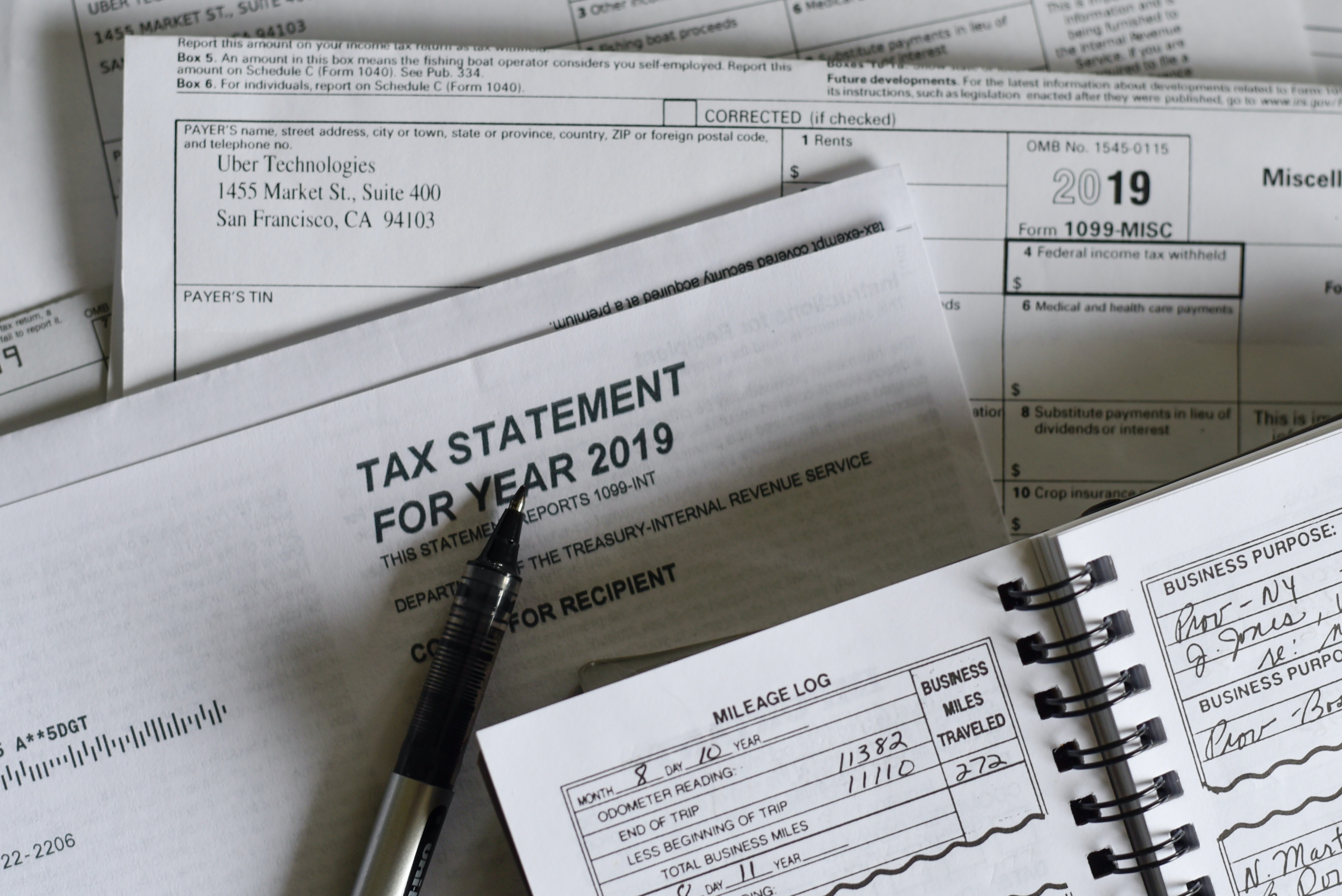
Young professionals that I know often say adulting sucks.  Quite a bit of the time I tend to agree with them.  The 9-2-5 makes just getting along difficult, at times.  I’m sure there’s software to ease some of the woes, but you have to learn how to use it.  And that takes time.  Time I’d rather spend writing or reading.  For example, to get a small break on state taxes, if you work from home, you need to calculate your office space and then how much it costs to exist in your house for the year.  When I remember to do so, I can look utilities and mortgage up in Quicken.  Sometimes, however, when a book in my mind is distracting me I just tot all this up on the back of an envelope.  Then I need to type it in so my accountant can see it (taxes are far too complicated for mere mortals) and, I can’t underscore this too many times: numbers are adulting.
Photo by Tyler Easton on Unsplash

I’m an idea person.  The 9-2-5 (numbers!) that keeps you in front of a computer all week long means that things pile up.  Weekends seem too short to spend on numbers.  But you’ve got to balance that checkbook.  And even tot up the number of hours you give to “the man” each day.  What could be more adult than accounting?  Don’t get me wrong—at times numbers can be interesting.  Numbers, at their best, are philosophical.  One squared is one.  When you square any number greater than one, it increases.  One doesn’t.  And you can’t divide by zero and get zero for an answer, as handy as that’d be from time to time.  These abstract concepts come in useful but adulting involves serious numbers.  Numbers that imply liquidity.  Cash flow.  

Time is made up of numbers too.  If a social event comes up on a weekend, there goes your grocery and cleaning time.  And writing a book takes a tremendous amount of time.  It’s a second job on top of the other one you work 9-2-5.  All of this makes me think of those TIAA-CREF ads that showed prominent professors and captions that said “Because some people don’t have time to think of money.”  Or something similar.  That’s what I’m talking about.  Adulting is all about money.  And money must be taxed.  And you have to keep track of where it all goes.  I’m sure Quicken could help me with this, if I had time to learn it.  (We pay for it after all.)  But I’m kind of busy writing this book…


Cover Copy

If you’ve ever wondered why the same images appear on book covers over and over, there’s a fairly simple explanation.  (I should specify, by the way, that I mean academic press books.  The pockets of trade publishers are apparently bottomless.)  For many in the humanities the choices come to the same set of classical paintings that are out of copyright.  Now, in a capitalist system, copyright is a necessary idea.  It protects those who create intellectual property from being taken advantage of.  Their work is treated like a physical object, so an accurate image of a painting is the same as the painting itself.  But if you’ve ever been to an art gallery you know that’s not exactly true.  Art galleries show us that being in the presence of the real thing is different than seeing a reproduction.  But I digress.

Books are not only recognized by their covers, but sold by them.  It’s a strange industry and part of the reason why goes back to one of those eye-glazing-over court cases involving (yawn) taxes.  In 1979 the Supreme Court ruled that companies could no longer devalue old stock for tax purposes.  This was the Thor Power Tool Company v Commissioner case.  The court ruled old stock had to be assessed at value.  While this was about manufacturing, it deeply impacted books.  Publishers now had to destroy old stock (and books are printed in quantity) or face heavy tax consequences.  This led to books being pulped much more quickly than usual (they could then be written off as losses) and directly impacted the book cover.

Despite the old adage, every publisher knows people do judge books by their covers.  Since 1979, extra care has been given to covers to make books sell quickly, and in significant numbers.  Now granted, your nuts and bolts will still be useful in future power tools, but books sell differently.  A typical book has a three-year lifespan.  Sure, there will be those (like yours truly) who’ll buy a book that’s been out for a while, but most books are considered dead after year three.  That old stock is a liability and pulping is common.  It seems an inglorious end for such a noble product.  Not to mention wasteful.  Academic books have similar covers because copyright images are often too expensive to license for covers.  Constantly publishers have to guess as best they can how many copies will sell because old stock is too expensive too keep.  Print on demand has changed a lot of things as well, but that’s a different story.   Covers still do count.


Tax Season

And it came to pass in those days, that there went out a decree from the Internal Revenue Service that all the world should be taxed.  (And this taxing was first made when Penn was governor of Pennsylvania.) And all went to be taxed, every one into his own city. And Steve also went up from Galilee, out of the city of Nazareth, into Northampton, unto the city of David, which is called Bethlehem; (because he was of the county and district of Northampton:) To be taxed with Kay his beloved wife, being great with patience.  Well, not exactly biblical (with apologies to Luke), but this came to me upon having to go to Bethlehem to collect our tax documents from our accountant.  There’s something biblical about living in the Lehigh Valley.

Photo by Olga DeLawrence on Unsplash

I don’t complain about having to pay taxes.  I only wish far less of the money went to pay congressional salaries.  And far less to the military.  Otherwise, I realize that in order for infrastructure to be up-kept, for the many services that make life possible for so many people, those of us who earn enough—even if not exactly flush—owe something to the system.  I’m saddened that the very wealthiest feel they’ve earned the privilege of not paying taxes. Modern-day Herods, I think, ready to kill babies in order to maintain personal power.  Still, those of us who pay participate in the most basic kind of charity.  So we make our annual trip to Bethlehem.

These days many people feel that if they don’t like other people they shouldn’t cooperate with them at all.  Even finding out that a certain Trump has been defrauding the very government which he purported to lead, and has been doing so for many years, doesn’t dissuade some of them.  I think our accountant, who looks gaunt and who doesn’t overcharge, could fairly claim a bit of back taxes that might be due.  Community is an endangered concept.  It’s a place where people support one another, and perhaps even care about others.  When I logon to Nextdoor.com I’m distressed to see the trolling and inappropriate emojis that show up.  The internet makes us all think we’re clever, ready with the snappy comeback.  Even to a recent story about a dead homeless man found in a park.  We need each other.  Society can’t move ahead if everyone keeps everything to themselves.  So it was we drove our rusty, four-cylinder donkey even unto Bethlehem.


Taxing Thoughts

Tax season has come with a new fear this year.  We had to visit our accountant’s small office to sign things.  We managed to get last year’s taxes filed before the pandemic became evident.  This year I spent weeks worrying about the upcoming appointment.  Sitting in a room with a man I both respect and fear.  Our government loves its paperwork, and although you can file electronically you still have to pay any amounts owed (on the state or local level) with actual paperwork.  That paperwork has to be signed.  To do so you need to meet an actual person who has some inkling of how this all works.  Ironically, the technology exists for taxes to be done automatically by the government.  Groups like Intuit, the owners of TurboTax, lobby the government not to make it easier.  Intuit would lose its income stream.

I don’t mind paying taxes.  I did chafe a bit the past four years, knowing I was supporting an evil government, but overall I understand that we all need to contribute in order for things to continue to run (somewhat) smoothly.  The thing that frightens me is being in a room with someone who might’ve been earlier talking with someone who had a dread disease.  Last week marked the one-year breaking point.  My wife and I agree that March 12 was the day the news turned utterly ominous.  Although the Trump administration knew about the disease, it had decided simply to ignore it.  Now, with more than half-a-million Americans dead, we’re still paying our taxes to try to undo the damage that one man did.

The more immediate problem is how to survive getting those tax papers signed.  Ironically, I can oversee the acquisition, editing, production, and sale of a physical book without ever having to touch a piece of paper.  It’s a marvel, really.  In fact, many of the books I acquire I don’t see until months after they’re published.  For taxes, however, we still need to send the physical paper in.  The alternative is TurboTax.  They add on so many fees that we ended up paying them as much as an actual accountant last time we did our own taxes.  I’m happy to pay a human being to do them, and I even like our accountant.  It’s just that it doesn’t feel safe to go inside somebody else’s space right now.  It’s a little too cold and wet to stand outside and sign the papers with trembling fingers.  Perhaps next year we’ll be able to do our part without fear.


Caesar Salary

Juxtapositions interest me.  Washington’s Birthday and taxes have become connected in my mind.  Until the present administration I had no serious concerns about taxes; if people are going to live together they need to pool their resources.  If I had a choice now no Republican would be able to lay a dirty finger on my hard-earned contributions, but I know we all use the roads and bridges.  Some of the money actually goes to useful things.  I wonder what George would’ve thought of it all, though.  His birthday is a holiday, but employers have sent out their tax forms and so it’s become a kind of day of reckoning for me.  I used to be able to calculate roughly the right amount to be withheld so that I’d get a small return each year.  Tax laws being what they are, however, that has changed rather drastically.  I leave February feeling poor and cold.  And I don’t approve of how they spend most of our money.  Still, a day off work is a fine time to visit my accountant.

The mind of the Human Resources denizen is an odd place of rules devised by no god.  I never know from year to year whether “Presidents’ Day” will be a day off or not.  I remember standing on a wintery street corner waiting for the 114X into New York because the 117 didn’t run on federal holidays.  HR had decided that year that we wouldn’t have this day off.  Like the government, Human Resources has the ability to implement laws that make no sense.  I do appreciate the fact, however, that someone understands how medical insurance works.  For that you need a specialist.  Another strange juxtaposition.  In any case I’ll visit my accountant today and it may be the only time I’ll be sweating in February.

Adulting, some of the young say, isn’t much fun.  It has certainly become a lot harder to understand.  Our government complicates things to the point that you daren’t do your own taxes.  A visit to the doctor may or may not cost you.  And don’t even bother to try and find out where all that money you send to Washington’s going.  I just hope that when I get on the interstate that it’s maintained.  And that they keep an eye on the bridges.  If they don’t I won’t be able to get to the accountant’s office to be able to pay more taxes.  On Washington’s Birthday it’s in the best interest of the powers that be to keep the roads open so that we can send them our unholy tithes.  Strange juxtaposition, it is, between Washington and Lincoln.

Render unto Caesar


Bookkeeping

I can’t express just how happy I was when I first read the word “bookkeeping,” and it wasn’t because it had three repeated letters in a row.  I was strangely joyful at learning there was such a profession.  That joy quickly plummeted when I found out what bookkeeping actually is.  This memory came back to me this tax season.  I realize the word “book” has a storied history and multiple meanings.  I’m one of those people who likes to read books about books.  In “keeping” books, of course, we mean ledgers that show assets, profits and losses, accounting.  These are among the most boring things on the planet for some of us.  My imagination dances around all over the place, but it seldom sways to the realm of business.  As a young person faced with what bookkeeping is, I was crestfallen.

The idea that you could keep books—not necessarily as a librarian or bookseller—and have that as your job, seemed like an almost Platonic utopia.  A world where it was recognized that reading books is a virtue.  Even being around them can make me happy.  I still live in the world suggested by that form of the word bookkeeping.  When I’m sad a trip to a bookstore can usually bring me out of it.  Although I have difficulty finding publishers interested in my own books, writing them is a form of therapy.  Even this little blog is a way of participating in the keeping of books.  At least in an ideal world.  Tax season looms when many of us will find out how much we owe to a government we no longer trust.  If only more people would read.

Books began, in their earliest forms, as receipts.  Marks on clay to prove what you owned.  Shortly, however, those mud tablets began to house myths and stories.  That’s when the mud became clay.  Stories are what conscious minds crave.  Even the word “Bible” means “book” (via the circuitous route of naming books after the papyrus reed, which along the northeastern Mediterranean coast was called “Byblos”).  These stories, books, came to represent what we hold sacred.  Writing is a divine act.  Many centuries later books became commodities that could be sold.  Ah, and when money enters the equation, bookkeeping soon follows.  Perhaps in some distant future utopia we’ll come to a place where words like bookkeeping mean something more than just numbers.  Maybe someday bookkeeping will be recognized as far more valuable than mere money.


Walls and Calls

With a barely concealed chortle the man’s ebullient voice burbled on my answering machine.  For a donation right now, he gushed, Republicans would send bricks to Chuck Schumer and Nancy Pelosi to show my (non-existent) support for Trump’s wall.  Our government has been shut down for a record period over a temper-tantrum by a man desperate to leave something tangible from his wasted term as president.  Apart from the clean-up of the Trumpian incontinence that has befouled this nation, his legacy as the most incompetent holder of the office is likely all that will be left behind in the swamp.  With two full years of control of both houses of congress and the White House there has been pitifully little to show.  Now the GOP has turned to pranking the citizenry to deflect once again the fact that nothing worthwhile has been done.

Read the wall

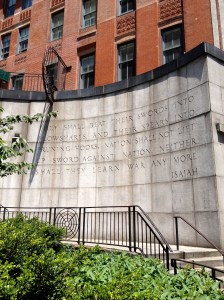
Walls, for those who know how to read, don’t work.  Republicans have forgotten how their former darling, Ronald Reagan, both gloried in his purported role in knocking down the Berlin Wall and his hatred of the Russians.  In a matter of three decades a major political party has excelled only in having outdone Watergate and completely reversing its position on everything that used to define it.  Claiming to be the party of Lincoln they nominated and elected a man who publicly supports the klan.  Branding has never smelled so cheap.  And get off my phone—I’m expecting some important calls.

What the GOP doesn’t seem to understand is that the price of a soul is far more than a long distance call.  Building a wall is mere rhetoric reified.  It would be an incredible waste of taxpayer’s money.  I’ve been paying into the system for 42 years now—others have been paying longer—and I’ve not yet met a rank and file Republican who wants a wall.  And yet our government, one of the most powerful in the world, is shut down over it.  The 2016 election itself was stolen by a game called the electoral college.  We’ve sat two years and watched democracy crumbling.  Now that a small check has been introduced we have an unbalanced man insisting on his own way over the will of the nation.   There are more important things to buy, for my money.  With my money.  Acknowledging how government works shouldn’t be a great effort for someone who aspires to be president.  If his party has to resort to sending novelty bricks, the wall has already been built.


Two Cities

Augustine of Hippo wrote that there were two cities. If you’re reading this blog you probably know what they are. Today, according to some, is Easter. For others it’s not quite there yet. Call that one city. It’s also very near that other national holiday—tax day. That’d definitely be the other city. Now, I’m not going to go into any detail here, but I’ve always done my own taxes. If you’re old enough to remember going to the public library to pick up two or three copies of the paper forms, sitting at home with a pencil, eraser, pen, and TI-30, and spending an entire Saturday reading through the instructions and scribbling, you know what I’m talking about. These days everything’s online.

I can’t recall how many years I’ve used TurboTax. It was free, easy, and generally led to a refund. I miss those days. This year when I sat down with Intuit’s child, it started asking questions I didn’t understand. Perhaps you’ve run into some industries that do this—they make up their own vocabulary and if they use the words in a way the dictionary doesn’t, well, it’s the dictionary’s fault for not keeping up. TurboTax started doing that. And unless you want to pay even more than they’ve already sold you up for, there’s no way to ask questions. The answers online use the same obscure lexicon. So this year I had to do probably the most adult thing I’ve ever done. I got an accountant.

Setting up the appointment for after work, it was a matter of looking at dates both my wife and I, and more importantly, the accountant, had free. It was only as judgment day dawned that I realized it was Good Friday (for some). Arranging to work from home that day so I could get to the office before the buses rumble out of New York, I ran into a traffic jam. No doubt people out to do their last minute Good Friday shopping. We were meeting the accountant for the first time, and I wanted to make a good impression. Be punctual. I had neglected to coordinate the two cities on my calendar. The accountant was understanding. He commented on how easy our taxes were, compared to many. Turns out TurboTax had been closing off many perfectly legal options and charging us for the privilege. So now it’s Easter. Taxes are due in a couple of weeks. There are two cities, and if either is neglected there’ll be Hell to pay in the end.


The Price of Academic Publishing

During seminary, I believe it was, a professor once told those of us in class, “You don’t get rich in academic publishing.” As the author of a widely used class resource, he added, “unless you write a textbook.” Both sides of his observation are true. I work with many young scholars who haven’t published as much as I have and I have to “manage expectations.” No, that monograph will not become a bestseller. Libraries will buy it, and, statistically, a few hundred people will read it. For those who play the more lucrative game of being acknowledged experts, however, cash can be freely flowing. The public is hungry for authentic information on religion. Despite what we’re told in the media, people are very curious about the truth.

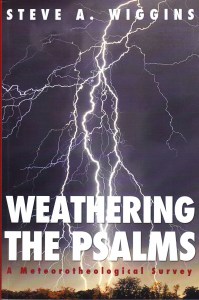
My own academic career ended before I could crank out all the books I’ve got in my head. You have to reach a certain stage of academia before that begins to happen. I’ve been working on my writing in the meantime, and I think I might be able to reach that crossover crowd that writes for non-professionals. I’m not sure I’ll have the time, but the ideas and, I hope, the skills are there. This all came back to me when preparing my taxes. One of the truly religious certainties of this world, taxes are, I know, for the common good. At least in theory. I never complain about them. Preparing them is a different story. My little book, Weathering the Psalms, followed the typical academic course of being largely ignored. I received a small royalty check for it. I wished I hadn’t. You see, I use TurboTax to file my return because someone with as simple an economic life as I have finds hiring a professional superfluous and, ahem, not cost effective. We don’t own a house or any capital. We just hope we’ve paid enough to get a little back in the spring.

WeatheringThePsalms

Then I came on the 1099 for my meager book royalties. (They were in the double digits, just to give you an idea.) I tried to enter it into TurboTax. Uh-oh. That kind of income requires a separate form. “Congratulations,” the screen said, “on earning money from your freelance business.” That can’t be good. It turns out I had to purchase an add-on for TurboTax to handle this new tax scenario. The add-on, literally, costs more than the amount of royalties. Technically, then, I lost money on the publication of my latest book. Those are the harsh realities of academic publishing. An abstract publisher contacted me a few days later—would I like to do the abstract of my own book? Why not? I’ve paid for it. If I ever get back into academe I’m going to write books people will want to read. In the meantime, I write them to contribute to the tax base. At least academically.