Just Trust Me

When I google something I try to ignore the AI suggestions.  I was reminded why the other day.  I was searching for a scholar at an eastern European university.  I couldn’t find him at first since he shares the name of a locally famous musician.  I added the university to the search and AI merged the two.  It claimed that the scholar I was seeking was also a famous musician.  This despite the difference in their ages and the fact that they looked nothing alike.  Al decided that since the musician had studied music at that university he must also have been a professor of religion there.  A human being might also be tempted to make such a leap, but would likely want to get some confirmation first.  Al has only text and pirated books to learn by.  No wonder he’s confused.

I was talking to a scholar (not a musician) the other day.  He said to me, “Google has gotten much worse since they added AI.”  I agree.  Since the tech giants control all our devices, however, we can’t stop it.  Every time a system upgrade takes place, more and more AI is put into it.  There is no opt-out clause.  No wonder Meta believes it owns all world literature.  Those who don’t believe in souls see nothing but gain in letting algorithms make all the decisions for them.  As long as they have suckers (writers) willing to produce what they see as training material for their Large Language Models.  And yet, Al can’t admit that he’s wrong.  No, a musician and a religion professor are not the same person.  People often share names.  There are far more prominent “Steve Wigginses” than me.  Am I a combination of all of us?

Technology is unavoidable but the question unanswered is whether it is good.  Governments can regulate but with hopelessly corrupt governments, well, say hi to Al.  He will give you wrong information and pretend that it’s correct.  He’ll promise to make your life better, until he decides differently.  And he’ll decide not on the basis of reason, because human beings haven’t figured that out yet (try taking a class in advanced logic and see if I’m wrong).  Tech giants with more money than brains are making decisions that affect all of us.  It’s like driving down a highway when heavy rain makes seeing anything clearly impossible.  I’d never heard of this musician before.  I like to think he might be Romani.  And that he’s a fiddler.  And we all know what happens when emperors start to see their cities burning.

Al thinks this is food

Making More Monsters

It’s endlessly frustrating, being a big picture thinker.  This runs in families, so there may be something genetic about it.  Those who say, “Let’s step back a minute and think about this” are considered drags on progress (from both left and right), but would, perhaps, help avoid disaster.  In my working life of nearly half-a-century I’ve never had an employer who appreciated this.  That’s because small-picture thinkers often control the wealth and therefore have greater influence.  They can do what they want, consequences be damned.  These thoughts came to me reading Martin Tropp’s Mary Shelley’s Monster: The Story of Frankenstein.  I picked this up at a book sale once upon a time and reading it, have discovered that he was doing what I’m trying with “The Legend of Sleepy Hollow” in my most recent book.  Tropp traces some of the history and characters, but then the afterlives of Frankenstein’s monster.  (He had a publisher with more influence, so his book will be more widely known.)

This book, although dated, has a great deal of insight into the story of Frankenstein and his creature.  But also, insight into Mary Shelley.  Her tale has an organic connection to its creator as well.  Tropp quite frequently points out the warning of those who have more confidence than real intelligence, and how they forge ahead even when they know failure can have catastrophic consequences for all.  I couldn’t help but to think how the current development of AI is the telling of a story we’ve all heard before.  And how those who insist on running for office to stoke their egos also play into this same sad tale.  Perhaps a bit too Freudian for some, Tropp nevertheless anticipates much of what I’ve read in other books about Frankenstein, written in more recent days.

Some scientists are now at last admitting that there are limits to human knowledge.  (That should’ve been obvious.)  Meanwhile those with the smaller picture in mind forge ahead with AI, not really caring about the very real dangers it poses to a world happily wedded to its screens.  Cozying up to politicians who think only of themselves, well, we need a big picture thinker like Mary Shelley to guide us.  I can’t help but think big picture thinking has something to do with neurodivergence.  Those who think this way recognize, often from childhood, that other people don’t think like they do.  And that, lest they end up like Frankenstein’s monster, hounded to death by angry mobs, it’s better simply to address the smaller picture.  Or at least pretend to.


Not so E-Z

Paying for someone else’s mistake.  That’s what technocracy brings.  We’ve used E-Z Pass for years.  We first got initiated in Pennsylvania although we lived in New Jersey at the time.  In those days we were taking lots of trips from New Jersey to upstate New York, for which you generally have to drive through Pennsylvania.  Hey, we’re a tri-state area.  One of the ironies my wife and I noticed is that you have to pay tolls to get out of New Jersey, but not to get in.  That’s not a scientifically-verified fact, just a pedestrian (or vehicular) observation.  Since I’ve got more things on my mind than I know what to do with, we set the account to auto-replenish.  When funds get low, it automatically refills.  Nifty, huh?!

For some reason I can’t even remember the card on which this system was based had to be reissued.  Like most people I can’t remember all the auto-renews on any given card, so when I get a notice that there’s a problem, I update immediately.  So let it be with E-Z Pass.  See, there—wasn’t that easy?  But apparently not.  The day after I updated (and given that transactions are instantaneous these days, what, me worry?) we happened to drive to New Jersey.  My wife had four work-related trips to our neighboring state over the next two weeks.  Then the violations started arriving.  From New Jersey E-Z Pass.  I’d spoken with a rep from Pennsylvania E-Z Pass the day before and he assured me everything was set up correctly.  But New Jersey plays hardball.  They won’t even talk to you until you’ve received the violations by mail—weeks after the fact.

Any violation comes with a $30 surcharge.  I needed to speak to a person since NJ’s E-Z Pass menu doesn’t offer an option for “If our system has screwed up and your being charged for it, please press 666.”  The message immediately says there will be a forty-minute wait to speak with a representative (PA E-Z Pass picks up on the first ring, just sayin’).  Forty-minutes of muzak turned into an hour.  My phone died.  I recharged and tried again.  Another hour passed.  Finally I called at 8 a.m. the next morning—there’s still a forty-minute wait, but it’s only forty minutes.  I finally spoke with a truculent rep (if you’re already out of sorts by 8:40 a.m. perhaps it’s time to look for a different job) who told me I had to set up an account for NJ E-Z Pass—they don’t have truck with PA E-Z Pass—and check it seven-to-ten business days later to see if the charges had cleared.  E-Z Pass really isn’t that easy.  Keeping a pocket full of quarters might save you time in the long run.


Keeping Up

Perhaps this has happened to you.  When you reach a certain number of decades, it’s sometimes a challenge to keep everything in mind.  I confess to being impressed by young brains.  I admire the confidence of youth because truth does seem to depend on when it’s discovered.  In any case, I don’t always recollect where I’ve put things.  Online this can be a real problem—I have so many bookmarks that I could open my own bookstore.  The place that it really bothers me, though, is email.  Perhaps somewhat foolishly, I use email as my reminder.  I file or delete emails when I have time to do so, but the volume is often difficult to keep up with.  Most of it isn’t personal, of course.  People don’t wonder how you’re doing with all this email, probably because they’re trying to keep on top of their own.

In any case, many organizations like to send out reminders that your membership is about to expire many weeks in advance of it actually happening.  I’m not exactly flush with cash and I like to renew the week before expiration.  If I had a pile of gold I’d be glad to pay a month to six-weeks in advance, but I live in the real world.  So I let the reminder sit in my email pile, figuring, naively, that I’ll see it in time.  Well, I wouldn’t be writing this post if I actually did.  No, other emails keep on coming, forcing my reminders off the top page and into internet purgatory.  It takes at least a holiday weekend to have enough time to file all my accumulated emails and then I find them, cowering, shivering and cold, under the weight of tons of other, less urgent emails.

Some have suggested that I put them on my Calendar app.  The thing is, I forget to look at it.  Or I could “set a reminder”—that’s not a bad idea, if the email doesn’t arrive with a bunch of others so that I don’t forget about it before it gets bumped too far down.  You see, different people think in different ways.  We’re only really starting to recognize that.  Some of us function better when the reminder is sent closer to the deadline.  It’s not like you need the time to take out a loan or anything before making what still feels, to me, like a big-ticket item.  The regular bills, they keep on a-comin’ and they can’t be ignored.  To people of a certain number of decades, it’d be helpful to remind us a bit closer to the deadline.  It’s not like you even have to wait for the payment to arrive through something that used to be called the mail.


Generation Tech

You can’t be lazy in a technocracy.  I find myself repeating this mantra to myself when dealing with many people who use technology only when strictly necessary.  They don’t realize the war has already been lost.  If you want to thrive in this new world order, you need to keep up at least a modicum with technology.  I deal with a lot of people for whom biblical studies means handling only pens and paper.  J. C. L. Gibson, one of my doctoral advisors, wrote all his books longhand and had his secretary type them.  That’s simply no longer possible.  For authors, if you’re not willing to put notice of your books on Facebook, Twitter (or, as it seems to be going, Threads) people aren’t going to notice.  Publishers don’t send print catalogues any more.  My physical mailbox has been quite a bit less used of late.

There’s an irony to the fact that the generation that grew up on Bob Dylan’s “The Times They Are a-Changin’” are now refusing to accept our robo-overlords.  AI is here to stay and shy of a total collapse of the electrical grid, we’re not going back to where we were in the sixties.  The times have a-changed.  And you know what Bob says to do if you can’t lend an appendage.  Now, if you read my blog regularly, you know that I don’t go into this future with a sincere smile.  But at least I try to keep up with what I need to to survive.  I have to stop and remind myself how to write a check.  Or fold a roadmap.  I suspect that many of those who object to doing academic business electronically also drive by GPS.  It beats getting lost.

How does this connect to the internet?

No, I’m not the first in line.  I still wouldn’t be using a headset for Zoom/Teams meetings if my wife hadn’t given me an old one of hers.  This despite the fact I complain that I can’t hear others who insist they can speak clearly without and whose voices are muffled by the echoes in their work-at-home room.  Nevertheless, if you want to be a professional of any stripe, you need to reconcile yourself with technology and its endless changes.  You wake up one morning and Twitter is now X and you find yourself xing rather than tweeting.  I need to get more followers on Threads, but you can’t do that on your laptop—I guess times are still a-changin’.


Silicon or Paper?

Most of us follow blindly through this tech jungle.  We do it, I suppose, because there are rewards for having the world of information and entertainment at your fingertips.  The problem is that the constant upgrades are expensive and as you approach retirement age—even if you can’t afford to retire—you have to keep spending in order to meet your tech needs.  A few years ago I purchased an app because apparently my laptop was running too slowly.  I do tend to have more than one app open at a time, I confess.  Maybe too many.  But apps take up so much operating memory these days that you can either constantly quit and reopen (if you have a mind like mine) or you can upgrade.  And even then you’re not sure of what you’re doing.

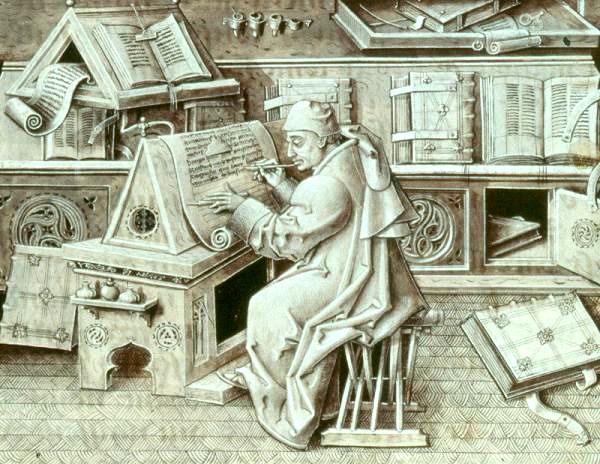
I’m old enough, you see, to remember having to load the program you wanted to use via floppy disc when you booted up.  We all assumed the swapping of discs was the price you paid for being able to, say, type a dissertation without using white-out all the time.  Then we started hearing these rumors of an “internet” with “email.”  I found my first (and it turns out, only) full-time professorship via letter.  Delivered by the post office.  A friend wrote to me about the opening and I sent a fateful letter of inquiry to Nashotah House.  The rest, as they say, is history.  I’ve kept much of the paper of those early days.  The movers always complain that I’ve done so, but I’m between worlds.  I was born in a paper world and I don’t trust this electronic one.  That’s why I still buy physical books.  I’ve had too many devices die on me.  And now I keep only one or two apps open at a time, and forget to look at the stuff on the others—I keep them open to remind me.

It is a jungle, this virtual world.  We like to think it’s civilized but what do we really know?  So I deleted the app that pops up telling me that one app open at a time is too taxing for my computer’s memory.  Then I remembered that I pay an annual fee for such annoying reminders.  I had to reinstall and await the notices again.  Yes, some of my files are big.  I write books, and that’s just the way it works.  So I put up with those yappy reminders because, well, it’s better than swapping discs a dozen times just to type a sentence or two when I have time.


Complications

That string of ten digits becomes your personal identity.  It’s conveyed by a pocket-sized device that’s so expensive you have to pay for it in installments.  And it’s not a one-time expense.  For a monthly fee that would’ve sent our parents calling on AT&T we carry a compact computer with us at all times and call it a phone because it responds to those ten digits.  The trend is to replace them every two or three years as more and more features become available, many of which, one suspects, are never used.  So, with a notice from our carrier that the card in one of our devices would no longer work at the end of this year, having reached the end of its life, we found ourselves in one of the countless phone stores around the country.

I mused as we waited—buying a replacement phone took two hours out of a Saturday, and that didn’t count driving time—at how complicated life has become.  One of our cars, purchased in 2003, also needs replacing.  My wife and I have to coordinate a day off work to buy one.  It pretty much took a whole day the last time we bought a car.  It’s complicated.  Credit checks, titles, registration, insurance.  And oh so much money.  You can’t, however, live without a car.  Not if you don’t reside in a major city.  You need to get to the grocery store, to doctor’s appointments, the hardware store—and the telephone store.  Many of these places exist in their own carefully zoned commercial habitats and since they have the necessities of life, you need to go to them.  Meanwhile, the internet offers to send them to you.

Ads now tell me you can buy your car online and some smiling stranger will drop it off right at your house.  It’s just that easy!  What they don’t say is all the work that must, I’m assuming, be done in advance.  The insurance, the financing, title transfer, trade in, let alone nothing of the test drive.  Now you have to figure all that out in advance.  Let’s face it—nothing is easy.  If you’re reading this you’re doing it on a highly sophisticated device that may have cost you quite a bit of money.  If it’s a phone it bears your personal ten digits that can be used to reach you at all times and in all places and that, in fact, knows where you are at all times.  Even if you’re out for a virtual test drive.


False Focus

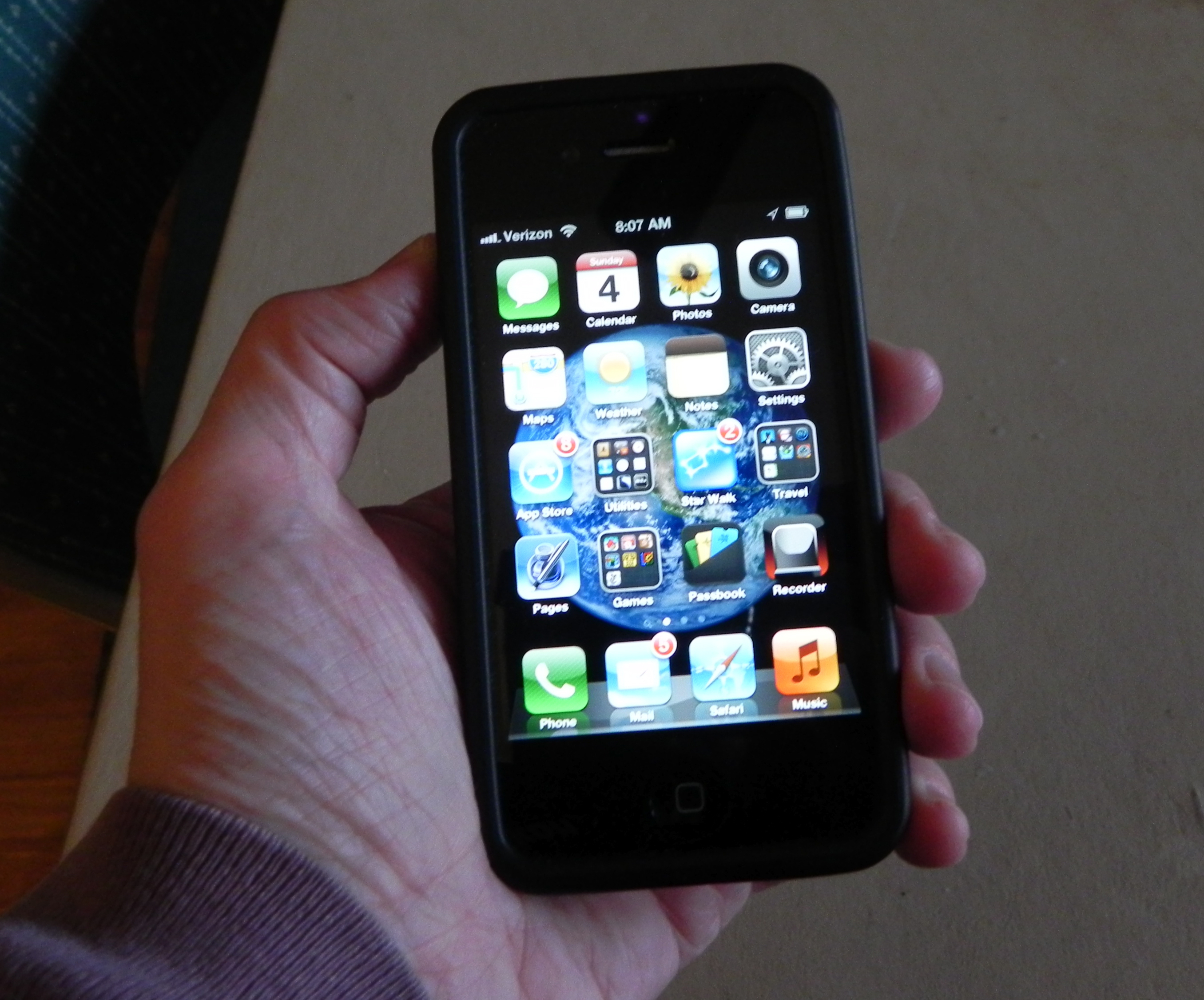
I seldom use my iPhone.  I admit that I like having a camera with me most of the time and I don’t look like a tourist.  I don’t text and when I feel like tweeting I do it from my laptop.  I often forget where I put my phone and walk out of the house without it.  What I’m trying to say is that it’s not a distraction.  Now I realize companies (which seldom undertake to comprehend those of us who are anomalous) have to appeal to the lowest common denominator.  In iPhone world this means that they now want you to use “Focus.”  In other words, if you’re behind the wheel or in danger of losing your job for being distracted all the time, you can filter what gets through.  I recently had a request from my phone to send me Focus notifications when I’m home.  Of course it knows when I’m home!

It seems unnerving to me that we need to have our devices remind us not to use them.  What does it say about our love-love relationship with devices?  We use them to guide us when we’re driving—no longer experiencing the wonder of getting lost.  We read on them, forgetting the feel, smell, and non-reflective look of a book.  Some people even smoke their devices.  Many people now protect their houses with devices that allow them to see who’s at the door.  Do we really feel safer with our devices taking care of us all the time?  Perhaps we do.  Perhaps the cyborg revolution has already begun.

When I see how simple things like telling an apple from a tomato still flummox machine sensors (and even if they learn to tell this difference, the point remains the same), I realize just how much life experience teaches us.  We’re constantly taking in sensory data and interpreting it.  Often subconsciously.  I can smell and feel the difference if the same shirt is dried in a dryer or on a line.  I know which is better but I struggle to find the words to describe why.  I can tell the difference between the taste of this peanut and that one.  Some scents can trigger euphoria while others warn that a mustelid is nearby and wants to be left alone.  I know to look around for a skunk, to honor its wishes.  I can infer that the apples that have started to go bad are why that opossum is in our compost bin.  Perhaps I’ll pull out my phone and take a picture.


Reconnecting

Not using the internet for 48 hours isn’t the same as not being able to use the internet for that length of time.  Even politicians (who are notoriously slow at figuring out what people need) have started to make noises about this being an essential aspect of life.  Some (many) things you just can’t do without connectivity.  And during a pandemic taking an entire family to an enclosed space with free wifi (still a rarity) for over a full day so that they can get things done is an issue.  All of this has convinced me of the need to purchase a wifi hotspot, in addition to relying on what Astound Broadband (formerly RCN) is able to provide.  (You see, I’m in charge of a Sunday morning program at a local faith community.  I couldn’t even email anyone to let them know I wouldn’t be able to show up on Sunday without using costly data.)  Now that service has been restored, a kind of nervous normality has returned.

This has been a learning experience.  Of course we’ve got books to read.  I have papers, stories, and a next book to write.  None of those, ostensibly, uses the internet.  All of them do, however.  I’ve been conditioned to look things up on the web while I’m writing.  This is true of both fiction and non; a fact needs checking, a reference requires look-up, a thought occurs to you that has to be dealt with before you move on.  There’s an email you forgot to answer.  Etc.  Etc.  The web is our source of news (what’s happening with Ukraine?), our phonebook, our map, our encyclopedia.  Let’s face it—it’s an addiction.  But a necessary one.

Like many things, our government has the capacity to make internet access available, just like they could do our taxes for us and stop the madness of setting back clocks each year from Daylight Saving Time.  They could ensure universal health care.  They’re too busy “defending” a crumbling, pre-internet way of life and enriching themselves to actually enact any of these things.  And somebody would have to figure out what accountants would have to do if taxes weren’t an issue.  I strongly suspect people would still be willing to pay for more than basic internet connectivity.  But to have a basic signal out there that we could tap into without tapping out our data plans would be a real boon.  I found myself glancing at our neighbors’ houses all around and thinking, “They have internet.”  We pay a lot to have it too, but the only company in the Valley can’t guarantee access, especially on a weekend.  What have I learned?  The ascetics were onto something.

Photo by Nicolas Häns on Unsplash

Outernet

Once in a while (ahem), I interject a note of caution regarding technology.  This blog has been part of my daily routine for over a dozen years.  I try to post every day.  When I experience life outside I often think “that would make a good blog post.”  I make notes.  I ruminate.  One of the things I caution about is the fragility of tech.  In order for me to post these thoughts many different components have to work just right.  Not only that, but if I want to pay bills, or, more importantly, work so that I can pay bills, I have to have internet.  Everyone in my family uses it and they do so all day long.  This weekend is the long anticipated Project for Awesome (check it out at projectforawesome.com) sponsored by the Vlogbrothers, John and Hank Green.  If the names are familiar it’s perhaps because I’ve read and commented on their books.  Then the internet went out.

Late on Friday afternoon, of course.  Now we’ve had outages before—most recently after a power outage earlier in the week.  I called what used to be RCN, the only service provider in our area, only to be on the phone for half an hour with a tech.  She talked me through the usual rebooting and system checks.  The router was fine, but the only actual connection to the internet is via wifi mediated by a device called Eero.  There’s no ethernet cable (as if Apple laptops even have ethernet ports any more!), no phone line plug-in (ditto), nothing.  Nothing but Eero.  Apparently Eero had died.  And being a weekend a masked tech can’t be sent until Sunday afternoon.  So Friday night with no Disney Plus and Saturday without the long-anticipated Project for Awesome (you really should check it out).

Then my wife noticed her phone could act as a wifi hotspot.  It felt like we were entering a new world of magic.  (And data bills.)  The laptop could covert the G4 that her iPhone could receive into wifi.  It wasn’t ideal, because we have three people who want to use the internet.  With old tech.  All because one component of RCN’s complex system has x’s for eyes.  We had to play Wordle through her phone.  Watch Project for Awesome (it supports charities!) through her phone.  I don’t know, maybe we are even breathing through her phone.  Once in a while I interject a note of caution regarding technology.  This blog post is brought to you by my wife’s phone, acting as an internet hotspot, before anyone else awakes this Saturday morning.

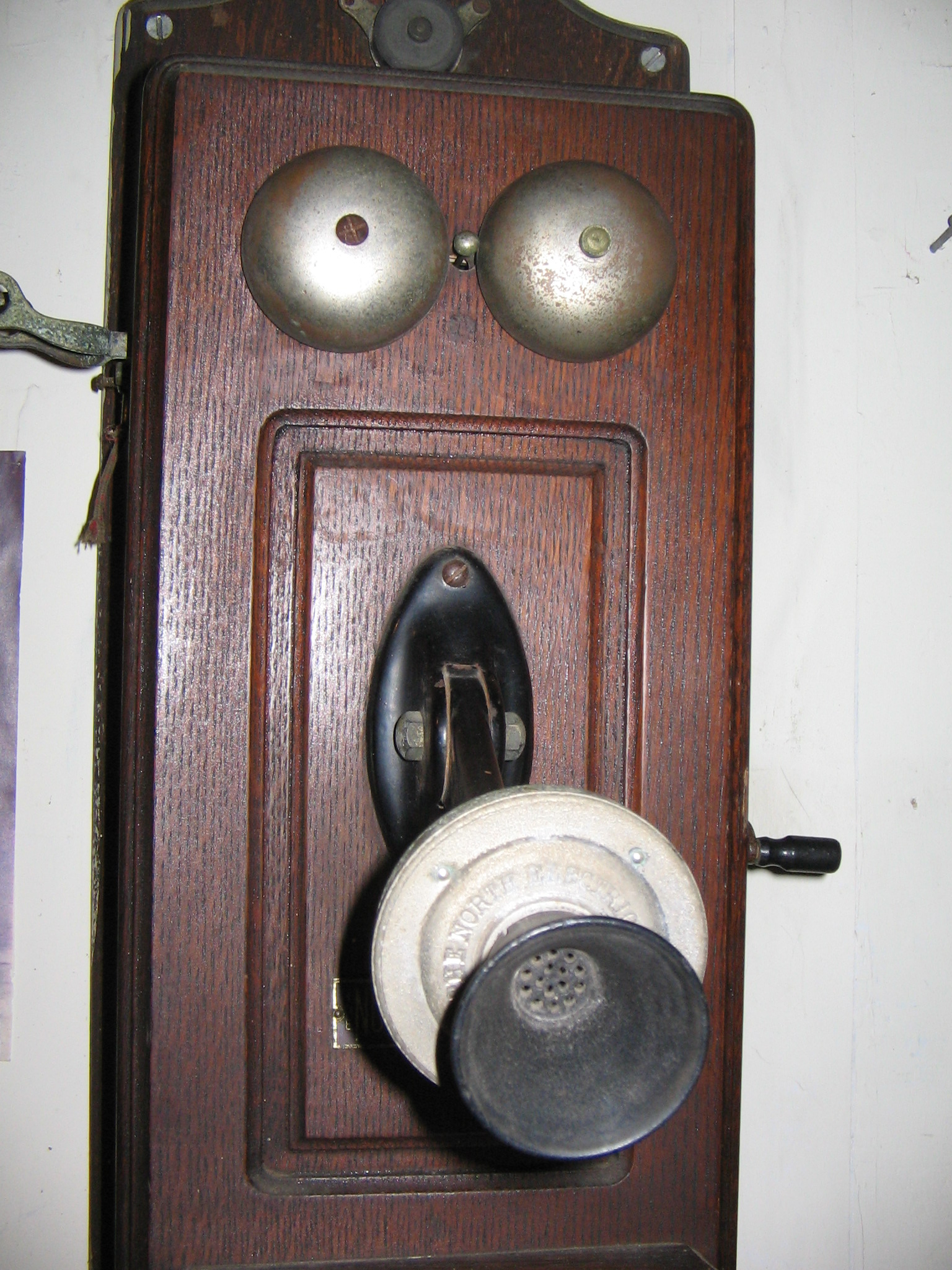
Ancient history!

Routine Change

A certain type of mindset thrives in routine.  Perhaps you’ve noticed that these posts appear each day about the same time.  This happens because the routine states that work comes next and it will be largely the same day after day after day.  After work there’s also a pattern until I fall, exhausted, into bed.  Hit repeat.  In the midst of this routine change has crept.  Partly it’s the pandemic, but mostly it’s technology.  And spending habits.  People don’t buy academic books like they used to.  Overall books are booming—so much so that paper shortages aren’t uncommon.  In order to try to keep up with electronic lifestyles, publishers have to integrate the newest technology and to do that everyone has to learn far more tech than technique.  The pace of change is dizzying.

For those who thrive on routine, such rapid-fire alterations make it feel like we need a personal change manager.  “How do I do this now?”  The way we’d done it for years has suddenly shifted and it is only one of many moving parts.  Meanwhile, outside work, other aspects are shifting even as many people still survive without computers at all.  We’re left, those of us tied to routine, in a haze of uncertainty.  It’s like that dream where you’re driving and you can’t slow down but you can’t see out the windshield either.  To make it through we look for routine.  I type this posts on a laptop.  I prefer to write things out by hand, but there’s no time for that any more.  The routine has been broken and the shop that repairs it has gone out of business.

Perhaps this is a malady of those of us who look to the past.  Technological changes used to be measured in centuries, not seconds.  Ancients thought a spout on a jar was a pretty rad invention.  For a hundred years.  Maybe two.  Now if you don’t buy a new iPhone every couple of years you’re hopelessly outmoded.  What was my routine again?  I still awake at the same time and begin each day with writing.  I’ve learned to do it via laptop.  Then it’s to the work laptop where updates seem to be loaded daily and I’m the dog chasing that stick now.  I wonder whose vision we’re following?  Technology’s in charge now.  The rest of us mere humans should be able to get along, as long as we establish a routine of routine change.


The Cost of Content

Those who don’t read this blog (you, my friend, are in a rarified crowd) aren’t aware of my antipathy to tech for tech’s sake.  Many people mindlessly go after the latest technology without stopping to think of the consequences.  I was reluctant to get a cell phone.  Not a decade ago I got along fine without one.  When I finally succumbed, I found I didn’t use it much.  I still don’t.  Nevertheless, many have charged ahead.  It’s not the first time I’ve been let behind.  I recently wrote about an organization I joined that unilaterally decided to make all members sign up for Slack.  “It’s better than email,” they said.  What they didn’t say is that it doesn’t replace email.  In fact, what it does is gives you yet another communication medium you have to constantly check.  Why?

Not that long ago—a year or two perhaps—it was recommended that you ask people what their preferred form of communication was.  Phone call?  Text?  Email?  Well, my cell phone plan charges by the call and text so please don’t use that.  My preference, since about the last century, has been email.  I check it regularly and I respond as long as emails don’t get buried by others on top of them.  What did my organization do?  Went to Slack.  How long, I ask, will it be before advertisers and others figure out how to do the Slack stack?  How long before a new technology (giddy giggle) comes along and we all have to do that instead?  I’ve lost track of the number of software packages and apps I’ve had to learn for work.  Several dozens at least.  What suffers?  The content does.

Now I get three or four, or nine or ten Slack notifications a day, through my email. (My computer has no room for a nw app.)  It has compounded the premature burial issue I’ve got.  That email that arrived just yesterday is now on page two.  When will I have time to navigate to it?  I guess I’ve been slacking off.  So now I check my email to see if there’s another system that I have to check to find out someone wants to contact me.  I miss the days when humanity drove communication instead of technology doing it.  Learning some new system isn’t always the solution to complex problems.  Or at least we can find out the preferences of the individual before making them learn (and probably eventually forget) a new communication system.  It seems to me that we should be spending actual time on the content of the communication itself instead of playing with new toys.