Had my Phill

One of the pleasures of the editorial occupation is traveling to campuses to meet potential authors. Having no excuse not to go to Philadelphia, I jumped on a train this morning to spend the day on the campuses of the University of Pennsylvania and Temple University. I’d been to both campuses before, but they are a study in contrasts. Penn is Ivy League, of course, and the students appear confident and self-assured. Temple is a large, public university situated in a neighborhood that doesn’t exactly inspire the same confidence. The students appear happy enough, but of a rather different ethnic blend. I pondered these differences while waiting for a taxi. I hadn’t realized that PHL Taxi stands for “Prefer Hanging Loose”—after three calls and no vehicle, I had to call another company. To try to save Routledge a few pennies, I had opted for the Days Inn in north Philadelphia. A friend told me over lunch that this part of the city is probably not the safest.

In the taxi we drove through neighborhoods that politicians like to pretend do not exist. The sheer degradation of the buildings, sidewalks, and people was sad. The most common type of building, next to houses (many semi-demolished), is churches. Many of the churches bear their names in Spanish; most have heavy metal chain doors emblazoned with crosses. It seems that maybe Van Helsing would go to church in a place like this. The kind of place where a dead body does not astonish, and the people on the street corners look remarkably cheerful, given the circumstances. The Days Inn is in a more open and commercial area, and I don’t think anyone has actually been murdered in this particular room. On Temple’s campus I saw many signs for Occupy Philly.

Those who think everything is just fine with the ultra-wealthy in their heaven while we expect human beings to live like this are worse than naïve. Those who are privileged look on Occupy Philly with a sense of academic curiosity. Those who live next to poverty, hard up against it, see Occupy Philly as a mandate. We can’t keep pretending that everything is okay. If God has a plan for America, why have so many people been left out? People with more churches per block than any affluent neighborhood desires or supports? The movement may be ill-focused and leaderless, but the need is very real. Tomorrow I go back to Temple, back to where the struggle is often life and death and the need is very human. But for this evening, “Now I lay me down to sleep…” I’m sure you know how the rest of it goes.

Waiting on a Miracle

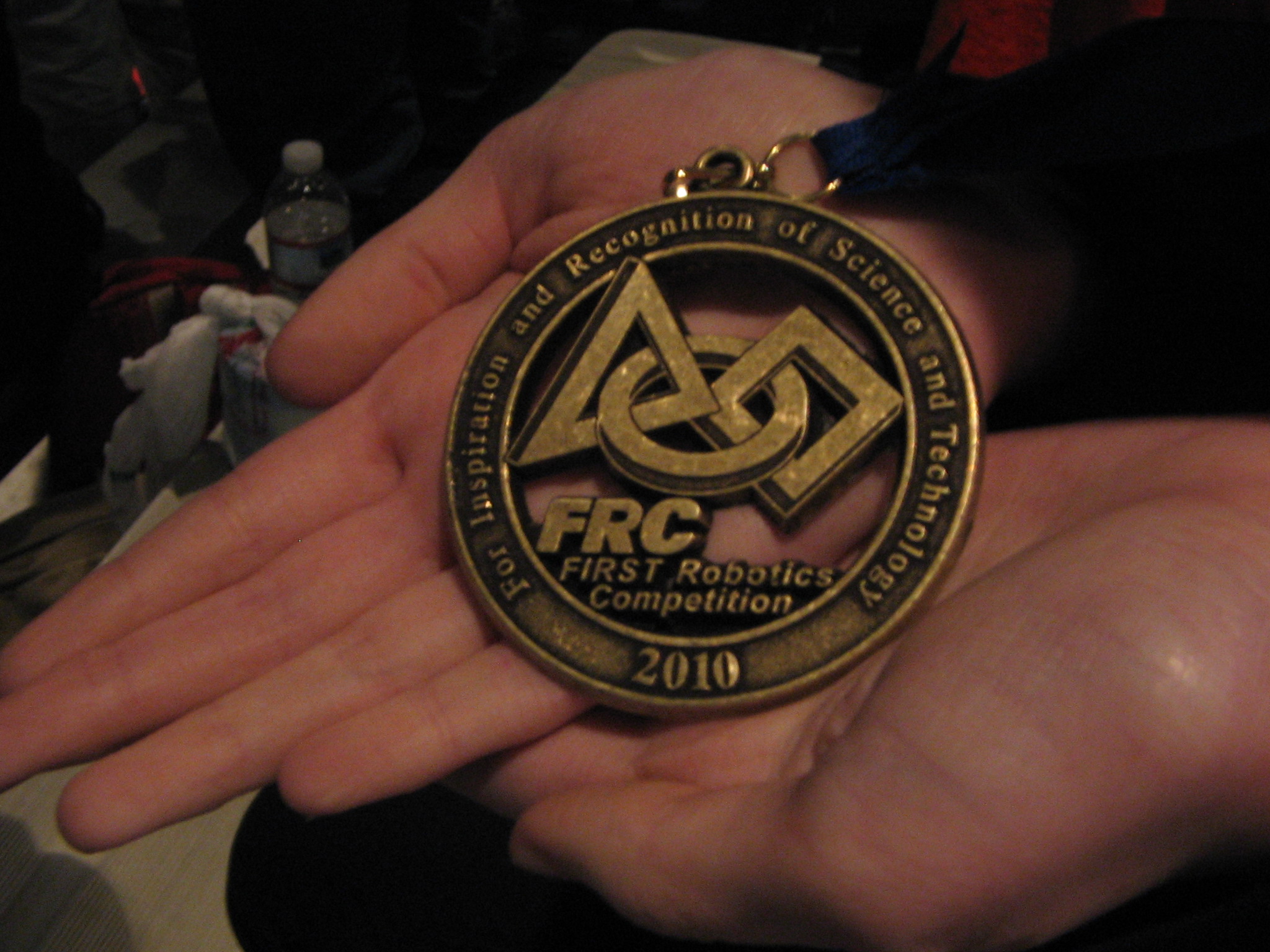
A Google search for Morgan Freeman and FIRST Robotics will bring up an online invitation to the FIRST Robotics national championship in St Louis. After having spent yesterday at the Philadelphia FIRST Robotics regional competition I was once again struck at how emotional such events can be. I reflect on how emotion often drives religion and it is obvious that humans crave this kind of fulfillment. We look for something to believe in. Science and technology fields of inquiry are offering answers to age-old questions and present-day problems. God has been removed from the machine, but a divine residue remains. Whenever I attend these competitions I am alert for how religion manages to cling on to this highly humanistic art of robot building. I’m never disappointed.

The Dean of Temple University’s College of Engineering (which was hosting the event) spoke of the emotional rescue of the Chilean miners last year and how the press hailed the feat as 75 percent engineering and 25 percent miracle. The Dean espoused that the goal of engineering is to bring the engineering factor up to 100 percent. A world where we no longer rely on miracles. Any of us who’ve every waited on a miracle know that the outcomes are chancy at best. And yet the religious language was not over. DuPont, one of the corporate sponsors for FIRST Robotics, had a promotional slide on the projection system reading “The Miracles of Science.” Of course, that is one of their corporate logos, but the question left lingering in the air is: does the miracle come from God or human engineering?

Teams from a wide variety of high schools participate in the FIRST Robotics Competition. The founder of FIRST, Dean Kamen, was present yesterday to celebrate the final regional event. Several parochial schools compete in the competitions, and religious language is evident in team names, logos, and mascots. One of the winning alliance members yesterday was the Miracle Workerz (I didn’t catch what high school they were from) making a hat-trick of miracle references. Another team mentor was caught on the camera making the sign of the cross as he left the robot to make its way into the finals. Even though my team did not make it out of the elimination rounds this time, I left feeling inspired. Dean Kamen revealed new ways that FIRST is promoting technology to better the future while the headlines remind us how dangerous religious extremists can be. At the same time, even in this future that our engineers are designing, God is still hidden in the machine.

A gift of the gods or human innovation?