Magic Color

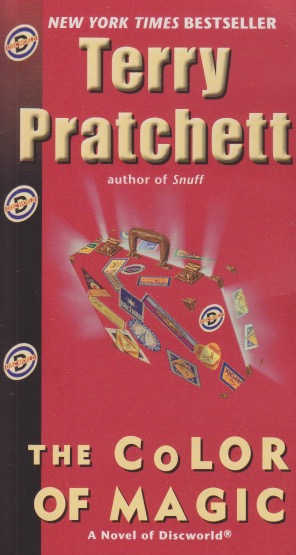
Terry Pratchett was known for his quirky, funny writing.  I’ve only ever read his collaboration with Neil Gaiman before, Good Omens.  I’d heard of Pratchett’s Discworld series and I decided to give his first novel in the series, The Color of Magic, a try.  There can be little doubt that Pratchett was a clever writer with great turns of phrase and imaginative plots.  Something I’m discovering about myself, however, is that fantasy as a genre isn’t working well.  I suppose a case could be made for calling Discworld science fiction, but the world-building seems definitively fantasy—warriors, dragons, supernatural beings—the whole lot.  The story is well told and the writing’s great.  It just didn’t grab me as I hoped it might.

Having said that, one thing I noticed was that Pratchett realized something I’ve written about many times before—if you’re going to do world-building incorporating religion makes it believable.  There are gods here, often distant and mainly unconcerned with human beings (and various other beings), but clearly part of the diegesis.  And, of course, magic.  Maybe that’s the part of fantasy that I find disconcerting.  I read through the Harry Potter series, and although it was funny in parts, it was mostly played straight.  Was it fantasy?  I’ve been writing quite a lot about genre lately, and I’m beginning to run up against its limitations.  Discworld is clearly a fantasy environment. Rincewind and Twoflower are great characters, and so is the luggage (if you haven’t read it yet, let that be an enticement).

I ran into the same sense of disbelief recently with Ursula K. Le Guin’s Left Hand of Darkness, and there’s little doubt that it’s science fiction.  Maybe as I’m aging I’m getting more and more mired in this familiar, if not tired, world in which I find myself. Horror, however, retains its fascination.  The Color of Magic follows the hapless wizard Rincewind and how his life changed forever after he met the tourist (a rarity on Discworld), Twoflower.  Together they face and overcome (with sometimes a little deus ex machina) obstacles of others with agendas that simply don’t accept misfits.  The literally cliff-hanging ending does encourage the reader on to book two and the characters won’t soon be leaving my mind.  It’s just with fantasy too much seems possible.  Anything can happen and it’s almost a matching of wits with the writer.  Not that that’s bad, but maybe it just isn’t the escapism I tend to think fantasy is intended to be.

Good, Evil, and Normal

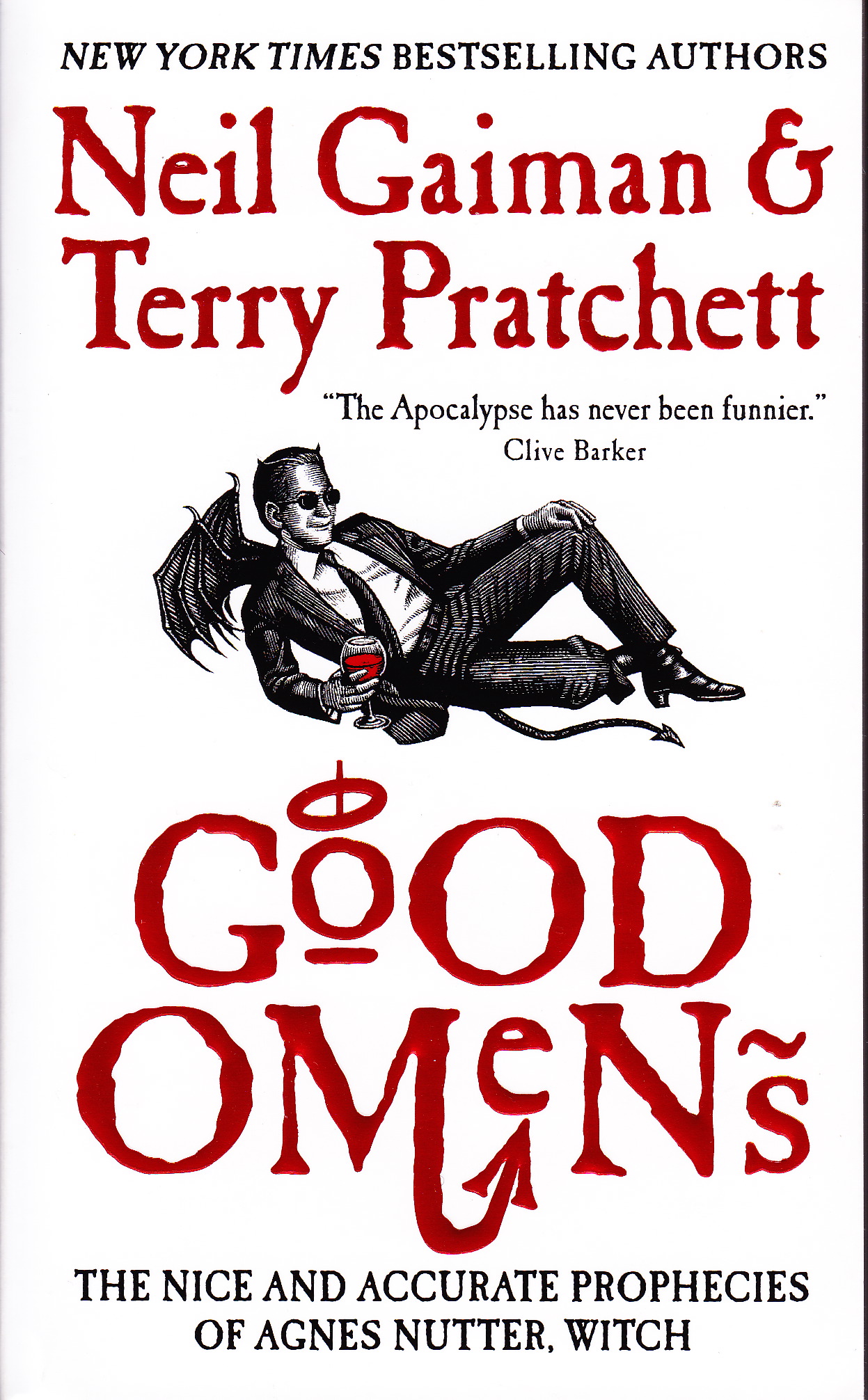
GoodOmensTo date I’ve read a fair number of Neil Gaiman novels. One of my students started me out on American Gods and I pursued his others on my own after that. I was a little unsure about Good Omens, however. I guess I’ve always been dubious about the quality of co-written books. Terry Pratchett, an accomplished novelist in his own right, paired up with Gaiman on this one, and it took the wisdom of another student, albeit recently graduated, to assure me that it was worth the effort. Given that it’s about the apocalypse, or perhaps an apocalypse that doesn’t quite take off, there seemed to be no reason not to give it a try. It is, at the end of the day, a charming book with colorful characters and an Antichrist who gets switched at birth and grows up in a normal household and herein lies the tale.

One of the most common religious themes in novels is the end of the world. The four horsemen of the apocalypse are one of the most striking literary tropes of the first century, if not of all time. The real question about the end of the world, it turns out, is—why can’t it be funny? For those who’ve pondered that, Good Omens is the book for you. It actually does help, however, if you’ve read the Bible. It adds to the cumulative effect. Subtitled The Nice and Accurate Prophecies of Agnes Nutter Witch, the book revolves around the certainty of the written word. Prophecy, however, just as in the book, only achieves verisimilitude in retrospect. The prophets didn’t always get it right, even in the Bible. Human choice often causes a breakdown in divine plans. In Good Omens, you’re pretty sure from the beginning that the world won’t end, but you’re not quite sure how it won’t end. The unfolding of the story eventually addresses how a prophecy can fail.

Free will, those who specialize in theology and philosophy will say, is among the more difficult of phenomena to pin down. Some predestinarians would say it’s all an illusion. We are programmed to do what we do. Ironically, some reductionistic materialists would say the same thing. Each of us, however, trudging through out days of toil and play, feels like we’re making our own decisions. True enough, sometimes circumstances decide for us, but if we were given the choice of good or evil, wouldn’t we approach it the way we approach just about everything else? Along the way, the demon Crowley asks a pointed, poignant question: why would God make people inquisitive and then forbid them some obvious, desirable fruit? Isn’t the conclusion foregone? Any writer today would know the outcome before the first sentence was finished. And so, free will is off and running. I hope that the fact that the world doesn’t end won’t be a spoiler for anyone, because I also hope that others will read Good Omens and learn a great deal about how demons can be good, angels can be naughty, and people will always just be people.