Weathering Qohelet

Over the weekend I finished the initial formatting of Weathering the Psalms, my long-suffering book on the weather terminology in the Psalter. While I’ll have to give it another going over, a strange cocktail of feelings has come over me in the process. Scholars age quickly. The time between putting that last period on that last sentence and the book showing up in a few dozen hands is generally over a year. You feel outdated. Not only that, but this book was finished, for all practical purposes, a dozen years ago. In this world of endless, indeed, almost insane academic publishing, many books and even more articles have appeared that I should have read, pondered deeply, and incorporated into my work. That, however, is a luxury reserved for those society deems fit to place in colleges, universities, and seminaries. The predominant feeling, apart from relief, was a kind of melancholy, however. The book represents a world that no longer exists. Indeed, a young scholar who no longer exists.

From the day I started teaching at Nashotah House in 1992 (or even before), I knew it would be a limited-time engagement. The then dean, interviewing me, knew that I was too liberal to fit the medieval theology then current (and still current) at the school. As a teacher of the “Old Testament,” however, the damage I might do was deemed minimal. I wrote several articles on my beloved Ugaritic, but no job interviews came. Those who’d sussed the system suggested I try publishing biblical material—after all, that’s where the jobs are. (Ha!) So I began. Weathering the Psalms took several years to research and write in scholarly isolation. I began rising at 4 a.m. to find the time to do the writing. Most of the book was written between four and six in the morning. Yes, it’s rough. And tentative. A young scholar unsure of himself. Now I’m an old man even more unsure of himself. Still, there are insights in that outdated tome that I hope some will find worth their time.

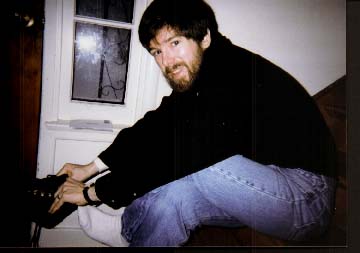
I have a photograph of myself that my daughter took at the time. I was putting on my boots to go shovel some snow. The face in the photograph is young. Optimistic, even. I was facing the weather. I’ve come to realize that all photographs are lies. They capture an instant of time that has already vanished. In my case, a livelihood. A dream that was shredded on the plains of some theologian’s ideological Somme. Winters seem to have become much harsher since then. Colleagues who’ve found jobs prosper while the rest of us fight against nightmares and that sense that all we ever tried to do was, in the end, vanity. One of the questions in the study, The Bible in American Life is, which is your favorite book of the Bible? Mine has always been Ecclesiastes. And even as I make final preparations to ship my manuscript to Wipf and Stock, I know that the preacher is right: there is nothing new under the sun.
snowman


Royal Reading

Post-Christian America still reads its Bible. One of the perks, such as it is, of working with Bibles is getting such vital news early. The Center for the Study of Religion and American Culture at Indiana University-Purdue University Indianapolis (IUPUI) has just released a study that was underway when I visited the school a couple years back. “The Bible in American Life,” available online, presents the results of a scientific survey of Bible reading in the US. Suffice it to say, we’re not done with Holy Writ just yet. In our world of high tech gadgets where the waves and particles that make the internet possible penetrate our bodies constantly, it is sometimes easy to forget that the Bible in many ways made this all possible. Both the good and the evil that drove western civilization to colonize its world had at least some dusty memory of “manifest destiny” embedded in sacred writ about it. And those who take the Bible seriously have continued to read, mark, and inwardly digest it.

The Bible in American Life, already picked up on by major media, indicates that about half of the population of the United States reads the Bible outside of worship. Perhaps not surprising given the still faltering civil rights dream, African-Americans are the biggest Bible reading demographic in the country. In fact, the study states, race is the single largest indicator of probable Bible reading. Those who are low on the economic scale also tend to read Scripture more. Those for whom “success” isn’t what it seems to be at first. Those whom “success” has passed by. Even Hispanic readers outnumber the white majority. People who have been distracted by material success, predictably, have little time for ancient wisdom. Still, half the country does turn to the Bible on occasion. Among the more interesting demographics is the fact that nones—those who are unaffiliated with any religion—also turn to the Bible for learning about life.

434px-King_James_I_of_England_and_VI_of_Scotland_by_John_De_Critz_the_ElderThe media seems to have picked up one of the major points as well—few Bible readers turn to Holy Writ for political advice. To hear the news weavers tell it, politicians and rabble-rousers trawl the Bible for its scant words about homosexuality and abortion—issues ignored by Moses and his ilk, for the most part. In fact, most people rate such issues very low on their scale of why they turn to the Bible. It is read more for consolation than for political intrigue. Having just about finished my formatting of my book on the Psalms, it warms my heart to read that the Psalter tops the list of favorite books of the Bible, narrowly inching out the Gospel of John. The study doesn’t, and can’t, come right out and say it, but the Bible is read by people to help them feel better. They still prefer the King James by a considerable margin. And in this world of self first, they can still read, “For what shall it profit a man, if he shall gain the whole world, and lose his own soul?” Even though Bible readers are, in the majority, women. Good old King James still shows the way, as the ruling white man always has.