Life As We Knew It

The government does funny things when your back is turned. Back in January, reading Scott W. Gustafson’s At the Altar of Wall Street, I learned that the government treats corporations as people. It assigns certain rights and privileges to these collectives so that business can thrive without interference. A recent article by Chip Colwell in The Conversation asks, “What if nature, like corporations, had the rights and protections of a person?” This isn’t merely an academic question. As Colwell points out, New Zealand has recently accorded a natural area personhood status to protect it from exploitation. Meanwhile we in the United States live in a country where companies—those nasty people—are chomping to get their teeth into the “natural resources” of our national parks and wilderness areas. Not because it’s best for the planet, but because their corporate person has one of humanity’s greatest evils—greed. Gluttony used to be a deadly sin. Now it’s called economy.

One thing this corporate person doesn’t understand: we have only one planet and it belongs to everyone. Or no one. Our capitalist outlook has given an undue sense of entitlement to those who have the means to take without asking. They can frack the ground under your feet and you’ll never know it. Until the earthquakes or sink holes come. Meanwhile natural areas—as Colwell indicates, considered sacred by many Native Americans—are unprotected from fictional persons that have immensely more power than any individual. We know what happens when the sacred is engaged in battle by the economic. It’s an unfair fight.
img_2476

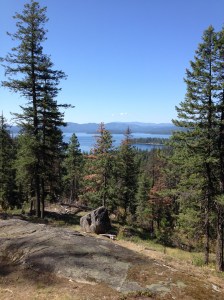
When the crush of work stress gets to be too much, nature is our balm. Many times my wife and I will head to the woods on a weekend just to regain the balance that is stolen by what we call civilization. Manhattan has its wonders, to be sure, but they pale next to a simple stretch of “undeveloped” land and a path to walk through it. There’s a reason that corporate executives have their vacation houses far from the towers they build. It’s not a question of whether the sacred forests are valuable, but rather who gets to own them. With the legalization of fiction—corporations are not people, no matter how logic may be distorted—we have doomed fact. The earth is our fact, and, at this moment our only fact. As Colwell suggests, if it were treated like a person we’d have to show it some respect. And with respect true civility can thrive.

Exobiology

Are we alone in the universe? The answer is every day growing more and more certain that we are not. Humanity may experience shortages of many things, however, pride is not among them. For millennia we’ve been convinced of our own superiority and, of late, we’ve become convinced that we must be as good as it gets. We’ve mastered logic and our material world. We’ve sent probes to land on Venus and Mars, and flying by just about every other planetary body close enough to reach. We sure are smart. So it stands to reason that we are the brightest beings in a universe that we tell ourselves is infinite. A recent article on Exobiology that my wife pointed out to me on The Conversation, traces the history of the idea of life outside the earth. Not surprisingly, the idea has its origins in religious thought.

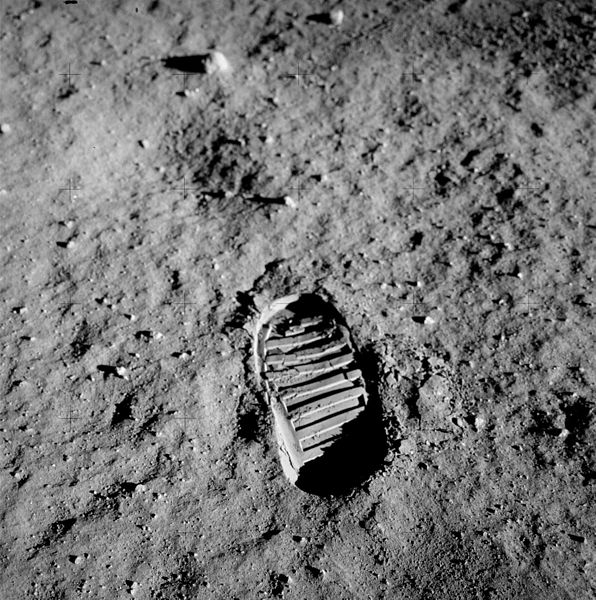
Giordano Bruno was an early modern Dominican who was burned at the stake for his heresies. Like his near contemporary Galileo, he was fascinated by the sky and postulated that the world up there could be full of life. A church increasingly under pressure from the pesky Protestant movement had no time for flights of fancy among the faithful. No, religion at the time wanted its feet planted on solid ground. The only life up there was angels and God. Still, the idea had been broached. Since the world’s major religions have been geocentric, as a rule, they’ve had a bit of difficulty adjusting to the idea of the other other. God as other is one thing, other creatures as other is quite another. How do earth-bound religions account for the possibility of life in space? This is not merely academic fancy at play. We will almost certainly discover life elsewhere—whether it comes to us (or already may have), or we go to it (which might take a little longer), we will discover that a universe that is infinite has infinite possibilities. Will religion keep us grounded?

596px-Apollo_11_bootprint

Ironically, one of the areas where science and religion have broadly agreed is in the superiority of humankind. Both remain staunchly geocentric. Religions and tend to say we’re sinful, but other than that, pretty much the best the earth has to offer. Although biologists say evolution is non-teleological, they still have a hard time imagining something more advanced than us. We are pretty self-absorbed. Meanwhile, we are discovering water is likely not unique to earth. Rocky planets seem to be the rule rather than the exception. And there are billions and billions of stars in our own galaxy alone, among billions of others. What are the chances we’re alone? Virtually none. Here is one place that both religion and science might learn a lesson based on early spiritual teachings. In the face of the unknown, humility is the most logical response. I’m impressed in how far we’ve come in the last several millennia of civilization. I think, however, that we’d better be prepared to meet exobiology with a realization that Genesis 1 was only the beginning.