
Given my circumstances, I never really celebrated Father’s Day growing up. By the time I was old enough to get the concept, my father was long gone. My step-father, some years later, was no real father. Besides, we were poor and it was hard to think what such a celebration might entail. All of which is to say that I never really expect much from the day myself. My wife and daughter suggested we try Nightmare in New Hope again—this is the horror movie museum in New Hope, Pennsylvania, which had been closed last time we tried. It was an appropriately rainy day, the kind we seem to specialize in around here. I suspect that the museum will show up in a future blog post or two, but suffice it to say that it’s an impressive little collection. It’s an odd feeling, this human desire to be in the presence of something you’ve seen in a movie. I recommend it for any horror fans who happen to be along the mid-Delaware.
Not being large enough to take all day, we considered what we might do that afternoon. In keeping with the theme, a visit to Vampa: Vampire and Paranormal Museum was suggested. This museum is in Doylestown, which is only about a quarter hour from New Hope. There’s more to it than just the museum, so it too will likely come up in future posts. This museum contains a truly impressive array of artisanal vampire hunting equipment from Europe, dating between the seventeenth and nineteenth centuries. I’ll try to put together a photo essay of it soon. But that’s just the first room. A second deals with demonic possession. Then rooms have displays of occult and other esoteric artifacts, along with creepy suggestions to be careful of engaging too much with them. The final room is dedicated to St. Michael the Archangel, and it warns that the struggle with evil is real.
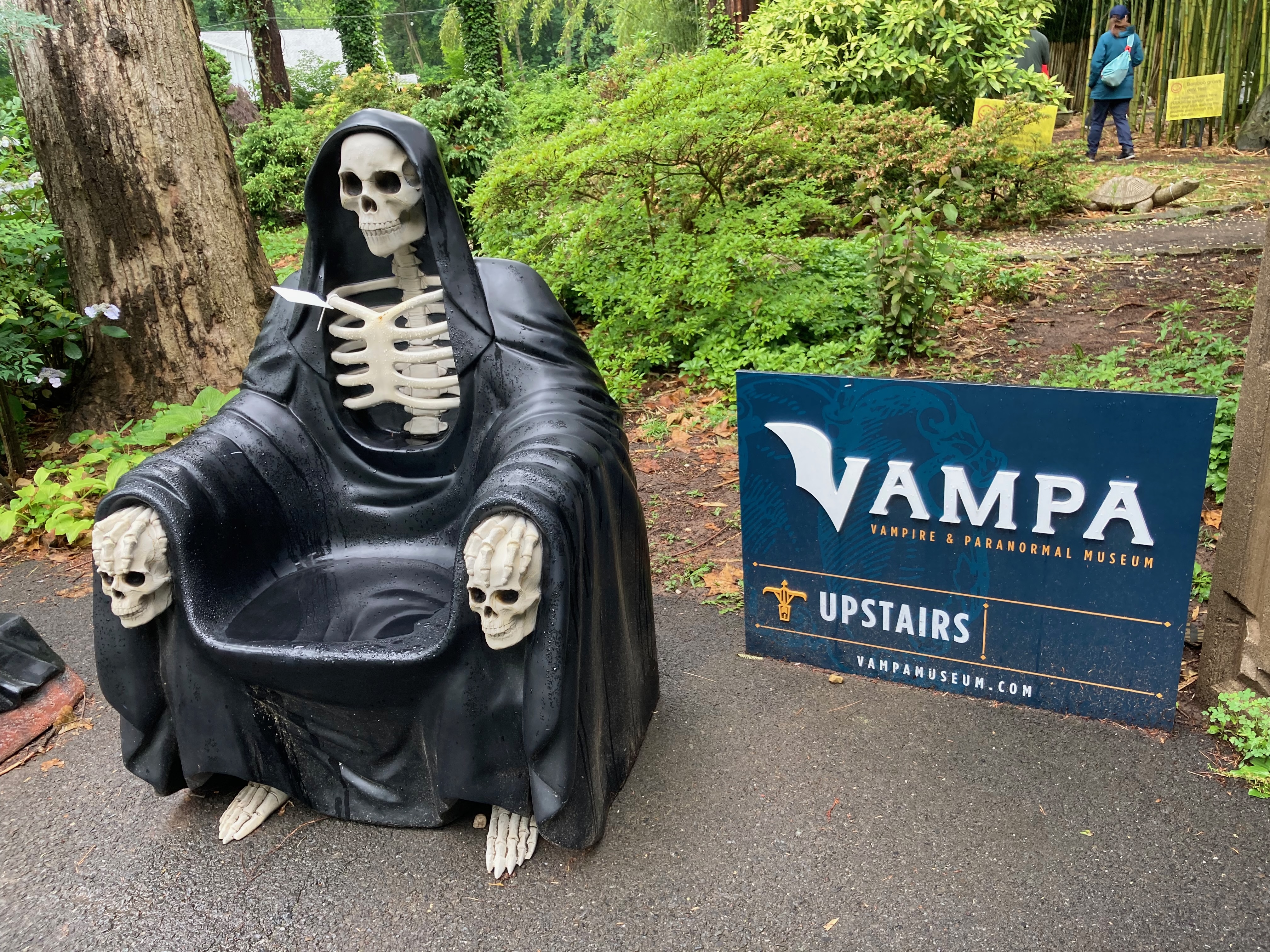
Both places had a steady stream of visitors yesterday. It would be fair to say that by the time we finished I was over-stimulated. You have to understand that I personally don’t know many people interested in horror. Going to these places was the sacrifice of a rainy Sunday afternoon for my family but will likely become one of those pleasant, lingering memories of the unusual that take on a rosy afterglow over the years. This blog quite often ponders over why such things take on meaning for someone interested in religion and belief. Being in the presence of artifacts, as noted above, puts you in touch with a kind of earnestness that mere electronic reading on the internet lacks. If you happen to be along the mid-Delaware, the side trip to Doylestown is a worthy add-on, Father’s Day or not.
 Steve A. Wiggins