
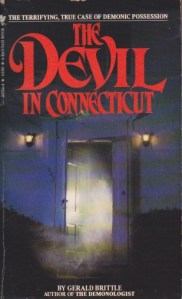
It was an almost surreal experience. First of all, it’s been well over a year since I’ve been in a movie theater. Secondly, I’ve never been to this particular theater before. And in the third place, I’m absolutely alone in here. I didn’t rent the theater out or anything, but I’ve been wanting to see The Conjuring: The Devil Made Me Do It since June 4. Actually, since September when it’s initial release was delayed due to the pandemic. Everyone else around here must’ve seen it already. I knew the story of Arne Johnson and the Warrens, having found and read Gerald Brittle’s book, The Devil in Connecticut. Loosely based on that event, this story focuses on the actual fact that this was the first time not guilty by reason of demonic possession was proffered in a US courtroom. The story is a strange one and the movie, as movies do, makes it even stranger.
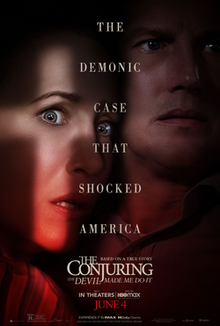
I’ve been anticipating The Conjuring: The Devil Made Me Do It, despite the title, for a few years now. If you’re familiar with Nightmares with the Bible you’ll know that an entire chapter is devoted to The Conjuring franchise. You may also know that it is the most lucrative horror series of all time, apart from Godzilla in its many, many iterations. One of the points in Nightmares was to try to make sense of the demonic world presented in the Conjuring universe. The franchise, for the most part, deals with actual case files from Ed and Lorraine Warren. Some of the episodes are pure fiction, however, and the explanations given in the films are all, well, conjured for the big screen. The movies call attention to the Warrens’ work, but in a way that requires an entire chapter to untangle.
My initial impression is that this isn’t the best movie in the series. I can’t replicate my previous work here, and I’ve only seen the movie once, so there are details I certainly missed. The demon isn’t named this time. Indeed, the backstory proposed is drawn from the spin-off film Annabelle. A fictional satanic group called Disciples of the Ram is posited as causing the trouble. Like the demon behind Annabelle, they’ve placed a curse on the Glatzel family for some unknown reason. During the opening exorcism Arne, in an Exorcist move, asks the demon to take him instead of the young David, the brother of his girlfriend. The movie leaves the Warrens to find out who put the curse on the Glatzels in the first place, and break it. With some time for pondering I’ll likely come back to this movie again. I do have to say that the book was probably scarier, although sitting in a theater alone to watch a horror movie is not something I hope to make a habit of doing.
 Steve A. Wiggins