Bible and Horror

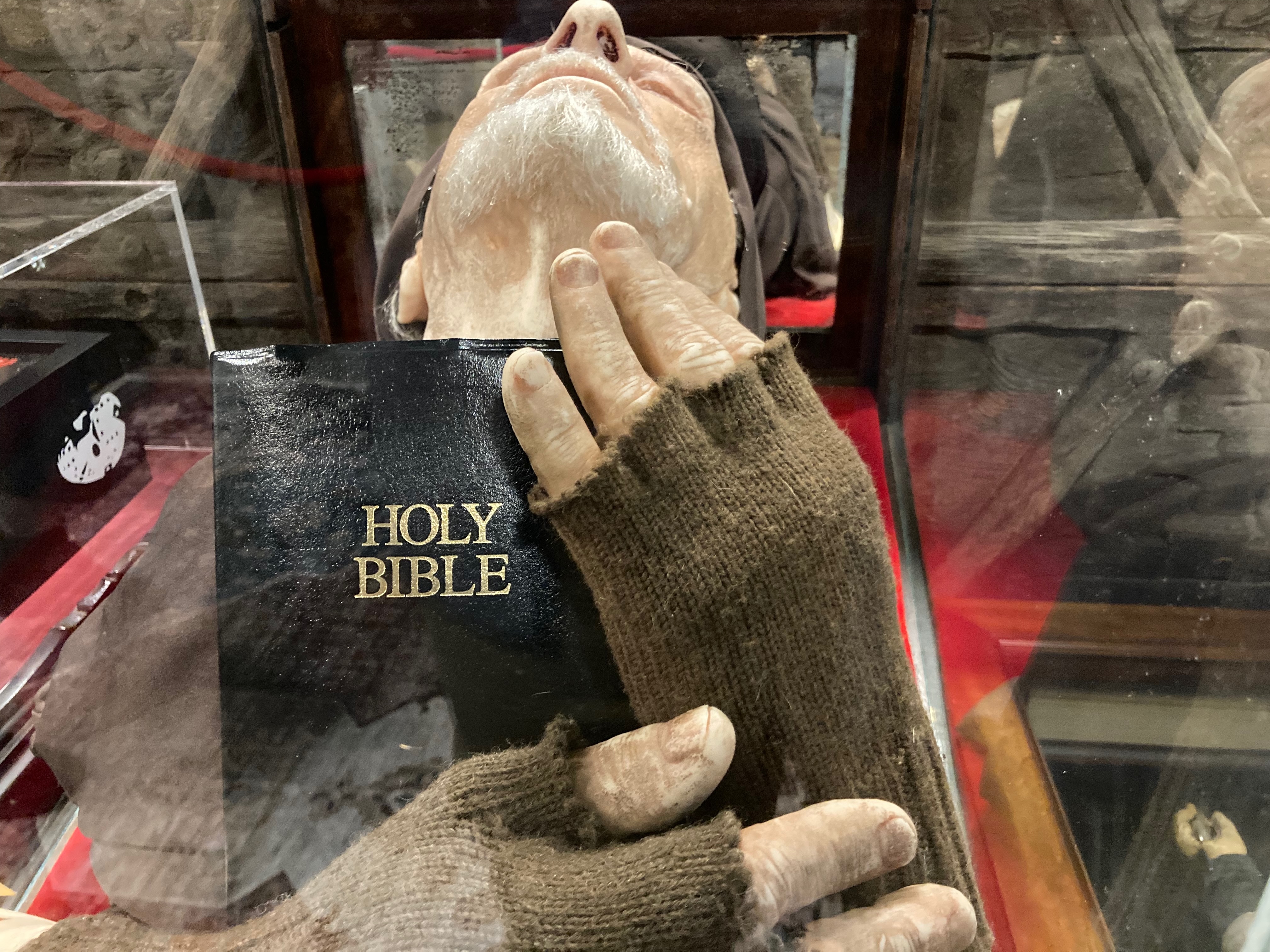
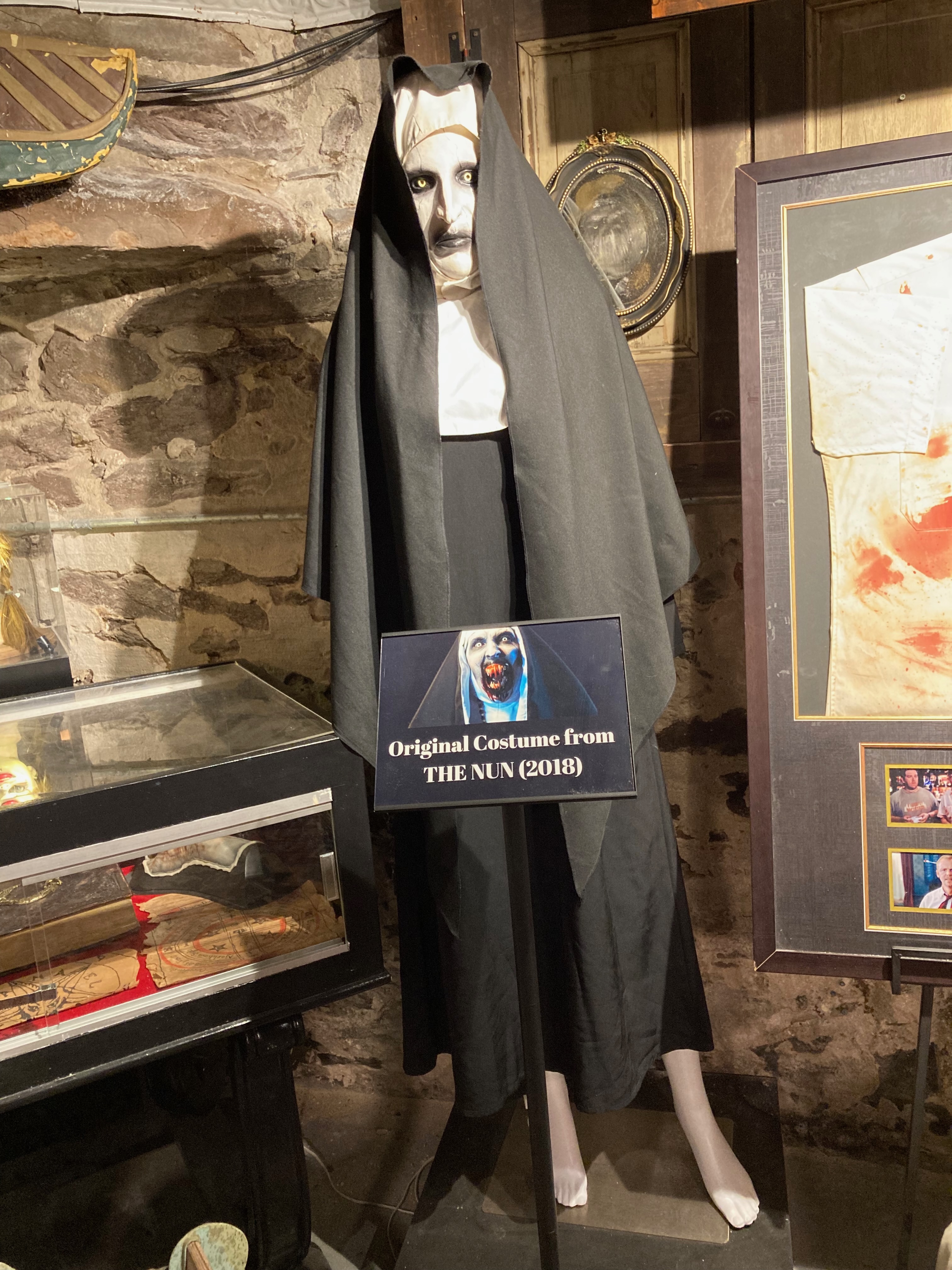
Having written Holy Horror, I keep an eye out for Bibles in horror contexts.  In the context of A Nightmare in New Hope there was the torso and head of Fr. Alameida from Stigmata.  In his hands he clutches a Bible.  Of course, if you’ve seen Stigmata you’ll know that Alameida is already dead at this point, having been so from the start of the film.  Those visiting a horror museum are likely completely nonplussed by seeing a Bible there.  Much of the horror genre builds on religious themes.  Witness The Nun.  The original costume for her is standing over in the corner right there.  If I had enough time (i.e., if I were in an academic post again) I would be spending my time trying to figure out this connection.  I’ve written about religion and horror in four books, in several articles on Horror Homeroom, and in too many blog posts to remember.  There is a connection that only professors have the luxury of thinking time to explore.

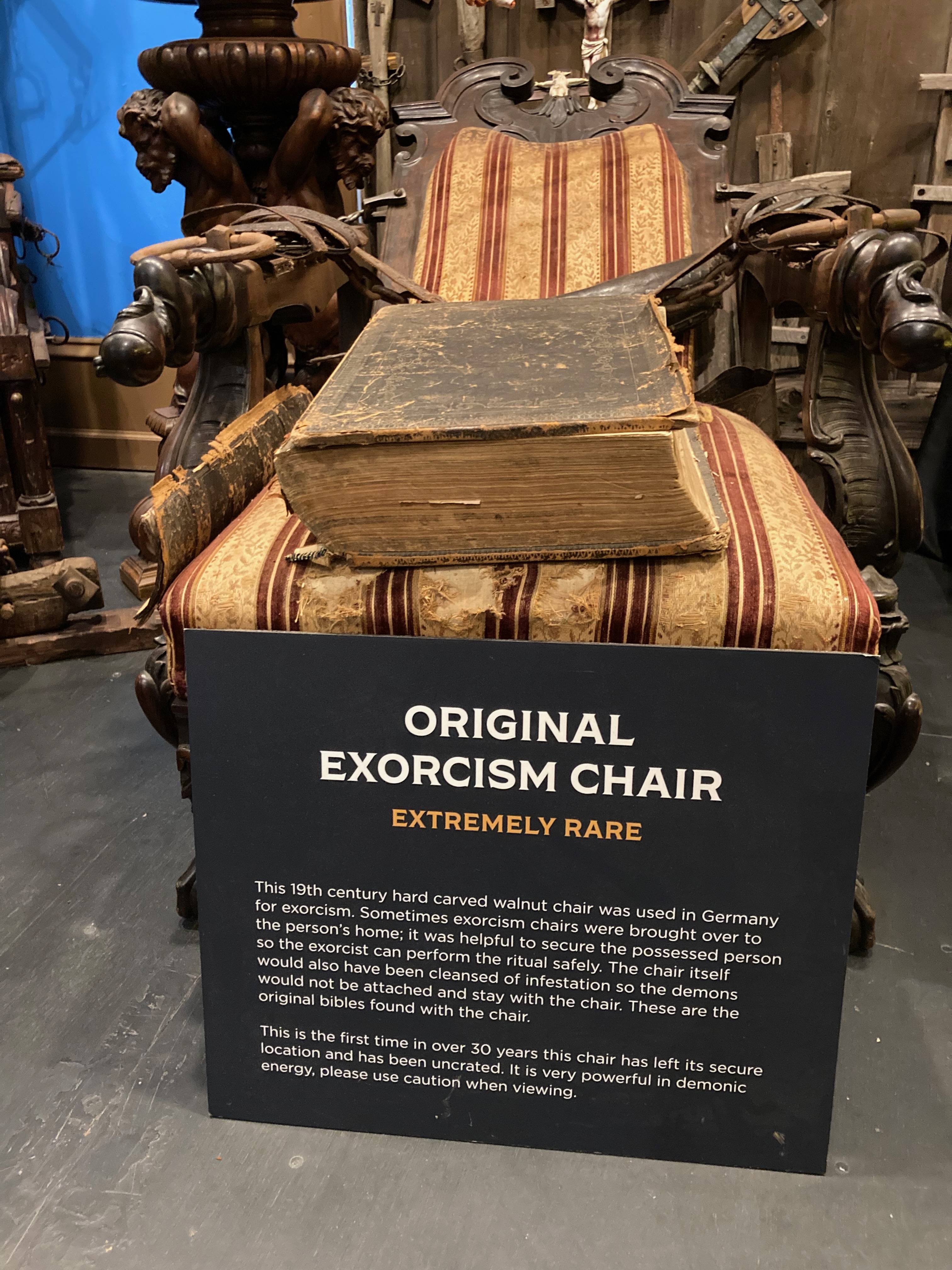
A couple hours later at Vampa, Vampire Paranormal Museum, Bibles were again in evidence.  Indeed, in profusion.  Vampire hunters, it seems, never wanted to be without the Good Book.  Many of the vampire hunting chests (entire chests!) included a Bible.  As noted in a previous post, Michael Jackson owned a vampire hunting kit for a while, until the Jehovah’s Witnesses convinced him he shouldn’t.  In one of nature’s ironies, in the mail when we got back from the museum was a handwritten letter to me from the local JW Kingdom Hall.  Religion and horror.  Vampa also owns a rarity, an exorcism chair.  Things get a bit muddy here since the chair dates from the nineteenth century but exorcism as we know it largely derives from the movie, The Exorcist.  And that takes us back to New Hope.

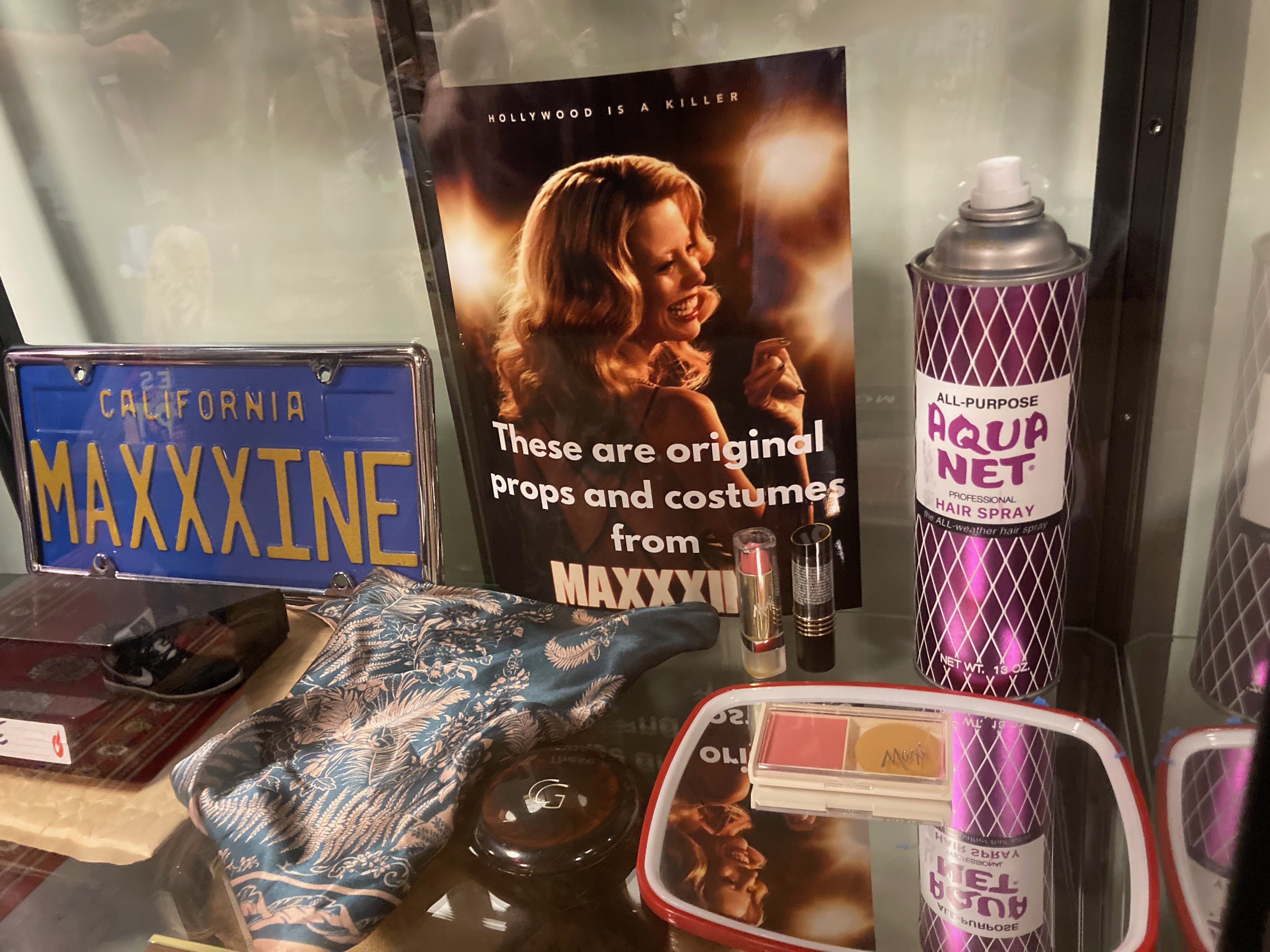
My interest was primarily in artifacts from actual movies.  The Exorcist head of Regan McNeil in Nightmare in New Hope was, I believe he said, a cast.  A horror museum without at least a passing reference to The Exorcist would feel strangely incomplete.  And then there’s Maxxxine.  The entire X trilogy is framed around religion that leads to horror, over a couple of generations.  There’s a connection here and I haven’t found a convincing explanation for it yet.  It’s one of the many books that I’m working on at the moment.  But time is limited.  And Fr. Alameida’s presence in this room, holding tight to his Bible, reminds us that the topic bears exploration.


Finding The Exorcist

This blog is the closest thing to a diary that I keep anymore.  It’s also the place where I remind myself when I read a book or saw a movie.  I started this blog (actually, my niece did, but I started putting content on) about a decade-and-a-half ago.  Most of the books I’ve read since then (but not all), have been featured here.  It didn’t start out that way with movies.  I watch a lot of films.  The other day I was wondering when I first watched The Exorcist.  I figured that it must’ve been something I’d blogged about, knowing me.  It could be that I watched it before 2009, or it could be that the search function on WordPress doesn’t allow me to find the post, if it exists.  You see, I don’t know what else to search for beyond “The Exorcist,” because I can’t recall what I might’ve written about it.  If I did.

So, in case I haven’t, I do want to say a bit more about that experience.  I was only eleven when the movie was released.  Three movies that I grew up terrified to see were Rosemary’s Baby, The Exorcist, and The Omen.  I finally saw them as an adult.  Since it was the DVD era (preceded by the VHS era, and followed by the Streaming era—all within about three decades) I bought the disc.  In all likelihood this was at FYE, which used to be a thing, just like Blockbuster before it.  Of course by the time I sat down, trembling, to watch it I’d seen many clips, stills, and parodies.  Still, I was afraid.  The movie, some thirty years old, lived up to its reputation.  I was left trembling more than when I started.

Many books have been written about The Exorcist, and although people sometimes laugh at it today, most horror fans I know still speak of it with reverence.  This movie changed horror.  It also changed demons.  Today what we believe about demons derives largely from this movie.  Its explanatory value is that it offers somewhere to turn when nothing else works.  Religion as a last resort.  And, ultimately, religion works where everything else fails.  It is possible, that somewhere in this sprawl of a blog, that I wrote first impressions of seeing it.  It would’ve been 2009, or perhaps I saw it as early as 2006.  I was struggling with my own demons then.  And, as often happens in such cases, precisely when things happened can be a little difficult to determine.


More Omens

Brushing up on my eschatology, I watched The Omen again.  The original, that is.  One of the underrated aspects of cinema is that people learn their theology from it.  Movies tend to be more memorable than sermons.  It is opined among some that The Omen is responsible for the prevalence of dispensationalism among many Americans.  I’d put a bit of a finer point on it in that The Late Great Planet Earth was being raptured off the shelves all the way through the seventies (I personally bought two copies) and it caused a feedback loop with The Omen.  Many mainstream ministers, without benefit of a Fundamentalist upbringing, were caught unawares, I expect.  Scholars of religion have noted how several aspects of the narrative—the character of “the Antichrist,” the rapture, indeed, the Apocalypse—have been read back into the Bible by credulous believers.

What I found interesting in this viewing is the debt owed to The Exorcist.  Of the two there’s no doubt as to which is the superior film.  The name Damien in The Omen, I read somewhere once upon a time, was taken from Fr. Damien Karras.  During the late seventies and early eighties, unruly boys were routinely called “Damien” by frustrated camp counselors and others.  Apart from this nod, if true, is the fact that the abruptly introduced character Karl/Carl Bugenhagen is an archaeologist exorcist.  (He’s the guy who gives Robert Thorn the knives, if you haven’t seen it for a while.)  The scene shot in Jerusalem (said to be Megiddo) underscores that Fr. Merrin is also being channeled here.  I suspect that the film was getting a bit long in the tooth and some explanatory material on Bugenhagen was left out.

It has also been suggested that the number 666 entered popular culture because of The Omen.  I would temper that a bit with the fact that a lot of people were reading Hal Lindsey’s new apocalypse as well and the two of them got the job done.  There’s no doubt that after the film the evil number took off in a direction that would’ve left John of Patmos scratching his head.  This brings me back to the point that belief is influenced—sometimes constructed—by movies.  The Omen was a huge success at the time, despite the fact that many critics (also not raised Fundie) thought the premise was silly.  Most people aren’t film critics.  The Bible can be pretty impenetrable as well.  Preachers may not be inspiring.  Movies, however, wrap it up neatly and tell you what to believe.  Perhaps it’s some kind of sign.


After Effects

Every once in a while you find a book you wish had been published sooner.  The Exorcist Effect, by Joseph P. Laycock and Eric Harrelson is one of those books.  Although it covers many of the same films I talk about in Nightmares with the Bible, it does so with a different target in mind, and a lower price point.  Drawing on the observation that human recall is often accompanied by “source amnesia,” they explore the idea that famous horror films (and some less famous) get remembered as “facts.”  This seems to be a greater danger to those who don’t actually watch horror or who watch it uncritically.  Movies such as The Exorcist become the basis for what individuals believe about demons.  But it’s far more dangerous than that, because in a culture where everything’s politicized, horror movies become “the truth” for groups like QAnon.

Considering Rosemary’s Baby, The Exorcist, and The Omen as prime examples, they then move on to consider the fascinating, if weird, lives of Ed and Lorraine Warren, and Malachi Martin.  Popularizers such as these three influenced both horror films and general public opinion about demonic possession and exorcism.  The study moves on to the Satanic Panic of the eighties and nineties and how heavy metal music both utilizes and ties into the Exorcist Effect.  This important book ends by discussing the very real dangers of a society that elects presidents and others based on this Effect, which confuses reality and movies.  The book shows how many of the ideas behind conspiracy theories either misremember, or intentionally misuse, horror films.

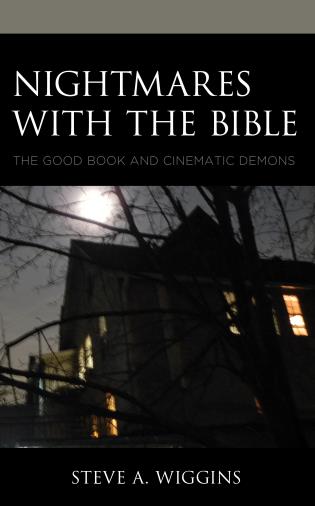
Back in the days when I started Nightmares with the Bible there was comparatively little published in readable terms that discussed demons or, specifically, the portrayal of exorcism in movies.  Laycock and Harrelson’s book would’ve been a welcome contributor to that dearth of resources.  As someone who works on the fringes of the fringe, I don’t always hear the discussions other scholars have and I’m often left to my own devices when it comes to finding and reading information on horror films.  Without library privileges, it often means having to purchase the books to access them.  I was thrilled when I first learned about this book and I’m glad to have finally had the opportunity to read it.  I’m sure I’ll be coming back to it on occasion.  After writing Nightmares, I took a bit of a break from demons because being in the dark for too long can do odd things to a person.  But not knowing about them, as this book shows, might cause even greater problems.


Frightening Legacy

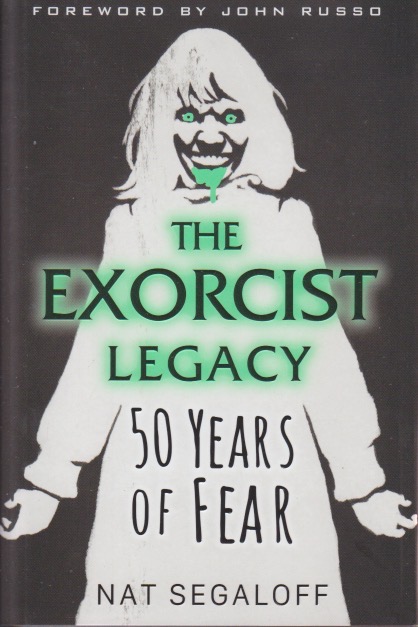
Like The Wicker Man, The Exorcist also turns fifty this December.  I was caught up in this half-century mania and so I got ahold of Nat Segaloff’s The Exorcist Legacy: 50 Years of Fear right away.  The reading was disrupted by life events, but I’d been enjoying it, as time permitted.  Written by a movie insider (as opposed to an ex-academic wannabe), this is a fairly full treatment of the film.  It’s actually not unlike what I tried to do with Nightmares with the Bible, but it is yet another testimony of the importance of The Exorcist to our understanding of demons.  Although one book can’t really be one-stop shopping for any worthwhile movie (there are plenty of books out there on the subject), this one is well worth reading.  For those who enjoy learning about cultural phenomena with a bit of horror tossed in, this is a very good introduction.

One of the things I’ve learned as I’ve tried to break into film reading is that a lot more goes on in making a film than most of us imagine.  And when we see a movie we miss an awful lot.  I’m no shill for Hollywood, but watching a movie multiple times brings out things that writers, directors, and producers didn’t even notice.  Think of the Bible, for comparison.  Readers two thousand years later are still finding new things to say about it.  The Exorcist has influenced religious outlooks in extremely important ways.  Our modern ideas of demons and possession largely go back to this film.  Details may change over time, but even the church has had to respond to it, and actual exorcists reference it.  The Bible says little about demons (again, Nightmares), so we have to pick such knowledge up from elsewhere.

The one part I found somewhat thin was, not surprisingly, parts of the final chapter, “The Mystery of Faith.”  It tends to show when a writer really knows religion.  William Peter Blatty, who wrote the novel and screenplay (the latter at least partially), knew Catholicism cold.  One of the things I’ve been yammering on about for years is that understanding religion enhances our understanding of horror movies.  I’m certain that the connection goes even deeper than that, but books written on horror mention religion often in amateur ways.  If we want to get at what’s really going on here, it’s going to be important to listen to those who understand religion as well.  None of that detracts from this fascinating book that will throw new light into shadowed corners.


Keeping Sentinel

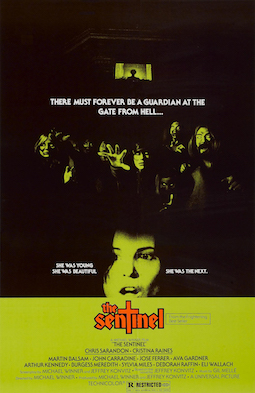
Not among the trinity of holy horrors from the late sixties and early seventies, The Sentinel takes its cues from religious horror but manages to fall into bad movie territory anyway.  While still cited from time to time, it’s largely forgotten among the films of the era.  It had a lot of competition in the seventies with The Exorcist, The Omen, and The Amityville Horror.  One of the reasons it seems to have fallen at the threshold is that it doesn’t understand the religion it tries to portray.  That religion is some form of Catholicism that involves a number of clerics who run around northern Italy wearing various liturgical vestments to oversee an apartment in Brooklyn Heights that’s actually the gateway to Hell.  They do this by way of an eponymous sentinel who lives in the apartment building that’s Hell’s portal.  The rest they, reasonably enough, rent out.

Alison Parker, a model, ends up renting the place while her boyfriend lawyer decides to have her killed—no particular motivation is given, although he had his first wife murdered too.  At the apartment Alison is disturbed by the other tenants, who are very strange.  And a mysterious priest lives in the apartment at the very top and never comes out.  (In case you haven’t gathered, the plot is pretty convoluted.)  It turns out that people who’ve formerly attempted suicide (like Parker) are targeted by the church to take over as sentinels to make up for their sin.  They have to “go missing” and reappear as a priest or nun and live in a particular apartment.  The strange neighbors, as you may have guessed, are demons trying to escape the watchful gaze of the sentinel.  Naturally, they stay in the same building.

The problem—or one of them, anyway—is that the Catholicism displayed doesn’t resemble Catholicism very much.  In the famous scene where the demonic entities are swarming on Alison and the dying sentinel she’s to replace, said sentinel carries a distinctly Protestant cross rather than a crucifix.  The mythology the film tries to construct is simply bizarre.  The classics of the period at least got the religion correct.  Catholicism in The Exorcist, Protestantism in The Omen, and, although fabricated, Satanism in Rosemary’s Baby.  Many filmmakers, it seems, think it’s easy to fake it when it comes to religion.  Looking at the movies that succeed on that front, however, and comparing them to those that become bad movies, it seems clear that doing your homework, or at least going to Sunday school, pays off.


Not the Exorcist

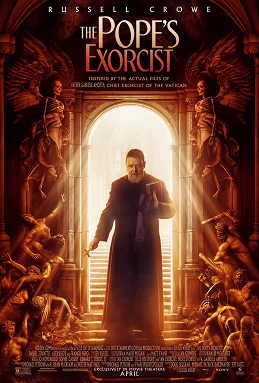
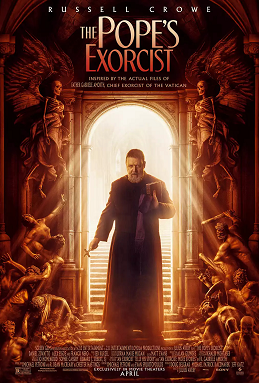
It’s too bad The Pope’s Exorcist didn’t come out before Nightmares with the Bible.  In that book I tried to make the connection between demons and nightmares and in this movie Asmodeus, the “named demon” gives his name as “Nightmare.”  Released in April of this year, The Pope’s Exorcist received a considerable amount of fanfare.  Starring Russell Crowe as Fr. Gabriele Amorth (two of whose books I’ve posted on), the entirely fictionalized account ends up coming across as, I shudder to say it, rather silly.  Using just about every exorcism movie trope available, the film goes over the top and really doesn’t have much scare in it.  Let’s start from the beginning.  Fr. Amorth is in trouble at the Vatican but the Pope’s his personal friend, so no worries there.  Meanwhile an American woman has inherited a decrepit abbey in Castille, Spain.  Her late husband owned nothing else and she has to be there personally to oversee restoration, dragging her two kids with her.

It turns out that this abbey contains evidence of a centuries’ old conspiracy during the Spanish Inquisition covered up by the Vatican.  It’s also the home of Asmodeus, king of Hell.  And one of 200 locations that fallen angels came to earth.  After the demon scorches a couple of restoration workers, the woman, Julia, is left in the spooky abbey alone with her kids.  They both end up possessed, but the boy, Henry, is the focus of the body horror.  Since Asmodeus has clearly seen The Exorcist, he says outright that he’s after Fr. Amorth, who is sent by the Pope himself to take care of this.  To save the boy Amorth has to be possessed in his stead (as in The Exorcist).  Together with a younger priest (really, is any of this sounding familiar?), the demon eventually has to capitulate.

Apart from not being “based on a true story,” the movie also takes seriously the fictionalization of characters.  “The Pope,” never named, in the 1980s was John Paul II.  He’s portrayed as bearded and in poor health.  Amorth (Crowe) is also bearded, although historically Amorth, like most Roman priests, was clean-shaven.  The “silliness” of the movie derives from not having researched Roman Catholicism thoroughly.  All of this makes me wonder if an exorcism movie can be made that surpasses The Exorcist.  Much has been written on that movie since William Friedkin recently died (and much was written on it before).  It’s difficult to put a finger on just what made that film so superior.  It doesn’t stop others from trying, of course.  And now there’s talk of a sequel for The Pope’s Exorcist.  The nightmares, it seems, never end.


Wrong Entity

In one of those weird synchronicities the universe likes to play, the very next day after I watched The Entity (2015) and wrote a blog post on it, this happened.  In yesterday’s post I noted that I couldn’t remember where I’d read about the movie, or who had recommended it to me.  I couldn’t even be sure which The Entity it was, since I didn’t write down the movie’s date.  The next morning I had the privilege of watching Claire Donner, of the Miskatonic Institute, talking about The Entity and it immediately came to mind that it was she who’d suggested I might like it (or might not).  Also, that I got the wrong one.  I haven’t had the opportunity to watch the one actually recommended yet, but it brings back to mind just how the Miskatonic Institute contributes to understanding horror.

The Institute has asked me to present a course this coming October and I will be posting more on that closer to the time.  It got me to thinking about a couple of things.  One is that I missed some major horror films growing up.  When I “got religion” in high school (I always had it, of course, and saw no problem with enjoying monsters too) I began to steer away from horror.  In college I had a dating occasion or two to watch horror, but it really only started again in earnest after being booted out of academia.  I was interviewed in seminary by a sociology grad student interested in why people watch horror, but my watching was (and still is) circumscribed by lack of cash flow.  The Entity made quite a splash in the early eighties, but it took someone in the 2020s telling me about it before I realized I probably should watch it.

The other thing Donner’s talk brought to mind is how religion and horror relate.  Such films are scary because of an existential threat—THE existential threat.  There’s nothing more powerful than God, but in such movies God can do nothing.  I haven’t seen the movie yet, but I suspect that’s true.  It’s certainly true of The Exorcist, with which it’s sometimes compared.  God doesn’t deliver Regan McNeil, no, Fr. Karras does.  And only by sacrificing himself to do so.  The existential threat has to involve a universe entirely out of kilter.  What is a God that’s powerless (it’s implied) to drive out evil?  The exorcism in The Exorcist doesn’t work, does it?  Yet there’s some benevolent force in the universe that gives us synchronicities and, it seems, is looking out for goodness in an often cruel world.


50 Years Ago on May Day

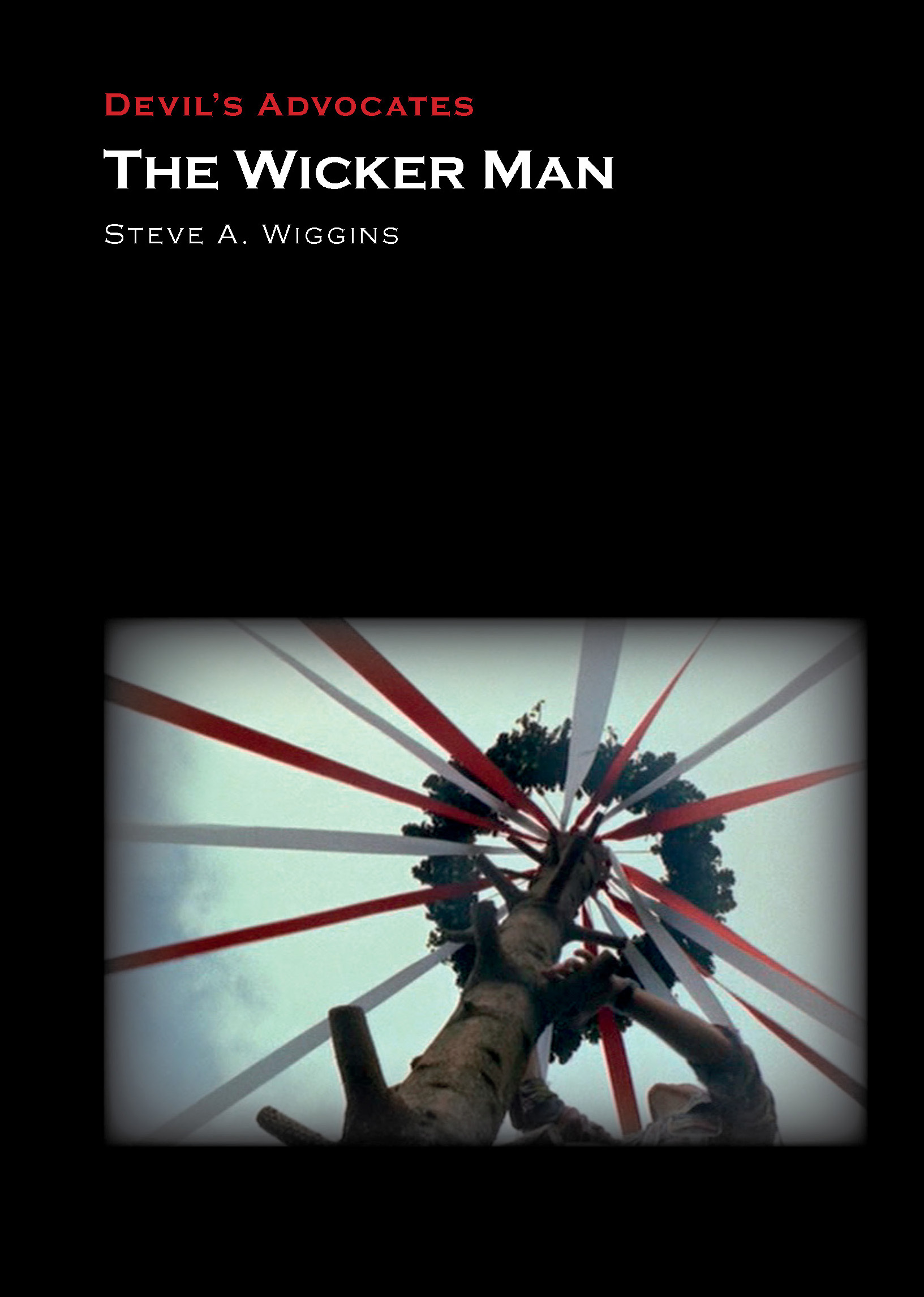
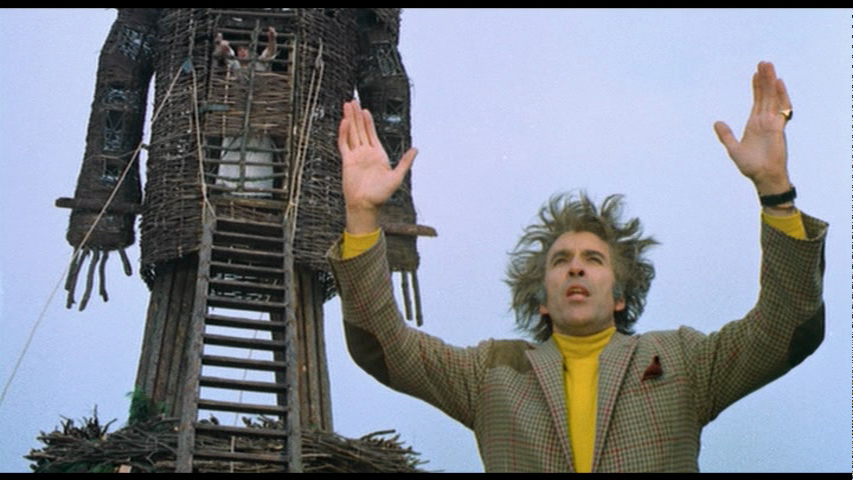
Word is starting to get out about The Wicker Man.  One of the most intelligent of horror movies, it turns fifty this year.  Aware of the coming anniversary, I pitched a volume in the series Devil’s Advocates on the movie a few years back.  I was delighted that my take on the film was unique enough to qualify and my volume has now appeared on Liverpool University Press’ website.  And, as an added bonus, a blog post I guest wrote on the book will also appear shortly.  And it’s May Day.  The Wicker Man is the third person of the unholy trinity of folk horror.  The other two films are Witchfinder General and The Blood on Satan’s Claw, both of which I’ve reviewed here.  But 1973 was also the year another person of another unholy trinity, The Exorcist, was released.  This other trinity began with Rosemary’s Baby and concluded with The Omen.  If you’re curious about it, I wrote quite a bit about it in Holy Horror.

Fiftieth-year anniversaries are significant, given how young the film industry is.  Depending on the publisher, it may be difficult to get advance notice out.  My colleague Joseph Laycock, along with Eric Harrelson, wrote The Exorcist Effect.  This is a book I’m very excited for, although it’s not yet on its publisher’s website.  Academic publishing can be slow that way.  Another fiftieth anniversary Wicker Man book is coming out in October—John Walsh’s The Wicker Man: The Official Story of the Film.  The publisher, Titan books, not hampered by university press processes, had the book well advertised a couple of months back.  I’m looking forward to reading that one as well.  These fiftieth anniversary books are a boon for those who watch intelligent horror.

Academic publishers, you see, classify books in different ways than trade publishers do.  If you’re not sure what a trade publisher is, it is essentially anyone whose books you see in actual bookstores.  Academic publishers tend to focus on library sales and sales to academics who are willing to shell out fifty, a hundred, or sometimes more, bucks for a book.  (In my teaching days, although we had no expense budgets at Nashotah House, I would occasionally (very rarely), after careful family consultation, shell out the academic press price for a book I needed for research and the library wouldn’t buy.)  My last three books have been written for wider readerships, but have been published by academic presses.  On this fiftieth anniversary year, I’m planning on reading a couple of good books.  And thinking about May Day fifty years ago.


Another Exorcist

I learned from the wonderful Theofantastique that Russell Crowe’s new movie is The Pope’s Exorcist.  (I guess Crowe hadn’t read Nightmares with the Bible to think to send me a personal notice.)  I knew instantly, from the title, that it had to be about Fr. Gabriel Amorth.  Say what you will about him, he inspired William Friedkin to make a documentary titled The Devil and Father Amorth.  It’s pretty unnerving to watch, no matter what is really going on.  Catholic officials aren’t trilled about Crowe’s movie—I wasn’t impressed with his portrayal of Noah in Darren Aronofsky’s take on the flood story a few years back.  It takes a certain kind of director (like Friedkin) to be able to handle theologically dense material in a believable way.  I can’t say anything about Julius Avery’s The Pope’s Exorcist, of course, without having seen it.

I can say, however, that those who publish books at $100 miss many opportunities.  My book is one of very few written by a credentialed religious studies scholar on demons in movies.  A quick web search will reveal that it remains basically unknown and uncited.  (The only Amazon review is a two-star job by an evangelical who didn’t like what I was doing.)  Pay $100 for a book with a two-star review?  Most people, reasonably, have better things to do.  I once got around this in the past by posting a PDF of one of my book for free on Academia.edu, where, at recent count, it has been viewed over 6,000 times.  Academic publishers don’t realize the appeal of most of the books they publish.  Even demons can’t open a wallet to a Franklin level.

So while I’m waiting for enough royalties to afford seeing The Pope’s Exorcist, I’ll focus on my current book project.  Of course it’s on something completely different.  The Wicker Man should be coming out in September, but my mind will likely be elsewhere.  Those of restless intellect are condemned to wander, it seems.  Of course, I have Theofantastique to keep me busy.  There are other kindred spirits out there.  They don’t know the way to my website, I suspect, but I’m not alone in being excited about a new exorcist movie.  I’m not expecting anything to surpass The Exorcist, however.  Like The Wicker Man, The Exorcist turns fifty this year.  One guess which was the more popular film.  Given Crowe’s profile I’m surprised there hasn’t been more buzz about his new film.  Demons can be funny that way.


Wicker Man Comes

Not that I would know bodily, but it seems like a book being published is something like giving birth.  It takes several months (perhaps years, in the case of books) from conception to delivery and there are certain milestones along the way.  And you worry like Rosemary.  Has something gone wrong?  Is this still going to happen?  The book production process is a long and complicated one.  Just this week, however, the next recognizable stage occurred for The Wicker Man.  An ISBN has been assigned and a new book announcement has fed out through various channels.  It’s not on Amazon just yet but a Google search of 9781837643882 will bring it up.  I’d been worried about this because I saw a new book announced on The Wicker Man due out in October.  This is the fiftieth anniversary of the film, and I suspected I wasn’t the only one who’d noticed that.

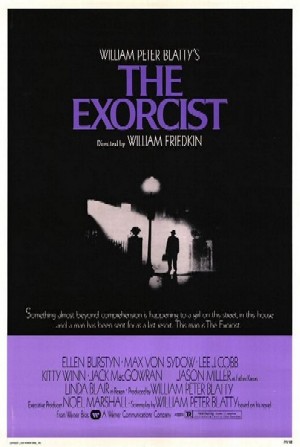
Ironically, another film turns 50 this year.  The Exorcist released in December of 1973 to far greater acclaim than The Wicker Man.  Both films became classics in their own right, but The Exorcist would become a household name.  Even if they’d never seen it, most people had heard of it.  The Wicker Man is more of a cult classic.  It’s known among horror fans and a certain kind of Anglophile.  And those interested in paganism, particularly of the Celtic variety.  Although the cover isn’t available yet, I was glad to see the feed for my book going out.  It looks like I might scoop the other book by a month or so.  If that happens it will be the first time that I’ve actually had a book on horror release before Halloween.  The last two missed the deadline by a couple of months.

Having said that, if you’ve had your appointment with The Wicker Man you already know, it takes place on May Day.  And you likely know that a large number of people claim it isn’t a horror film at all.  Indeed, the horror element only becomes clear in the last ten minutes or so.  It’s the build-up that makes the movie.  And it was really a one-film wonder for the director, Robin Hardy.  He did other movies, but this was the one that lasted, and spawned imitations and parodies.  It’s exciting to see that the discriminating, or very persistent, searcher can now find the book announcement online.  I haven’t seen much to-do about the 50th anniversary just yet, but now when I do I’ll have something to point to.  More on this to come!


The Best Religious Horror Movies Streaming Now

Here’s an extra-special second guest post this week, enjoy!

Many horror movies have religious themes, plotlines or undertones. Here are a handful of the best religious horror movies to make you pray the bad away, in order of release.

Rosemary’s Baby (1968)

Rated R

Director: Roman Polanski

Starring: Mia Farrow, John Cassavetes, Ruth Gordon

A young couple moves into a NYC apartment with a haunted past. When the wife gets pregnant, she experiences an array of strange feelings, believing her baby may be the spawn of Satan.

Stream Rosemary’s Baby on Hulu, Sling TV, The Roku Channel and Amazon Prime Video.

The Exorcist (1973)

Rated R

Director: William Friedkin

Starring: Ellen Burstyn, Linda Blair, Max von Sydow

An increasingly strange-acting 12-year-old girl causes her mother to volley between scientific and supernatural explanations. Ultimately, she seeks the aid of a priest who himself is experiencing a crisis of faith.

Stream The Exorcist on Netflix.

The Exorcist spawned two sequels: Exorcist II: The Heretic (1977) available to stream on Apple TV, Vudu and DirecTV and The Exorcist III (1990) available to stream on Apple TV and FuboTV. There was also a 2016 television remake of The Exorcist that lasted two seasons and is now available to stream on Hulu and Amazon Prime Video.

Carrie (1976)

Rated R

Director: Brain De Palma

Starring: Sissy Spacek, Piper Laurie

Based on a novel by Stephen King, the master of horror himself, this is the story of a shy, introverted and sensitive teen bullied by her schoolmates and abused at home by her highly religious mother. Then, she becomes imbued with the devilish power to take revenge on them for the suffering and humiliation they’ve made her endure. This is such a timeless and beloved horror classic, it’s been remade twice: once made-for-TV in 2003 starring Angela Bettis and Patricia Clarkson in the leading roles and again in 2013 starring Chloë Grace Moretz and Julianne Moore in the leading roles.

Stream all three versions of Carrie on Apple TV, Vudu and AMC On Demand.

The Omen (1976)

Rated R

Director: Richard Donner

Starring: Gregory Peck, Lee Remmick, David Warner

When the wife of an American diplomat gives birth to a stillborn child, he adopts a child named Damien. After the child’s first nanny commits suicide, the family calls in a priest, who delivers a dire warning: the child may be the anitchrist himself.

The original The Omen spawned two sequels and one remake.

Stream the original The Omen on Hulu, Paramount+, Epix on Amazon Prime Video or Epix On Demand, Tubi and DirecTV.

Stream Damien: Omen II (1978) and Omen III: The Final Conflict (1981) on Apple TV and Vudu,

Stream the 2006 remake of The Omen on HBO Max.

Summary

Catch up on these, and you can say you’ve survived the most harrowing classic religious horror films of all time.


Unconventional Demon

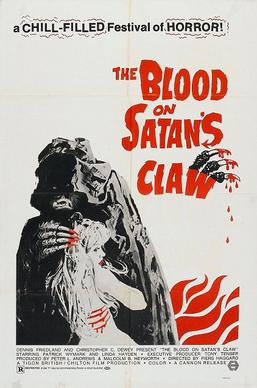
In my book Holy Horror I limited my discussion to fairly widely available and well-known films.  Part of the reason for this is that nobody can watch all horror movies and for those of us who work, there’s just limited time.  All of the films are at least American co-produced, most of them American productions.  The one exception to that is The Wicker Man.  I couldn’t bear to leave that particular movie out.  I didn’t realize at the time that it was classified as the newly coined “folk horror.”  Another film, released two years earlier was the strangely titled The Blood on Satan’s Claw.  It’s a strange but competent British horror film that has an eighteenth-century village falling prey to a demon that is accidentally plowed up in a field.

It is a film that could’ve been included in Holy Horror.  Indeed, the Bible appears in it and one of the adult characters is the local curate.  As the children are succumbing to a Satanism that’s raising a demon, he tries to teach them their Bible lessons.  Like Village of the Damned, the horror here centers on the children.  Flaunting the reverend’s rules, they play in the woods, raising the Devil.  Almost literally.  The demon they summon is called Behemoth.  Perhaps surprisingly, the judge actually saves the day in this one.  At first he’s convinced that the age of superstition is over and insists that it not be brought back.  He learns, however, that the demon is real and deals with it by rather physical means.  Who is Behemoth?

The word translates rather literally to “beasts.”  In the book of Job Behemoth is the land-bound companion to Leviathan, the two monsters that God cites to demonstrate his superiority over mere mortals.  As time wore on into the middle ages Behemoth and Leviathan were recast as demons, although it’s pretty clear that the book of Job doesn’t present them that way.  One of the points I make in Nightmares with the Bible is that demons aren’t fully formed beings in the ancient imagination.  Since the Bible says so little about them, ideas were drawn from folklore and other sources to flesh out these somewhat amorphous entities.  Descriptions of The Blood on Satan’s Claw quite often state that the children of the village are possessed.  If so, it is quite a different form of possession than will become standard two years later with the release of The Exorcist.  It is fitting, I suppose, for folk horror to have a folk demon for its antagonist.


Movie Demons

There’s an old tradition regarding demons that even discussing them is dangerous.  This was certainly in my mind as I wrote Nightmares with the Bible, as the topic is an uncomfortable one, at best.  A recent story by Paul Seaburn on Mysterious Universe references this danger in the title “Exorcist Claims ‘The Exorcist’ and Other Horror Movies are Sources for Actual Demons.”  Others have made similar suggestions that merely mentioning a demon is a form of summoning.  The post focuses on Fr. Ronnie Ablong, a Catholic priest in the Philippines, and an exorcist to boot.  Fr. Ablong claims that a number of recent cases involve fictitious demons from horror movies that possess those who watch them.  This is scary by implication and indeed is similar to what I learned growing up.

One of the things researching  Nightmares revealed was that demons in the ancient world come in many varieties.  There wasn’t one origin story behind them and ideas that make it seem that way had to evolve over time.  Of course, you can’t write a book like that without watching the movies and reading lots of books about demons.  It is a creepy thing until you start to reach the point where the material starts to break down.  In the case of Fr. Ablong, the demons come from movies, but often movie demons are based on ancient grimoires that name various entities.  The real question, and one which Seaburn raises, is whether such demons are real.  Given that we don’t know what demons are, and that some of the movies mentioned use made-up demons, such as Annabelle, it becomes suspect.

After finishing Nightmares with the Bible I was ready to put the subject aside for a while.  I’ve got other projects going and it’s important to have some balance, even in horror watching.  Still, the article caught my attention because it was one I’ve frequently heard—the danger of “opening doors.”  Often this is done unintentionally.  There’s no doubt that in the biblical world demons were frightening.  They still are.  Part of the reason is that they are so poorly defined.  In many more recent treatments they’ve become somewhat secularized, but they are, by their nature, religious monsters.  There is some truth to the Mysterious Universe story, however; our modern conception of demons goes back to the movie The Exorcist.  This is something I discuss at length in Nightmares and I don’t want to give too many spoilers here.  The topic, it seems, remains relevant even in our technological era.


Comedic Horror

Spoofs can be a great way of preventing us from taking ourselves too seriously.  Extra Ordinary is a film I’d completely missed until my wife made a gift of it.  We weren’t quite sure if it was a horror film or a comedy, and genres aren’t always helpful here.  I would call it a spoof on possession movies, something of particular interest after writing Nightmares with the Bible.  Apart from being a bit of much-needed silliness after a terribly serious year, it’s also a demonstration of how genre can be helpful in knowing how to interpret what we see.  Not knowing anything about the film, it begins with the statement that it’s based on a true story.  There’s an interesting history behind that phrase, but when it comes with a spoof it only adds to the fun.

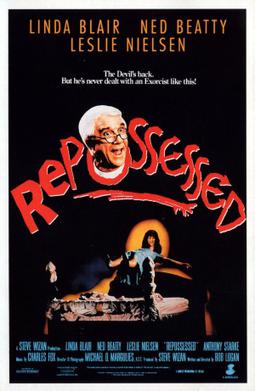
Extra Ordinary follows the adventures of Rose Dooley, a driving instructor who was raised by a ghost-hunting father.  Blaming herself for her father’s death, she’s taken on an anodyne career that she feels is safer.  A particularly desperate widower whose daughter is targeted by a hapless Satanist, brings her back to her true calling.  Although there are some horror-comedy scenes (that’s an entire sub-genre often eschewed by horror fans who don’t like to laugh at themselves) the witty dialogue and crude jokes make it fun rather than anything to be worried about.  Possession occurs in a specific way to move the plot along—Rose has to have a partner (the widower Martin Martin) accept possession by the ghost in order to send it to the beyond.  Although there are clever takeoffs from The Exorcist, the idea of possession is much different.

What is evil?  The film asks the question directly (if comedically).  Although washed-up rock star Christian Winter has become a Satanist, the demon in the film is Astaroth, a later development from the pre-biblical goddess Astarte.  As discussed in Nightmares with the Bible (for which this film could’ve been profitably discussed), there’s a confusion among demons.  (Beelzebub is also mentioned by name.)  The element that ties them together with the human condition is clearly sex.  The frantic search for a virgin, and the communal shaming of unwed mothers makes that obvious.  Although deliberately campy, Extra Ordinary answers the question of evil by noting that it is a person using their powers (magical, in this case) for their own benefit rather than for the good of others.  There is a moral to it, after all.  And if we can’t laugh about the human condition once in a while, we deserve to be spoofed.