Cinematic Demons

It was because I read The Exorcist Effect.  I realize that there are lots of movies that I could’ve watched for Nightmares with the Bible, but with limited time, limited budget, and limited social contact, I made choices without all the data.  I guess no one ever has all the data, really.  In any case, I could’ve discussed The Crucifixion.  I’ve been taking a bit of a break from exorcism movies, but since this one was based on a true story I’d not heard before Exorcist Effect, I decided to give it a go.  Although highly fictionalized, the movie crew did pick up on significant details from the case of Maricica Irina Cornici, who died after an exorcism in Romania.  The framing story is that of Nicole Rawlins, a journalist who wants to learn the truth.
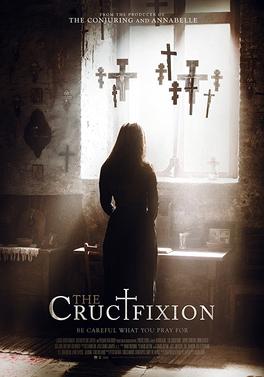
In fact, the story is really about how Rawlins comes to faith after confronting the demon Agares.  Rawlins has guilt over being an atheist, unable to convince her dying mother to try new treatment and then by letting her die with the knowledge that her daughter has no faith.  In Romania Rawlins drives around a lot and, in one of the most difficult to accept aspects, everyone freely gives information.  Sister Adelina Marinescu, the victim, we’re led to believe, picked up a sexually transmitted demon in Germany.  Her brother, and friends, even the bishop, all freely share their opinions.  Rawlins develops a crush on the local priest, Fr. Anton.  He wants her to regain faith since, as an atheist, she’s an easy target with a demon on the loose.

It turns out that the demon was actually transmitted from a possessed priest, who got it from a possessed farmer.  It then passed to Sister Adelina and from her to Rawlins.  Her possession becomes apparent on the farm of the original possessed man and Fr. Anton performs an unplanned exorcism to save Rawlins from the same fate as Sister Adelina.  Rawlins comes to believe; she saw her mother during a brief moment when, it’s implied, Nicole died.  The film has a rather convoluted plot and many scenes where logic seems to break down, but it is certainly a passable horror film.  Rawlins earns sympathy as the lead, and the Romanian setting is a nice (if historical) touch.  The local festival “like Halloween” adds intrigue.  The movie didn’t rock the critics, but it seems like it works for what it is.  And if I even write a follow-up to Nightmares, it will definitely be included.


After Effects

Every once in a while you find a book you wish had been published sooner.  The Exorcist Effect, by Joseph P. Laycock and Eric Harrelson is one of those books.  Although it covers many of the same films I talk about in Nightmares with the Bible, it does so with a different target in mind, and a lower price point.  Drawing on the observation that human recall is often accompanied by “source amnesia,” they explore the idea that famous horror films (and some less famous) get remembered as “facts.”  This seems to be a greater danger to those who don’t actually watch horror or who watch it uncritically.  Movies such as The Exorcist become the basis for what individuals believe about demons.  But it’s far more dangerous than that, because in a culture where everything’s politicized, horror movies become “the truth” for groups like QAnon.

Considering Rosemary’s Baby, The Exorcist, and The Omen as prime examples, they then move on to consider the fascinating, if weird, lives of Ed and Lorraine Warren, and Malachi Martin.  Popularizers such as these three influenced both horror films and general public opinion about demonic possession and exorcism.  The study moves on to the Satanic Panic of the eighties and nineties and how heavy metal music both utilizes and ties into the Exorcist Effect.  This important book ends by discussing the very real dangers of a society that elects presidents and others based on this Effect, which confuses reality and movies.  The book shows how many of the ideas behind conspiracy theories either misremember, or intentionally misuse, horror films.

Back in the days when I started Nightmares with the Bible there was comparatively little published in readable terms that discussed demons or, specifically, the portrayal of exorcism in movies.  Laycock and Harrelson’s book would’ve been a welcome contributor to that dearth of resources.  As someone who works on the fringes of the fringe, I don’t always hear the discussions other scholars have and I’m often left to my own devices when it comes to finding and reading information on horror films.  Without library privileges, it often means having to purchase the books to access them.  I was thrilled when I first learned about this book and I’m glad to have finally had the opportunity to read it.  I’m sure I’ll be coming back to it on occasion.  After writing Nightmares, I took a bit of a break from demons because being in the dark for too long can do odd things to a person.  But not knowing about them, as this book shows, might cause even greater problems.


50 Years Ago on May Day

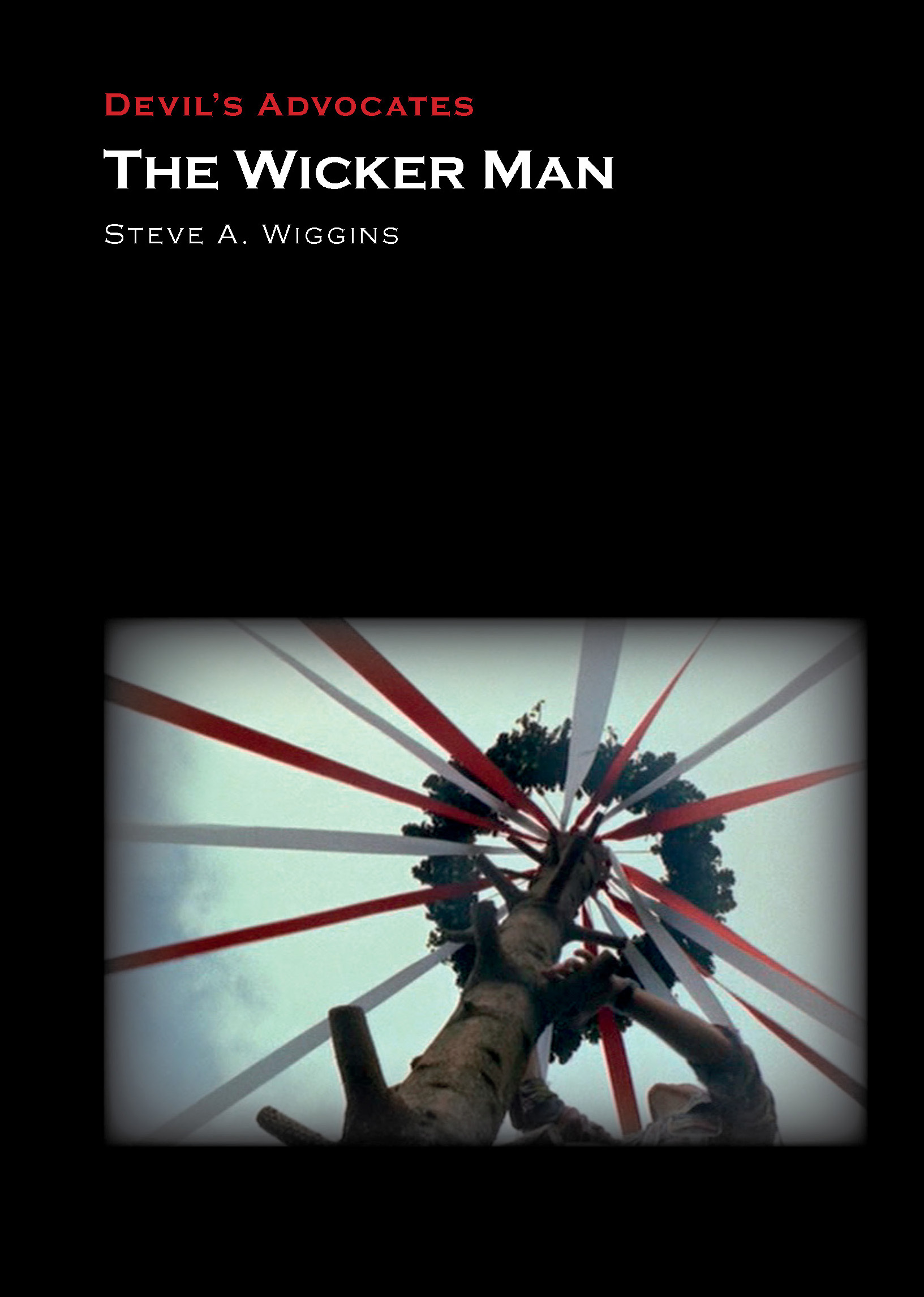
Word is starting to get out about The Wicker Man.  One of the most intelligent of horror movies, it turns fifty this year.  Aware of the coming anniversary, I pitched a volume in the series Devil’s Advocates on the movie a few years back.  I was delighted that my take on the film was unique enough to qualify and my volume has now appeared on Liverpool University Press’ website.  And, as an added bonus, a blog post I guest wrote on the book will also appear shortly.  And it’s May Day.  The Wicker Man is the third person of the unholy trinity of folk horror.  The other two films are Witchfinder General and The Blood on Satan’s Claw, both of which I’ve reviewed here.  But 1973 was also the year another person of another unholy trinity, The Exorcist, was released.  This other trinity began with Rosemary’s Baby and concluded with The Omen.  If you’re curious about it, I wrote quite a bit about it in Holy Horror.

Fiftieth-year anniversaries are significant, given how young the film industry is.  Depending on the publisher, it may be difficult to get advance notice out.  My colleague Joseph Laycock, along with Eric Harrelson, wrote The Exorcist Effect.  This is a book I’m very excited for, although it’s not yet on its publisher’s website.  Academic publishing can be slow that way.  Another fiftieth anniversary Wicker Man book is coming out in October—John Walsh’s The Wicker Man: The Official Story of the Film.  The publisher, Titan books, not hampered by university press processes, had the book well advertised a couple of months back.  I’m looking forward to reading that one as well.  These fiftieth anniversary books are a boon for those who watch intelligent horror.

Academic publishers, you see, classify books in different ways than trade publishers do.  If you’re not sure what a trade publisher is, it is essentially anyone whose books you see in actual bookstores.  Academic publishers tend to focus on library sales and sales to academics who are willing to shell out fifty, a hundred, or sometimes more, bucks for a book.  (In my teaching days, although we had no expense budgets at Nashotah House, I would occasionally (very rarely), after careful family consultation, shell out the academic press price for a book I needed for research and the library wouldn’t buy.)  My last three books have been written for wider readerships, but have been published by academic presses.  On this fiftieth anniversary year, I’m planning on reading a couple of good books.  And thinking about May Day fifty years ago.