Ushering In the New

I’m not at all certain I’ll finish it, but at my daughter’s suggestion I watched the first episode of Netflix’s new series, The Fall of the House of Usher.  This isn’t set in Poe’s day.  The action is in the present and it opens with a funeral for three of Roderick Usher’s children.  What’s particularly striking about this funeral is that the priest’s homily is composed of lines from Poe.  I think we all know that Poe is undergoing a great surge of popularity these days, but this series seems not content just to name characters and companies after Poe’s names, but it also weaves his thought deeply into the fabric.  It uses his images in literal ways that add depth to the plot.  I’m not sure that I can spare the time to watch it the whole way through, but I’m sorely tempted to do so.

With C. August Dupin as the Assistant District Attorney, the series ties Poe’s ratiocination stories in with his horror tales.  Like most recent media efforts, the cast reflects diversity in many ways.  This diversity isn’t the reason the house of Usher is falling, but it’s because of disloyalty.  The family owns an unscrupulous company that has shown disregard for the suffering it causes, buying its way out of legal difficulties.  (This part is quite realistic and one can’t help but to think of Trump and others like him who simply buy injustice.)  But someone in the Usher family has decided to speak out.  Dupin won’t reveal who it is, so Roderick and Madeline Usher put the family up to the task of rooting out, and killing, the informant.
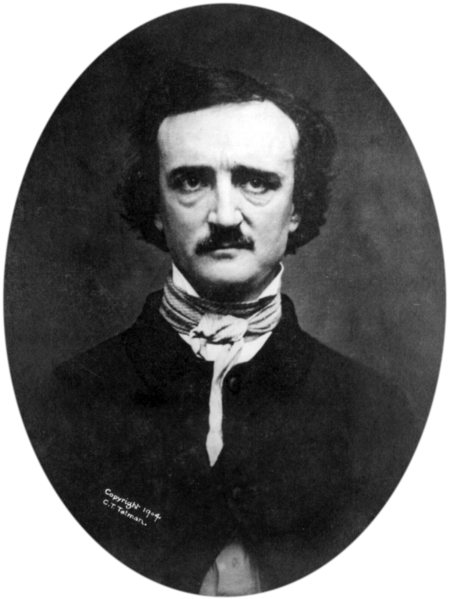
Perhaps with some time off over the holidays I’ll be able to catch more of the series.  It intrigues me, however, that Poe is being used essentially as scripture.  Literally.  The priest’s homily fades into the background as the surviving family members check in on each other, but his words are drawn from a variety of Poe’s writings.  I’ve long felt that our canon of scripture is too small.  Inspired literature did not cease to be written in the second century.  As someone who has listened, and still listens to sermons, it’s clear that the Bible alone isn’t a source for knowledge.  I haven’t read all of Poe—he left a massive paper trail through his life—but what I’ve read sticks with me and hearing him as sermon material makes me think I need to try to find time in coming weeks to pick up another episode or two.
What Poe Saw

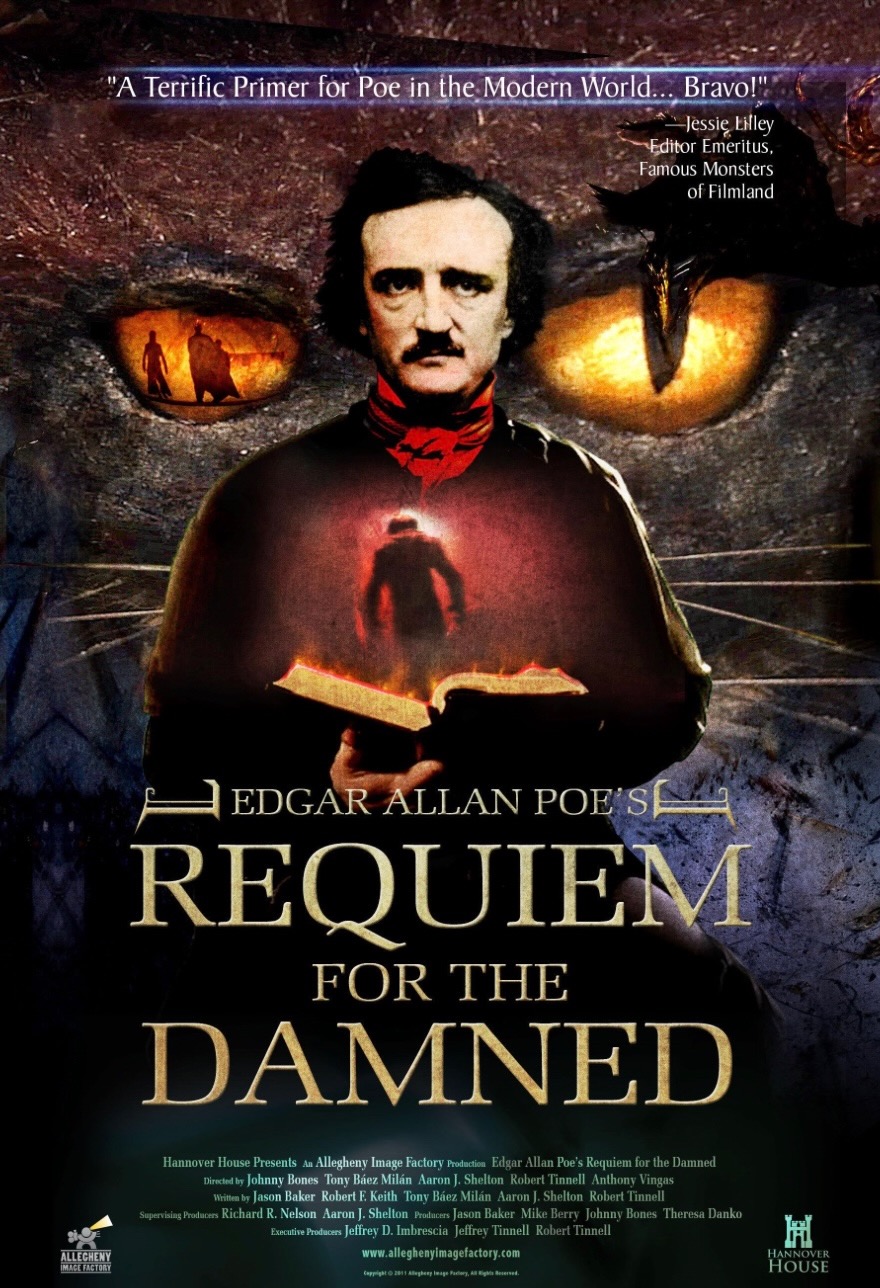
It must be quite a draw, making a film based on Edgar Allan Poe.  The psychology of his tales of terror is compelling and modern filmmaking offers endless possibilities.  I wasn’t looking for anything too heavy, so I watched Requiem for the Damned.  Vignette movies are like a box of chocolates (I’m sure you know how the rest of it goes).  This particular feature doesn’t seem to have had a theatrical release, perhaps because it is an independent film made by students and faculty at the Douglas Education Center.  The opening credits cite the Allegheny Image Factory, and when I think of Pittsburgh and horror my mind eventually wanders to George Romero.  The Douglas Education Center began as a business school south of Pittsburgh and it offers training in filmmaking.  And that seems to explain this particular film.

Five vignettes are taken from Poe’s “Fall of the House of Usher,” “The Tell-Tale Heart,” “The Black Cat,” “Murders in the Rue Morgue,” and “The Pit and the Pendulum.”  Only “The Black Cat” is set in Poe’s period and it is heavily CGI.  The rest are modernized versions of ideas inspired by Poe rather than following his plots.  “Usher” uses Poe’s characters and an introduced illegitimate son, to present the Usher curse—the unfeeling business practices that brought the Ushers wealth have made theirs a haunted estate. “Tell-Tale” has a modern urban legend feel as a guy starts seeing his ex-girlfriend’s broken heart everywhere he goes.  “Rue Morgue” is a lesbian revenge story involving an improvised gorilla suit.  “Pit” is a post-apocalyptic vision with almost no dialogue and a somewhat confusing resolution.

Horror anthologies seldom work.  Like edited volumes in the book world, they lack coherence.  Poe insisted that short stories should be single-sitting forms so that mood could be maintained.  Putting five together, each with different directors, writers, and styles, makes for a disjointed viewing experience.  A couple of the segments, “Black Cat,” and “Pit,” seemed to drag a bit.  The former because you already know the story and the CGI was so abstract that it interfered with the telling and the latter because you really don’t know what’s going on.  The visuals are impressive, but story seems to have been sacrificed.  I was looking for something not too heavy and I did find that.  I also learned about a place where filmmaking is taught and you don’t have to have connections to get in.  Who knows?  Perhaps in another life I might’ve gone that direction.  I tend to follow Poe.


Falling Usher

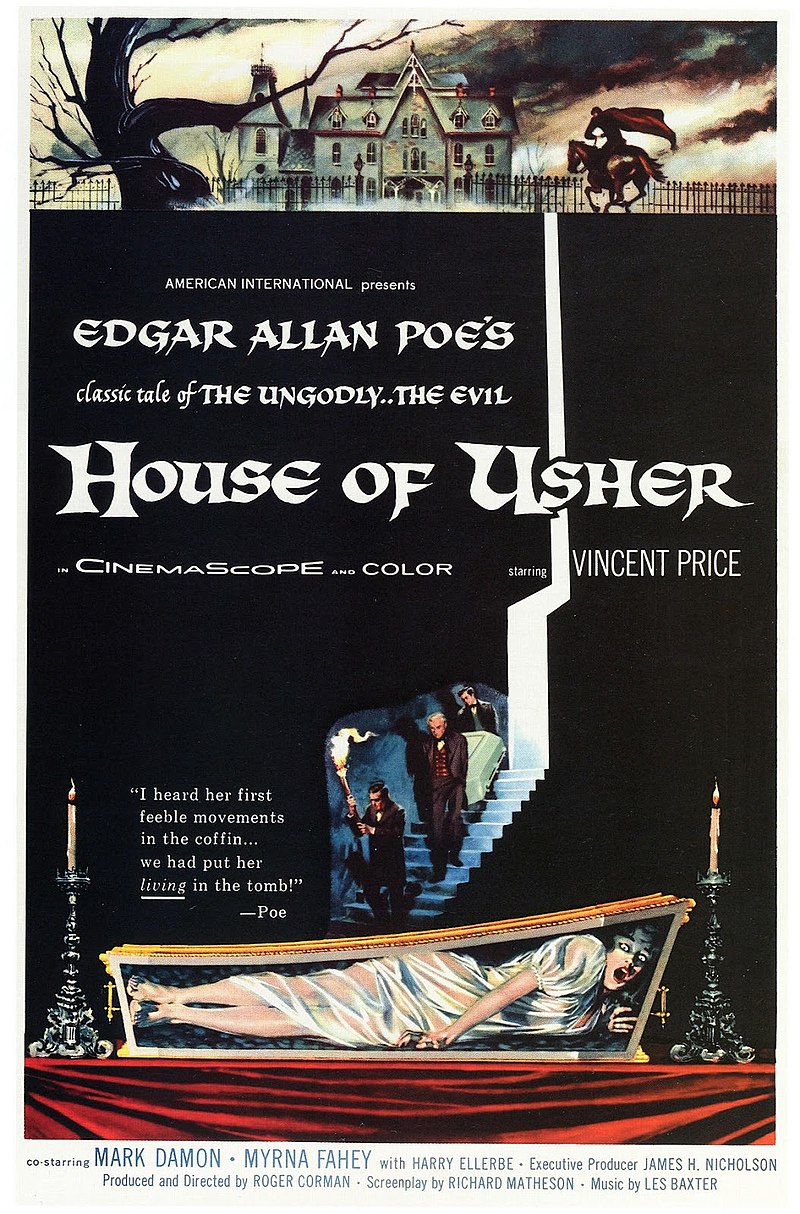
Roger Corman is a name well known to film buffs.  The producer of many low-budget, obviously cheaply filmed movies shot over a matter of days, his early career was prolific.  Often working in genre films, he directed horror (among other projects), occasionally drawing on Edgar Allan Poe.  The problem of adapting a short story to a length required for cinema release could be solved in a number of ways, but padding out the story was common.  I had only a few minutes to watch a horror movie over the weekend, so I pulled out a Vincent Price collection I’d bought some time ago.  A number of them are Corman films and I may have seen them when I was younger, but if so the path recall is completely eroded.  I decided to watch The Fall of the House of Usher.

This story by Poe remains my favorite for its sheer moodiness and imagery.  The premise is brief and the action little.  I knew Corman would have had to have changed quite a bit.  It turns out that he’d brought Richard Matheson in as the writer.  Many films can be made or broken by the writer.  While it doesn’t improve on Poe it is certainly a watchable effort that develops a mood in its own right.  The low budget is evident, but despite that the story is a slow build using many of Poe’s famous concerns such as premature burial and isolation in dangerous locations.  While not scary in the same way as modern horror, and stretched out by a dream sequence and overture, it nevertheless works.

Given my particular angle on horror, I noticed the introduced religious aspects.  While identification is difficult due to the lack of focus, there seem to have been two large, iconic Bibles in the story.  Indeed, the Ushers have a private chapel in which Roderick prays over his dead (?) sister.  The curse of the Ushers has to do with family evil that is being punished, causing Philip Winthrop to quote the Bible in his denial of the passing down of divine wrath.  The paintings of the Usher ancestor as Roderick explains this are the scariest part of the movie.  Not all Corman adaptions of Poe work well, but with the ministrations of Matheson and the rich ground for development from the original story, this is an atmospheric contribution to early horror.  And it works if you only have a few minutes on a busy weekend for your favorite avocation.


Early Literature

In a recent discussion I was asked what piece of literature that I first recollected as being superior.  A couple of provisos here: I’ve got a few decades to reach back and memory may not be as sharp as it once was, and as a child I didn’t have a ton of reading choices.  (There were no local bookstores, for which we didn’t have money anyway, and I had to be driven to get to a library.)  The first piece of writing that, apart from the Bible, I came up with was Edgar Allan Poe’s “The Fall of the House of Usher.”  It’s still my favorite short story.  Today is Poe’s birthday.  While not a national holiday, it is a literary one.  Poe was one of the early experimenters in trying to make a living from his pen alone.  His fame was primarily posthumous.

I don’t recall how I learned about Poe.  I know that I picked up a book of his stories at Woolworth’s in Oil City (you see what I mean by no bookstores) for something like a quarter.  It was a cheap, large-print edition with a strange selection of stories, but the first one was Usher.  Such an impact was rare in my young literary experience.  Many years later, riding a horse as a counselor at horse camp, the initial scene of Usher was the one that kept coming to my mind although I hadn’t read the story for a very long time.  I ended up writing one of my first high school English papers on Poe.  By this time I had a good library I could access, even if I couldn’t drive myself there.  While sometimes submerged for years at a time, my appreciation for Poe always eventually resurfaces.

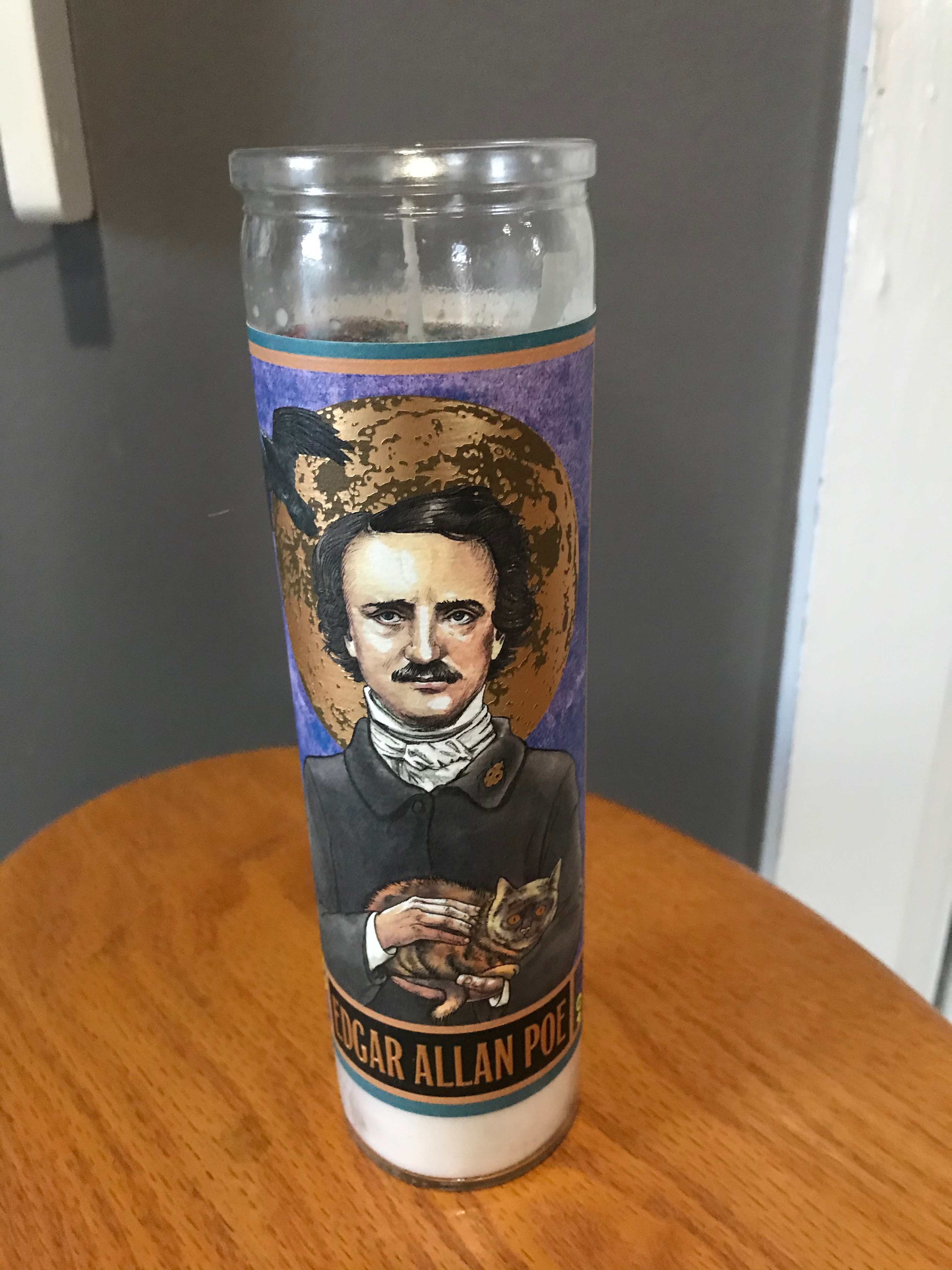
For anyone who’s read Nightmares with the Bible the appreciation of Poe should be obvious.  One of the peer reviewers suggested I should remove the Poe references since he didn’t write about demons.  Struggling against demons, to my way of thinking, counts.  In fact, Poe is largely the thread that holds the book together.  I’m aware that at its price point the book will be little read.  Still, having a literary tribute must be a form of consolation.  Mine is but one of many, I know.  As we stand on the cusp of an unknown future, hoping the maelstrom is truly behind us, I gladly acknowledge that Poe has helped me get this far.  And like the Raven, let us hope it is truly nevermore.


Halloween Mood

As America becomes scarier and scarier, I appreciate the fact that I grew up loving Halloween.  I don’t know why the dark mood appeals to me—I don’t like being scared, and I certainly don’t want others to suffer.  It’s more the mood that appeals; think of it as Halloween in the abstract.  I begin to feel it in August when I walk into stores already beginning to stock their black and orange wares.  It grows stronger through September as the dark comes on noticeably earlier each day, culminating after an October of anticipation.  Unlike some consumers of horror, what I’m after is the mood.  I started reading Poe as a young person, and “The Fall of the House of Usher” remains my favorite short story.  It’s the mood.  The narrator riding his horse through the woods toward dereliction.  There’s a sublimity in it that’s hard to match.

Yes, I watch contemporary horror.  I even write books about it.  Still, it’s difficult finding others who share my sensibility concerning horror.  I don’t like the jump scares or the gore.  I’m after the mood.  Poe knew about mood—he wrote stories that maintained it throughout.  A kind of beautiful hopelessness.  It’s a feeling in the air around Halloween when it’s clear nothing is going to stop the leaves from falling and the onset of a long and lonely winter.  Writers will shiver in their garrets, allowing their thoughts to flow despite the pale sky and feeble sun that is the only hope of continued life on this isolated planet.  Halloween tells us there is a spirit world no matter what the scientific authorities say.  It’s a world you can feel, but you can’t find it rationally.

Masquerading is a theme in some of Poe’s work as well.  We, as social beings, tend to excel at it.  We hide our real feelings so that others won’t hurt us, or so as not to hurt them.  We all know the childhood feeling of putting on that Halloween mask that permits us to act as we really feel, within limits.  Even as a Fundamentalist, I knew the catharsis of masquerading.  I read Poe and I understood him in my own way.  As an Episcopalian, I saw how fear of death was hidden behind All Saints and All Souls.  Masquerading.  Halloween was the Eve of All Hallows, but it usurped the master in its own form of beautiful dereliction.  The holidays following this are more comforting and heimlich, until the solstice comes to remind us that light will return, no matter how feeble at first.  We need Halloween.