Born Identity

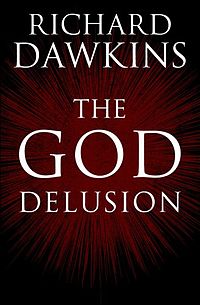
Richard Dawkins, most famously in The God Delusion, made the claim that children are born without religion. Faith is something we’re taught in the growing up process, and we generally learn it from our parents or guardians. A recent piece in The Guardian (the newspaper, not ersatz parent) by Andrew Brown, stakes a bold, and surely correct, counterclaim: children are not born atheists. This isn’t just wishful thinking. As Brown points out, study after study has shown that people, especially children, are prone to belief. Where Dawkins does have a claim to verisimilitude, however, is that religious branding is not a product of nature. We have to learn what flavor of religion tastes good. As Brown points out in his opinion piece, we also have to learn to be the nationality that everything from our passports to our job applications requires of us. I can’t decide to be Scottish or Canadian. I’ve tried both, and here I am, an American mutt, just as I was assigned at birth.

What should  I believe?

What should I believe?

Like nationality, religion is frequently a matter of where you are born. Take a look at a world map of religions and see. India is the most statistically likely country to be born Hindu. It can happen elsewhere, but it would be unlikely where no Indians live. Life sometimes offers the opportunity to change belief, generally through education or through proselytization, but it is fairly uncommon. Most people don’t think too deeply about their religion. You accept what your parents tell you about what’s poisonous and what’s not, and how to drive a car. Would they steer you wrong on religion? Not willfully, surely.

The tabula rasa myth has been one of the most difficult to eradicate. We’re born with all kinds of things going on inside already. Specific religious belief is not one of them, but the tendency to believe is. We believe because it is human nature to do so. We can learn not to believe, and we can even become wealthy by sharing that outlook vociferously. You can also get a good deal of money by being religious and selling alternatives to science. The Institute for Creation Research is well funded, from what I hear. The one place where there is no money, and where you’re not likely to be noticed, is in the middle. Some of us are born as middle children. We had no choice in the situation, and no matter what we decide to believe, we’re no less Episcopalian than we are atheist, or vice versa.
Darwinian Dawkins

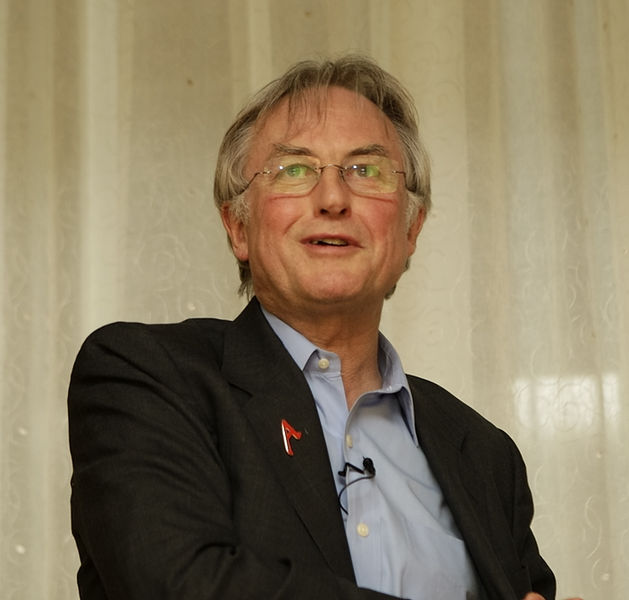
Richard Dawkins seems like he’s probably a nice guy in person. You can tell quite a bit about somebody from their writing, and even when Dawkins is being abrasive in script, you can almost see a gleam in his eye. When I read The God Delusion, for example, I found myself nodding in agreement quite a bit. Not that I agree with everything he wrote; as an academic I can’t, in principle, agree with everything anyone writes. Nevertheless, Dawkins expresses himself with passion and clarity, if with a bit over overstatement. I was interested to read the interview with him in the 10 Questions section of this week’s Time magazine. When one is building a case, it is easy to pile on rhetoric, and pretty soon the force of an argument takes on its own life and sometimes a few casualties are left bleeding in the wake. Still, it is a good exercise to sharpen the mind.

Wikipedia Commons, photo credit: Mike Cornwell

Wikipedia Commons, photo credit: Mike Cornwell

The last of Time’s 10 questions deals with how Dawkins can be certain there is no God. Dawkins, in a conciliatory move, declares that there is much of which we can never be certain. Noting that future science will discover realities that we simply don’t foresee, he suggests, “it’s extremely unlikely that it would happen to home in on an idea from a Bronze Age tribe in the desert.” I found this final sentiment a touch off-kilter. We have plenty of scientific developments that have come out of the “Bronze Age tribes,” but God is not one of them. “Desert tribes” gave us metal smelting, bovine and caprid domestication, and, perhaps most importantly of all, writing. God, however, comes from a much earlier evolutionary strata. In fact, by the time that the Sumerians appeared, multiple gods were already in their train.

In fact, evolutionary scientists seem to indicate that our brains have contrived some need for God/gods. That God isn’t a semitic desert mirage, however, is attested by people all over the world developing the idea independently. Not only did the Israelites and their forebears have deities, so did the Vedic cultures that we now call Hinduism. So did the Native Americans, indigenous African religions, and those who developed in isolation on Australia. Gods evolved everywhere. It doesn’t take a scientist to figure out that this means that we have some need of them. I like what Richard Dawkins writes. I enjoy his candor and passion. We do, however, have to credit the desert tribes with much of the thinking that leads to science, but the gods, they are far more ancient than that.


Curing Fundamentally

Despite the many problems with Richard Dawkins’ religious reasoning, he correctly notes that children are religious because they are taught to be. (That’s actually further than Dawkins is willing to go, since in The God Delusion he states that children are not religious at all, but are only claimed to be so by parents.) Belief is something that we are only beginning to understand, but it is clear that children are taught their religion, generally, by those who raise them. By the time most of us finish high school or college, however, we have learned that religion is limited to a relatively brief segment of our otherwise busy, secular lives. Over the years I have met many people whose religion I have studied in more depth than they, mainly because it was of little interest to them. God made no sudden appearances in their lives, the miraculous never occurred, and so life is business as usual. Religion was for Sunday morning (or whenever).

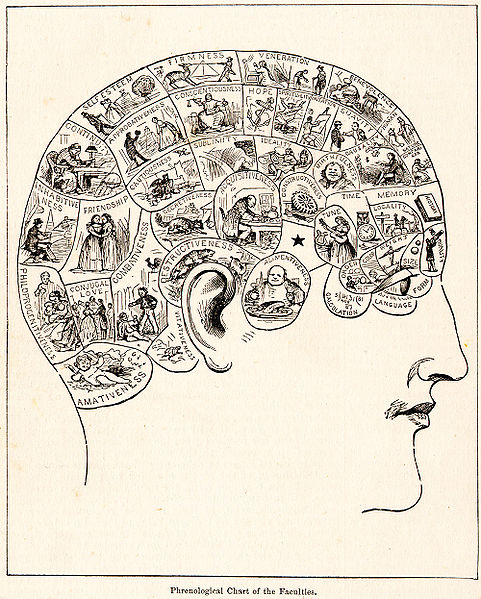
481px-PhrenologyPix

I was raised as a Fundamentalist. Although my readers may clearly see that I am no longer one, I do know that this bundle of neurons in my head has been made what it is, at least in part, because of that early training. Now a neuroscientist is suggesting that such thinking might be a curable mental illness. In an article in the Huffington Post, Kathleen Taylor, a neuroscientist at Oxford University, suggests fundamentalism may be a treatable disease. Looking over the secular headlines, there is no doubt that much of the misery in the world is caused by religious literalists acting out their fantasies in deadly ways. The suggestion that they might be treated for mental illness, however, raises profound—exceptionally profound—questions. Since I work in a city of millionaires and billionaires, I ponder how it is that extreme selfishness is not counted a mental illness. The desire of an individual to acquire far more wealth than one person can ever use seems to be an illness. Aesop might call it being a dog in the manger. No one is suggesting their brains be reprogrammed.

The even larger issue is who has the right to decide “the new normal.” Richard Dawkins may be correct that children reflect the religion of their parents, but as soon as adults declare what religion is acceptable we find other adults colonizing new continents, with the attendant misery that such migration entails. Where do we draw the line? If Fundamentalism programmed out, will Baptist neurons be allowed to remain? Methodist? Presbyterian? Mormon? The issue raised by Dawkins must be placed in context; if parents decide on a child’s beliefs do other adults have the right to decide on what is the correct belief? (Orthodoxy means precisely that.) Is a strict rationalist mentality what we want? A life without Hayden, Picasso, or Charlotte Brontë? What would Mr. Spock do? Will the real Randle Patrick McMurphy please stand up? Our rich fantasy lives are what make us human. If we are going to program out religious freedom perhaps the brave, new world is already here.


Dawkins Dilemma

Some of my regular readers may have divined that I’ve been reading Richard Dawkins’ The God Delusion. It is a book well worth more than one post on a blog, but it is also one of those troubling and liberating books all at the same time. Dawkins is a gifted writer who explains things clearly. He sometimes makes mistakes in the details, but his logic is flawless and consistent, at times running up against the limits of reason itself. There is a dilemma here, however, and that is the ghost in the machine. It may not be supernatural, but even Dawkins must occasionally refer to “enlightenment”—a term derived from Buddhism, and “essence”—something that does not actually exist, and other turns of phrase that wander beyond the strict purview of science. Nevertheless, his point, hammered home repeatedly, is well taken. The perpetuation of religion is not very healthy, and in a way, contains the seeds of its own destruction.

As a specialist in religion reading this book by a world-class scientist, it feels like awaking in the morning after a stranger has broken into your room at night and beat you soundly while you slept. Religion is what we do, our thing. That voice of indignation whimpers, “why must scientists come in here and trash all our stuff?” And yet, that is the way of reason. It takes no prisoners. Back at Nashotah House I used to argue points of Scripture with students. Often there would be someone who would resort to, “reason is fallen and is therefore not to be trusted.” I would always respond, “how do you come to that conclusion if not by reason? Can you trust it?” If reason be true, it must be true the entire journey, as anyone who has ever flown on a plane knows. When reason meets religion, however, fireworks fly.

Dawkins does an admirable job illustrating the troubles into which religion has led the human race. It is very unlikely, however, that the human race will ever outgrow religion. Perhaps it is one of those evolutionary mechanisms set into our brains in order to ensure that we are not too successful. With the exception of crocodiles, sharks, cephalopods, and many insects, life forms are continually evolving and dying out. Maybe religion is our apocalypse, the mark of the beast. The original sin. Call it what you will, but religion often acts as a massive deterrent to human progress, and especially to the ideals that it often promulgates. Sometimes it takes a biologist to sort out the menagerie.