Young Fear

The amazing thing about people is that even when you’re aging you remember what it was like to be young.  I used to have to stop and consciously think of that if I wanted to realize it when talking to those older than myself.  Now that I’m no longer young I don’t need to have it explained.  I’m not afraid to read teen literature.  Those who write it well (John Green comes immediately to mind) make you feel like you did when you were a teen.  I read Jessica Verday’s The Hollow because of, well, the Hollow.  Sleepy Hollow, that is.  This is a young adult novel and even before I was half-way through I got the strong impression that to be satisfied with the story I’d need to read the entire trilogy.  This was a relief since I’ve read Sleepy Hollow novel series before where I had no real desire to press on beyond volume one.

The story isn’t a modern-day retelling of Washington Irving’s legend.  It is set pretty much in the present (although, I notice, tech changes so fast that it’s immediately clear that this was set a decade ago.  Has anyone considered how this constant change will affect literature?) where Abbey, the protagonist, is trying to come to terms with her best friend’s death.  Since her best friend was really her only friend (some of us know what that can be like), she finds solace among strangers.  Those strangers, it becomes clear late in the novel, are not what they seem to be.  Throughout the novel both quotes from and discusses Irving’s story—how could any tale set in Sleepy Hollow not do so?

In any case, this is a quick read despite its size.  Verday captures what it’s like to be a teenager.  My experience of teenage girls was always limited, but I have no reason to doubt that she represents that part accurately.  The funny thing about being an adult is that you learn that you don’t really know how to be one.  For me, dips into youth help to center me when this whole adult thing just doesn’t seem to make any sense.  I don’t want to give any spoilers for the story here, but I’ll likely move on to the second novel in the series before too long, and by the time you get to second in the series it’s okay to assume those reading about it won’t mind a bit more information.  At least that’s the way I think about it, having once been young.

The Young and the Headless

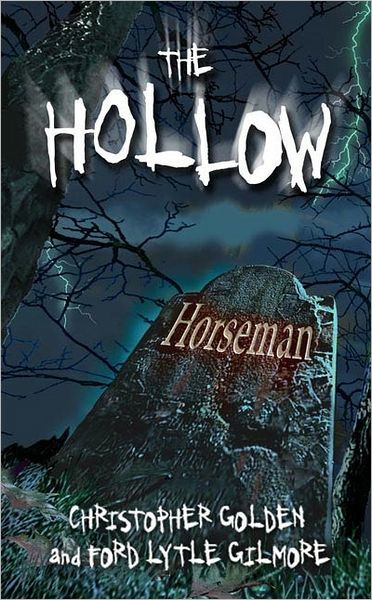
Young adult literature is sometimes fun to read as an adult.  In addition to going swiftly, compared to much “adult” literary literature, it has a way of evoking what life was like when we were younger.  Or at least it can.  Sticking with my Sleepy Hollow kick, I read the first volume of the series “The Hollow” (later “Sleepy Hollow High”) by Christoper Golden and Ford Lytle Gilmore.  This volume, Horseman, posits the return of the headless horseman to Sleepy Hollow in the modern day, triggered by the return of some of Ichabod Crane’s unknowing descendants.  The story follows brother and sister team Shane and Aimee Lancaster, who’ve just moved to Sleepy Hollow from Boston.  Although full of unexplained happenings, the book conjures the emotional turmoil of teenage years well.

While I normally try to read within my usual age level, the occasional foray into tween, young adult, and now, new adult lit is a fun escape.  One of the mysteries of aging—and I certainly didn’t think of this myself as a young person interacting with my elders—is that you remember what it was like to be at the various stages of life you’ve passed.  When you’re young you’re discovering things for the first time and there’s a revelatory aspect to them.  I can’t make universal claims, but in my experience life just gets more complicated the longer you live.  We yearn for the simplicity of younger times when, for example, you just paid the rent, went to work, fell in love, and did your own taxes.  As an adult you find all of these things hide complexities that often hide even more complexities within themselves.  Why not throw caution to the wind and spend a weekend reading a young adult novel?

I’m undecided about reading the rest of the series.  This story quickly drew me in, but the other volumes are now published only in ebook format.  And I suppose I should do some more serious adult reading as well.  Actually, I’ve been plugging away at a novel written for adults by an author my age, but it’s long and, well, involved.  Kinda like life itself, I suppose.  One of the things I’ve noticed about modern engagements with “The Legend of Sleepy Hollow” is that they tend to skew towards a younger crowd.  Maybe I can recapture a bit of my own youth that way.  I’ve known the story since my youngest years but have only recently really began to pay attention to it as, well, I guess I have to admit, an adult.


Hollow

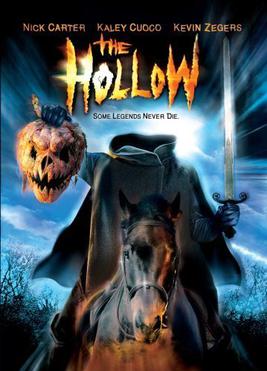
Now that we’re officially in September, it’s kosher to talk of Halloween horror (I’ve seen Christmas decorations in the stores already).  Well, around here we don’t really need an excuse, but since it’s handy I’ll use it.  Regular readers know I’ve been on a Sleepy Hollow kick lately, and I’d been wanting to see The Hollow.  Released as an ABC television movie, it had a fairly modest budget of only about $900,000 but managed to pull in stars with name recognition.  A pre-Penny Kaley Couco also appears as the new version of Katrina Van Tassel.  Let me back up a bit.  This is set in the present day.  Halloween eve.  Karen (not Katrina) is watching a Sleepy Hollow retelling being done by Ian Cranston, but her bored escort, Brody (Brom, anyone?), goes to the graveyard instead with some of his friends.  Two of them are killed.  Oh yes, there will be spoilers.

It turns out that Ian, who’s just moved to the area, is the last remaining descendant of Ichabod Crane.  You see, after Ichabod fled, and settled in New York City, he changed his name for fear that the Horseman would find him.  Now that a Crane is back in town, the Horseman rides again.  The teen-rivalry between Ian and Brody plays out at Karen takes a shine to the newcomer.  A descendant of Hans Van Ripper, who unaccountably talks like a pirate—lots of “ye”s thrown in—realizes that the Horseman’s after the young Cranston.  Since he’s the town drunk, though, nobody really believes anything he says.  On Halloween the town has a haunted hay ride in which each side of the love triangle is involved.  Brody plays the Horseman, but suddenly there are two of them—uh oh!

Cranston, who’s on the fencing team (to the everlasting shame of his football-coach father), is able to engage the fiend in swordplay and eventually destroys him.  He gets the girl and impresses his father all in one predictable way.  There are some laughs along the way, but for the most part this is played as teen drama.  Some racy scenes (and head-chopping) led to an R rating, but there’s little that’s surprising here.  For anyone who’s interested in the various ways Washington Irving’s “Legend of Sleepy Hollow” has been repackaged over the years, it’s a reasonable enough diversion.  When Halloween draws closer, however, it may well be time to try something a bit more appropriate for the harvest season.