Othering Offering

I get to feeling a bit anxious when nobody else publishes me for a while.  It’s a strange kind of validation, I suppose.  No matter my motivation, I knew as soon as I saw The Offering that I would have to write something about it for Horror Homeroom.  The article is now available here.  Horror, as one of the more intelligent genres, often has much to say about things such as religion and esoteric beliefs.  In the article I compare it to other recent Jewish horror such as The Possession, The Golem, and The Vigil.  All of them are worth watching.  Religion often addresses those things that scare us, whether secular or sacred.  Movies like these often make me ponder the sense of belonging that religious communities offer.  At least in the best of times.
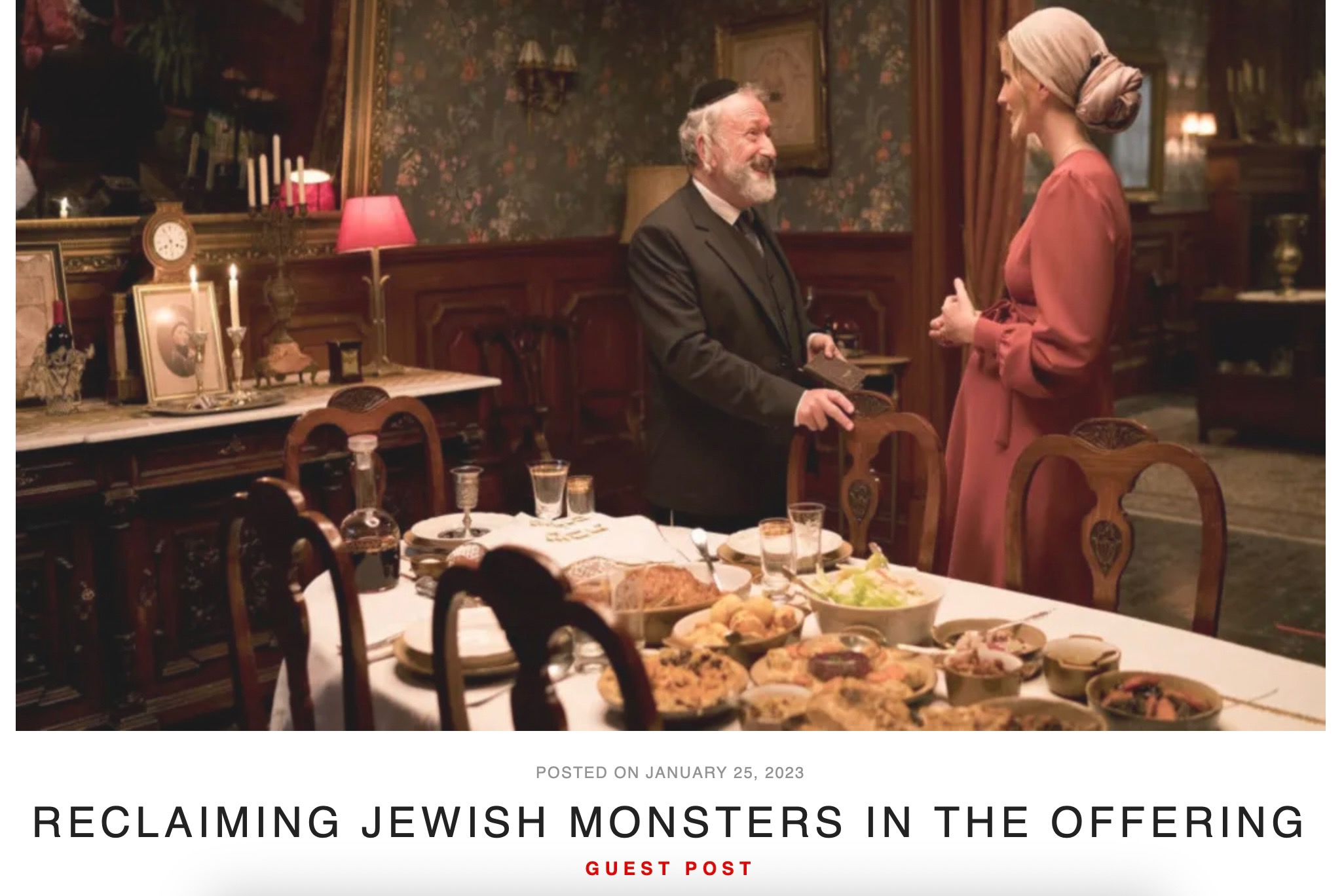
These three movies each have their own posts on this blog, but the point of the Horror Homeroom article is to try to look at them together.  Judaism can be a particularly delicate topic.  Not only the Holocaust, but also subsequent political developments have led to dangerous situations for Jews in the real world.  Theirs is an old and rich culture, persecuted largely by Christians who ironically blame Jews for their own salvation.  And hate them for it.  Nevertheless Jewish culture and belief persist.  It’s telling that even when they invent a protector, such as the golem, they come to realize that it too will turn on them in the end.  Most horror movies, if they participate in religious worldviews, do so from a Christian point of view.

Some colleagues recently asked me to name some Protestant horror movies.  That’s a tricky question to answer because the American context is still largely Protestant as a whole.  And when you want to take on monsters and demons you generally call a priest.  Even movies like The Last Exorcism have Protestant clergy using Catholic crucifixes.  As I’ve stated elsewhere, Asian horror movies have also come into their own, often reflecting Buddhist or Hindu outlooks.  So we find religion and horror intermingling worldwide.  Movies are more than just entertainment.  They can be, and are, teaching tools.  We should pay attention to what goes on in their classrooms.  Not only can we learn about ourselves, we can also learn about those that we, or society, tend to “other.”  Like high school, there are a variety of classes you might take.  The day always starts, however, with homeroom.

On Offer

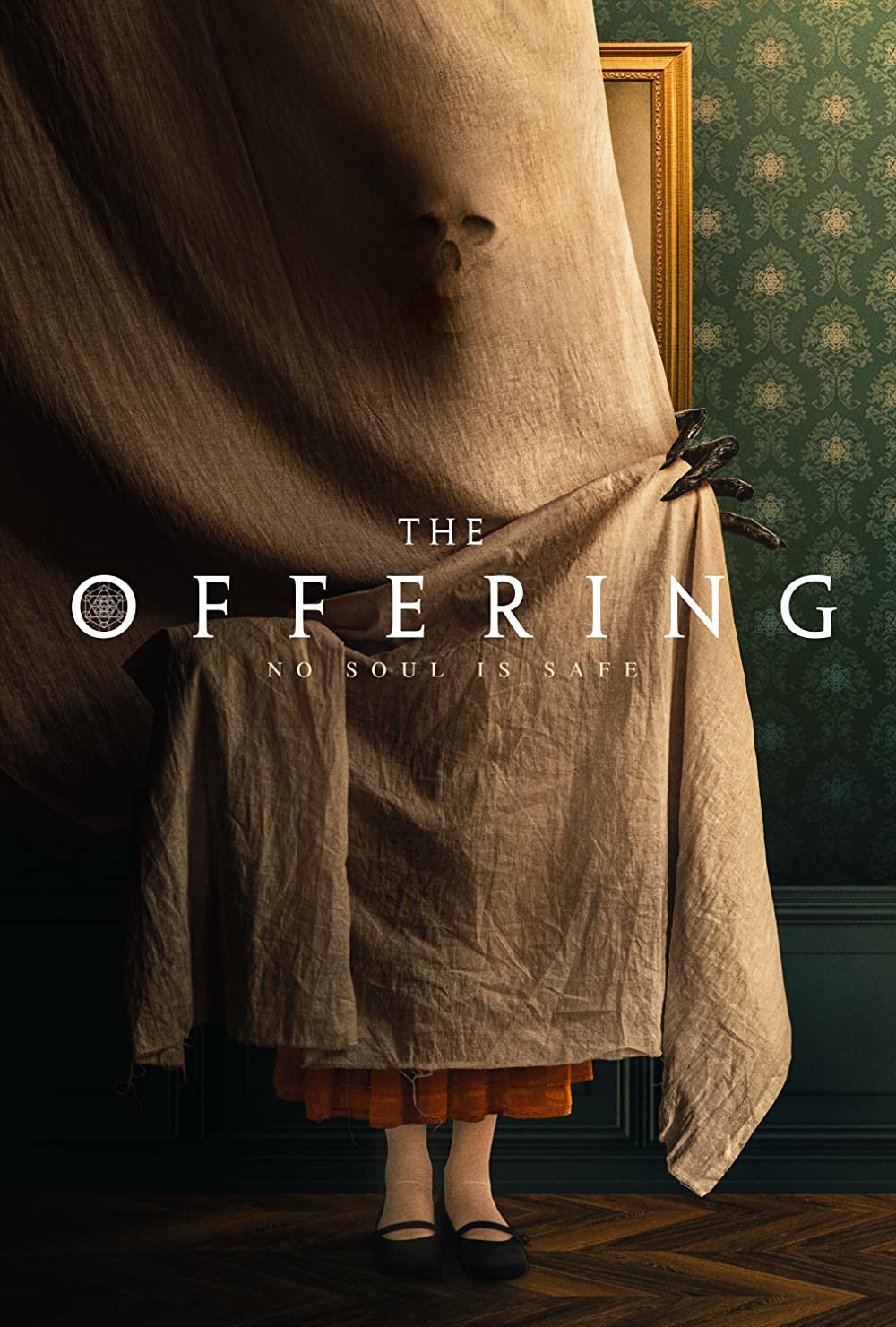
Feeling a bit overwhelmed by various January blues, I took me to my homegrown therapy of watching horror.  The newly released The Offering raises many questions regarding religion and horror, focusing again on Hasidic Judaism.  I say “again” because several movies from the past decade have begun to reflect Jewish monsters, often in Orthodox settings.  This is fascinating because Judaism tends not to emphasize spiritual entities, and perhaps that’s why they’re so surprising in such a framework.  I’m not a specialist in Judaism, and I worry about cultural appropriation, but horror is open to all people.  Religion often plays a central role.  A former author of mine, with Routledge, wrote a fascinating chapter in his book that dealt with Buddhist horror films.  So, The Offering. (I have an article on the movie coming out soon on Horror Homeroom, so be sure to check there for more.)

Like most Jewish-themed horror, The Offering is intelligent.  A Hasidic Jewish scholar, wishing to see his recently deceased wife again, accidentally raises a demon.  While demons aren’t especially plentiful in Judaism, this one happens to be Abyzou, a character familiar to anyone who’s seen The Possession, or, perchance, read Nightmares with the Bible or Holy Horror.  Abyzou targets children and so when Art, a non-practicing Jew, takes his pregnant wife to visit his religious father in Brooklyn, the tension is lined up.  Also, did I mention that Art’s father runs a funeral home out of his house?  The scholar’s encounter with Abyzou lands him in the morgue in the basement where, as demons are wont to do, it escapes.  And it wants that unborn baby.  There are also other family tensions which add to the complexity of the story.

I’m not in a position, without committing a lot of research time that I don’t currently have, to gauge the authenticity of Jewish lore associated with the demonic attack in this particular movie.  It is a film, however, that uses many familiar tropes in the service of horror that’s fueled by religion.  Demons are, after all, religious monsters.  Unlike The Exorcist, the goal here isn’t to exorcise but rather to trap the demon.  Exorcism always raises the troubling question of where a demon might go once it’s expelled.  The famous gospel story of Legion entering a herd of swine makes that abundantly clear.  The Offering also makes the threat to a pregnant woman a key element in the tale, and since we know that Abyzou wants the young, we’ve got built-in suspense.  There may not be a ton new here, but the movie addresses some important issues.  The dialogue about religion deserves some in-depth consideration—perhaps after I finish the book I’m currently writing.