At World’s End

“I am not a number, I am a free man” Number 6 plaintively cried on The Prisoner. Capitalism, however, has a way of making each of us quantifiable. A statistic. Not a guy with a kid in college. Not a human being with a sense of self worth and pride of achievement. From far above, in houses and penthouses owned by those who climb ladders made of other human beings’ hopes and dreams, those below are just means to an end. I’m sorry Number 6, you are wrong. Freedom is not free and the capital in capitalism is humanity, commodified.

It used to be that on the way to work I’d walk past the homeless in Midtown and wonder what could have brought them here. What could happen to a person to make them invisible—just a statistic waiting to die? What system could reduce a person to a number? Learning to count is, at times, a betrayal of our very humanity. It used to be that hard work was rewarded. It used to be when someone looked our way s/he saw a human being, and not a number. I’m terribly sorry, Number 6, I truly am. We don’t know your name. You are a number. So are we all.

In the aptly named Pirates of the Caribbean series, the second installment complicated the story by introducing the unmoved Englishman Lord Cutler Beckett. Satisfied with nothing less than the control of the world’s oceans—some two-thirds of the planet, he secures the means to reduce all enemies to fish-food with no show of emotion beyond a shallow smile. In At World’s End, as the Flying Dutchman and the Black Pearl bombard the Endeavour, blowing the ship of unbridled capitalism to bits, Lord Beckett, bewildered, significantly climbs down the steps muttering, “It’s just good business.” Aye, but not Aye, aye. (There is a serious difference.) As the Endeavour sinks I think I hear Number 6 from the depths, and I desperately hope he’s right.

Pirates_3_AWE_Poster_International


After the Gold Rush

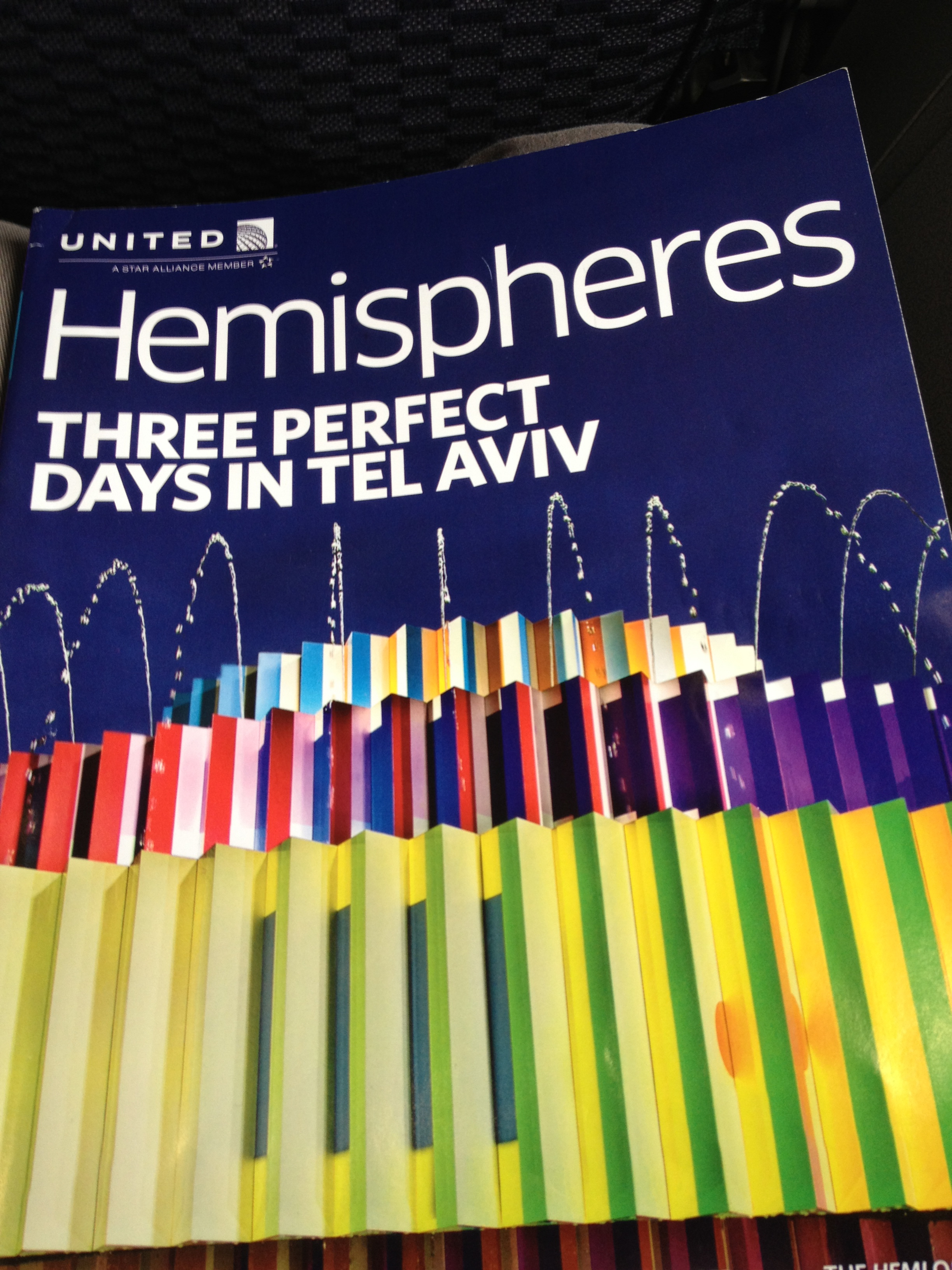
The morning I flew to Chicago for the American Academy of Religion and Society of Biblical Literature annual meeting, the headlines in the morning paper were about the rocket attacks in Tel Aviv. Ironically, the in-flight magazine cover on United, I noticed as I fastened by seat belt securely low across my waist, read “Three Perfect Days in Tel Aviv.” The irony wasn’t so much funny as it was sad. The situation in the Middle East is hopelessly entangled, but it all comes down to our obsession with dividing people into groups. Religious, ethnic, social: somehow we are not like them. We’re better, superior in some way. It matters not that proving superiority is a purely subjective enterprise. After all, we just know it. When history places one persecuted group in a position of persecuting another group, well, I’m afraid we all know what happens.

The problems in the Middle East are largely biblical and predominantly petroleum-based. Even those who tend to read the Bible figuratively can see a land claim based on an Abraham who probably never existed as strangely literal. Especially when there’s oil in them thar wells. Isolationism served the United States well until it was discovered that they had more black gold than even Texas does. Establishing a foothold in the region was not such a subtle policy; the x-ray vision of politicians funded by heavy industry saw beneath the sandy soil to the real deity that lay beneath. Dig a well, hit a gusher, and, like the Bible says, “he anointeth my head with oil, my cup runneth over.” Good news for modern capitalists. But some people will have to die.

As I sat in the lobby of a posh hotel, waiting for an appointment, I heard a fragment of a conversation as a couple of scholars rushed by. They were discussing the aftermath of the rocket attacks on Tel Aviv. One suggested to the other, in the context of how many Palestinians might die in retaliation, “well, if they can keep the numbers down…” and then they were gone. My mind jumped to The Prisoner. “I am not a number, I am a free man!” crashed in my head with the way that the dead in the Middle East are piled up as “the numbers.” I’m sure it was only intended as a convenient turn of phrase. Outside the hotel lobby the striking workers from the Hyatt labor disputes were protesting in a cold, crisp Chicago morning. They were soon cleared away. My fear, Number Six, is that you are wrong. We are all numbers, even the best of us.