
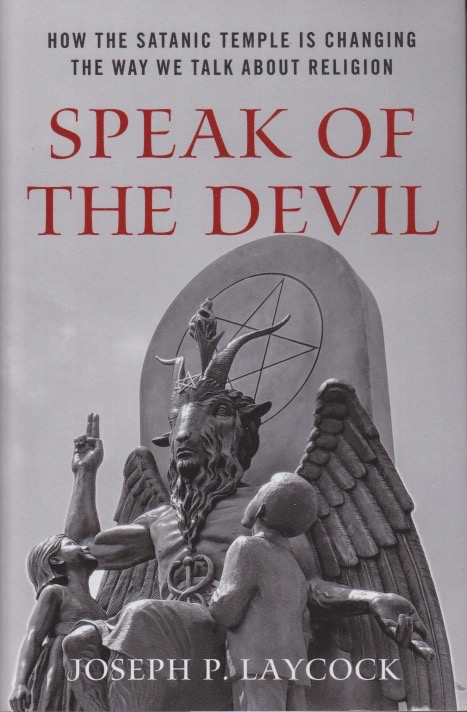
Now for the local news. The ironic thing is I know very few people locally and even though folks are friendly around here nobody really wants to get to know you, it seems. But that’s not unique to this area and it’s off point. No, locally some months ago The Satanic Temple (which I’ve written about before) tried to start an after school club in an eastern Pennsylvania school in response to an explicitly Christian after-school club receiving sponsorship. Of course it caused local furor. That’s what the Satanic Temple intends to do. The members do not believe in, let alone worship, Satan. They exist to try to counter Christian hegemony, often in the form of courthouse lawn Christian imagery, or, as in this case, biased treatment to Christian groups wanting to use public property, such as school facilities, to promote their religion.
The reason I’m bringing this up is to show how the Christian agenda raises your taxes. According to the ACLU, this school district, after challenged in court, has agreed to pay $200,000 and it must allow the Satanic Temple to meet if it allows Christian groups to meet. That hefty chunk of change (enough to buy a house in this area) has to come from taxpayers because the school board (until a recent election) was controlled by a right-wing group that played the Christian narrative and apparently supposed the Satanic Temple was really a Satan-worshipping group. It’s not. The Satanic Temple is a national organization whose goal is to maintain freedom from religion in government and publicly funded spheres. “Satanic” causes shock and panic and the sheep scatter. And local citizens foot the bill.

Although I understand what they’re doing, I really don’t like to see my taxpayer dollars having to be spent to coddle the egos of groups who spread the narrative that Christianity is the only religion allowed in America. In fact, one of the truly fascinating things about this country is the wide varieties of religions that exist in it. Although the melting pot metaphor has fallen on hard times lately, I’ve always felt this was one of America’s biggest charms. We’re a Frankenstein’s monster of a nation that’s just like the creature—not really a monster, but not like anything else you’ve seen. Cookie-cutter populations seem to lead to wars and hatred. Celebrating difference, indeed, encouraging it, leads to peace and shared prosperity, if we’ll let it. It’s only when we want to keep all the good stuff for ourselves that things begin to break down. And your local taxes go up because a faulty narrative is on the agenda.
 Steve A. Wiggins