Nesting Urge

Okay, I’m going to try really hard to do this without spoilers.  There’s a twist ending here that, in my humble opinion, works.  All I’ll say is that the monster may not be what you think it is.  The only problem is that there are at least eight movies titled The Nest, and you’ll need to find one  from 2019 if you want to see what I’m talking about here.  Don’t read any summaries beforehand because you want to let this wash over you and draw you in.  Although distributed by Universal, this Italian Euro-horror remains relatively unknown.  That’s really a shame since this movie delivers.  A woman, an heiress, has a paraplegic son that she never allows to leave the estate.  She’d training him to run things when she can’t and she strictly limits the people he can see.
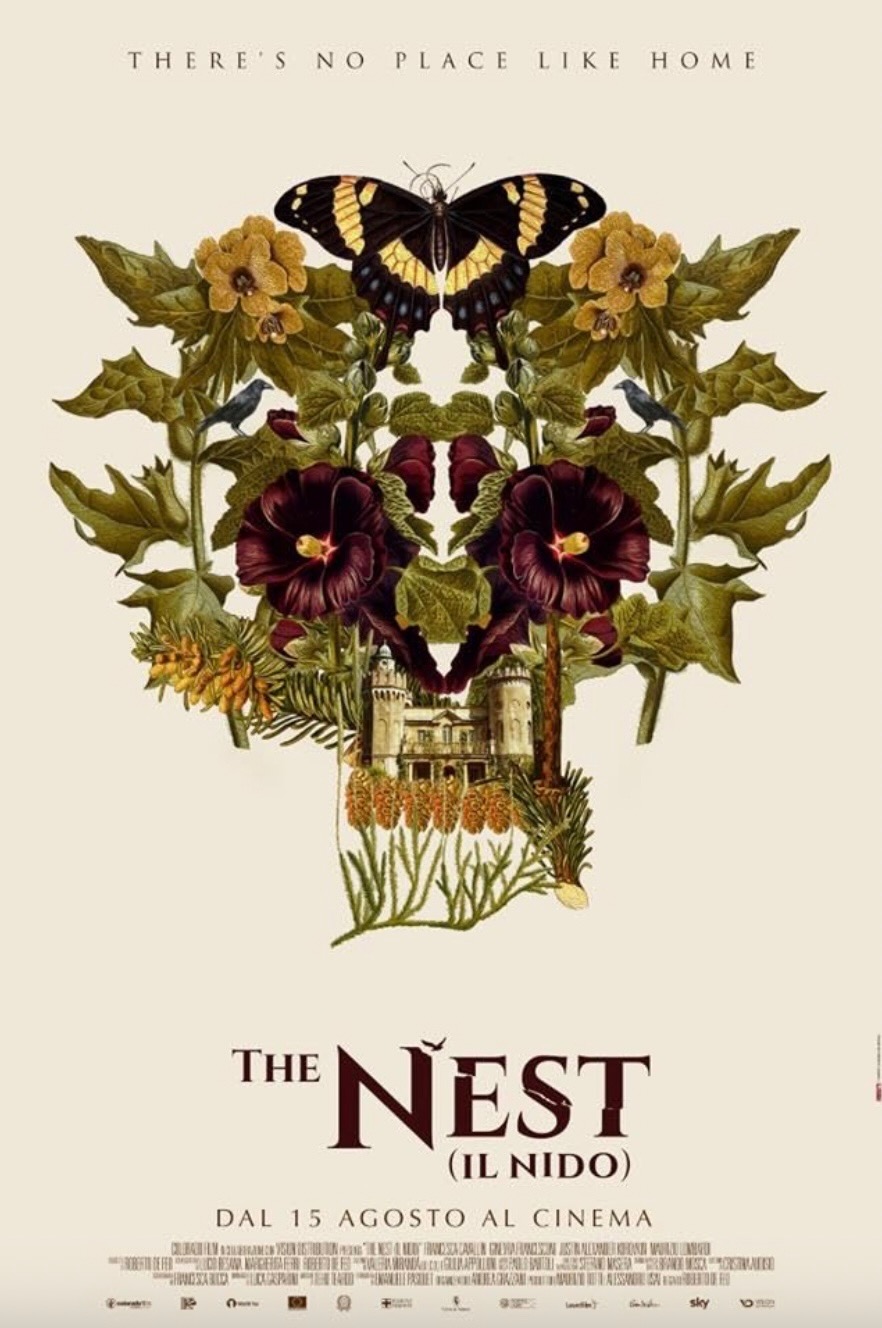
Teaching him classical culture, she won’t expose him to anything modern.  Then a teenage girl his age comes to live on the estate.  She was being raised by the same man who raised the heiress, but she knows things.  She knows about rock music, and she understand the way the world works.  The heiress, however, wants her son to experience none of this.  Afraid of what might happen, she sends the girl away.  In the meantime, we learn that the heiress kills those who are sick among her staff.  She employs a very creepy doctor who does whatever she orders, noting that she has saved them all.  The question is, is it best to live in such a bubble?  Is life so isolated worth living?  The heiress brings the girl back, but begins, with her doctor, to alter her behavior using electroshock treatment.

The Nest is one of those movies where you spend nearly the entire thing being misdirected.  When it’s over you think back on what you’ve seen and it does make sense.  Along the way, you know something’s not right.  It’s creepy in a way more than old, castle-like houses can account for.  I like gothic films like this.  There are disturbing moments that punctuate what seems like an idyllic lifestyle.  The heiress knows that survival equates to a cultured existence, but she never tells her son why.  This film shares some territory with M. Night Shyamalan’s The Village, in fact, they could be next door neighbors at points.  They both have a similar message, at least in part.  Efforts to build a paradise are beyond human capacity.  We need the outside world even if we fear it.

Robot Crossing

With my new job I haven’t been able to be as active on our high school’s robotics team this year. Not that I ever contributed much beyond moral support, but there is a very profound satisfaction at seeing teenagers concentrating on such technological marvels and building self-esteem. Yesterday was spent at a regional competition. Noisy, colorful, chaotic—it was like being a teenager again myself. I overhead engineers talking during the course of the day about the great technological marvels of the future made possible by robots. These people have no apocalypse hidden among their endless optimism. We’ve got robots on the ocean floor and rolling around on Mars, snaking into our bodies even down to the cellular level. No end of times here, only forward motion. I know that computers now define my life. If I miss a day on this blog I grow dejected; one of my biggest worries about going to Britain later this week is how I will continue posting from overseas. But I sometimes feel as if our love of technology will be our undoing.

Experts—of which I am not, I hasten to add, one—tell us that within a lifetime artificial intelligence will be indistinguishable from real intelligence. As I watched the robots playing basketball (this year’s FIRST Robotics challenge), I began to wonder about the motivation of our robot slaves. Humans are driven by biological and emotional needs. Robots, as far as we can tell, do not want anything. It is a vacuous life. Yet as the robots played basketball all day, I noticed they didn’t suffer the obesity problems so evident among humans, nor the weariness that accompanies having to awake before dawn to catch a school bus to the competition. They are built for a purpose and they stick to it. Even as I watched hours of competition, I began to miss my laptop—driven by my own emotional needs as I am. I begin to wonder who is really the slave here.

Last night my family participated in Earth Hour. We try to do it every year with a kind of religious fervor. Turning off all electronics, including lights, we sit in the dark and talk by candle light. There is a profound peace to it. As my daughter commented on how spooky the shadow play could be, I imagined our ancestors who had no choice but to rely on pre-electric light in drafty houses where real wild animals still prowled the dark nights outside. How quickly that would become a trial for us. The same thought occurred to me as I watched M. Night Shyamalan’s The Village again last weekend. We are helplessly tied to our technological advancement. We might like to get away from it all for a few days or weeks, or even months. But we want the comfort of knowing that the robots are waiting for us when we turn back to reality again. Perhaps no apocalypse is needed after all.

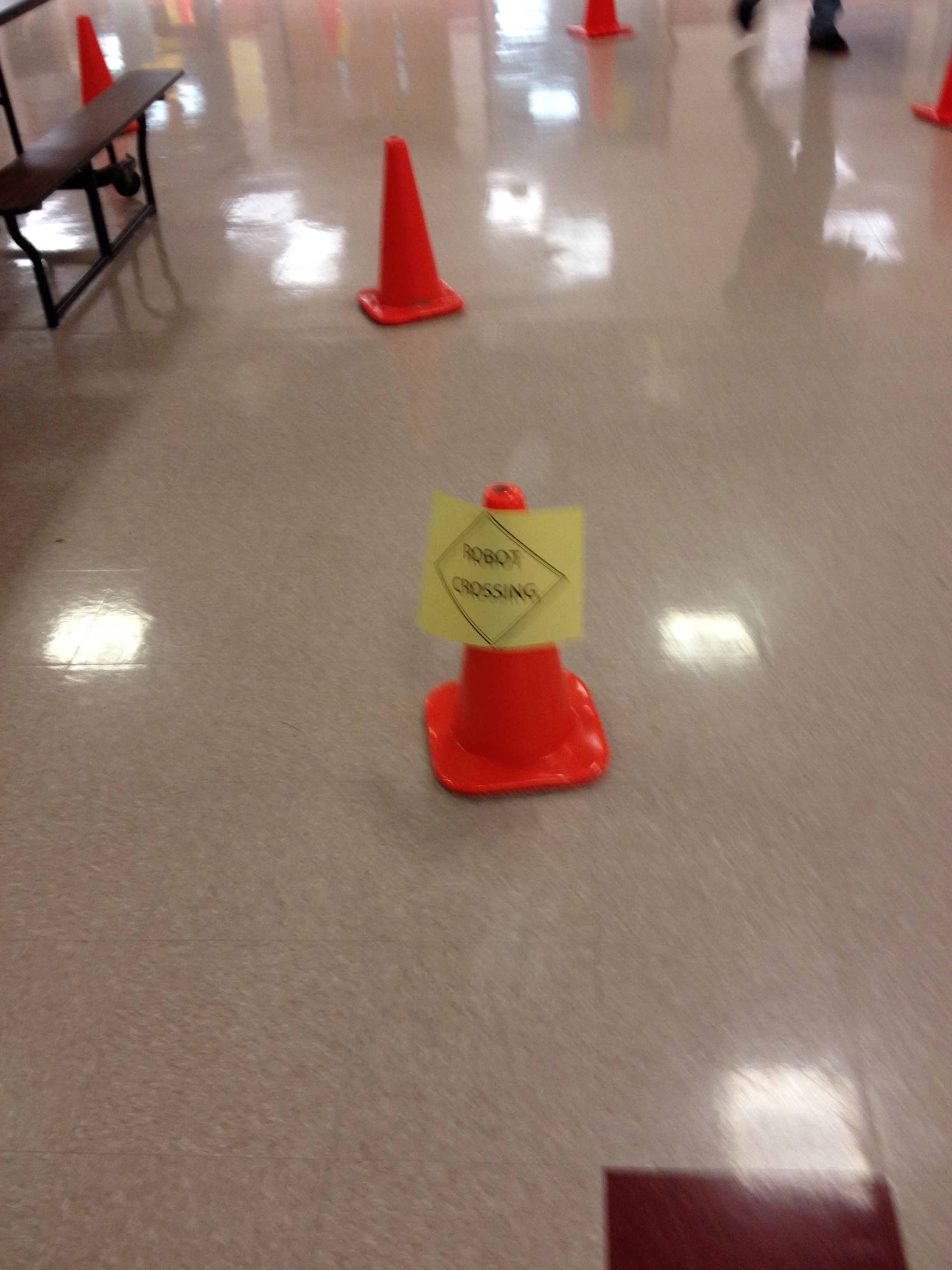
Robot crossing