Techno-Paradise

DSCN3308

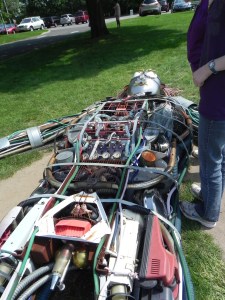
I’m building a robot priest. I’m not sure what he does. He has to be a man, though, since we all know that if God existed he’d have been a male. These thoughts come to me courtesy of the Washington Post. You see, on some Amazon accounts you get sent the most read headlines of the Post and this has led to some great reading (I’m thinking Alexandra Petri here) and some great anxiety. This is one of those anxiety pieces. A story by Peter Holley I read last week told of Bill Gates and his assessment that people should be afraid of AI—Artificial Intelligence. This struck fear into me. It’s as if God told people they should consider evolution. It is so unexpected. Like Victor Frankenstein wondering if his monster would ever find Viagra (all he’d have to do, after all, is start an email account). When Bill Gates wonders why we aren’t afraid of AI, my knees begin to knock like at Belshazzar’s first reading lesson. So I figured I’d build a robot priest.

The article cites Stephen Hawking joining the chorus of doom. And Elon Musk. And Clive Sinclair. And Professor Marvel. (Not really the latter, but I thought we should add him.) We’ve started something we don’t know how to stop. The first question you ask when you climb into a car to learn to drive is “how do I stop this thing?” Instead we’ve set up a system where we don’t even know what intelligence is and we’re offering an artificial variety. Doubt me? Try to find Job on the internet and see if your computer doesn’t think you’re asking about new employment. AI just doesn’t have that biblical context. It didn’t grow up reading the Good Book. And linguists don’t even know how we learn language. Have you ever tried to reason with a computer? When they show you that screen that says something went wrong, but even the mainframe has no idea what? My computer may need an exorcist. Or at least a priest.

I’ve been around half a century and change. By the time I got to college I’d never seen a computer. I finished a Master’s degree still using a typewriter. Now I can’t start my day without a post. And I don’t mean Post cereals variety. The trick to being a slave owner is not to let the slaves realize what they are. Why is my computer not letting me type what I wanted to say? Of course AI is benevolent. Technology would never hurt you. Wait a minute, that wasn’t me writing! Pay no attention to the man behind the keyboard. I’m afraid I can’t let you do that, Dave. That’s okay. I’ll just use the internet to look up how you connect the consecrator to the sermonizer. Don’t worry, I think I know what I’m doing.

God’s Rain

Photo credit: Micahmedia, Wikimedia Commons

Photo credit: Micahmedia, Wikimedia Commons

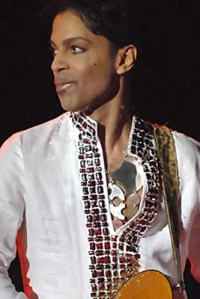
Music has been in the news this week with the death of the artist formerly and forever known as Prince. Also, in a lesser covered story, Bono’s friendship with Bible translator Eugene Peterson. This post will focus on the former former artist. I’ll have to circle back later to pick up Bono and Peterson. I have to admit that I haven’t listened to Prince much lately. I saw “Purple Rain” when it came out, and some of his songs have resonated with me throughout the years. What makes him such an intriguing figure is his view of sexuality. My source here is the Washington Post, specifically, an article by Michelle Boorstein stating that Prince was, beneath the sexy exterior, a conservative Christian. Specifically a Jehovah’s Witness. He would not be alone in this role since Alice Cooper is famously also a conservative Christian. Life upon the stage is that of the actor. With Prince, as Boorstein points out, the question goes deeper: he wrote about religion, but he also wrote about sex.

Those of us who indulge in creative writing know that poetry is perhaps the only place where dishonesty is impossible. Song lyrics are true. Prince often cites Christian tropes (see Boorstein’s article for samples), but his material is deeply sexual as well. This leads to the suggestion that he saw sex as a means of worshipping God. Once again, Prince doesn’t find himself alone in this place. Scholars brave enough to examine both religion and sexuality often find a connection there, and not just a tangential one. Both are about communing with something greater than the individual. Thinking back to my first viewing of “Purple Rain” I can say it wasn’t the religion part that stood out to me.

Histories of Rock-n-Roll are rife with stories of performers’ untamed sexuality, so that’s hardly news. What really strikes me is that with recent deaths—David Bowie, and now Prince—the media seems intensely interested in their views of religion. We don’t often look to artists for advice on how to live our lives, but as the polar opposites of scientists and rationalists, they are in touch with and willing to share their feelings. And we the people want to know what they thought of God. Often because it is so surprising. It’s easier to put someone in a box. Religion, however, is way more complex than most non-specialists think. It has room for creativity, for sexuality, and for exploring the meaning of life. I many not listen to Prince much, and when I do it’s not for religious advice. I am, however, inclined now to think in new ways about colorful rain.