A Glimmer

You just never know.  A few months back I emailed Liverpool University Press because my book, The Wicker Man, has apparently not sold any copies.  I had never received (have still never received) a royalty statement or any payment.  Now, I’m willing to accept that no copies have sold.  I’m not a recognized name and a bigger book came out in 2023, the fiftieth anniversary of the film.  I moved on.  Then, the day before my Sleepy Hollow as American Myth copies were scheduled to arrive, a friend sent me a text that made my day.  He’d seen on the MIT bookstore staff picks shelf, a copy of my humble little book.  I was floored.  Someone had read it and liked it.  And MIT!  I mean, that’s worth celebrating.  It also made me curious.

Image credit: a friend

I checked a website that tracks classroom adoptions.  The Wicker Man had been adopted for a class at Kennesaw State University in Georgia.  Ironically, just the day before my friend’s text arrived, a colleague at a nearby seminary asked if I’d come and give a talk about Weathering the Psalms.  This is all very dizzying to me.  I am an obscure private intellectual because no schools will open resident scholar or any other such non-tenure positions to me.  I can’t even verify myself on Google Scholar.  But a few people, it seems, have found my books.  In case you might think otherwise, I’m very well aware that the scholarly world is small (and the current administration would like to make it smaller by the day).  But I tend to think of myself as lost in that small world.

The Wicker Man was a departure for me, as is Sleepy Hollow as American Myth.  In these two books I moved away from my identity as a scholar of religion.  Don’t get me wrong, I’ve used my background and experience, and even latent knowledge of religious studies in both books, but they aren’t fronting religion.  It remains to be seen if the just curious will pick them up.  I know many people don’t default to, “I find this interesting, I’ll buy a book on it,” as I do.  And I’m more than willing to suppose that others aren’t interested in what I have to say.  Still, just when I’m starting to feel down on all my efforts, a little ray of hope shines through.  Someone in a bookstore somewhere has recommended one of my books.  And it feels good.


A Father’s Day

Some thoughts I hope I’m allowed to share on Father’s Day: I recently saw a review of The Wicker Man that pointed out (rightly) that my treatment of gender was outdated.  Similarly, the (few) readers of Nightmares with the Bible make a not dissimilar observation about my use of Poe’s formulation of women in danger.  I am very much aware that gender studies (which wasn’t even a potential major when I was in college) have done much needed work in clarifying just how complex a phenomenon it is.  I have posted several times on this blog about precisely that.  Still, we all write from a position.  My training is not in horror studies, and it’s not in gender studies.  My writing, despite the price, is intended for non-academic readers, but I too may be between categories here.  I’m trying to escape the academy that has already exiled me, but the framing of my questions is too academic.  I get that.

I also write from the perspective of a man. There’s no denying that I write as a straight, white male.  This is how I experience the world.  And how I experience horror.  Returning to Nightmares, I think my point might’ve been better expressed as noting that writers, directors, producers, and others in the film industry understand that viewers of their particular films may be more moved by a female possession than a male.  Or, in Wicker, that publicly expressed concerns about rape and sexual violence are more commonly expressed by women.  Statements can always be qualified, but that happens at the expense of readability.  There’s no such thing as a free lunch after all.

Academics can’t be blamed for doing what they do.  They critique, poke, and probe.  My books since Holy Horror have been intended as conversation starters.  But they’re conversation starters from the perspective of a man who watches horror and tries to understand why he reacts to it the way he does.  There is an incipient ageism, I fear, that sometimes discounts how people raised to use “man” when referring to mixed or indeterminate genders—taught so earnestly by women who were our teachers—sometimes take our earliest learning for granted.  Those early lessons are often the most difficult to displace.  I try.  Really I do.  I’ve had over six decades looking at the world through a straight man’s eyes.  I welcome comment/conversation from all.  Of course, my intended readership has never been reached, and they, perhaps would have fewer concerns about my view.  Romance (hardly a feminist-friendly genre), after all, is one of the best selling fiction categories, even today.  And many of the writers—generally women—express the gender-expected point of view. That’s a genre, however, outside my (very limited) male gaze.


See Monsters

I have a soft spot for seventies movies, but I can’t decide if The Sailor Who Fell from Grace with the Sea is horror or not.  I found it on a horror list, and an oblique reference to Lord of the Flies got me interested.  It reminded me, in some ways, of The Wicker Man.  Although based on a Japanese novel, the movie’s set in England.  Two subplots seem unrelated except they happen to the same widowed mother and son.  The son is part of a group of five boys in a private school who have a secret society (echoes of dark academia here).  The leader, although not yet at puberty, is a sociopath who’s very bright and the others follow him.  He declares that a perfect balance (a very East Asian religious outlook) exists that adults simply cannot realize it.  Indeed, adults are bad.

At the same time, the boy’s mother meets and falls in love with a second-mate on a merchant ship.  The boy likes the mate too and feels that they have found a perfect balance.  Thus the two plots come together.  The boys in the club feel that the son has gone soft on their principles, and so to prove he hasn’t they arrange the vivisection of an anesthetized cat.  When the sailor returns, unexpectedly, to try to marry the widow, her son objects.  The perfect balance has been distorted.  The boys decide that the sailor must be treated “like the cat.”  They take him to a distant overlook on a pretense, and drug him.  In a long shot at the end, the boys gather around his unconscious body.  Now, the similarities to The Wicker Man may seem passing, but the idea of human sacrifice is there.

Is this horror or not?  Hard to say.  Most of the movie revolves around the mother’s relationship with the sailor (which the son watches, voyeuristically, through a knothole in his bedroom cupboard.  The secret society is always there, however, and when the plots come together you realize that the sailor will have to be killed.  Like Wicker Man, there’s nothing really explicit here, although Wicker Man does have a horrific ending.  The Sailor only has one by implication.  The leader of the secret society of boys is pretty scary and apart from the widow, parents are pretty scarce in the movie.  I was left wondering what it was that I’d just seen.  I can see why someone would list it as horror, but it had other echoes that I felt might fit better.  It was, however, free for the streaming.


Belting Beltane

Things have been so busy that I forgot that today is Beltane.  That’s all the more ironic because yesterday I’d been on a panel to address the British Association of Film, Television and Screen Studies special interest group on Horror Studies, about The Wicker Man.  Lest you get the wrong idea, BAFTSS did not approach me to talk about my book (which has largely disappeared, as far as I can tell), but another recent Devil’s Advocate author approached them about having a panel featuring recent titles.  This special interest group has a program called Weekday Night Bites where they gather virtually to have speakers talk about horror.  Yesterday there were seven of us, discussing five books, one of which was The Wicker Man.

The theme of the panel was No Safe Space, about place and space in horror.  This meant I spoke briefly about The Wicker Man as folk horror.  As I told the assembled group, I actually interpret Wicker Man as holiday horror—it’s based on May Day, and I didn’t even think to mention that it was today—instead of folk horror.  One of the the hallmarks of the Devil’s Advocates series is that it tries to approach horror films from unexpected angles.  When I first contacted the editor who started the series at Auteur (who has, unfortunately left), he told me that they didn’t have a Wicker Man volume because everyone was pitching it as folk horror.  He wanted to see a different interpretation.  I’d been writing a book about folk horror and decided to give that a try.  The critics liked it, and thus my book was born.  And here it is, May Day, and I’d forgotten all about it.

There was a reasonably sized group present for the discussion and it was a lot of fun.  It reminded me of my Miskatonic Institute for Horror Studies course on Sleepy Hollow two years ago.  Both of these were efforts to stir some interest in my books.  Horror and religion is a new avenue of approach and there are a handful of us working in this area.  The others, it seems, have a knack for getting their books published in places where you don’t have to take out a mortgage to afford them.  I’m more in the group whose books are relegated to the Summerisle of sales.  Either that, or I’m actually Sergeant Howie, unwittingly flying there to help someone I think is in trouble. Who knows?  Anything’s possible on Beltane. 


Academic Publishing

I had lunch with a friend a couple months back.  He is one of the few people who’s read The Wicker Man (the Devil’s Advocate version).  Not many reviews appeared and no royalties at all have yet followed its publication.  The funny thing is, when I search for reviews I notice that the book is “for sale” on far more websites than copies actually sold (I’m assuming).  You see, one of the best-kept secrets in publishing (both trade and academic) is the number of copies sold.  Publishers are terrified of poachers after their authors, and don’t advertise actual sales figures.  For an author only the royalty statements reveal just how many (or few) copies ever made it to the hands of potential readers.  We’re all adults here; we know that not every book purchased is read.  I do wonder if there has been any interest in this little book at all.

My friend actually went and watched the movie because of my modest little book.  The film The Wicker Man is widely known in certain circles, but it is still a movie with a cult following.  Horror fans know it, of course, with some declaring loudly that it’s not horror.  It gets referenced all the time in more mainstream media.  I occasionally read quirky little books like Your Guide to Not Getting Murdered in a Quaint English Village.  I wasn’t surprised to see The Wicker Man (the movie) referenced there.  As I discuss in the book, it’s even the subject of a Radiohead video for their song “Burn the Witch.”  Beyond a few academics, however, nobody’s really interested.

My friend suggested a topic for a new book for me to write.  I didn’t have the heart to tell him that, barring a teaching post coming my way, I’ve given up writing books for academic presses.  I’m pleased McFarland accepted Sleepy Hollow as American Myth, but the crude cost-benefit analysis that I do tells me writing books for academic presses, without library access, is always a money-losing venture.  Remember those old Guiness Book of World Records paperbacks?  I recall seeing, as a child, the least successful author listed.  Of course I don’t remember his name.  I now know that at least that record hasn’t been broken.  Not officially, but when books cost so much to write… Academic publishers are facing hard times but I don’t see the wisdom in pricing your books so that nobody can afford them, just to scrape in a few university library sales.  Not to sound as mercenary as a Hessian, but what’s in it for me?  Certainly not tenure or groundskeeper Willie’s retirement grease.  I’m not paid like a professor. Right now, though, I’m wondering if maybe I’ve broken that record after all.


Gothic Folk

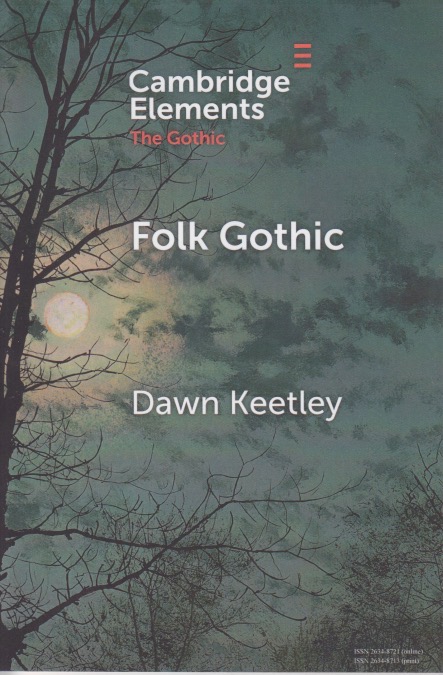
I smelled autumn on the air during yesterday morning’s jog.  Pseudo-non sequitur: Cambridge Elements are one of the many series of short books that academic publishers are promoting these days.  Elements is divided into different categories, one of which is “The Gothic.”  (Thus the pseudo.)  When I saw that Dawn Keetley had written a volume on Folk Gothic I knew I had to read it.  In some ways it reminded me of my own short book, The Wicker Man.  Although I analyze that movie as holiday horror, it is widely known as a textbook example of folk horror.  Just as many people haven’t heard of holiday horror as a category, I hadn’t heard of folk gothic.  Autumn is a gothic time of year, and I enjoy folk horror, so I wanted to find out what this genre is all about.

Keetley is an able guide through all things horror.  She co-runs Horror Homeroom, a wonderful website that sometimes publishes my own musings on horror and religion.  There’s a lot packed in this brief book.  One of the draws to these fascicle-like series is that you can learn a lot in a relatively short time.  As a weary scholar, I do appreciate the monograph—I read plenty of those as well—but something that distills is also appreciated.  So what is folk gothic?  Well, if you want a good, short introduction, read this book.  If I were haltingly to try to put it into a sentence, I would suggest that it is a form of horror with no obvious monsters; one that draws on folklore to set up a melancholy scenario that often involves violence.  If you want a better definition, I would recommend reading what an expert has to say about it.

One of the films discussed in this Element is The Wicker Man.  One of the early folk horror movies, it has no obvious monster.  Folk horror often relies on the very landscape to create a sense of unease.  This is something I always feel as autumn approaches.  I still have a ton of summertime chores to do outside—the too hot summer weekends aren’t conducive to physical labor for a guy my age—but I enjoy the melancholy of that first whiff of autumn.  It brings gothic sensitivities to the fore.  I picked a good time to read Folk Gothic.  I’ve seen nearly all of the movies discussed in the book, but some of the fiction I have yet to read.  There’s so much to do to get ready for autumn’s chill.


Happy Beltane!

They creep up on you, these holidays with no official recognition.  I’ve been so busy that it didn’t even occur to me that today was Beltane—May Day—until my wife mentioned it to me before I headed up to bed last night.  Why is that important?  It’s not a day off work, so why bother?  Well, for one thing it’s the fuel behind my book published in the summer of last year.  Or, according to the Celtic calendar, the fall (just before Lughnasadh).  In other words, this is the first May Day for The Wicker Man.  I should’ve been trying to drum up a little interest, but things have been busy.  Besides, my profile hasn’t grown since its publication.  Nobody even cites it on the Wikipedia page for the movie, although it takes a distinct angle.  So I’ve been busy with other things.

I’ve been trying to find a publisher for my next book.  A couple friends know what it’s about but mostly nobody else because it’s time-sensitive.  Agents haven’t nibbled.  Well, one did.  He had me rewrite the book and then decided he couldn’t sell it after all.  Back to square one.  Even presses that publish mostly non-PhDs weren’t even interested enough to respond to queries.  Nothing like writing a book to make you realize how insignificant you are.  Like Sgt. Howie, I’m caught on Summerisle.  Ironically, I didn’t even think of writing a post for my book today when I was jogging yesterday and a haze over the moon (I know the movie ends with the sun—I’ve seen it a time or two) made me think, “That sky looks like the ending of The Wicker Man.”  Well, when I get back from my jog I have to start right in to work.  And Beltane’s not a holiday in these parts.

May Day used to be celebrated, even in the United States.  Now it’s just disappeared into the haze of work days.  And we don’t have time even to watch movies on work days.  That’s a weekend activity.  Of course, my weekends are full of trying to find publishers.  Two are currently considering my unagented book.  Four have already rejected it.  I’m thinking that I could use a trip to the Green Man with Howie.  At least on Summerisle they know how to celebrate May Day.  Of course, it’s the ending that makes it horror.  And Beltane snuck up on me this year.  Without it, The Wicker Man wouldn’t even exist.


Fear and Reviewing

I have a confession to make.  I don’t always read reviews of my books.  I’m always a little scared, even though they made it through the review process and were accepted for publication, there will be those who don’t like them.  I’ve only seen three full reviews of Nightmares with the Bible and two of them were negative.  Eventually, however, I generally come around to taking a look.  Yesterday I found the first review of The Wicker Man on FilmJuice.  It took some time before I could settle down to read it, and to my great relief it was a positive review.  You see, I knew I was taking a chance by writing this book because I was approaching the movie from an unexpected angle.  That often makes fans uncomfortable.  I’m glad that at least one reader found it worth his time. (By the way, I tried to leave a thank you but WordPress, ironically, wouldn’t let me log in—hey guys, I’ve been blogging here for 14 years!)

I’ve watched horror movies since I was a kid.  I started writing about them in 2009, back when I started this blog.  It was tentative at first, being trained as a religion scholar as I was.  I think many of my early readers didn’t know what to make of it when I wrote about horror—wasn’t this a blog about religion?  Well, actually it’s a blog in the old sense of the word, a log.  Ship logs and diaries both depend on what’s going on at the time.  I still work with religion for a job, but I rely on horror films to help me make sense of life.  Since I watch them, I write about them.  Holy Horror was a bit of an experiment for me.  It didn’t exactly become a best seller, but it brought me into the conversation.

Holy Horror was the first book where I discussed The Wicker Man.  I’d discussed it many times on this blog, of course, but having a book published means that somebody’s invested in your thoughts, or at least thinks they can make a buck or two from them.  (This blog is entirely non-profit.)  I knew the Devil’s Advocates series was lacking a volume on The Wicker Man so I asked the series editor if he’d be interested in a new angle.  That set the direction for the next couple years of my life.  Despite my skittishness, I’m delighted to have a positive review on my reading of the film.  If negative reviews come (and they likely will) I’ll at least have the satisfaction of knowing one reader gets what I’m trying to do here.  And I confess that it feels good.


Speaking of The Wicker Man

The TheoFantastique website is older than my blog and, I suspect, has more followers.  I was immediately struck when I first found it in my early days of blogging.  Seeing that the fantastic—genres that include sci-fi, horror, and some adventure material—often comments on and often uses religion as its milieu, the site features many posts about topics I find compelling.  Over the years I’ve had the opportunity to get to know John Morehead, the creator and builder of the site and he has kindly agreed to interview me about each of my books that deal with these topics.  The links to those interviews (which can all be found on YouTube) are on the “Social Media & Interviews” page of this blog.  Just yesterday John recorded and posted an interview on The Wicker Man.

There is a small community of us that explore these connections between religion and pop culture.  My interests, as careful readers will know, is really with monsters but I’m still learning how to write about such things and, more importantly, to do so with limited resources.  That often means analyzing films because they are accessible whereas research trips to libraries and locations that monsters dwell isn’t really conducive to a 9-2-5 job with no sabbaticals or even summer or holiday breaks (capitalism is relentless).  I can take in a movie or two over a weekend without leaving home and I can use my writing time to explore them.  Thus Holy Horror, Nightmares with the Bible, and The Wicker Man were born.  And interviews about them can all be found on TheoFantastique as well.  There’s also much, much more there.

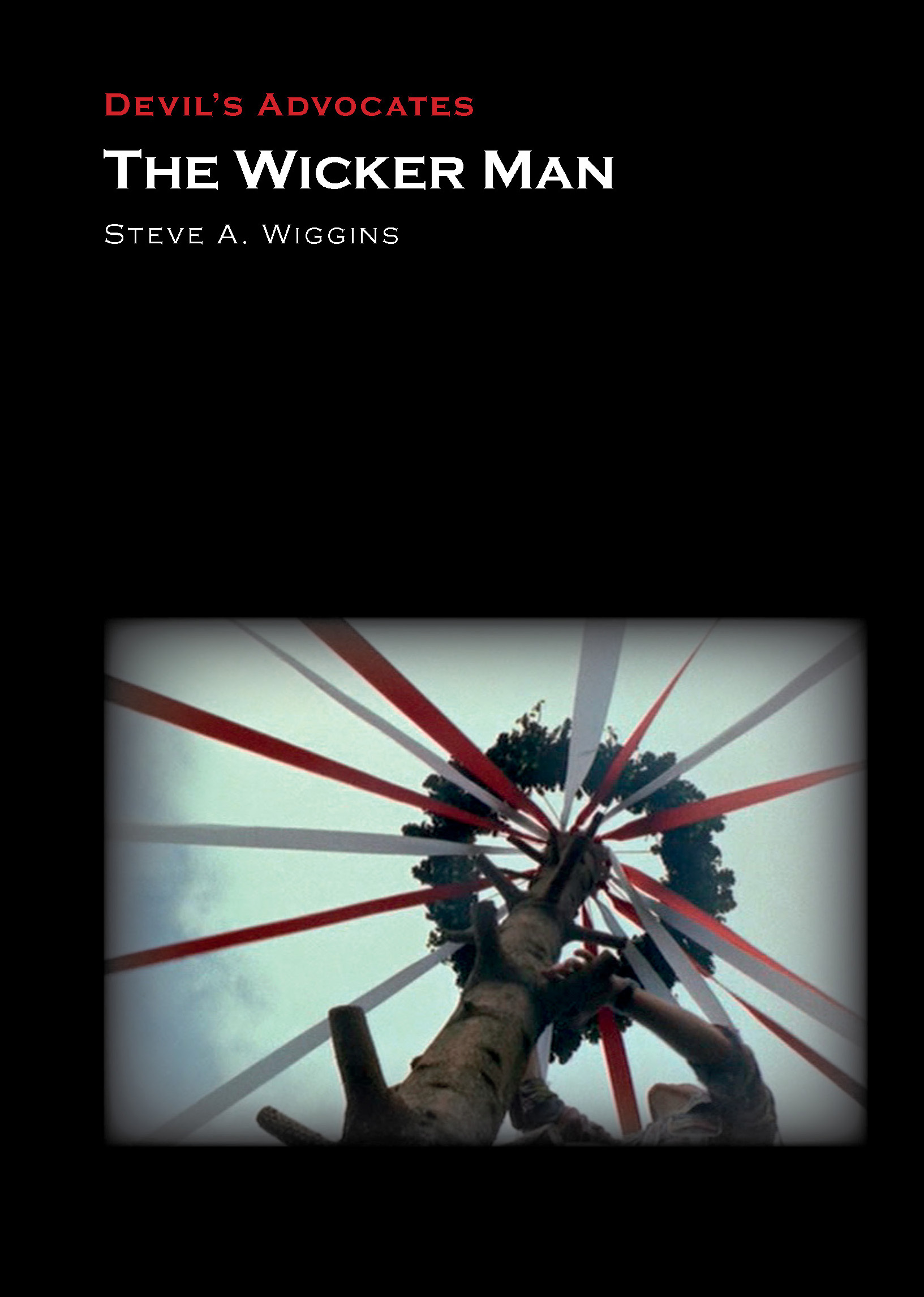
By the way, John is also quite a capable author and editor.  He’s got wonderful books to his credit as well.  Some of them appear on this website and the others I haven’t got around to reading yet.  (My “to read” list is about as long as the Burj Khalifa is high.)  I often think that being a full-time reader should be a job.  It is, I guess, if your own books sell well enough.  Otherwise you need to work around the long days at the office to make ends meet.  But I digress.  In this era of information via recorded media, online interviews are key to getting word out about your book.  Coincidentally, quite unexpectedly a single hardback copy of The Wicker Man arrived just yesterday as well.  That always helps when it comes to bookends.  But it may help to watch the interview before just diving in.


Whither Wicker?

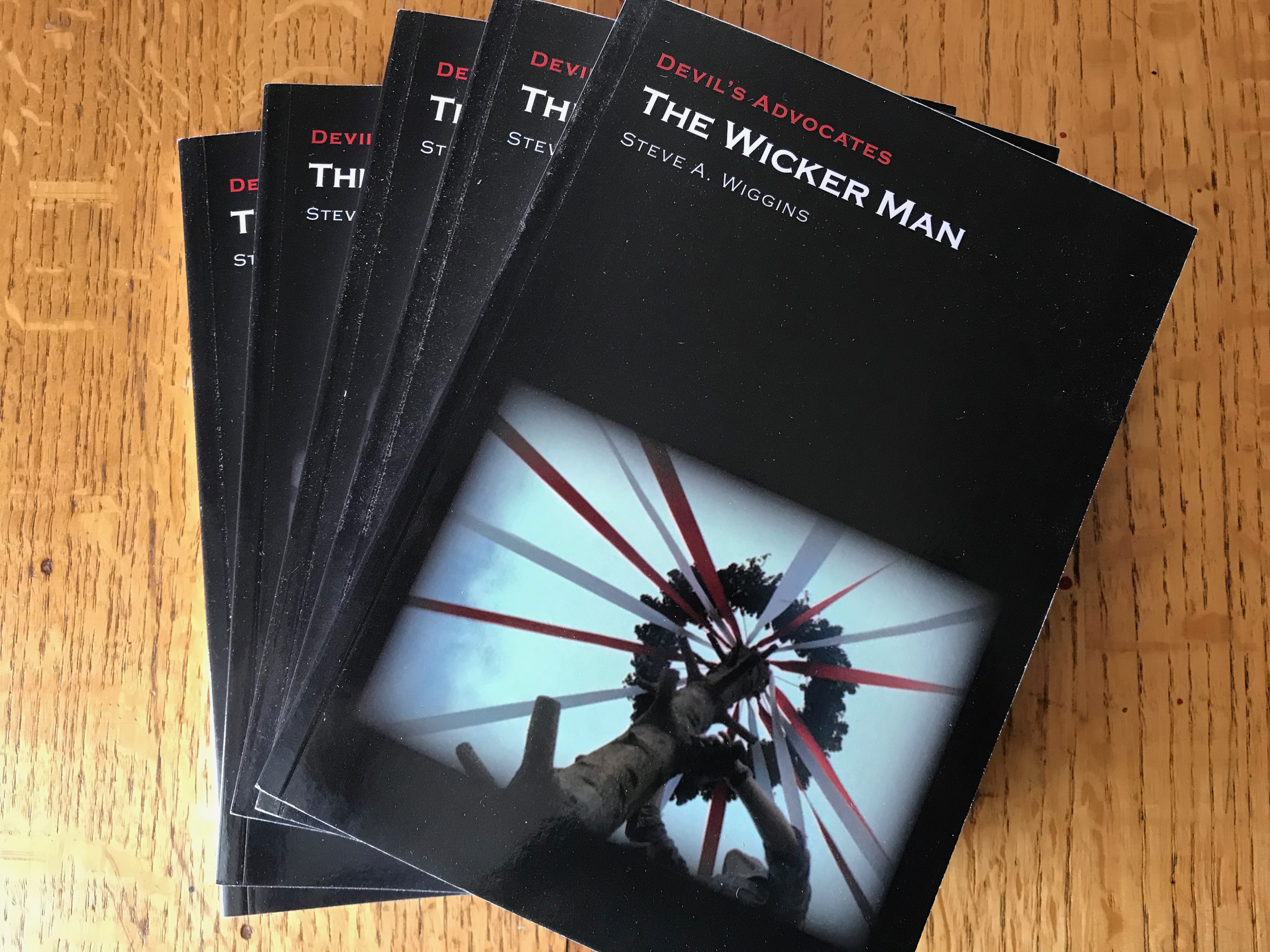
The process of producing a book is a lengthy one.  Even as an author you’re not really ever quite sure when it’s out in the world.  My author copies of The Wicker Man have arrived.  The release date is set for August and the publication date is September 1.  Still, it’s out there somewhere in the world at the moment.  The release date of the book is generally the date that stock arrives in the warehouse.  The book is technically available on the release date, but the publication date isn’t until two-to-four weeks later.  The publication date is when a book is fully stocked at the warehouse and is available in all channels (Barnes and Noble, Amazon, Bookshop, and your independent local bookstore).  Chances are you won’t find this book, being a university press book, in your local, but it can be ordered now.  Even in July.

This is a short book, so I don’t want to write too much about the contents here—then you might have no reason to buy a copy!  In brief, though, I can say that it explores The Wicker Man through the lens of holiday horror.  Not a lot has been published on the sub-genre of holiday horror.  In general publishers tend to be reluctant about holiday books—the perception is that they sell only seasonally (if my buying patterns are taken into account, that’s clearly not true).  Movies, however, can be watched at any time.  The Wicker Man is about May Day but it was filmed largely in November and was released in the UK in December of 1973 (fifty years ago), and in the United States in August of 1974.  People see it when it’s offered.  (Of course, video releases have changed all that.)

The movie has grown in stature over the years.  It appears in many pop culture references and even those who aren’t fans of horror have often heard of it.  There’s been quite a bit of buzz about John Walsh’s book on the movie, to be released in October.  (Of course, it is distributed by Penguin Random House.  I’m learning about the importance of distribution the more I delve into the publishing realm.)  My book has a more modest release and a slightly smaller sticker price (unless you go for the hardcover, then I’m right up there with university press prices).  I thought readers might like to know it now exists.  This writer, in any case, is glad to hold a copy and see the fruits of a few years’ labor, whenever it might come.


Release the Wicker

One of the many fascinating things about The Wicker Man is that even its release date can cause confusion.  There should be nothing so simple as to look up when a movie first hit theaters, but especially in trans-Atlanic efforts the dates are often different between the UK and the US.  The Wicker Man had a limited UK release on June 21 (quite close to Midsummer, it turns out) of this year.  It’d been released before, of course.  The initial UK release date was December 6, 1973 (twenty days before the US release date of The Exorcist).  Making its way to the US, it was first released on May 15, 1974—not long after May Day.  One of the features of the curious history of the movie is that it lacked support from its own studio.  Not surprisingly, it performed better overseas, particularly in America.

Release dates can be important, and can make a difference in a film’s success.  Again, the quirkiness of The Wicker Man reveals this—although set in late April-early May, it was filmed in November.  Actors had to suck on ice chips to prevent their breath from being visible.  And who’s thinking about May Day when getting ready for Christmas?  All of these factors swirl around in a mythology that the movie has developed.  My book went to the printer yesterday.  It should be out in August-September, hopefully in time to catch the interest of those who’ve gone to see it in theaters again.  I’ve lost track of how many times I’ve seen it.  I’ve watched all three released versions.  It feels like an old friend.

From the beginning, the plan was to release my book this year, due to the fiftieth anniversary of the movie.  It’s funny how simply surviving half a century can make something interesting to people.  There are plenty of 1973 movies that aren’t getting any particular boost this year.  The thing about The Wicker Man is that it became a cult classic.  Although it was never a mainstream hit, it has sent out its tentacles far and wide.  I notice references to it is unexpected places.  If you’re attuned to this you say to yourself, “that movie really made an impact.”  And it did.  When I first pitched this book idea to the editor of Auteur, I told him I’d do whatever I could to make a 2023 release.  Of course, I started writing it before Nightmares with the Bible came out.  My next book after the Wicker Man doesn’t have an anniversary release in mind.  That’s good, because like a moon-shot it’s nerve-racking to aim for such a narrow target, years in advance.


More Proof

They’re here!  The second proofs for The Wicker Man have arrived.  Nothing makes you feel like a book will actually happen than seeing the stages unfold.  In the meantime I’ve begun seeking an agent for the next book.  This is always a tricky process—work a ton on a pitch, send it, and try to forget about it because most agents simply won’t respond.  If they do it won’t be for a month or two.  And even then they may not like what you’ve written.  It’s a weird system.  Meanwhile at least I’ve got proofs to read.  Proofreading is stressful enough.  I’ve read my new book proposal lots of times.  It was only after I’d sent it to a couple of agents that I found the typos.  You are your own worst editor.  Even if you’re an editor.

Still, you feel like proofs arriving should be occasion for a day off work.  Like your boss would say, “That’s quite an accomplishment!  Why don’t you take a day off to get started with it?”  I live in a fantasy world, I guess.  The proofs arrive with their shot of adrenaline and then you’ve got to read other people’s ideas for less interesting books (or so it seems).  Maybe this is why not so many editors write any more.  It’s exhausting.  Of course, I’m writing this post instead of reading the proofs.  Every diet should have some variety, even the literary kind.

I’m not a fussy author.  Some turns of phrase I will fight over, but I know copyeditors mean well.  I’ve done some copyediting myself, and I meant well.  Authors are people who are in for the long haul.  From the time you start working on a book (and if finding an agent is part of the process, you need to add several more months) to completion is generally measured in years.  It’s not unusual to get no pay at all for this work.  As Ivan Klima wrote: “A truly literary work comes into being as its creator’s cry of protest against the forgetting that looms over him, over his predecessors and his contemporaries alike, and over his time, and the language he speaks.  A literary work is something that defies death.”  If you can forgive the sexist language, there’s a great deal of truth there.  And part of that process is the effort to locate an agent who shares your vision.  And, of course, getting proofs back to the publisher on time.


Wicker Proofing

I’m currently reading the first proofs of The Wicker Man (due out in August).  While necessary, proofreading is a pain (and I work in publishing!).  You have to put everything else aside and concentrate on what you’ve already written, and if you’re like me, moved on from, to get your earlier work out.  I’m extremely time conscious.  I have many things that I would like to accomplish in the time I have left.  Right now one of my priorities is book six.  It’s already written, but I’m revising it for the umpteenth time.  Then the proofs come.  This is one of the issues a graphomaniac faces.  It’s part of trying to make a life from words.  And it distorts time.  I submitted my Wicker manuscript back in December.  Since then my mind has largely been elsewhere.

Proofreading—or is it proof reading?  I’m not a proofreader—isn’t the same as it used to be.  These days you proofread a PDF and use the markup tools for changes.  I had developed a kind of nostalgia for the old-fashioned proof markings.  Now you highlight the offending text and add a note to explain what you would like changed.  This makes me worry about time too, since I’m probably among the last generation who will even known what proof markings are, apart from historians of publishing (and yes, there are historians of publishing).  I am fortunate in having had a good copyeditor for The Wicker Man.  S/he didn’t change much but pointed out where my wording was ambiguous.  Those of you who’ve read me for a while know that some of that ambiguity is intentional, no?

A quick turnaround time on proofs is necessary.  Of course, mine would arrive on a Wednesday.  That very same day I was asked to be a reader-responder to a journal article, also with a brief turnaround time.  I wanted to say “No,” but as an editor I know how difficult it is to find reviewers.  Anyone who publishes should consider it a moral obligation to review when asked.  Just like jury duty.  Thursday and Friday mornings were spent reviewing the article (which I hope will be published, whoever wrote it).  All of this was done without picking up a pen (as much as I wanted to) or leaving my laptop.  As much as I enjoy those proof markings, nobody has the time for them anymore.  Even now I’m playing hooky from proofreading to write this blog post.  I’d better get back before someone notices that I’m gone.


Entitled Titles

Movies have a tremendous impact.  Nowhere is this more obvious than in movie titles moving into standard vocabulary.  “McGuffin” (which autocorrect thinks is “McMuffin”) and the Wilhelm scream may not be household terms, but many people know what they are without being movie experts.  Even more impressive is when a movie title becomes its own noun.  I learned about the Rashomon effect not from movies, but from history.  When a story is told from more than one point of view, often with contradictory accounts, this is known as “the Rashomon effect.”  It’s named after a movie, Rashomon, that I’ve never seen.  I suspect I’m not the only one to use the phrase who hasn’t.  Movies can become points of reference.  We’re quite often visual creatures and movies can reach large audiences. The title plays a crucial role.

As the writer of a small blog with a small readership, and of books with small circulation, I often think of how movies manage to reach so many people.  I’m constantly discovering movies from before when I was born, or from countries far away.  They ask, like this blog, for only a little bit of time and yet they provide so many things to think about.  In many ways they are the mythology of our age, and no matter whether you watch on your phone or the big screen, you’re joining the ranks of believers.  Sometimes a movie becomes a cultural reference, such as is the case of “the Rashomon effect.”  But this can lead to its own set of problems.  Movies, like some bestselling books, often have one-word titles.  Sometimes that word fits many movies (as in Entity/The Entity).  Or sometimes it has a wider meaning, such as Avatar.  Or it refers to another well-known reference, such as Titanic.  I’m not picking on James Cameron here, but making a point that movies may make meaning, but they also bear the weight of their titles.

Titles are often sticking points with authors.  Many academic writers like the draw of the clever or pithy title, but such titles often hurt the sales of their book.  Using a quote as a title, apart from making confusion, also runs into duplicates.  Titles can’t be copyrighted, so multiple books (or movies) can use the same one. Quotes have long been favorites, so using them for titles is not a good idea.  I was distressed (mildly) when I realized that my fifth book, The Wicker Man, would bear the same title as the movie.  (That’s the way the series rolls.)  I’m now reading the proofs and thinking about titles.  My next book may not have a one-word title, but I hope I’m getting close.  And maybe it will have a little impact?


Wicker Wondering

Why The Wicker Man?  It’s a fair question.  My book is now starting to appear on Amazon and other venues (it’s on Goodreads!), so it’s time to try to get the word out.  The BBC ran a recent story, “Why The Wicker Man has divided opinion for 50 years,” and that offers a springboard into the “why” question.  I’m not Scottish, but my wife and I lived in Scotland for a little over three years.  That’s one reason.  While there I did some research into Scottish folklore—historians of religion are curious people—and traveled widely, and that’s another.  As one of those writers who’s never been able to break out of the academic market, the third and most direct reason is that I’d begun a book on holiday horror.  A friend pointed the series Devil’s Advocates out to me.  Back then the series books were priced in the twenty-dollar range, but the pandemic put an end to that!

I’ve always thought The Wicker Man derived its fear from the strangeness of the holiday.  I’ve also often wondered why Anthony Shaffer and Robin Hardy didn’t make more use of “Beltane” in the dialogue.  Maybe the unfamiliar was too unfamiliar?  I suggest a different reason in my book, but I won’t reveal that here.  Writing a book on The Wicker Man would allow me the opportunity to share my thoughts about holiday horror without trying to convince an agent that people actually do like to read about horror as well as reading horror itself.  Come on, agents!  It’s called pop culture because it’s popular!

I pitched the idea and the series editor liked it.  So did the reviewers.  They were tired of hearing/reading about The Wicker Man as folk horror, as if there was nothing more to the movie.  Like most films that grow an afterlife, this one is complex and can be approached from many angles.  In fact, there’s another book, one by John Walsh, coming out on the movie just weeks after mine.  I wasn’t the only one who knew the fiftieth anniversary was on the horizon like a Beltane sunset on Summerisle.  For those who prefer a more television-like explanation, I’ve posted a video on The Wicker Man on my YouTube channel.  This blog, I realize, doesn’t get enough hits to drive traffic that way, but it’s nevertheless part of the package.  Why The Wicker Man?  The answers likely lie in several posts on this blog, a few years in Scotland, and a love of strange movies.