50 Years Ago on May Day

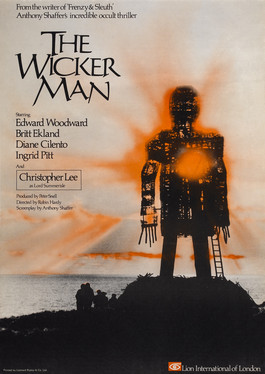
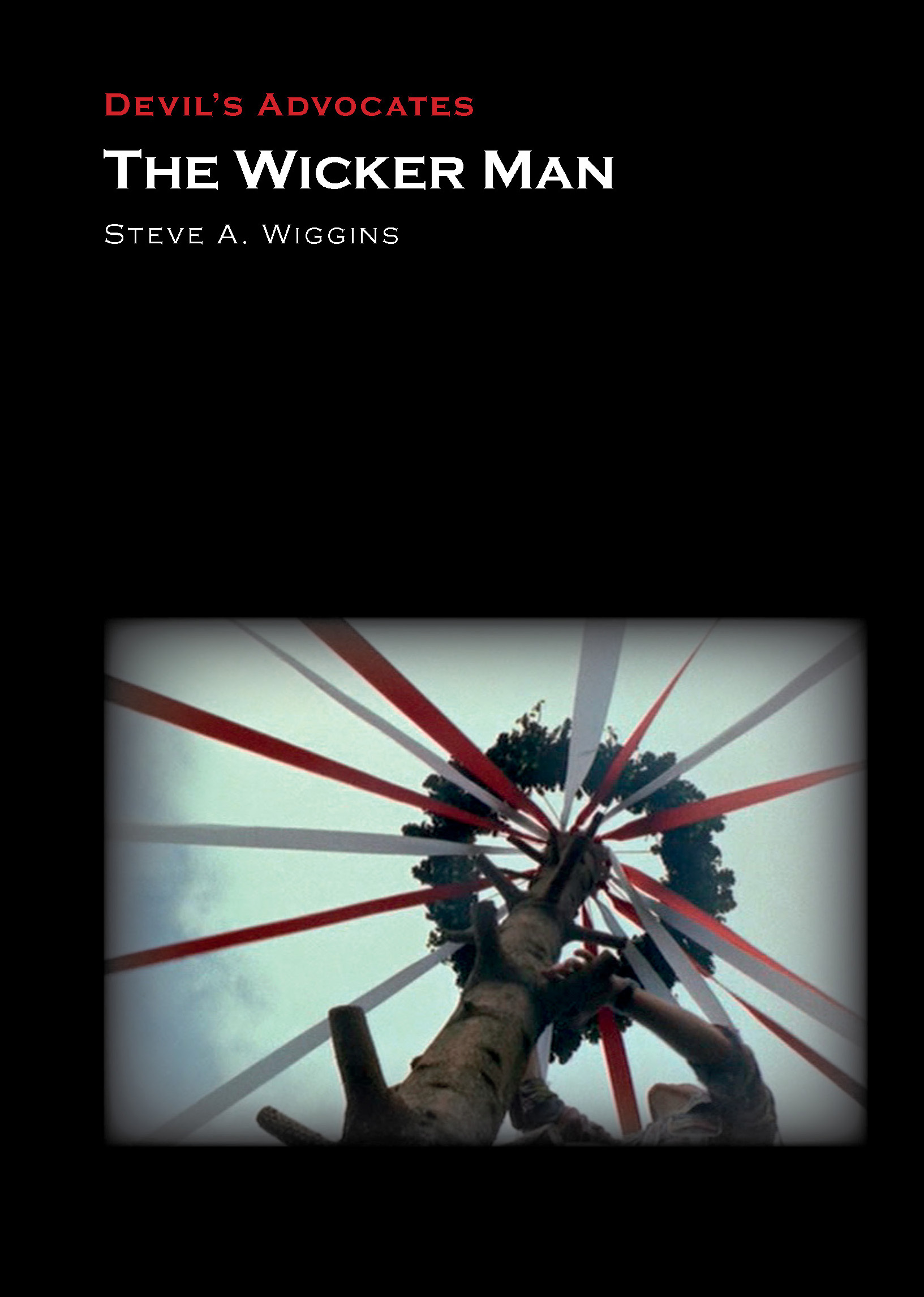
Word is starting to get out about The Wicker Man.  One of the most intelligent of horror movies, it turns fifty this year.  Aware of the coming anniversary, I pitched a volume in the series Devil’s Advocates on the movie a few years back.  I was delighted that my take on the film was unique enough to qualify and my volume has now appeared on Liverpool University Press’ website.  And, as an added bonus, a blog post I guest wrote on the book will also appear shortly.  And it’s May Day.  The Wicker Man is the third person of the unholy trinity of folk horror.  The other two films are Witchfinder General and The Blood on Satan’s Claw, both of which I’ve reviewed here.  But 1973 was also the year another person of another unholy trinity, The Exorcist, was released.  This other trinity began with Rosemary’s Baby and concluded with The Omen.  If you’re curious about it, I wrote quite a bit about it in Holy Horror.
Fiftieth-year anniversaries are significant, given how young the film industry is.  Depending on the publisher, it may be difficult to get advance notice out.  My colleague Joseph Laycock, along with Eric Harrelson, wrote The Exorcist Effect.  This is a book I’m very excited for, although it’s not yet on its publisher’s website.  Academic publishing can be slow that way.  Another fiftieth anniversary Wicker Man book is coming out in October—John Walsh’s The Wicker Man: The Official Story of the Film.  The publisher, Titan books, not hampered by university press processes, had the book well advertised a couple of months back.  I’m looking forward to reading that one as well.  These fiftieth anniversary books are a boon for those who watch intelligent horror.

Academic publishers, you see, classify books in different ways than trade publishers do.  If you’re not sure what a trade publisher is, it is essentially anyone whose books you see in actual bookstores.  Academic publishers tend to focus on library sales and sales to academics who are willing to shell out fifty, a hundred, or sometimes more, bucks for a book.  (In my teaching days, although we had no expense budgets at Nashotah House, I would occasionally (very rarely), after careful family consultation, shell out the academic press price for a book I needed for research and the library wouldn’t buy.)  My last three books have been written for wider readerships, but have been published by academic presses.  On this fiftieth anniversary year, I’m planning on reading a couple of good books.  And thinking about May Day fifty years ago.


The Importance of Sharing

Growing up with siblings, I remember it well—my mother instilling the message of sharing.  If something good came my way, I could count on hearing “Share that with your brothers!”  These days sharing is easy and it only costs you a click.  And it’s very important.  Especially to those of us with soft voices.  You see, there is another new Wicker Man book coming out this year.  This is the 50th anniversary of the movie and there’s a lot of interest.  The other book is getting quite a bit of free press because the publisher knows the importance of sharing the information.  Click that share button!  Meanwhile I’m watching what we in the biz call the NBA (New Book Announcement) creep very slowly out of its box.

A couple days ago I wrote about how Amazon isn’t aware of the book, and Google can’t seem to find it.  In the intervening days it has now shown up on Lehmann’s bookselling shop in Germany.  You here, reading this, are the only people in the United States (if you are) who know about this book.  My voice isn’t very loud.  I don’t get retweeted and I don’t even have a cover image to share yet.  I’m still waiting for it to appear on the publisher’s website.  (This is one of the reasons I’m (hopefully) moving on from publishing with academic presses—they tend to be a touch slow.)  What can you do to help?  Share this post.  It’ll only take you a second.  Look down below this post and you’ll see this:

Of course, I can accept that you don’t like what I’m saying.  But if you’re on Reddit, Facebook, Twitter, or Pinterest, you can share the misery.  All it costs is a click.  The thing about the internet is that little things can add up to a lot.  That’s the whole idea behind websites that take a small cut to get the item you want out to you.  Life by a thousand cuts.  If enough people share, even those with a “Yop” to utter can save all Whos, right Ted?  I used to think all those YouTubers were a bit gauche with reminders in each and every video to click the “like” and “subscribe” buttons.  Now I’m coming to understand that that’s the way life on the internet is lived.  And May Day is just around the corner. Notice for my book will continue to creep out slowly.  Meanwhile I’ll look at Lehmann’s website and hope for the best.


Search Your Engines

It’s been fascinating to watch.  We tend to think things appear instantaneously on the internet, and sometimes they do.  Book announcements, however, are less prone to that.  The Wicker Man, my book for the Devil’s Advocates series, was first announced to the world (apart from me) on Oxford University Press’s website because they distribute books by Liverpool University Press.  It took several weeks before it appeared on LUP’s site (I’m projecting here, it still hasn’t showed up there).  Like an anxious father, I checked every few days to see if word was getting out.  After about two weeks it showed up on Barnes and Noble’s website, but not Amazon or Goodreads.  Then it appeared on ecampus, a textbook seller.  Days later it appeared on Amazon’s site in Spain only.  Word gets out slowly.

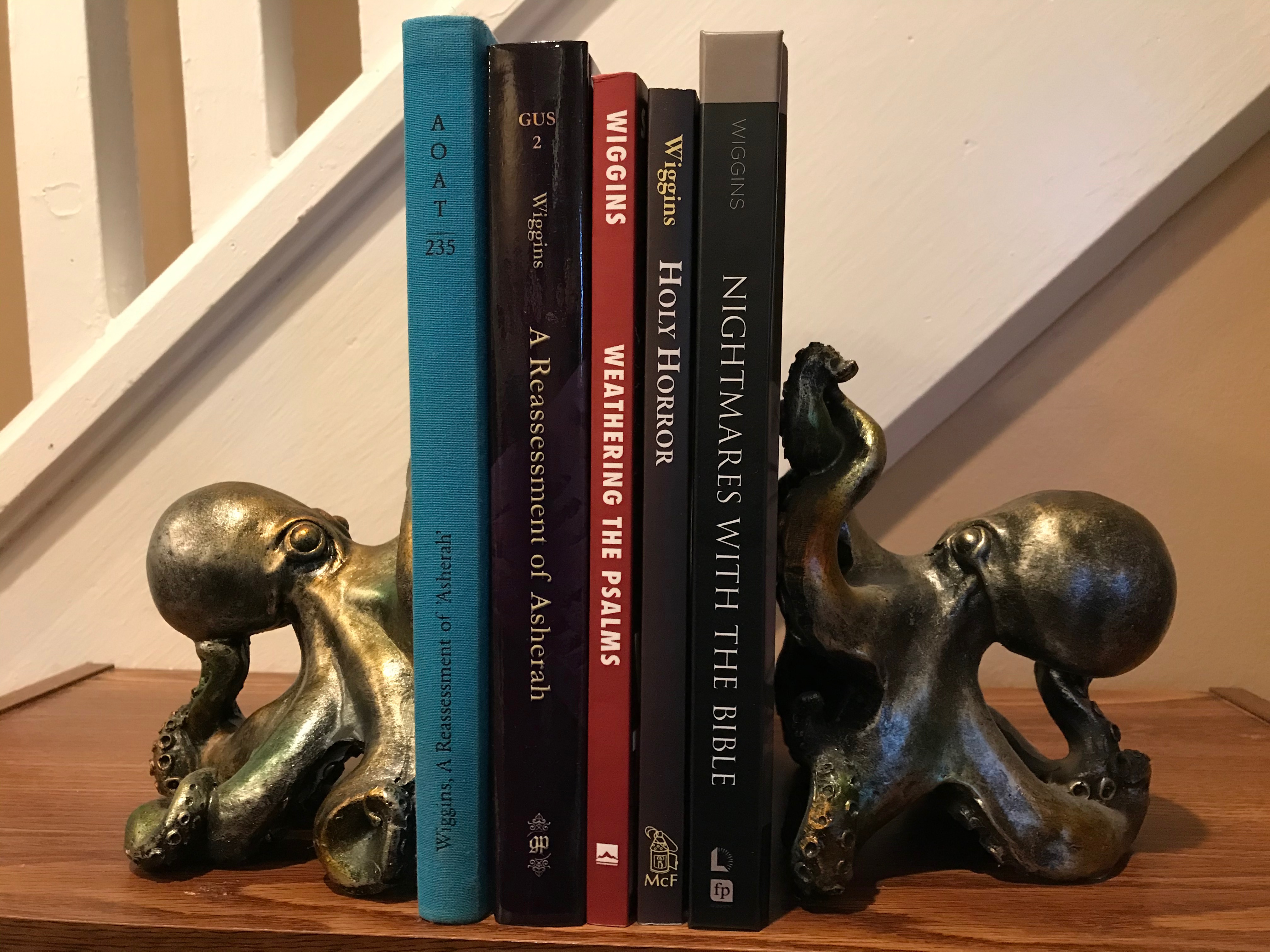
Some things hit immediately, of course.  Everyone in the world knows about them seconds after they happen, whether they should or not.  Some young folks, who grew up with the internet, are having trouble letting go of the, well, troubles of the world that jet through the 24/7 news cycle.  Books by unknowns travel much more slowly.  Of course, I’ve been trying to reinvent myself.  In as far as I’m known, I’m known as an ancient Semitic goddess scholar.  (The ancient part is correct, in any case.)  I turned to writing about religion and horror about a decade ago and if web searches mean anything, my most searched book seems to be Holy Horror.  That makes sense since Nightmares with the Bible is so expensive that I can’t afford additional copies even with the author discount.  The Wicker Man will be up near forty dollars, but that’s cheap these days.  At least it will be paperback.

Maybe I have been checking more than I let on, but I’ve also noticed something else odd.  Ecosia, the tree-planting search engine, comes up with more results (based on the ISBN) than Google does.  That astonished me.  Google apparently isn’t as good at searching as it would have us believe that it is, at least for obscure information.  (In my case, very obscure.)  Ecosia even outperformed Bing.  With this internet full of stuff, you’re obviously missing out if you don’t use multiple search engines.  Yahoo added yet one more site with the book.  I’m wondering when the actual publisher, or Amazon’s main site, will catch up.  Giants do move slowly, I guess.  Maybe once the cover image is released…


Balance

Psych!  Yesterday was actually the vernal equinox.  And speaking of psychs, it was about the coldest morning jog I’ve had all winter.  (The equinox itself didn’t occur until 5:24 p.m., which is way it was the 20th instead of the 21st.  And I honestly can’t understand how that works since don’t you need 24 hours for night and day to be equal?  There’s a reason I went into the humanities.)  Interestingly, in the pagan Wheel of the Year, it was Ostara.  And the similarity of that title to Easter isn’t really coincidence.  (By the by, I discuss this to some extent in The Wicker Man, due out in September.)  Easter is, in essence, a spring holiday.  Ēostre, a germanic goddess of spring, seems to have been its namesake. 

First light comes suddenly, for those awake early enough to see it.  I keep a close eye on the diminishing darkness so that I can get out and jog in the twilight.  It will be too dusky to see and then suddenly it’s not.  Sunrise is like an epiphany each day.  From now on light will increase both morning and evening until the summer solstice, or Midsummer.  Between Ostara and Midsummer lies May Day, or, as it was also known, Beltane.  Beltane is the fuel behind The Wicker Man, or so I argue in my book.  Holidays are important.  More of them should be recognized.  If the pandemic taught us anything it’s that most of us probably work too hard.  At any rate, spring is now here.

The mornings are still below freezing, at least around here.  The winter never got very cold and we had very little snow.  Some would argue that it was more like an extended, chilly spring.  The light, however, was missing.  I spend a lot of time awake in the predawn hours.  There’s a stillness to that time that’s a daily gift.  Yesterday was a brief moment of balance.  Soon it will be time to start mowing the lawn and to do the endless weeding of summer.  Those will last until long after the other equinox, awaiting in September.  Climate change has assured us that the weather will be erratic, but the waxing and waning of the light is as old as the spinning of this weary planet.  We’ve entered the light half of the year.  Equinoxes remind us that balance is rare and should be appreciated when it arrives.  It’s worth making into a holiday once more.


Wicker Man Comes

Not that I would know bodily, but it seems like a book being published is something like giving birth.  It takes several months (perhaps years, in the case of books) from conception to delivery and there are certain milestones along the way.  And you worry like Rosemary.  Has something gone wrong?  Is this still going to happen?  The book production process is a long and complicated one.  Just this week, however, the next recognizable stage occurred for The Wicker Man.  An ISBN has been assigned and a new book announcement has fed out through various channels.  It’s not on Amazon just yet but a Google search of 9781837643882 will bring it up.  I’d been worried about this because I saw a new book announced on The Wicker Man due out in October.  This is the fiftieth anniversary of the film, and I suspected I wasn’t the only one who’d noticed that.

Ironically, another film turns 50 this year.  The Exorcist released in December of 1973 to far greater acclaim than The Wicker Man.  Both films became classics in their own right, but The Exorcist would become a household name.  Even if they’d never seen it, most people had heard of it.  The Wicker Man is more of a cult classic.  It’s known among horror fans and a certain kind of Anglophile.  And those interested in paganism, particularly of the Celtic variety.  Although the cover isn’t available yet, I was glad to see the feed for my book going out.  It looks like I might scoop the other book by a month or so.  If that happens it will be the first time that I’ve actually had a book on horror release before Halloween.  The last two missed the deadline by a couple of months.

Having said that, if you’ve had your appointment with The Wicker Man you already know, it takes place on May Day.  And you likely know that a large number of people claim it isn’t a horror film at all.  Indeed, the horror element only becomes clear in the last ten minutes or so.  It’s the build-up that makes the movie.  And it was really a one-film wonder for the director, Robin Hardy.  He did other movies, but this was the one that lasted, and spawned imitations and parodies.  It’s exciting to see that the discriminating, or very persistent, searcher can now find the book announcement online.  I haven’t seen much to-do about the 50th anniversary just yet, but now when I do I’ll have something to point to.  More on this to come!


Of Ewes and Groundhogs

I need more time to prepare for Imbolc.  Or Groundhog Day, whichever you prefer.  Candlemas for you Catholic holdouts.  February 2 has the trappings of a major holiday, but it lacks the commercial potential.  Too many people are still working their way out from under Christmas overspending and tax season is just around the corner.  Still, I think it should be a national holiday.  My reasoning goes like this: since the pandemic our bosses now have our constant attention.  They’re in our bedrooms, our living rooms, our kitchens.  I see those midnight email time stamps!  We’re giving them a lot more time than we used to and seriously, can they not think about giving us a few more days off?  Some companies strictly limit holidays to ten.  

Can’t recall where I found this one…

Others, more progressive, have simply dropped the limits on paid time off.  And guess what?  The work still gets done.  I could use a day to curl up with a groundhog, or to go milk my ewes.  (Being a vegan, perhaps I could just pet them instead.)  What’s wrong with maybe two holidays a month?  (We don’t even average out to one per month, currently.)  I always look at that long stretch from March, April, and nearly all of May with some trepidation.  That’s an awful lot of “on” time.  (Our UK colleagues, of course, get Easter-related days and a variety of bank holidays.  Their bosses, I understand, would rather go with the more heartless American model, but tradition is tradition, you know.)  What if I see my shadow and get scared?  What am I to do then?

Imbolc is part of an old system for dividing the year into quarters that fall roughly half-way between equinoxes and solstices.  I go into this a bit in my book, The Wicker Man, due out in September.  That movie, of course, focuses on Beltane, or May Day, but the point is the same.  Look at what happens when you deny your people their holidays!  You’d think that the message that showing employees that you value them makes them more loyal might actually get through.  Businesses, however, have trouble thinking outside the box.  Take as much as you can and then ask for more.  What have they got to lose by giving out a few more holidays?  Otherwise each day becomes a repetition of a dulling sense of sameness.  Rather like another movie that focuses on this most peculiar holiday.


Green Pagan

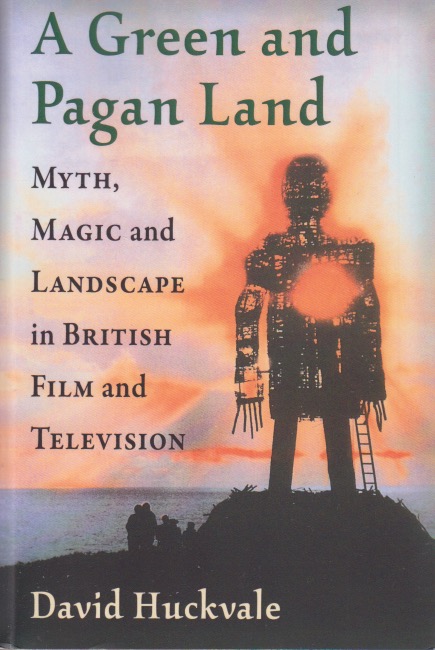
The folk tradition doesn’t encompass folk horror only.  I’ve been working on The Wicker Man, one of the initial folk horror classics, long enough that I sometimes need to remind myself of that.  Of course, it was the cover image featuring said movie that drew me to David Huckvale’s A Green and Pagan Land: Myth, Magic and Landscape in British Film and Television.  The descriptive subtitle more or less informs the reader what the book is about although it reaches further than that.  Huckvale also interprets novels, short stories, and classical music pieces according to landscape.  And sometimes it ranges beyond Britain, especially to other Anglo-Saxon cultures.  Richard Wagner, for example, plays a prominent role in one of the chapters.

Having written about popular media myself, I’m aware of how such issues can easily arise.  A movie too good not to discuss falls out of the precise range you’ve set for yourself.  And no matter how much media you can consume there will be tons more that you could, had you the time, add to your experience of it.  This book looks at mostly British media with an eye toward the pagan landscape.  That doesn’t always mean horror, but sometimes it does.  Huckvale always has interesting things to say about the media he addresses.  Whether the pieces go back to Arthurian legend or to more recent fictional pasts, the landscape has a role to play.

Indeed, folk horror is generally defined by landscape.  That makes sense considering that it’s all around us.  Many people in urban settings may have to struggle to find it.  Indeed, when they want to get away they head for it.  In Britain—and anywhere in which invasion has taken place—the earlier pagan ideas are imprinted on the land.  In Britain they’re perhaps more obvious; think of Stonehenge.  As later interlopers modern people see them and wonder.  And then we create stories—literary, musical, or visual—about the experience.  I’m so used to reading about folk horror that I’d finished the book before I realized it wasn’t really the focus of the entire thing.  While I don’t live in a major city, I too have blinders on for much of the time.  I’ve got a book deadline and I wanted to read this before making final revisions.  I’m glad I did.  There were places where I was just in the backseat, along for the ride, but there were also chapters where The Wicker Man was a crucial component.  And it reminded me of why I enjoyed living in that landscape for a few years.


Express Yourself

Do you ever get excited by an idea only to be let down when it comes to the execution?  I suspect that’s a standard human experience.  For me it often happens with books.  Especially academic books.  I get excited about the ideas that are sure to be lurking between the covers only to discover that the author has unimaginatively fallen into bad academic habits, such as “scholar A says, but scholar B says.”  Just tell me what you say!  Reflecting on this I realize that building a case has become conflated with taking a test.  A doctoral dissertation is a years’ long test.  Your ideas are being compared to those who’ve gone before you—the fact that they’ve published has proven that—and you are expected to show your work.  Did you read Smith?  Have you struggled with Jones?  Is Anderson in more than just your bibliography?

This kind of extended citation leads to turgid writing that slays any interest in the subject by the end of page one.  I’m not alone in this critique.  Some famous academics, such as Steven Pinker, have noted this.  In a not nearly frequently enough cited article, “Why Academics Stink at Writing,” Pinker lays out the bad habits that get perpetuated throughout the modern academy.  It comes down to, in my humble opinion, the fear of the exam.  Test anxiety.  Recently my draft of The Wicker Man came back from peer review.  While the comments of the reviewers were helpful, and quite complimentary, they felt there should be more academic dialogue going on.  I push back at this: if you don’t believe I’ve done the research, why approve the book for publication?  Most academic writing stinks and there’s no reason it should.

I’m a slow reader.  My average rate is about 20 pages per hour.  I know this because my morning routine sets aside about an hour for reading each day, and I note how many pages I consume.  Lately some of the academic books I’ve read have hobbled me down to 10 pages per hour.  I keep waiting for the narrative flow to kick in, something that I can follow and absorb.  Instead I’m learning what everybody else, often except the author, thinks about each minute point of his or her thesis.  Please, just tell me what you think!  I trust that you’ve done the research.  You wouldn’t have been granted a doctorate if you hadn’t.  The last thing I would want from my, admittedly few, readers is for them to close my book and say, “I’d rather be reading something else.”


Wicker Back

The dilemma of my eclectic interests sometimes runs up against the natural slowness of publishing.  My book on The Wicker Man has been given the green light by Auteur Publishing and should be out next year.  I just received the readers’ reports and they were positive enough to make me blush.  The thing is, I submitted the manuscript back in January and I’ve nearly finished writing my next book since then.  It’s on a different topic for which I’ve been collecting sources since January.  I really hope this next one won’t publish with an academic press.  The endless rounds of revision from peer review can wear a body out.  Reviewers, you see, have university jobs.  Libraries at their fingertips.  Sabbaticals.  (I work with authors who won’t write unless they have one of the latter.) Now my reading shifts back to Summerisle.

For those of us with 925s that get a paltry number of holidays per year (which are spent holidaying) and paid like most working stiffs, with no academic library access, this can present somewhat of a challenge.  I see peer reviews all the time.  Academics so deeply into the subject that they don’t (can’t) think of the practicalities.  When I see a reviewer write that a book is ready for publication, but if the author could only restructure the whole thing and approach it from this angle instead… I have to chuckle.  During my teaching career I worked in situations that didn’t allow for sabbaticals.  Even among academia those given such rare benefits are privileged.  It’s a wonder that so many books get written, all things considered.

Like waking from a dream world, I suddenly have to downshift to a previous project.  I haven’t really thought much about the Wicker Man since January.  My next book, which is eclectic, has been slowly gestating over the months.  My reading has been geared towards it and is financed personally.  I’ve tried contacting the local college and university libraries.  I can’t borrow, or do inter-library loan, so the weird resources I need I have to buy.  Preferably used.  One thing reviewers like to do is point out new resources.  And yes, I have to agree that my argument would be stronger with them.  I have a strategy to the way I write my books, now that I’ve found a receptive readership, so none of this is mishap, I hope.  (Ironically, now I get quite a few readers of my revised dissertation asking me questions about ancient West Asian studies.)  That trireme paddled from shore long ago.  I’ve moved my current project to another burner, and you’ll be hearing more about The Wicker Man in coming weeks.  Next year is the film’s fiftieth anniversary, so I have a deadline that I just can’t miss. It’s time to get reacquainted with an old friend.


Wicker Lessons

Beltane creeps up unnoticed.  Not an official holiday in these parts, it is, hopefully, a sign of slightly warmer weather than we’ve been having in April.  It’s also the day that I can’t help but think of The Wicker Man.  One of the early intelligent horror offerings, it came out 49 years ago.  My book on the movie, as far as I know, is still scheduled to come out next year, on its fiftieth anniversary.  Watch this space for further announcements.  In any case, today I have a piece on The Wicker Tree—the “spiritual sequel” to the movie, appearing on Horror Homeroom.  Societies in old Europe tended to celebrate this as the beginning of summer, which explains why Midsummer comes half-way through June.  The seasons aren’t always the same in all times and places.

In Germanic countries, Walpurgisnacht, which began last night, was a time of concern about witches.  Our modern calendar tries to concentrate our fears in late October, but they are appropriate any time of year.  These days Beltane’s more of a day when we expect warmer weather to start rolling in and perhaps, especially this year, hopes for peace.  May tends to be a hopeful time—it’s a transition.  The persistence of our fears suggests that learning to deal with them might well be a good idea.  Instead of hiding monsters away, why not face them?  The Wicker Tree isn’t a great horror movie, but something holds true for it—the monsters are us.  In that film capitalism is the real horror.

What makes The Wicker Man the classic that it is is religion.  More specifically, the clash between religions, neither of which is willing to yield.  This is largely behind religious violence throughout history, up to the present.  Religions convinced that they’re the only possible way to the truth can’t recognize that believers of other religions feel exactly the same way.  Yet May is about transitions—one season giving way to another.  It’s part of the inexorable change that marks life on this planet.  We may not fear witches in the mountains any more, but we still fear what’s out there.  Beltane is a hopeful holiday—a day of blessing animals and building fires to encourage the strengthening sun.  Instead of making it a day of clashing beliefs, perhaps we should look for our common humanity in it.  Perhaps we can learn a deeper lesson from The Wicker Man.


Wicker Redux

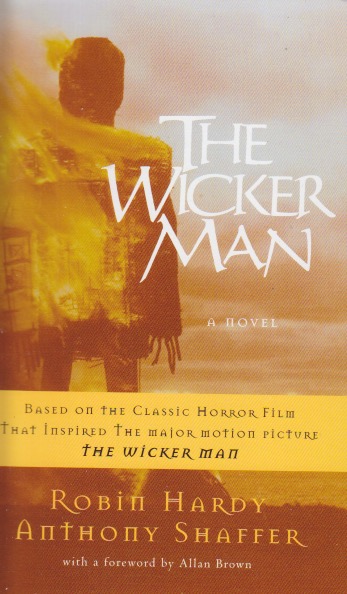
The Wicker Man (1973) is a cult classic.  If it had had proper distribution and promotion it might’ve become a more mainstream hit when it was released.  Instead it was a slow burn.  Once it reached cult status controversy grew.  The movie doesn’t acknowledge, but was clearly influenced by, the novel Ritual by David Pinner.  I reviewed the novel earlier, and it isn’t particularly great.  The movie changes so much that it maybe was “inspired by” rather than “based on” the novel.  Several years later the director, Robin Hardy, decided to novelize the film.  His The Wicker Man also credits Anthony Shaffer because a good deal of the dialogue is lifted straight from the screenplay Shaffer wrote.  But the novelization also changes things.  That means there really is no novel that gives the full story of the film.

The creative process is never-ending.  Anyone who’s had a story published knows the tinkering that goes on, even after it appears in print.  The last word’s never truly that.  It takes restraint to leave something alone.  So Hardy wrote one of the more important characters out of his novel and wrote in another who seems to have very little connection to the story itself.  I’m still not sure what the point of adding him might have been.  Incidents that seem to be bracing for a sequel are present, and indeed Hardy wrote a spiritual successor that became a less impressive movie some years later.  Sometimes you do get it right the first time around.

Not that the movie is perfect—none are—but it has held up considerably well, growing in stature over the years.  A novelist, however, tends to have a deft touch that seems to be lacking here.  There’s a great deal of telling instead of showing.  Hardy’s Howie almost becomes a Mary Sue.  Tying his love of birds into the plot of the novel would’ve been one such deft touch.  Instead we have here a serviceable novel with much that’s familiar and even some that is strange and provocative.  It does restore some of the famously edited footage from the first cut of the film.  It tries to make Howie’s religious conviction clearer.  Changing parts of a story comes with the territory of those who spin yarns.  Hardy never really rose again to the heights he achieved in directing The Wicker Man.  It’s no wonder, then, that he felt compelled to return to it in literary form.


Mag Dash

I don’t do much magazine reading.  Back when I had more time (mainly before buying a house), there were a few with which I attempted to keep up.  Mainly, however, I’d buy a particular issue that I wanted to keep.  I suspect that’s because I’m a book reader and my time for pure reading is limited.  Strange thing for a professor/editor hybrid to write, but there you have it.  Each year I “pledge” a number of books to Goodreads to keep me honest, and achieving that goal adds a kind of friendly pressure on my reading time.  Magazines don’t count, and mostly I never read the whole thing.  My current book project is an analysis of the movie The Wicker Man.  This led to some magazine reading.

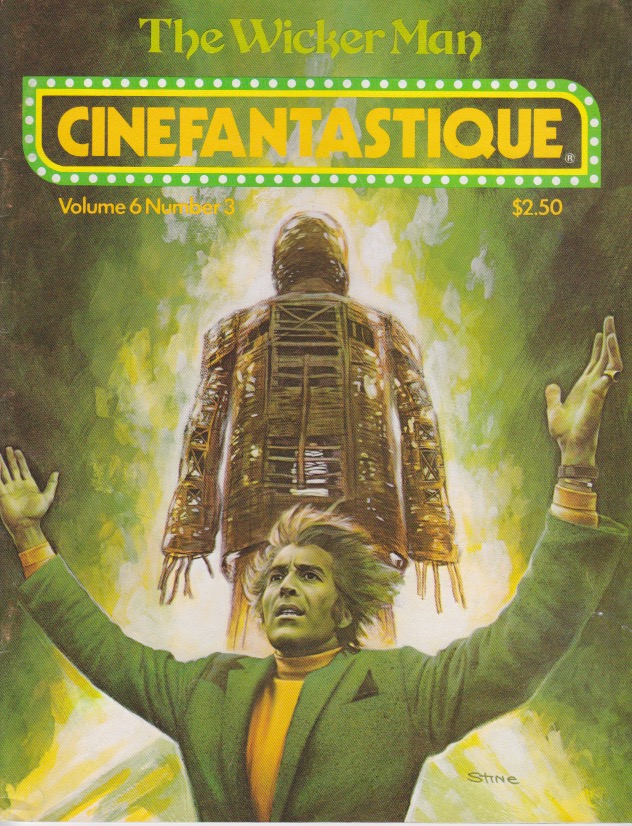
Horror movies, especially, have been traditionally treated as ephemera with little lasting cultural value.  Fan magazines, therefore, often provide most of the periodical treatment for some of these “B movies.”  The Wicker Man suffered legendary distribution problems and that may have been what prompted Cinefantastique to devote all its feature space to this particular movie back in 1977 (the movie came out four years earlier and was still struggling).  The article is a lengthy one, not quite to the extent of The Atlantic, but still several pages.  It was the origin of the much repeated epithet “the Citizen Kane of horror films.”  To read this I had to locate a copy of the magazine.  There was, fortunately, a seller in Beloit, Wisconsin who wasn’t extortionate (thank you!).  My experience in buying print materials from the seventies has often proven the opposite.

Occasionally someone glimpsing my books will cattily ask, “Have you read them all?”  No.  But then not all print matter is for reading all the way through.  Reference materials, for example, are consulted.  The way my mind works, I need to keep things around so I can find them again.  Studies have shown that retention for electronic media isn’t as reliable as it is for print.  That may change some day as we evolve more and more into extensions of our machines, but for now I use it to justify keeping books.  Since I can’t predict the future, I never know when some forgotten tome might come up again in a new project.  That has happened a few times already while working on my small book on The Wicker Man.  And that includes magazines with good articles.  This one is a keeper.


Next Books

The other day an older friend asked about my writing.  My answer was brief because it’s complicated.  Not because I do it from three to four a.m.  Not because many of my older friends don’t know what a blog is.  No, it was complicated because my next book is about a movie few Americans know, especially many of my friends.  I really don’t know many horror fans.  Academics, yes, but normal folk, no.  This is a little odd because statistically most adults like horror.  I feel I always need to explain why I bother writing such books.  (There is a reason and there’s even a book I’m working on to try to explain it.)  It’s easiest, in such circumstances, just to say “I’m keeping busy with it.”

The fact is the draft of my book on The Wicker Man is done.  It has been for a few weeks.  None of my published books are the same as their drafts initially were.  (This is the difference, say, between a dissertation and a first monograph.  Let those seeking advice take note.)  The draft follows the approved proposal pretty closely, but I now kind of do research backwards.  Or at least while the book is in process.  Unlike a professor with a library and sabbatical and summers off, I find my sources as I write.  My books, despite what might seem a narrow focus, range pretty widely.  My reading goes in directions not even I anticipated when I began.  Ideas lead to other ideas.  Soon there’s enough of them for an entirely new book.  So I’m reading my draft and reading other books and creating the Frankenstein monster that will be a codex.

Every time I reach that point where I say, “this will be the last book I need to read for this project,” only a matter of days later I find another.  And another.  Book writing involves both creativity and distillation.  It takes a lot of books read to make one book written.  All writers know that.  Some have trouble knowing when to cut off the research because, and this is a truth for all of life, there’s always one more.  The very month of my doctoral defense a new book on Asherah was published.  The external examiner brought it to my viva.  Obviously he knew that I couldn’t have read it by then (it had to be in German, of course).  It ended up on my bibliography.  So I plod along with my book already written, but not yet begun.  I said it was complicated.


Quest for Quest

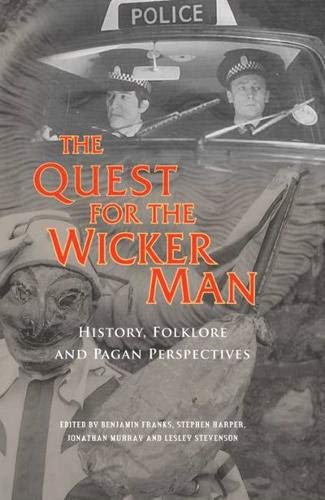
The Quest for the Wicker Man is a rarity.  Not only is it very difficult to locate and very expensive if you do find it, it’s also a collection of essays where each one is worth reading.  I’d read some of it before, but since I’m writing a book on the movie I thought I ought to sit down and go through it cover to virtual cover.  I had to settle for a Kindle version—please bring this back in print!—and was reminded yet again why a paper book is so much more satisfactory as a reading experience.  You see, I’m a flipper (not the dolphin kind).  I like to flip back and forth while I’m reading.  Clicking and swiping (both of which, coincidentally, dolphins do) isn’t satisfying.  And if you underline in a Kindle everybody else can see it.  I prefer the privacy of a print book.

In any case, if you’re interested in probing a bit into The Wicker Man you’ll find quite a lot of information here.  (Available on Kindle for a reasonable price, if not a comfy reading experience.)  Many aspects of the film are covered here.  One thing I won’t be discussing in my book is the music.  Firstly, I’m not qualified to do so, and secondly, it is done well here.  Essays also discuss religion (which I will discuss in my book), paganism (ditto), and many other aspects.  This is a book of conference proceedings—a boon for fans, but bust for most publishers.  It’s also a boon for those who like marking up used books to the tune of 64 cents per page (the lowest price on Amazon).  

Some of us believe a page is an ontological entity.  Once narrative writing began those responsible for clay tablets soon settled on a size that is, well, handy.  You can hold it easily.  That concept translated to the codex, or “book” as we know it.  Scrolls were cumbersome, but books offered many advantages.  For hundreds of years they were the standard-bearers of accessible knowledge.  I miss page numbers when reading an ebook.  I don’t want to know the percentage of screens I’ve swiped.  I want to know how many pages I’ve read, what page I’m on, and how many pages there are to go.  (The best of electronic books preserve that information.)  The book was not a form that required improvement.  Well, at least that digression kept me from giving up too much information about my book.  If you want to read it, when it comes out, I recommend the print form.


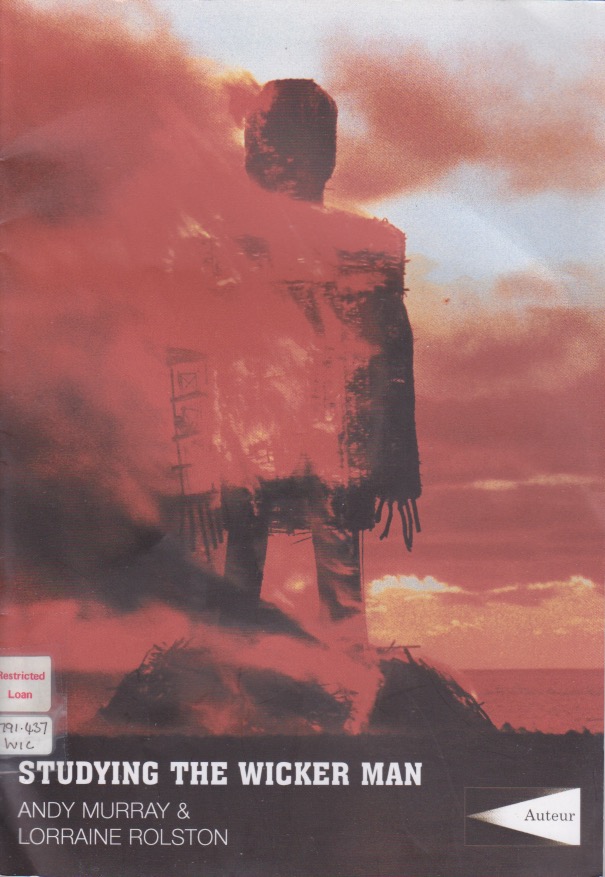
Book or Movie?

The funny thing about people, or at least one of the funny things, is that when individuals get together we notice different things.  It can happen at in-person meetings or “virtually” through books.  I’m working on a book on The Wicker Man, as I recently noted.  Others have written on the movie, of course, and I’ve read some of their analyses already, but I’m continuing to read more.  Recently I finished Studying The Wicker Man by Andy Murray and Lorraine Rolston.  This particular book—more along the lines of a booklet, actually—has quite a few observations about the movie that I had missed.  Connections, or interpretations, that I’d failed to make despite having watched the movie many times.  It takes the meeting of the minds to bring many things to light.

One of the questions they raised (and there will be spoilers here) is why the movie bears the title it does.  Obviously the climatic moment of the film features a wicker man.  Murray and Rolston noted, however, that more could be going on in this title than is obvious.  Sgt. Neil Howie, the protagonist, is a lot like a wicker man himself.  I won’t repeat their wonderful work here but I will say it’s convincing.  The literary trope of “the hollow man” (it could be woman, or hollow person, but I’m writing from personal experience) can be a poignant one.  We know that life may carry on biologically, but what makes us who we are is what goes on inside.  The hollowness may be intellectual or emotional.  Either way it’s a trial.  It’s something that I wouldn’t have thought of without help.

Studying The Wicker Man may be slim, but it has some powerful ideas.  As a society we’re often impressed with size.  When a promotional photo wants to show an author with gravitas, they generally ask him or her to hold a thick book.  There is certainly a place for large books, but insight can come in any size.  This particular book is obviously designed for film studies courses focusing on this particular movie.  It does point out that “cult classics” become such by not being widely seen, so I realize many of my readers (presuming there are many) won’t be terribly interested in a book that analyzes a movie they haven’t seen.  If you’re one of them, and if you don’t mind a movie with an ending that will stay with you, I would recommend watching the film before reading the book.