Disputed Parentage

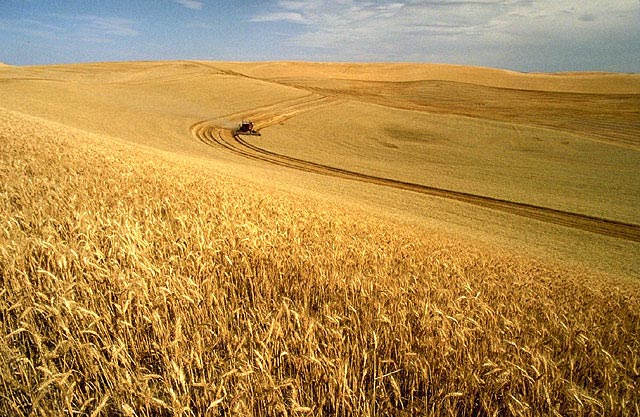
What has Athens to do with Jerusalem, Tertullian famously asked. Much, seems to be the rhetorical answer. Today, August 1, is Lammas. It is said to commemorate the wheat harvest and Lammas is taken to be derived from Anglo-Saxon hlaf-mass, or “loaf-mass.” Beneath this apparent Christian celebration is the pagan festival of Lughnasadh. I’ve posted on Lugh before, but holy days are often seasonal, and it is time to consider Lammas again. Lammas is the last of the cross-quarter days that divide the European pagan year. Some communities bake bread to celebrate it, sometimes in the shape of a person (those of you who’ve seen the original Wicker Man know what I mean).
Christianity was born a persecuted religion that grew to be a persecutor. Deeply rooted pre-Christian traditions were eradicated or sublimated in the growth of Christendom. The modern pagan movement may not have an unbroken line of tradition, but it is a tradition that has ancient antecedents. What Christianity could not conquer it assimilated. Much of what became Christianity derived from Judaism. Much of Judaism had its origins in folk religions of ancient Western Asia. In its European context, Christianity adopted the heathen traditions that fit within the pattern of Christian thought. Agricultural celebrations quite frequently matched events in the imperial religion. Or, if no so events existed, new traditions were invented. It is quite plain that that is why we celebrate Christmas in December.

Why is it that Christianity has so vociferously disavowed its lowly parentage? Being a chthonian religion should be no mark of shame. What is wrong with different but equal? Many people fear and despise those who declare themselves pagan, but paganism is a religion like any other, concerned with morality, justice, and living in accord with the power “out there.” So as August wends its way into the calendar, and the earth begins its inevitable tip towards lengthening nights and the cooling of the days, we might do well to consider Lammas. Whether from the Christian angle of Saint Peter in Chains or from the Pagan angle of Lughnasadh, Lammas is a time to eat bread and reflect, two of the most human of activities. And perhaps with thought will come tolerance.

Bookends

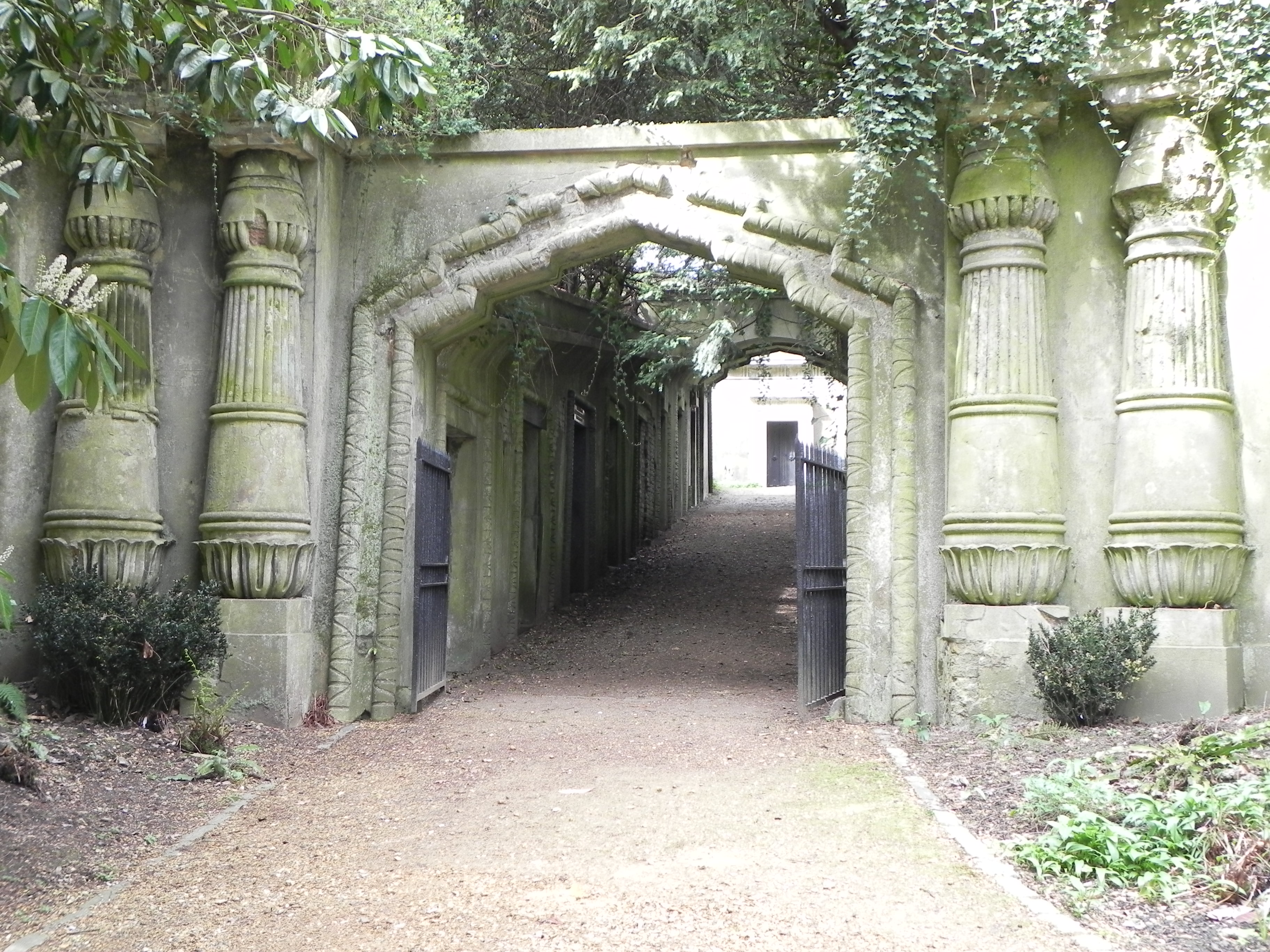
There is something extremely satisfying about bookends. Bookends are those events that bracket moments of our lives and give them a frame, a perspective they would otherwise lack. If my readers will indulge my recollections of my trip to Britain for a day or so longer, some of this may become apparent in esoteric ways. Our kind hosts in London live in Highgate. Our first bleary-eyed morning in the city we wandered to Highgate Cemetery. This burial ground is divided by Swain’s Lane and that makes it frightfully convenient to charge separate admission fees for the two halves. Both, however, are worth the pounds dropped to gain entrance. Our first visit was via tour group on the western half of the grounds. The ornate—indeed grand—architecture of this necropolis bespoke the mysterious connection between the living and the dead. Tycoons are buried there, as is the non-conformist Michael Faraday, a name that lingers on from my childhood physics classes.

Highgate Cemetery West

Just before leaving to board our flight back to the States, we completed the bookend by visiting the eastern half of the cemetery. Here the most famous residents seek eternal rest. The most famous of the dead on this side is Karl Marx. Visitors speaking Cyrillic or Sinitic languages milled about, but even an American idealist might find some grounds for admiring a man who felt deeply about the plight of the workers in society. Just across the lane lies Herbert Spencer, one of the founders of sociology. Less than two minutes will take you to the grave of Mary Anne Evans, known to the literary world as George Eliot. She is not far from Douglas Adams, inventor of the Hitchhiker’s Guide to the Galaxy. Across the path from Adams rests Anthony Shaffer, writer of both Sleuth and of the screenplay of The Wicker Man.

Highgate Cemetery East

Perhaps it seems macabre to travel such a distance only to bookend a visit with treks to Highgate Cemetery. Death, however, is the ultimate bookend to life, with each generation shoring up those that come after through its unique perspective on what has brought us here. Not even a visit to Westminster Abbey is complete without paying respects to the most noteworthy of the Brits found both within and without its walls. This trip to England will remain in my memory as the pilgrimage bookended by the solemn parentheses of death. With such august company, however, one might have less to fear from that final veil that all must face.