Wicker Lessons

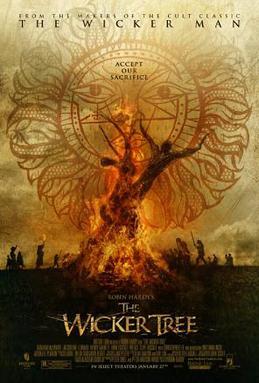
Beltane creeps up unnoticed.  Not an official holiday in these parts, it is, hopefully, a sign of slightly warmer weather than we’ve been having in April.  It’s also the day that I can’t help but think of The Wicker Man.  One of the early intelligent horror offerings, it came out 49 years ago.  My book on the movie, as far as I know, is still scheduled to come out next year, on its fiftieth anniversary.  Watch this space for further announcements.  In any case, today I have a piece on The Wicker Tree—the “spiritual sequel” to the movie, appearing on Horror Homeroom.  Societies in old Europe tended to celebrate this as the beginning of summer, which explains why Midsummer comes half-way through June.  The seasons aren’t always the same in all times and places.

In Germanic countries, Walpurgisnacht, which began last night, was a time of concern about witches.  Our modern calendar tries to concentrate our fears in late October, but they are appropriate any time of year.  These days Beltane’s more of a day when we expect warmer weather to start rolling in and perhaps, especially this year, hopes for peace.  May tends to be a hopeful time—it’s a transition.  The persistence of our fears suggests that learning to deal with them might well be a good idea.  Instead of hiding monsters away, why not face them?  The Wicker Tree isn’t a great horror movie, but something holds true for it—the monsters are us.  In that film capitalism is the real horror.

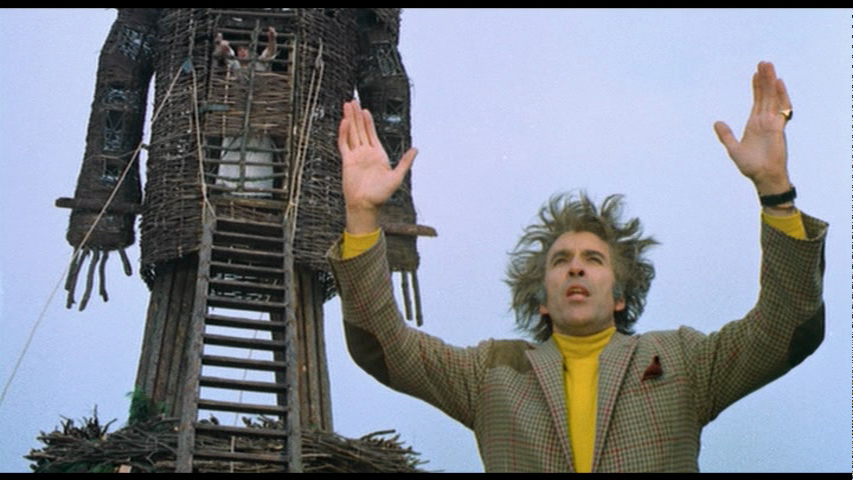
What makes The Wicker Man the classic that it is is religion.  More specifically, the clash between religions, neither of which is willing to yield.  This is largely behind religious violence throughout history, up to the present.  Religions convinced that they’re the only possible way to the truth can’t recognize that believers of other religions feel exactly the same way.  Yet May is about transitions—one season giving way to another.  It’s part of the inexorable change that marks life on this planet.  We may not fear witches in the mountains any more, but we still fear what’s out there.  Beltane is a hopeful holiday—a day of blessing animals and building fires to encourage the strengthening sun.  Instead of making it a day of clashing beliefs, perhaps we should look for our common humanity in it.  Perhaps we can learn a deeper lesson from The Wicker Man.

Podcast Live

Have you ever had one of those weeks where you forgot what day it was?  (Come on, now, it’s a pandemic—you can admit it!)  I spent yesterday unaware that it was Tuesday.  Tuesday is important because I knew that The Incarcerated Christian was going to be posting my interview on Holy Horror on their podcast.  It’s live now—give a listen!  I’ve been toying with rebooting my own podcasts, but like most other things in life I just can’t find the time to do it.  I still enjoy talking about my ideas and I thank Robin Mitchell Stroud and Debra Levy Martinelli for allowing me to yak their ears off for an hour.  There are many interesting podcasts on their site, so it you decide to listen the interview be sure to hang around a while and explore.

My hosts understand that Holy Horror was written for general readers, if not priced for them.  Being asked questions keeps you sharp, and sometimes it feels like my blade has been dulled from sitting in the drawer too long.  At the risk of sounding too biblical, iron sharpen iron, right?  Conversation is increasingly important in a polarized world where minds are already made up and the preferred solution is to hate others based on differences of opinion.  Why not talk about things?  Interviews also keep me sharp in asking about things I wrote years ago.  It may not seem like it, but the main body of Holy Horror was finished nearly five years ago.  Books take a long time to write and then a long time to publish.  It’s good to be asked about what one has written.

The questions asked on this interview were well thought out and reflective.  I can only hope that my responses were the same.  If you decide to listen and like what you hear, please share it with others.  The interview actually spilled over into a part two that will be posted in a couple weeks.  There’s a lot to say about religion and horror.  I’ve continued to watch movies since the interview and I notice further affirmations.  The Wicker Tree, for example, is a very biblical movie.  Or at least it quotes from the Bible quite a bit.  Holy Horror was very much an experiment on my part to find out if there was any room for a book like this.  After I wrote it I found others shared some interest in these topics, and two people cared enough to schedule an interview about it.  Please give it a listen.


B Film

October brings horror films to mind.  As soon as the calendar clicks over, discussions of favorite scary movies begins.  As I’ve mentioned many times before, it is the one time of year when those of us who watch horror don’t feel so odd.  It is a little strange, however, to be watching movies related to The Wicker Man at this time of year.  As holiday horror that particular movie is set at the other end of the year, in May.  So I had to see The Wicker Tree, something I’ve avoided doing all these years.  Neither properly a sequel nor a remake, The Wicker Tree is Robin Hardy’s re-envisioning of the story with a larger budget.  There’s no way to prove it, but it seems likely that it was released in response to the unfortunate remake of The Wicker Man in 2006.

There are any number of things that could be said about The Wicker Tree, not least of which is that it’s clear Anthony Shaffer was a far better screenwriter than Robin Hardy.  (Shaffer had written a sequel, more properly conceived, which has not been filmed.)  Robin Hardy was, of course, the director of the original movie.  Plagued by low budget, rushed filming, and lack of production company support, The Wicker Man nevertheless soared.  The Wicker Tree is what is termed a “spiritual successor”—it doesn’t directly carry on the story of the original, but draws its inspiration from it.  It was based on a novel written by Hardy titled Cowboys for Christ.  Two evangelical missionaries are sent to Scotland to convert as many lapsed Christians as they can.  Of course, their invitation to Tressock is a trap so they can be sacrificed on May Day.

Despite the many unanswered questions the film leaves, to someone raised evangelical it seems that Robin Hardy really doesn’t understand what evangelicals are.  Beth and Steve, on their tour through the lowlands, do things evangelicals just wouldn’t do.  They drink, they dance, they swear, they play cards.  The only thing he seemed to get about evangelicals is they like to sing and talk about Jesus and hand out pamphlets.  This is something I often see is movies—those who try to portray evangelicals haven’t actually been evangelical themselves and don’t understand them.  I also find this in my interactions with British colleagues all the time—they don’t really comprehend what evangelicalism is.  That could be a topic for its own post.  In any case, The Wicker Tree has its moments, but it’s convoluted, cynical, and off-the-mark.  It may’ve been intended as a spiritual successor, but its prototype required no re-envisioning.