Declining Prophets

Prophets aren’t what they used to be. Was a time when you had to be real to make an impression on the world. The historical evidence for Moses is slim. So slim, in fact, that it can’t be seen. As a child learning that the Bible contained no mistakes (it does) and no contradictions (too many to count), there was never any doubt of Moses’ historicity. Charlton Heston’s iconic portrayal of the man who wouldn’t be king left little room for doubt in pliable young minds. Not bad for a man who probably never lived.

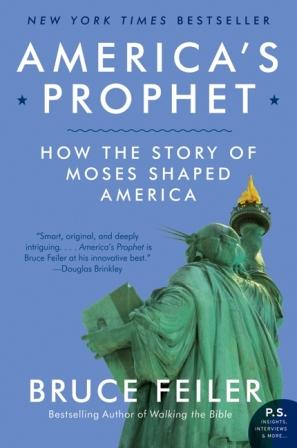
I finally got around to reading Bruce Feiler’s America’s Prophet: How the Story of Moses Shaped America. Initially I found the book difficult because I started it the day after finishing Kent Nerburn’s The Wolf at Twilight. There seemed a disingenuousness to America’s development that had been built on oppression. The retelling of sacred histories can be quite diverse. Nevertheless, Feiler’s book is well researched and compellingly written. Beginning with Columbus and coming up through the first years of the twenty-first century, Feiler shows again and again how Moses is lurking in the shadows of some of America’s grandest monuments to self.

Moses is the liberator who lays down the law. As such, nearly all the great political leaders in America’s Bible-saturated history have been compared to him. The funny thing about the actual Moses is that history’s chroniclers somehow failed to mention him. He does not appear in the annals of Egypt, where, according to Exodus, he was the near equal of Ramesses II. He is not mentioned by the political watchers among the other great powers of ancient western Asia. The Bible is all he’s got. Political commentators in early America, however, were not worried about whether he existed or not. The Bible says he did and that’s good enough.

Feiler builds a compelling case for Moses standing behind American figures and institutions. He also seems to be aware that Moses may never have walked the earth. An avenue he doesn’t explore is how entire national identities can be built on myths. Mythology gives us the meaning by which we live. Some times that mythology will include historical personages. Other times the myth must stand on its own. Moses may be one of the latter. Does it matter that Moses does not appear in history? No. He has already left his imprint, as Feiler ably demonstrates, on Columbus, the Pilgrims, George Washington, the Liberty Bell, Abraham Lincoln, the Underground Railroad, the Statue of Liberty, Martin Luther King, Jr., and even—God help us!—George W. Bush. Anyone capable of pounding a Bible loudly enough will eventually make the ranks, it seems. Ahistorical Moses has accomplished in his sleep more than historical people can ever attain. Amazing what you can achieve, real or not, with mythology on your side.

Bibles and Broomsticks

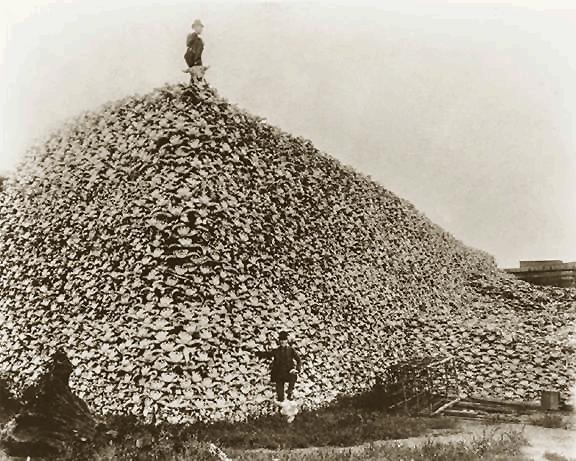
Continuing my musings on Kent Nerburn’s The Wolf at Twilight, I must pause for a moment on chapter eight, “Bibles and Broomsticks.” I must confess to having learned quite a bit in this account, and among the more disturbing facts is that government agents routinely removed Lakota children from their homes so that they would be sent to boarding schools to learn “white ways.” Many of these schools were run by Christian groups; in “Dan’s” case, the school was Roman Catholic. Confused and frightened, away from home, these children were compelled to give up their traditional ways so that they would be more accommodating to the people who had taken over their land. In the midst of the difficulties faced, Dan makes some pointed observations about the difference between what he had been taught as a child and what the establishment schools proclaimed. In punishment for speaking his own language, Dan was once sentenced to kneel on several marbles while holding a heavy Bible out at the end of each outstretched arm. Later he reveals that many of the children were sexually abused by the priests out on the prairie, far from the help of any non-religious adult.

Despite the grimness of this scenario, a parable may lurk for those of us who live in supposedly more enlightened times. The Bible being used as a physical weapon may be rare today, but it certainly has lost no force as a metaphorical one. We see this constantly when overly eager televangelists and politicians unilaterally declare that natural disasters are of divine origin, the god of the black book punishing the country he founded. Their logic twists like the rubber band on the balsam toy airplane of their mental depth. Complexity is the work of the devil when God can be blamed for every misfortune against those of whom they disapprove. The truly sad part is that they are continuing the oppression that was behind the mistreatment of the Native Americans. Books only enlighten minds when they are opened. Making a Bible into a cross is about as pagan an idea as can be conceived (my apologies to any pagans reading this—pagans are not nearly so barbarous).

At one point Dan explains to Nerburn that the Creator’s lessons could be found by observing nature, such as listening to the song of a bird. He said, “We could have taught your people, too. But they never listened…They just looked in their Black Book. They said it had everything they needed to learn the Creator’s lessons.” We are starting to learn this lesson, but very, very slowly. It was not by accident that the Navi in Avatar were portrayed as symbolic of Native Americans while the greedy industrialists mining their planet considered it manifest destiny to take charge. The Bible does not have all the answers. Those which it does contain in no way justify the abuse of others for one’s personal gain. It is one of history’s legitimate mysteries how an intelligent people can shut out reason when personal gain is at stake. It is easier to do, apparently, when there is a divine book to blame. When the Bible is used to punish others, however, it is always a safe bet that it has never been opened.

Differing worldviews


Who Are the Wolves?

Last week I finished reading The Wolf at Twilight by Kent Nerburn. To be transparent here, I’d picked up the book at a Borders’ closing sale based largely on the subtitle: An Indian Elder’s Journey through a Land of Ghosts and Shadows. It sounded like a good book for autumnal reading. The first chill breezes of fall swept through Manhattan last week, and I curled up with the book on the bus. I’m not sure what I expected, but what I found was nothing short of epiphanic. Those of us who’ve spent long years in religious studies, no matter what specific branch, know of the deeply spiritual writings of Native Americans. Black Elk Speaks is a classic often required in Religion 101 and it is still as potent today as it was back when first penned. The danger, which Nerburn clearly states, is in assuming a mystical kind of stereotype for a very real people who have continually been—and still are—hidden away as an embarrassment of the United States’ melting pot image.

The Wolf at Twilight is a follow-up to Nerburn’s Neither Wolf nor Dog, a book that I have not read. In that original narrative, Nerburn describes his encounters with “Dan,” a Native American, Lakota elder. The Wolf at Twilight is the story of how Dan finds closure in locating the resting place of his sister, from whom he was separated at childhood. The journey, spiritual though it may be, is a wrenching one. Speaking from my experience, many children grow up in America learning only cursory pieces of the large and tragic mosaic of how the Native Americans were treated by own government. The story of Dan is one of clashing worldviews where any system that stands against the ideal of private ownership—sadly embodied in the Christian settlers of this nation—is inevitably shredded, and, if embarrassing enough, hidden from future generations. Our ancestors did a great disservice to our fellow human beings, in the name of religion. Manifest destiny had an overly healthy dose of the divine right of Christians in it. An idea poisonous to anyone who might challenge the concept of personal gain.

As a neophyte in this field of reading, I was sickened by much of what I read here. It will take more than a single post to outline some of the more poignant inconsistencies between Christian practice and preaching perpetrated upon those who were here before us. A people forcefully converted to a religion that was openly oppressive to them reveals the dark underbelly of missionary zeal and the truth of the evils religion can hide. Or even justify. Often Dan decries the religion that believes all the answers are in a black book. What was done to his own family in the name of Christianity led to several restless nights for this reader. Kent Nerburn writes with the conviction of a man haunted by an experience of rough reconciliation. From the title, I had expected maybe werewolves or specters to roam this book, but instead what I found was much more terrifying. It was the naked lust for personal gain—a monster that no crucifix or prayer ribbon can ever banish or dispel.