
The tradition of telling ghost stories during the months of long darkness has evolved over time. Since the time seems right, I watched a movie for which I read the book some years ago. I recall that The Woman in Black is moody, and gothic. What I don’t remember is how it ends. More than one source—at least one from someone I know and one from a book—suggested I should see this movie, and I’m glad I did. It’s a haunted house movie, set in a haunted village and the production values (unlike some movies I’ve recently watched) are quite high. This film was a reboot in a couple of ways; there was an earlier film version, and it was also a new Hammer production. In the latter capacity it broke records for Hammer box office earnings.
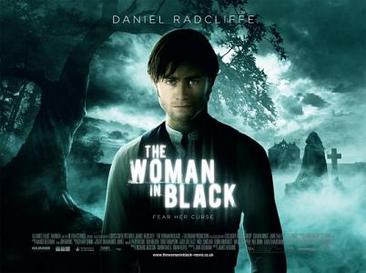
You see, Hammer, in its first incarnation, struggled for any kind of respectability. The company almost single-handedly kept horror movies alive while US studios moved more toward sci-fi-themed projects, before the rebirth of modern horror. Fans knew to go to Hammer for their monsters, but society folks (and those who wish to be society folks) don’t find horror worth any attention. From my amateur point-of-view, such movies give the viewer a lot to think about. The problem, as with most underdogs, is that a few bad examples tend to get all the attention. Life is scary. That doesn’t mean we shouldn’t try to live it, but it does mean that we might learn something from other people’s mistakes. Or we might find ourselves haunted.
The Woman in Black is set in Edwardian times. (I often ponder why we still refer to historical eras by the British monarchs—Elizabeth, Victoria, Edward, etc.—in a world finally moving away from imperialism. Still, it’s convenient.) Perhaps not quite as evocative as the Victorian Era, but still moody enough. Although there are some disturbing scenes, this is no slasher. Like the novel it’s the tale of a vengeful ghost, wronged in life and out for revenge. While the end of the movie isn’t the same as the novel (okay, so I looked it up!), it’s similar. And perhaps it’s best considered a parable of parenting. No amount of training can prepare you for it, and although it’s supremely rewarding, it’s also very scary. Susan Hill, the novel’s author, lost a child and that sense of haunting pervades both book and movie. Gothic is often about grieving, and perhaps about learning something from it.

 Steve A. Wiggins