Phantom Prayers

Religion and theater have much in common. I suspect that this is one reason several religious traditions initially protested against the secular theater. Morality plays were one thing, but dramas about purely human matters are quite another. Being given the very generous gift of tickets to the Phantom of the Opera, I recently had the opportunity to experience Broadway’s longest continually running show. It occurred to me that theater can often, if done right, draw in huge crowds—the line to get in was certainly impressive—while other than megachurches and very conservative religious movements based on reaffirmation of one’s superiority, many religious houses struggle to draw people in basically for free. It could be argued that secular entertainment requires less of an attendee than a religious service, but I wonder if that’s true. To receive your money’s worth for a show, you must be willing to put yourself into it.

While Andrew Lloyd Webber has never been afraid of religious themes—think of Jesus Christ Superstar and Joseph and the Amazing Technicolor Dreamcoat, or even Whistle Down the WindPhantom of the Opera is loosely based on the early twentieth century novel by Gaston Leroux, the story of a hideously deformed musician who falls in love with a beautiful opera star. Although characterized as “a monster,” the Phantom is, after all merely human. Lloyd Webber’s adaptation leaves much of the story undeveloped, allowing the imagination to chart its own course. This is precisely where theater diverges from religious performance—imagination. Religions frequently claim to possess all the answers and questioning or imagining new approaches to age-old dilemmas is often discouraged. Unless, of course, the dilemma is how to draw more people in. Those who run megachurches learned the lesson of theatrics long ago.

For all that, Phantom of the Opera is hardly devoid of religious sensibilities. In one moody scene where Christine visits her father’s grave for solace, and perhaps advice, the first set piece visible is the cross atop the tomb. It is from this cross that the Phantom in the guise of the “angel of music” comes to her. Having the representation of death emerge from a cross is a powerful enough symbol. During this scene Christine’s plaintive cries to her father sound like a prayer. The prayer is heard, however, only by a phantom. The end of the story is ambiguous, something religious performance simply cannot tolerate. And yet, as I was being pushed and propelled down a crowded Broadway after the show, amid a flood of humanity that had emerged from many theater doors, I wondered if this “secular” experience might not be religious after all.
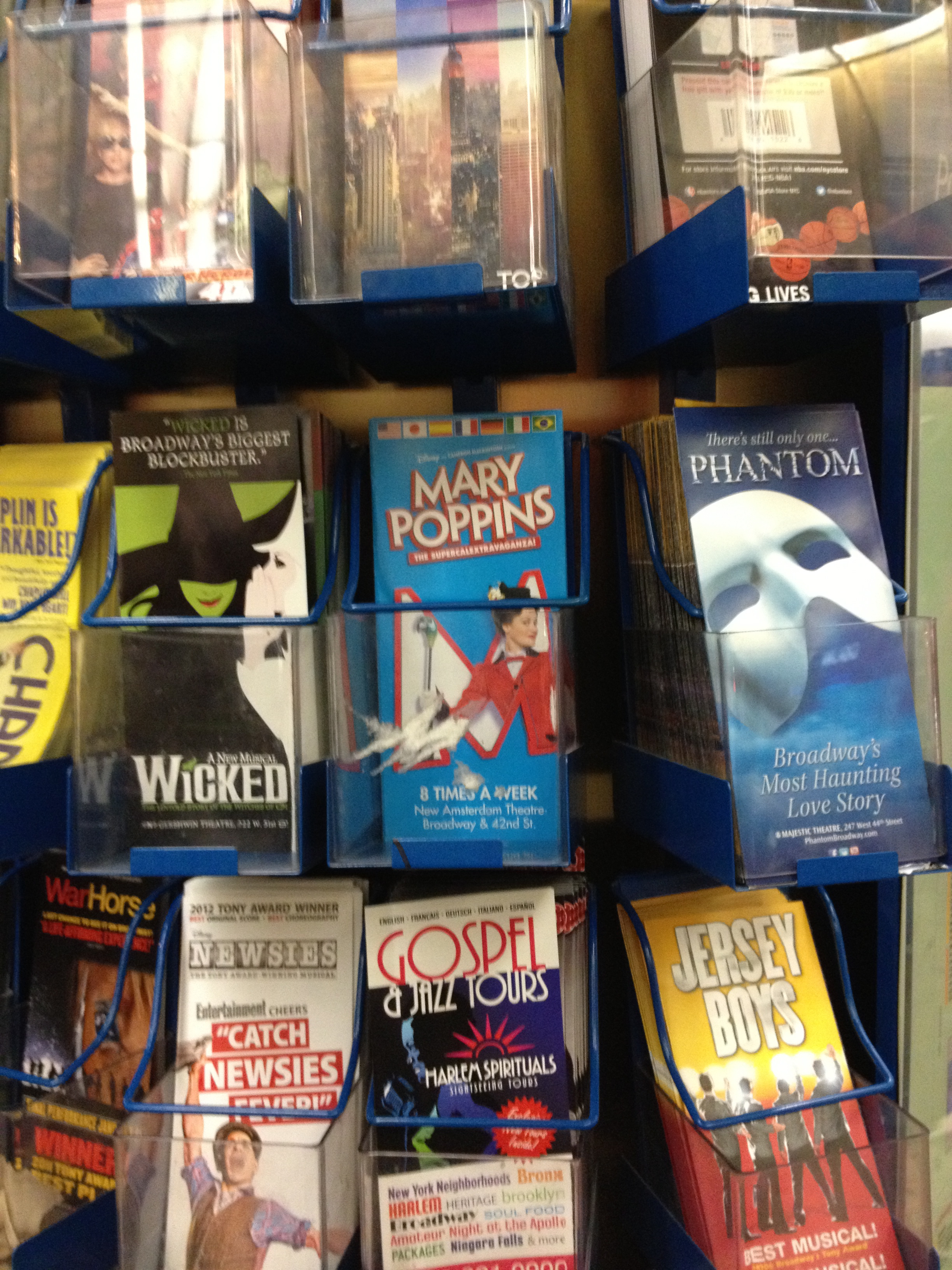
Religious tracts?
Where Whoever Walked

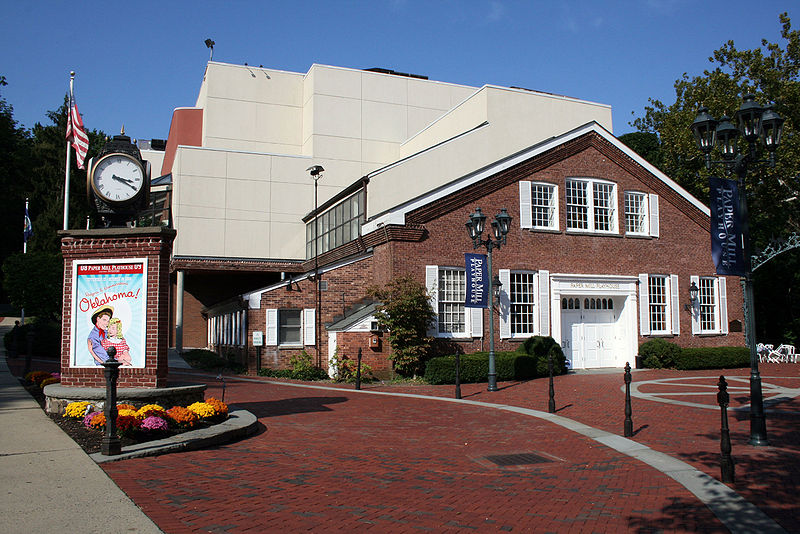
No adequate explanation has ever been proffered for the human desire to be where more prominent individuals have been. In its religious guise this is generally called pilgrimage, and the faithful seek out locations where a besainted member of their faith tradition once trod, ate, slept, or died. Going to the place of the famous is a major motivation for the travel industry. We are driven to see what s/he saw, taste what s/he tasted, experience what s/he lived. Just to be there, and contemplate. No one person, however, is universally known by every individual world-wide, so who it is we follow varies widely. This sense hit me once again last night as my family undertook the rare treat of a live show at the Paper Mill Theater in Millburn. Although Hairspray is not the most profound of shows, it was exceptionally well done, and the images on the walls of the foyer reminded us of who had been here before.

The Paper Mill Playhouse, a place of transformation

The shotgun blast of emotions this experience created verges on the religious. There was a time when I too donned the greasepaint (hard to believe for those who’ve only known me with this two-decades worth of old-growth forest on my face), and I know it to be a transcendental experience. The clean-shaven face is a boundless canvas. My own experience was local and small-scale, and certainly not done for fame, but the transformation was palpable. I am sure that actors everywhere share this experience – the apotheosis of becoming someone else. This week in mythology class we discussed Dionysus, the god of such transformations (and theater). A god who travels, a god associated with place, it is easy to understand how Dionysus became so popular, with or without the wine.

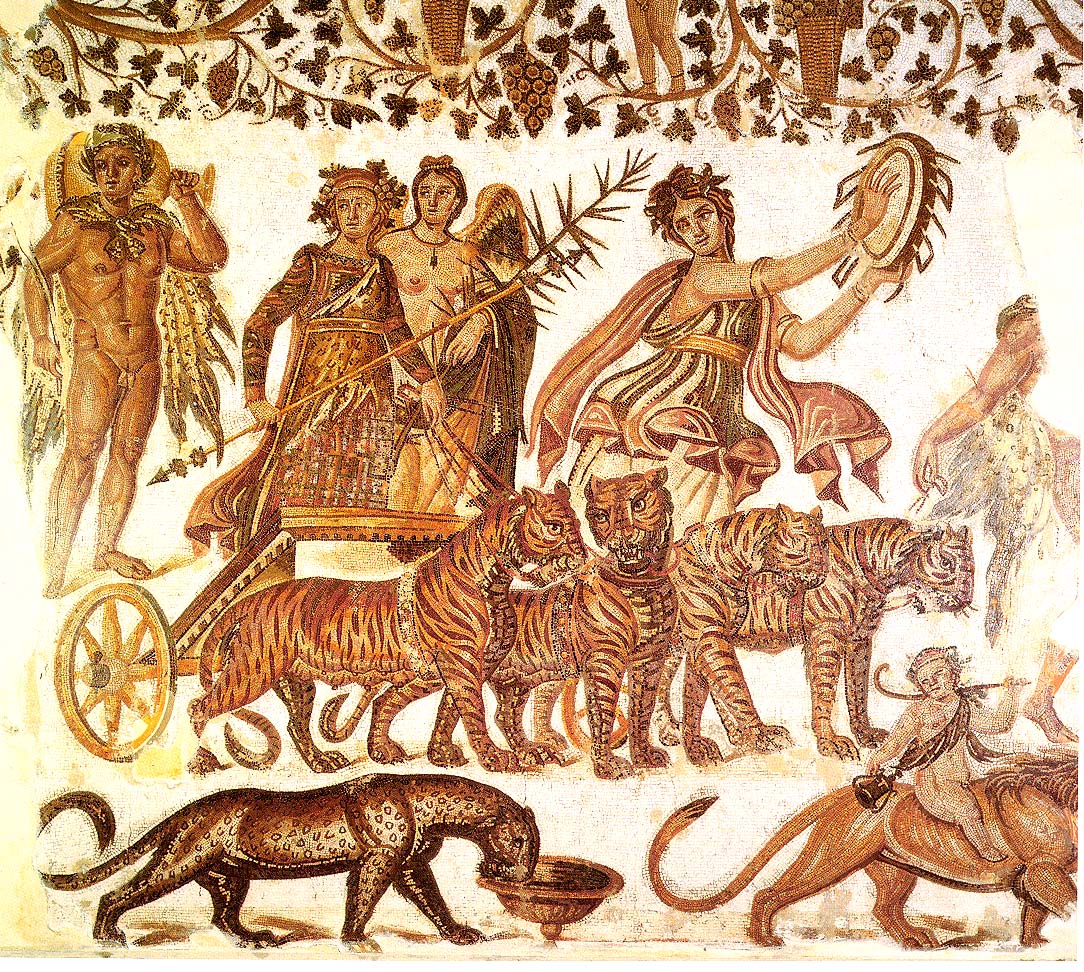
An epiphany of Dionysus

Dionysus was the recipient of a mystery cult in antiquity, one that rivaled Christian inroads in the Roman Empire. You see, many people recognized the similarities of Dionysus and Jesus. Both were begotten in unusual ways by their father (the high god), and both were gods of epiphany. Both were gods who understood the human condition – having mortal mothers, who came to people where they were, and who transformed the ordinary into extraordinary. Both were associated with wine – Jesus’ first miracle at Cana showed his theological pedigree – and both had reputations for associating with the less desirable members of society. And yes, both offered resurrection, a means of overcoming the limitations of life itself. Perhaps that is why the rare pilgrimage to the theater is so transcendental. It is pilgrimage and apotheosis all in one. And that is more than most of us might ever hope to achieve, short of encountering Jesus, or Dionysus, himself along the way of our pilgrimages.