
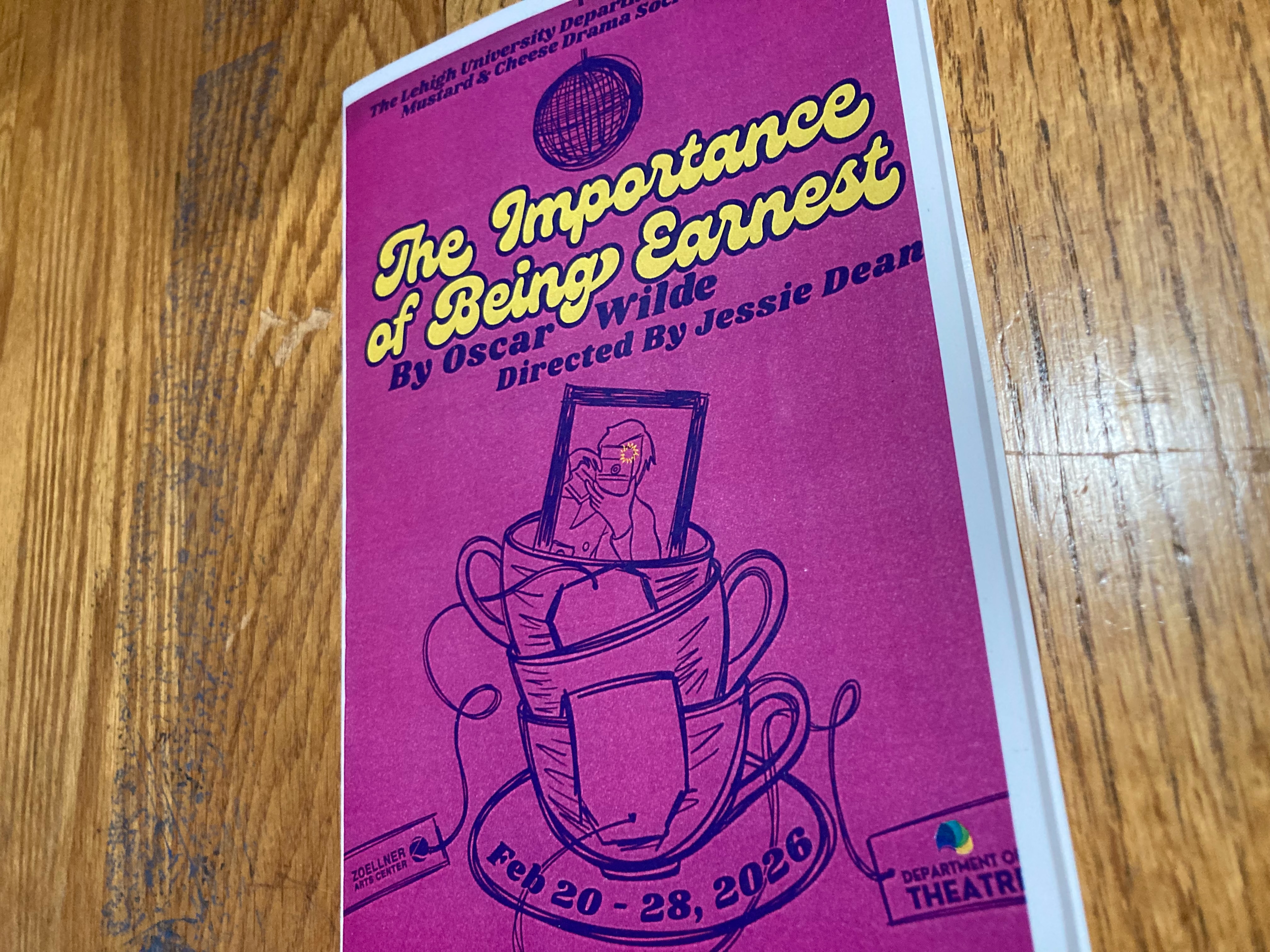
Christening. The subject may sound old fashioned, but it was once, within Christendom, where a name was officially conferred. These days a birth certificate, issued very shortly following a live birth, is the official record of name, but not so long ago religious authorities had the final word. This came to mind upon seeing a local (Lehigh University) stage production of Oscar Wilde’s The Importance of Being Earnest. I’ve read the play before, but hadn’t seen a stage production. As is likely widely known, the play’s title plays on the name Earnest. Two characters, Jack and Algernon, both claim to be named Earnest only to learn that the women they’ve proposed to both insist on marrying a man whose name is indeed Earnest. In order to remedy this situation, both men ask the local vicar to be christened, changing their names.
Names are chosen for us and given to us. Although it is possible to change one’s name (I’ve done so twice), many consider this almost insulting to the parents who provided the name. Since baptism, or christening, was so widely practiced in medieval Europe, this experience was fairly universal in western culture. The Reformation eventually changed that; some traditions declared that a person had to be old enough to consent to baptism and you couldn’t very well wait until seven or eight to be given a name. I was baptized in a river at about six or seven, and by then had learned my given name quite well. Names become our identity. I still recall the lines about names from another play, Arthur Miller’s The Crucible. “Because it is my name! Because I cannot have another in my life! Because I lie and sign myself to lies! Because I am not worth the dust on the feet of them that hang! How may I live without my name? I have given you my soul; leave me my name!” Thus spake John Proctor.
The Importance of Being Earnest is, of course, a satire. Even the name of the priest, the Rev. Canon Chasuble, DD, is a joke. A chasuble, in the ecclesiastical world, is the outer vestment worn by a priest who is the celebrant at a formal mass. Clothes make the man, so the saying goes. Those of us who write fiction often wrestle with names. In my day job I quite often encounter what seem to be unbelievable names. Names that, were I to put them into a novel, would earn the scorn of critics (assuming any) that it was made up. So I enjoyed being earnest for an afternoon.
 Steve A. Wiggins