
Finding Nemesis

Philip Roth was an author unknown to me (shame on me!) until this summer. Over the past several years I’ve taken it upon myself to read my daughter’s high school novel-reading assignments so that we can stay current (in an aspect where a parent is permitted to do so). Her school requires summer reading and this year Roth’s novel Nemesis was on the roster. As a recent book, it is unusual in being assigned before the test of time has rendered its verdict. Set during a fictionalized polio outbreak in Newark in 1944, Nemesis follows the fortunes of Bucky Cantor, a Jewish physical education teacher in charge of a summer playground program in Newark. As his kids begin to fall to the disease, the protagonist flees to the Poconos to be with his fiancée at a Jewish summer camp. As the situation deteriorates, Bucky questions God’s role in the world of disease and in the war that continues to rage in Europe and the Pacific.

It is the classic issue of theodicy. Having been raised in a tradition that espouses God’s goodness, the protagonist has to face the death and disabling of children by a disease for which there is no cure (at the time). The issue of God’s role in the disaster is a recurring theme throughout the book. In the final chapter when the atheist narrator—himself a victim of polio and one of Bucky’s former students—questions Cantor about his beliefs, Bucky holds onto a dogged insistence that blame must be ascribed. His student opines: “it’s a medical enigma… His [Bucky’s] conception of God was of an omnipotent being who was a union not of three persons in one Godhead, as in Christianity, but of two—a sick f**k and an evil genius.” That statement gave me pause. Traditionally theodicy assumes the goodness of God and tries to bend the facts to fit the premise. Here God is in the dock and all interpretations are permitted in cross-examination.

The angst of dealing with the concept of omnipotence is real enough. In this Tea-Party world where selfish personal aggrandizement is seen as divine prerogative while children starve in misery and die painfully on an hourly basis, very real questions should be asked. Instead, most people assume the religion they have been taught is correct: often the facts of history are distorted to make such a belief match pre-decided outcomes. God is good as long as I get my share.

Reviews of Nemesis have been mixed, but Roth does a powerful job in his final chapter of this novel. The action is almost as predictable as the heat of summer, but the real substance, as usual, lies in the interpretation of the events. When God is brought into the equation, the temperature is sure to rise even further.


Malleus Practice

Misfortune takes a quiet seat in the back of the bus for many people, but it is always there riding behind you. My recent trip to Salem is now over, but it has left me with that haunted feeling that sometimes tragedy just won’t let go. Reading up on the history of witches and the belief therein, it is pretty clear that the whole idea began as a form of theodicy. Misfortune happens. When a one-to-one correspondence attends it, people don’t worry too much. (John has a stomachache. We know that John slapped Bob, and Bob punched John in the stomach so there’s no supernatural agent at work here.) When the adversity comes out of nowhere, to all appearances, we naturally look for a cause. As long ago as ancient Sumer, and probably before, the answer was sometimes the baleful influence of enemies with supernatural powers. The witch was born.

This idea has remarkable longevity. Even as the eighteenth century dawned, just a few short years after the tragedy at Salem, Puritans and politicians embarrassingly looked at their feet and admitted this mockery of justice had been an unfortunate error. Yet they still believed witches existed. The concept is alive even today in parts of the world minimally influenced by schooling in science and logic. (I taught at a seminary where various witch hunts still took place; books were even burned.) Who doesn’t know the feeling that a totally natural disaster was in some way targeting them? Whether tornadoes, tsunamis, or rain on your Memorial Day picnic, the normal human response is one of a minor (or major) persecution complex.

To solve the riddle of witches, horseshoes and witch bottles are not necessary, but education is. Witchcraft was not considered Satanic until the late Middle Ages when apocalyptic fever raged through Europe with the Black Death. Not understanding microbes, the populace supposed a great war presaging the end of times was escalating between God and Satan. The minions of the Dark Lord were spawned by witches and demons. (Add Tim LaHaye and you’ve pretty much got Left Behind.) To solve the problems of the righteous, sacrifice a few innocent victims. If we call them witches—actually any undesirable name will do, eh, Senator McCarthy?—we will feel justified in doing so. The real solution, namely, working together to overcome natural and human-made afflictions, is really just too hard.


Conscious Cats

To pass yet another rainy Saturday, and to celebrate Earth Day, my family went to watch Disney’s African Cats yesterday. An avowed nature-film junkie as a child, I watched Mutual of Omaha’s Wild Kingdom on a weekly basis and have supplemented that fare with nature films throughout my life, when possible. It disheartened me a little to learn that some of the adventures were spliced together from different filmings, but I always believed every word avuncular Marlin Perkins said. After all, the show ran on Sunday nights, and who’d dare lie on a Sunday? Noting the humor even as a child when Marlin Perkins would stand back as Jim Fowler wrestled the anaconda or outran the crocodile, I could not get enough of authentic nature footage. As a child, wildlife sightings were limited to squirrels and rabbits, a number of birds that looked disconcertingly similar, and many, many bugs. Once a king snake slithered down an alley down the street, and we felt like Marlin Perkins, keeping our safe distance.

A trend in recent years has been to anthropomorphize animal films to engage children’s interests. So it was with African Cats. Each lion and cheetah family was described in human terms with human motivations, longings, and emotions. It is clear from watching many, many episodes of Zoboomafoo with my daughter (we even saw the Kratt Brothers live at a New Jersey Greenfest a couple years back) that animals genuinely do experience emotions. Anthropomorphizing them, however, has always disturbed me. I’ve been a vegetarian for well over a decade now, believing that animals have the same right not to be eaten that I fervently hope they respect in me. But placing them in the same level of consciousness as humans increases the suffering in our world a little too much. Both lions and cheetahs die in this G-rated movie. That is the unfeeling course of nature. Suffering comes at the level among humans of being aware of this misfortune, and taking it to heart. Theodicy is among the most intractable of theological problems.

Today as millions of Christians celebrate resurrection, my thoughts are with the animals. African Cats shows incredible footage of millions of wildebeest migrating, but packages them as mere prey for the hungry lions. What of the inner life of the wildebeest? In our society where the few lions demand the best while countless prey animals go about their daily grind, eking out a living from an unfeeling earth, the subtle message was almost overwhelming. Yes, the vast wildebeest herd can spare a member or two to predation. What if that member is you or me? It is the trick of numbers and the curse of consciousness. I respect and admire our animal co-inhabitants of our planet, but without the myth of resurrection isn’t giving them consciousness just a little bit too cruel?

James Temple's cheetah from Flickr, via WikiCommons


Tuesday Mourning

A mourning dove sat on my front steps today. I weep for Shaunakaye Williams, although I never met her. The death of the young is tragedy defined. I did not know Shaunakaye, but I know that she was a young woman of great potential. She had discovered FIRST Robotics in Newark and died while in California at a FIRST competition. If it weren’t for the FIRST connection, her death might of remained unknown to me, but it would have been a grave loss nevertheless. Becoming a parent has been the most wonderful and terrifying event in my insignificant life. Since it has happened, I have mourned every death of a child of which I’ve heard. The words of comfort fail. FIRST is the most optimistic group with which I’ve ever been affiliated, recognizing and rewarding the potential of bright young minds. Shaunakaye was part of that family, and her loss is deeply felt.

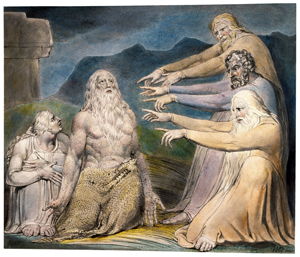
In the field of religious studies, those who would justify the actions of God in a world full of suffering are faced with a daunting task. Theodicy is the most unenviable and unsatisfying aspect of the theological endeavor. Even the stalwart author of the book of Job dared not ask the great unanswerable “why?” – there is no justification for the death of the young. Often the answer is there is no answer. Job’s friends cannot accept this truth and fabricate excuses to show that God is just. God himself affirms, however, that life is just not fair.

As a race, as a species, our children are our greatest assets. Bully governors and pedophiles notwithstanding, any society that does not promote or encourage its children has already cut off its entire future. I mourn for Shaunakaye Williams, and for all those who have not been given the chance to reach their full potential. I mourn for all parents who have had to face this most terrible of afflictions. And I will never be counted among the friends of Job.


Talking Past Each Other

My first two sections of Mythology class met yesterday, and my post on Stephen Hawking was still fresh in my mind. As predictable as clockwork, religious leaders have begun to respond the Hawking’s new book, not yet released. Theodicy in overdrive.

I am not qualified to assess Hawking’s scientific findings. As much as I daydream about having followed my childhood ambition to be a scientist, I find myself in religionist garb teaching university courses among the humanities. What is ironic is that theologians feel that they have to answer Hawking’s conclusions. An article on CNN has the rebuffs of a number of British clerics, including the Archbishop of Canterbury. The main thrust of their comments is that the God Hawking dismisses had already left the theological classroom (the God-of-the-gaps) while the God the major monotheistic religions serve is less of an explanation of the universe and more of a method of determining what it means. So, I guess, this God of meaning may or may not have created the universe, but let God be God and mathematics and physics be damned.

Unless the theologians are better trained than most, the intricacies of M-theory are far too complex to be understood by workaday religious practitioners. The theory is backed by mathematical formulas that are far more frightening than Tiamat, Ahriman, and Azazel bunched up in a cosmic tag-team match against the nice world theologians have created. For my part, I am happy to let the physicists deal with the numbers and symbol systems while I sit by trying to explain what mythology really is to my undergraduate audiences.

Who's looking down today? Uncle Earl?


Politicians and Blood-Suckers

The old icons and heroes are gone. It is best just to deal with it. No one is above reproach since we are all in this human morass together. Nevertheless, I’ve always held a soft spot in my cynical heart for Abraham Lincoln. I know he wasn’t perfect, but he stood for an issue that has been a driving force for my life: fairness. Now I see that he was a vampire hunter. After having read Seth Grahame-Smith’s Pride and Prejudice and Zombies last year, I’ve decided to give a try to his Abraham Lincoln: Vampire Hunter. My fascination with monsters and religion has not been disappointed in this fanciful story.

Our quasi-fictional honest Abe begins his vampire-slaying ways when he learns that, yes, a vampire killed his mother. As a boy of only twelve, he finds the knowledge stressful to the point of burning the family Bible that he used to read to his departed mother. Why? In Abraham’s own (fictitious) words: “How could I worship a God who would permit [vampires] to exist? A God that had allowed my mother to fall prey to their evil?” I admit that I was secretly pleased to see the classic issue of theodicy being raised in a story concerned with the undead. It is the dilemma of all who want to see a good God behind all the suffering in the world. It is a dilemma that stems from the same deep wells as our inhuman monsters. We can imagine a better world, but we can’t have it.

Politicians with axes

As I see New Jersey’s governor Christie (for whom I decidedly did not vote!) slashing away again and again like Freddie Kruger at the state’s educational system, I see the twin peaks of vampirism and theodicy peering distantly over the horizon. I am deeply disturbed by the facile disregard this “visionary” Republican has for the future of his own state, for the future of our children. And I am forcefully reminded once again that vampires are symbolic of all those who prey upon the unwary. When staring into the fireplace on a cold night, I imagine myself standing beside Grahame-Smith’s fictional Abraham Lincoln, wondering what god it is that vampires worship.


Theodicy Versus Idiocy

Among the leading reasons generally given for atheism in developed countries is the problem of theodicy. Theodicy is the act of justifying God, as implied by the roots of the word itself. In a world where many innocent suffer, as well as many guilty, the question of how a loving God and divine fairness fit into such a warped and corrupted system presents questions often left unanswerable. My class tonight will be reviewing Job, a book steeped in the issue of misfortune. The best that the narrator can offer is that Yahweh made a bet with the Satan and Job came out on the losing end. Not much hope for justice there.

This week’s horrific earthquake in Haiti has elicited high levels of sympathy and support as this poorest of western hemisphere nations struggles to find some kind of balance in a reeling world. The question of where God is amid all this tragedy, perhaps 100,000 dead, pensively teeters in minds sensitive to the human condition. Other minds, however, blare idiotic platitudes that only drive mourning theists closer to the other side. Pat Robertson, a major political player who has been a card-holding member of the Religious Right from its unholy inception, has declared that Haitians are paying the price for an ancient deal they made with the devil. In a theology that makes a mockery of even the Charlie Daniels band, Robertson stated, according to MCT News, that Haiti had made “a pact with the devil.” He said, “Something happened a long time ago in Haiti, and people might not want to talk about it… They were under the heel of the French… and they got together and swore a pact to the devil. They said, ‘We will serve you if you’ll get us free from the French.’ True story.”

This drivel, based on hearsay history and implicit racism, does not justify a loving, or even neutral, God. Instead, the Conservative deity is shown in his true colors: racist, supersessionist, arrogant, and uncaring. This is the deity behind the Religious Right. Some people castigate Pat Robertson for being outspoken and perhaps senile. I applaud him. He shows clearly what intellectual rubbish the Religious Right promotes. He simply has fewer inhibitions to admitting it.

In Job, there was a deal made with the Satan. The perpetrator of that deal was Yahweh. No answer is given as to why the innocent suffer. Job is a most profound book, wrapped in a childlike story of two supernatural beings trying to show each other up. If we look hard enough we can find the Religious Right in the book as well. Their voices are those of the “friends” that Yahweh ultimately condemns when he finally speaks from the whirlwind.