In the Bleak Midwinter

Labels. They can be problematic. Given our human brain structures, we are predisposed to patterns and categorization. Is it edible or not? Predator or prey? Like me or different from me? We constantly scan our world, categorizing as we go, holding our people, experiences, and places in a temporary, floating mode of immediate recognition. I’ve had people who read my blog ask me, “What are you?” My guess is that they want a simple, pat answer: Christian or not, religious or not, dangerous or not. The more specific the better, since the more precise the label the better fit the box we stuff you into will be. Given the trajectory of my unorthodox career, it is common for me to be labeled as “theologian.” It is a categorization I deny, but since the study of ancient texts and myths generally falls under the rubric of “theology” it is not entirely inappropriate. I prefer to leave theology to those more intelligent than myself.

It is with great joy, therefore, that a new blog has emerged from a worthy theologian. Bleak Theology makes its premiere today. I have known the talented writer, Burke, for some time. And I know that some fantastic things will appear on this blog. In its own words: “Bleak theology is anxious, but not despairing. It is pessimistic, but not hopeless. It is materialistic, but not idolatrous. It doesn’t always have hope, but it certainly would like to have that hope… It’s a theology that gazes troublingly up at Mt. Moriah; that sits in sack and ashcloth and resists cursing God and dying; that cries out that everything is meaningless (meaningless!); that sits by the rivers of Babylon and cries; that staggers away from the crucifixion disillusioned; and, after seeing the stone rolled back and the dead vanished, leaves the tomb and tells no one.” We have great things to anticipate. Melancholy is its own variety of joy, as some of us are continually discovering.

Labels. Some people make a lot of the alphabet soup one is legitimately able to put after one’s name. A friend once told me that he’d heard a Ph.D. insist on being called “Doctor” by the attendant when he pulled into a gas station. I have a label for such people, and it fits better than the one they prefer. I have known and worked for Ph.D.-bearing individuals who just as dumb as the rest of us. Sometimes even more so. Theology is not a discipline where advanced degrees are required, for either those who have them or those who don’t. The fact is we’re all thrown into this same world together and, like it or not, no one has the answers. Some may don their papal tiaras or their fancy academic robes with striped sleeves, and claim hegemony, but the truth is we are all seekers. The best company one might hope to find is with the person who honestly struggles. Embrace bleak theology and eschew easy classification. There may be no hope for us yet.

10 Questions

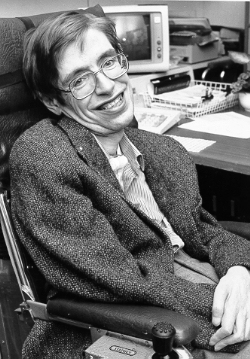
This week’s Time magazine’s 10 Questions feature is directed to Stephen Hawking. Predictably, the first one concerns God. “If God doesn’t exist, why did the concept of his existence become almost universal?” a reader asks. I was less concerned with the answer than with the implications of the question itself. The very question represents a paradigm shift. Time was, such questions were directed to local clergy. The minister had the answers. To be sure, many millions, if not billions, of people regularly rely on their clergy for divine guidance. I used to teach clergy, so I am wary. Today, however, we need to know if all the answers fit. To find out if God exists, ask a scientist.

Theologians have earned their reputation as inscrutable doyens of the unspeakable. I have been involved in higher education in the field of religion for nearly twenty years and when I read theologians I am left scratching my head and asking “what?” Erudite to the point of being obtuse, the issues and methods of theologians address the unknowable. Much of it is idle speculation. The specialists, however, must earn their keep. Deans are impressed by what they can’t understand. God himself, I’m sure, wonders what some of it means. Is it any wonder that the average citizen would rather ask Dr. Hawking than ask some obscure theologian?

Religion and science are bound to bump at the borders like the parallel universes of string theory. Both are concerned with explaining things. Science has a proven track record of presenting verifiable results while theology has produced a poke full of intangibles. I am the first to admit to being a working-class Joe who has no special knowledge. What I’ve learned has come from the many classes I’ve endured and the books I’ve read. As far as I can tell, none of it comes directly from God. In my mind’s eye I reverse the situation. I see a popular theologian, take your pick (I have trouble conjuring the moniker of a household-name theologian), being featured in 10 Questions and the first query being, “What is M-Theory?” I can imagine the convoluted answer.


Writing the Divine

The media has displayed considerable interest of late in the views of well-known writers towards the divine. Given the vast numbers of non-famous people daily consigned to Hell by the righteous, there are more tears shed for Anne Rice than for the thousands who’ve never written a vampire novel. Equally fascinating is a story from CNN yesterday on Ray Bradbury’s views on God. I cut my literary teeth on Ray Bradbury. I don’t even recall how I discovered him in the small town where I grew up. More likely than not I found used copies of his story collections at Goodwill. Already interested in science fiction, his tales of the future or fanciful past and alternate worlds captured my imagination. Living in a town where nothing ever seemed to happen, Bradbury was a doorway into someplace colorful.

According to John Blake and Bradbury biographer Sam Weller, the doyen of the sci-fi short story is an avid believer in something out there. Reluctant to accept any single religion, Bradbury embraces religious concepts as the wisdom of the sages. He believes, according to the article, that we have much to learn from religions. The views suggested in the interview may lack the rigor and sophistication of the professional theologian, but Bradbury’s emphasis on love comes close to the mark for several religions. People build superstructures around their religious founders and insist on orthodoxy and military adherence to human speculation about them. Often in the process, love becomes just another tenet left over, if you have time for it.

For many decades as I pursued formal degrees in religious studies, I was taught to put away childish things. I gave away my Ray Bradbury books and purchased hefty tomes of incomprehensible gibberish that passes for theological erudition. Then my daughter was assigned Fahrenheit 451 as high school reading. I picked up Bradbury again. His writing lacked the absolute wonder and fascination it held for my twelve-year-old eyes, but it was like greeting an old friend once again. My thinking had been partially shaped by this storyteller, and it is perhaps even possible, in a Bradburian sort of way, that I felt a “spiritual” connection as I read his books as a young boy. Reading his amateur views on religion was a quiet sort of homecoming.

An old friend


The Hardest Job

Being a religionist is the world’s hardest job. That’s because you are trying to peddle something that everyone gets for free – their own religious opinion. No other professional field has such universal competition. From the time our parents mutter their first bedtime prayers to us, we begin to become masters of religion. With an entrenchment deeper than any wisdom tooth, we know, on a sub-atomic level, that we are right. We consult lawyers about the law and physicians about aches and pains, but on the level of religion, we already know we are right. We seek houses of worship that agree with our way of looking at things, and if the minister strays too far from our views, we go shopping again. Never try to make a career out of studying religion – it is a dead-end street.

I bristle whenever someone calls me a “theologian.” I am not. I have spent my life studying religion, sometimes participating in it, sometimes sitting back and watching it, but always analyzing it. Theologians deal with abstract concepts that can never be verified or falsified. The unquantifiable is their realm, and their rarefied debates seldom touch those of us of less exalted mental energy. And they are also never wrong. Those of us in religious studies watch how people’s religious outlooks impinge on the real world. Put your tin cup on the sidewalk in front of you. Everyone knows the answers already.

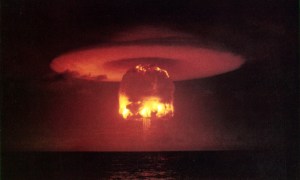
For some 25 years I have been specializing in religious studies, and I still assert that it is the most important, yet neglected academic field in the humanities. Twice I have been released from a living in the field by religious folk with less theological acumen than Cal Meacham. (If you don’t recognize the reference please educate yourself!) Not even eight years of a brutal Bush administration could convince university folk that the study of religion should be given priority. The most powerful nation on earth run by a recycled fundamentalist, and we don’t care to understand, thank you. Everyone is an expert. As we watch religious leaders of “foreign” nations posture with their weapons and rhetoric, we can sit back and be assured that even if they start a nuclear war, we were right about religion all along.

Better burn than learn

Better burn than learn