Welcome to the Labyrinth

Do anything long enough and you’ll produce a labyrinth.  I started this blog back in 2009 with the idea of perhaps continuing in the biblical studies/ancient Near East (actually west Asia) studies, where I began.  I always knew this would be a place to talk about books and movies and sometimes current events.  Often it would address American religion because, well, it’s so bizarre.  Over the years the blog has ranged pretty widely.  My interests are fairly diverse and I tend to get obsessed with a subject for some time and then move on.  I suspect that’s one reason followers are few.  People want the same thing—should I dedicate the site to horror films, religion, or social justice?  The weather?  Instead, it’s what catches my interest at the moment.  Thus the labyrinth.

On the rare occasion when someone actually comments on an older post this blog (there was a healthy chain about the Highgate Vampire some years back), I often have to ask myself, “Did I write about that?” “What did I say about it?”   The human mind is a labyrinth.  And life is too short to ever stop learning.  Even if it means that few will be interested in what you’re doing.  The few who’ve known me a long time and read this blog (I know who you are), might be surprised at the horror themes that have become pronounced.  These were, however, part of my childhood.  When I tried to get away from them, they pursued me.  Monsters are like that, of course.  They like to hide in labyrinths.

But labyrinths are contemplative spaces.  Contemporary spirituality has rediscovered labyrinths.  You walk them in intentional thought.  In the moment.  We might be able to forget for some time that the original labyrinth was built to house the minotaur.  And without Ariadne Theseus would’ve never survived.  When he left her on Naxos his actions spoke louder, much louder than his fight with the monster.  Labyrinths make you forget where you are.  One saved Danny Torrance.  And perhaps one might save your soul.  Those who make enough chairs, or write enough books, or design enough skyscrapers leave labyrinths behind.  Manhattan may be a grid, but it’s a labyrinth nevertheless.  It seems to be a part of every story.  The thing about labyrinths is that they have no one goal.  There is no single answer to this mystery.  When you begin making one you may not even realize it.  Until you stop to contemplate it.

Photo by Ashley Batz on Unsplash

Resurrinception

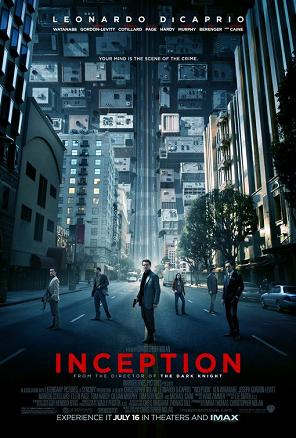
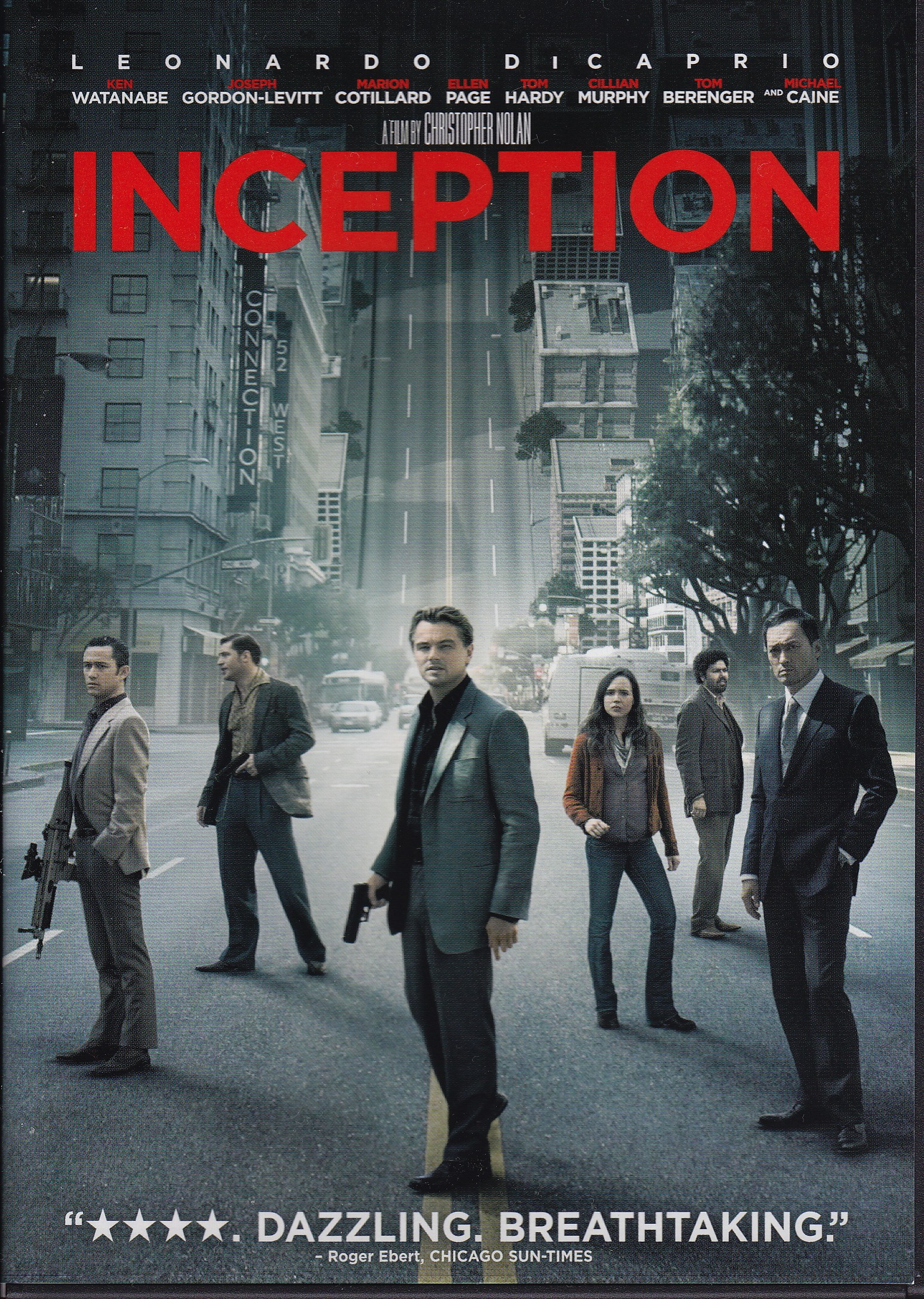
Inception_ver3Like most profound movies, Inception keeps me coming back repeatedly. I’ve already written a post on how the Theseus and minotaur myth lurk deep within the labyrinths of this film, but upon my most recent viewing a new angle caught my attention. In the first level down into Fischer’s dream, when Saito is unexpectedly shot, Eames asks Cobb, “What happens when we die?” It could be the question of a child faced with a dead pet for the first time. Of course, Eames refers to death in a dream under sedation, and limbo is the closest thing to spiritual death that a person can experience. The timing of that question, however, triggered in my head the number of resurrections that take place in the movie. I have frequently noted here that resurrection is a standard part of the tool kit for western movies, particularly American ones. We expect resurrection. So, finally, three layers down, a dream within a dream within a dream (even Poe would be proud), Saito dies. He is lost in limbo.

Limbo is a fuzzy theological construct thought up by the church for those who don’t deserve Heaven, or Hell, or even Purgatory. Some, it seems, end up in limbo. In Inception limbo is unconstructed sub-conscious, an area even Freud would fear to tread. Saito dies and goes to limbo. Fischer, meanwhile, also ends up in limbo because Mal shoots him dead in the third-level dream. Mal is already in limbo because she killed herself in real life—or was it a dream? Cobb, of course, must die to return to limbo to retrieve Saito so that he won’t be arrested when the plane lands. In limbo, three of the four escape, riding the kick back up to consciousness. Only after baptism in the first level dream, when the van plunges into the river, do the lost souls emerge. What happens after we die? Resurrection.

I’m not suggesting that Christopher Nolan planted a Christian idea in the viewers’ subconscious mind. Resurrection is part and parcel of our culture. Perhaps, however, this helps to explain the durability of some religious concepts. We long for resurrection on such a deep—maybe subconscious—level that we want to see it on the big screen. Even ghosts, we’re told, haunt because of unfinished business. It is Saito, the Japanese business mogul, however, who undergoes the most resurrections. He dies in the van underwater, in the fortified mountain hospital, and in limbo (perhaps in the elevator as well, but this is uncertain). His is a regular reincarnation of resurrections. Inception, I’m sure, will keep me coming back for more. One of the questions that none of us escapes while alive, is that uttered at the level of the dream.


Old Myth

The Greek gods are in the ascendant again. They seldom disappear completely, but the big movie studios have rediscovered the special effects boon that only gods can deliver. When I first began to teach my Mythology course at Montclair State University, the Clash of the Titans remake and Percy Jackson: The Lightning Thief were both released just as the class was getting underway. It seemed like interest had been lost since the original Clash of the Titans back in 1981 when I was still a student. Special effects then meant Ray Harryhausen. Now they are measured in terabytes and whatever is larger than that. So Immortals was released recently, but I haven’t seen it yet. Picking up on the sometimes forgotten hero Theseus, the Athenian answer to Hercules, the movie promises to bring the divine into the theater.

In the spate of movies showing gods, America is not yet ready for a movie featuring Yahweh. Oh, certainly there have been films where the god of Israel has loomed very large behind the scenes, but with a prohibition of making images—no paparazzi need apply—it seems unlikely that we’ll see a special effects extravaganza featuring the Almighty. Besides, few Americans have reconciled themselves with the mythic nature of many Bible stories. As politicians and televangelists insist, these stories are fact, not entertainment. GCI Yahweh always stops at the somewhat comic George Burns or Morgan Freeman figures. Charleton Heston, where have you gone? Yahweh of the Bible is a gun-toting, hard-talking, pestilence-slinging, American-style deity. And action is where it counts.

Critics say Immortals suffers on the side of story-line at the expense of gore and action. A factor that is often overlooked, however, is mythology’s inherent mutability. “The Classics,” as we grandly call them, do not derive from a super-Scripture of literalist myths. Each writer told his (less often, her) story in his (her) own way. Although there were those who took such stories literally, as Socrates will silently confess, I suspect not a few knew these were stories told to make a point. There is no right way to tell a myth. From Harryhausen’s Jason and the Argonauts to Disney’s Hercules to Singh’s Immortals, mythology transcends the mere mortals telling it. This is the greatest shame of the modern world—we have traded the beauty of myth for a paltry handful of literalism approaches to religion. And the literary (and cinematic) world is much the poorer for it.

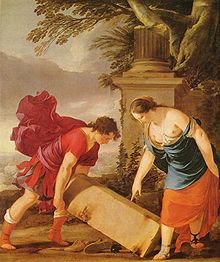
Theseus looking for immortality


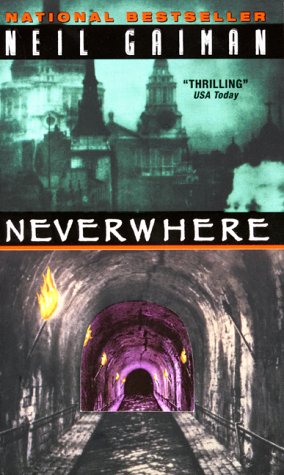
Neverwhere Angel

Neil Gaiman is popular among my students. At least among those that still read for fun. A couple of years back one of them lent me a copy of American Gods, and the story stayed with me. Having lived for many years in Wisconsin, and having visited the House on the Rock, the novel was like a kaleidoscope of some of my more pleasant memories of the state. Neverwhere is quite different and yet equally compelling. Gaiman peoples his worlds with characters just on the edge of believability thrown in with protagonists who tend to be completely confused by what they’re experiencing. Instead of gods, in Neverwhere there is an angel with the unlikely name of Islington and we have the myth of Lucifer’s fall retold in fantasy format, rolled together with Alice in Wonderland and the myth of Theseus. For starters.

A person is a composite of what s/he reads and learns and accepts. The books we digest, each in a unique recipe fitting our individual tastes, create new compounds and concepts that explore our personal realities. Neverwhere takes the reader down a rat-hole instead of a rabbit-hole, but nevertheless follows a young girl on a journey of maturity. The hero’s quest is undertaken to actualize both protagonist and idol, and along the way the beast in the labyrinth must be encountered and slain. Theseus, the flawed hero, dominates a world where even saviors have peccadilloes.

The protagonist of Neverwhere does not believe in angels, despite his encounter with one. As Gaiman puts it: “it was much easier not to believe in something when it was not actually looking directly at you and saying your name.” Belief generally involves not seeing. Once the object of belief is empirically confirmed, belief becomes knowledge. Today the belief in angels remains unabated. No empirical proof, nothing tangible confirms this belief beyond the anecdotal accounts of those who claim to have experienced them. Even the fanciful image of their androgynous good looks and unlikely wings remain untainted for all the centuries. Neverwhere raises an intelligent question about angels, but to discover what it is you’ll need to go down the rat-hole as well.


The Reality of Movies

Inception was released on DVD this week, and having a weakness for struggling with reality, I knew I had to see it again. Now, people with a far sturdier grip on life than myself have been blogging about the movie since the summer, writing posts both profound and critical. I wrote an earlier post on the movie, toying with its retelling of the Theseus myth. This time, I am wrestling with the wonderful burden of having a subconscious mind. The crux of the movie is when Cobb has to decide which world is real: Mal’s or his own. The movie, of course, refuses to divulge the answer.

With a finesse that I had previously experienced with the original Matrix movie, Inception ups the ante on what we consider reality. “Reality” is a problematic concept, a bi-product, we are told, of consciousness itself. Reality is generally viewed in exclusive terms, and most of us spend our days in what I learned to denominate “naïve realism,” the concept that what we perceive is pure, unadulterated reality. Perhaps not as Inception or The Matrix, or even eXistenZ would have us believe, scientists today tend to agree that the world is not as it seems. The quantum world has opened up levels of reality undreamt of even by Einstein whose God did not play dice. This is perhaps one of the greatest challenges to traditional religions.

Although many religions gladly point out that there is a mythical reality behind what we experience every day, there is no hard evidence to back up these assertions. This is not the same as declaring they don’t tap into that reality, it is just that we have no final arbiter as to what that reality is. Having been in the business of religion all my life, I am absolutely certain that it isn’t what any fundamentalist group declares it is. They make claims about reality that would leave Jesus scratching his halo-encircled head. Is it Cobb’s, Neo’s, or Allegra’s reality or is it Hawking’s, Witten’s, or Greene’s? I simply don’t know. I just put the disc in an press the play button.


Inception of Theseus

Never the first for new cultural memes, but often among the last, I finally took my family to see Inception over the holiday weekend. The Internet has been buzzing with comments about the movie for the last couple months, so it was difficult not to have preconceived notions of what to expect. Nevertheless, I found the film utterly engrossing. At one point I realized that I hadn’t blinked in so long that my eyes had begun to dry out. Having just finished Mark Danielewski’s House of Leaves at the end of June, and having begun my Mythology class on Friday, the Theseus myth has been on my mind anyway. Inception takes the hero’s journey through the labyrinth of the subconscious.

The first hint that Inception was the Theseus story, for me, was the introduction of Ariadne. The daughter of King Minos, Ariadne informs Theseus how to escape the labyrinth, and her first task in Inception is to draw a maze that takes a minute or longer to solve. Dom Cobb, like Theseus, is a deeply flawed hero. Part Theseus, part Daedalus, Cobb has trapped an unlikely Minotaur in the form of Mal, his wife, deep in his subconscious mind. She stalks him in his unsavory work, and when she threatens his very concept of reality, she is slain by Ariadne.

Coupled with classical mythology, the film also raises the unresolved question of the nature of reality. Is conscious existence any more real than the subconscious? This theme was explored in David Cronenberg’s eXistenZ back in 1999 with a similar ending that refuses to answer the question. Both films raise the troubling interference of technology with the most secret of human psychological repositories, the uninhibited subconscious. The closer the Internet comes to a global intelligence, the more the individual mind recoils into its own obscure and unexplored territory. Despite Freud and his disciples, we have not yet even begun to understand our own subconscious minds. Movies like Inception draw on classical sources to help us deal with the Minotaur that surely lurks there.

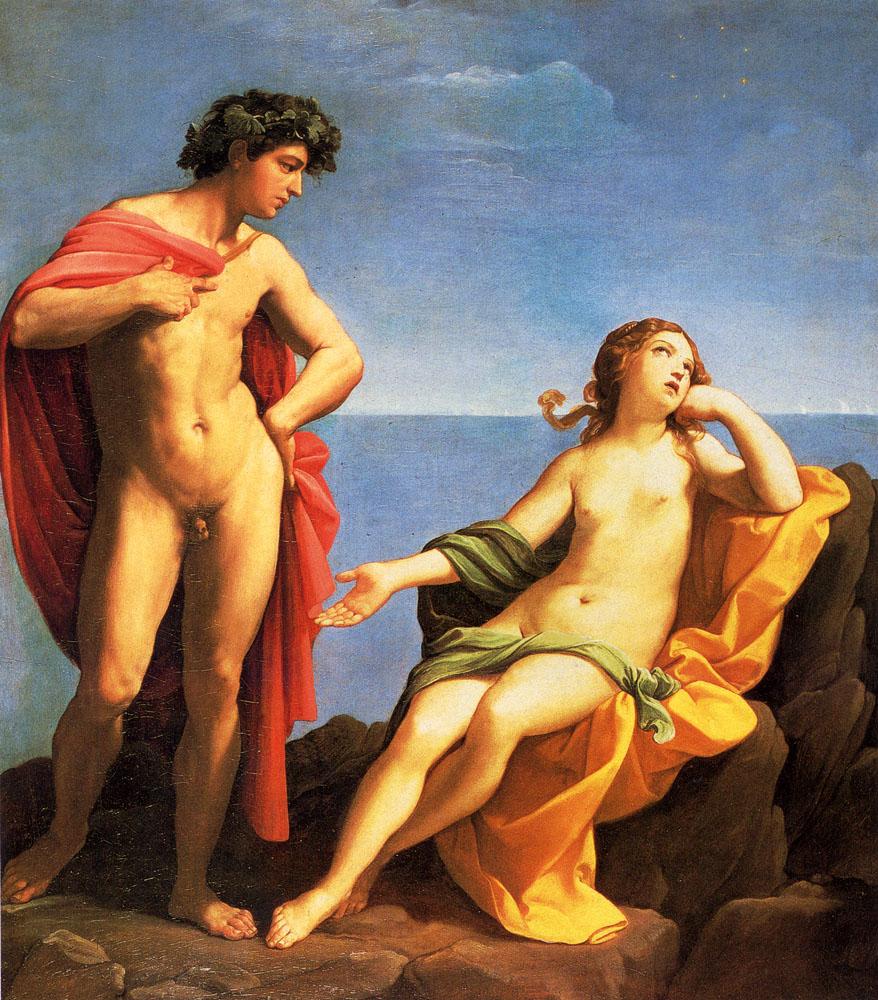
Ariadne explains her dream to Bacchus