Believing is Seeing

A story has long circulated that as Christopher Columbus approached the coast of the “New World,” Native Americans staring out at the water—straight at his ships—could not see them. This instance of perceptual blindness has been adequately explained, of all places, in the Fortean Times. The best explanation: the natives could see the ships but did not have the referential framework to know what they observed at first. The story still circulates, however, that to them the ships were invisible. An interesting analogue arose when I was reading about Thomas Edison recently. The phonograph was first developed for speaking voices, not music. It was not an immediate success. One of the observations that Edison made also applied to the telephone: when people first heard it, not knowing what it was, they could hear voices but couldn’t make out what they were saying. Once it was explained to them what was going on—a voice had been recorded and was being played back, or a person’s voice was being carried over a distance through a wire—they immediately comprehended what they heard. Not exactly perceptual blindness, but very human indeed.

When people encounter something completely unexpected, surprising, they don’t quite know what to make of it. So we see anthropological pictures showing natives replicating airplanes from grass and twigs, ascribing to these strange birds some kind of divinity. Imagine an iPad in the hands of Moses. Neuroscientists are rather new to the coterie of specialists trying to explain the origins of religion, but a gap remains between perception and science. Active areas of the brain can be traced, but what the experiencer feels remains utterly subjective. It is a realm into which science cannot go. Perception, it is supposed, is simply an evolutionary tool to find food while avoiding being eaten, oh, and also to reproduce. The experience of the perceiver is much more profound. Consciousness, a sense of selfhood, why some are poor while few grow rich, these are facets of life that add dimension to perception and make me wonder just how far down the rabbit hole it goes.

Religion is all about perception. The problem is not that no one tells us how to interpret our experiences, but rather too many interpreters are only too eager to step forward. Perception, it is said, is reality. When encountering the unknown our best road-guide is our senses. In the case of religious phenomena, that guide is supplemented by tradition. What do you see when you look out on that horizon? The answer will indicate what you believe.
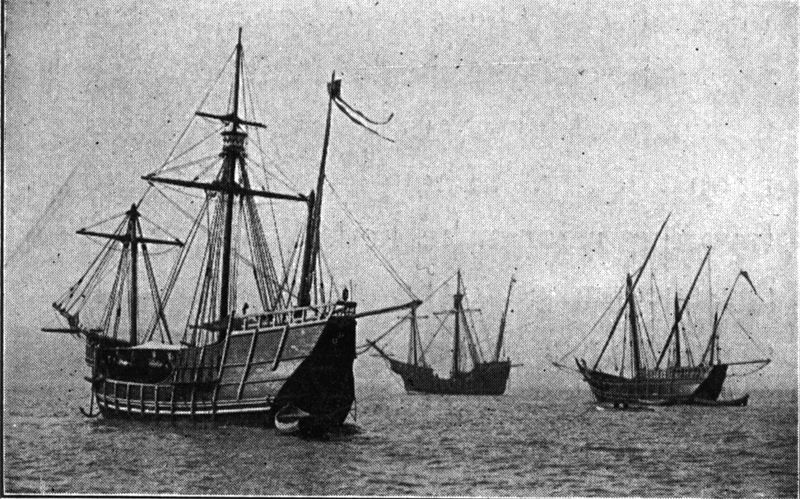
I saw three ships?
Wizards and Saints

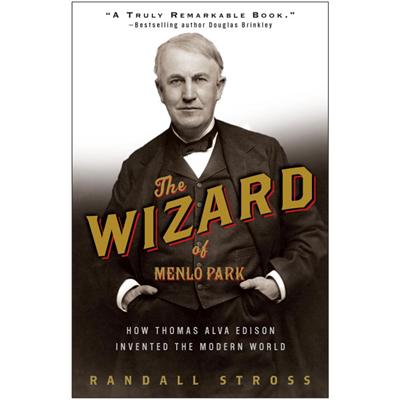
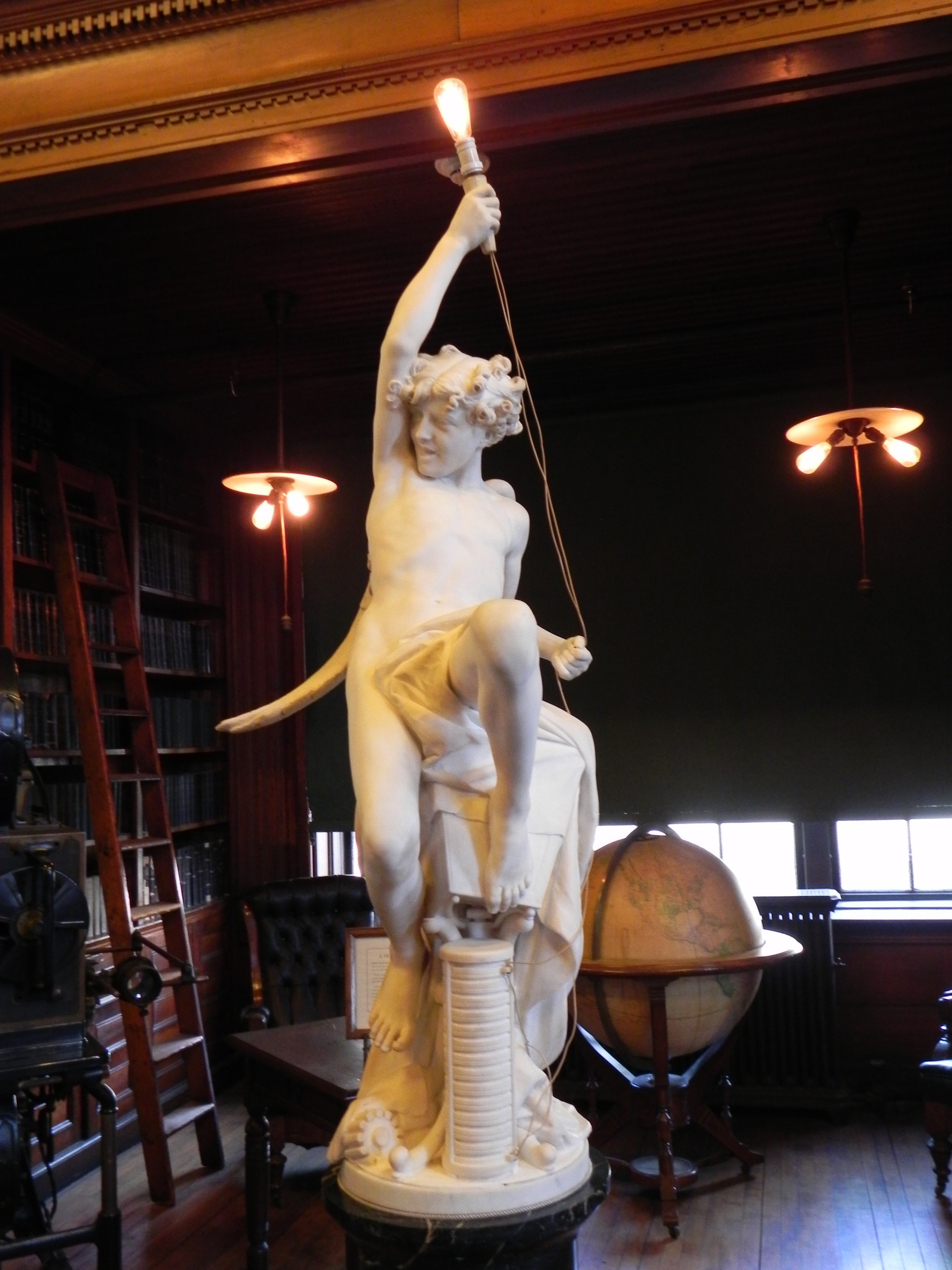
Hagiography has gone out of style. Since the Reformation we’ve come to see even our most promising lights as flawed and sullied, and no one retains the sheen of unadulterated goodness. It is the new realism. Yet somewhere in our psyches we still need our heroes—those who give us something to which we might feebly attain. A couple years back I visited Edison’s Orange labs in New Jersey—his last inventing paradise—and partook of the mythology that is Edison. Thoughts of that visit keep coming to me, so I read Randall Stross’s The Wizard of Menlo Park: How Thomas Alva Edison Invented the Modern World. Like a wonder-struck schoolboy, or Homer Simpson, I was ready to find stories of incredible creations Edison conceived. Instead Stross’s account is devoid of hagiography and presents a tarnished hero that is much more in keeping with the spirit of the twenty-first century.

Edison was known, even in the nineteenth century, for his atheistic leanings. He was one of the proponents of the human spirit of achievement, a perennial hard worker who believed we could solve our own problems. In many respects, although he didn’t foresee the practical aspects of his inventions, he was ahead of his time. As Stross points out, during his days as a telegraph operator Edison got into trouble for transcribing Jesus Christ as “J.C.,” following the standard practice of rendering time as “B.C.” (Before Christ). Others saw this as sacrilege, perhaps falling into that perpetual myth that Christ was Jesus of Nazareth’s surname. Abbreviation, no matter how sacerdotal the content, is eminently practical in telegraphy.

When entertaining Henry Stanley during his days of phonograph fame, according to Stross, Stanley asked whose voice Edison would most like to hear from history. (Keep in mind, at this time, before records, magnetic tape, and MP3s, a recorded human voice seemed to be a way of communicating with the dead.) When Edison answered “Napoleon,” Stanley expressed surprise suggesting he would’ve supposed the most important voice to be that of Jesus. Edison replied, “Well, you know, I like a hustler.” Even for Edison hagiography was dead. But he did see that the world had gone after the hustlers. Watching the political game unfold again, of which I’m already deathly sick, I hear echoes of Edison’s cynicism. Political leaders would have us believe they are in it for our best interests. Anyone who has studied history (which most politicians despise and discourage us from doing) knows that Edison was right. For all his flaws, Edison will remain a symbol of light in dark times.


Frippery or Faith?

A lesson quickly learned in New Jersey is that the state has housed its fair share of geniuses and that inspiration takes many different forms. From Albert Einstein to Thomas Edison, these thinkers have changed the complexion of not only the state and country, but also of the entire world. While on a visit to Edison’s final factory and laboratory in West Orange yesterday, his devotion to thinking could not be overlooked. With little formal education, Thomas Edison taught himself what was necessary to become one of the most prolific inventors in the history of the world. The key to what he believed to be purpose of human existence is, sadly, under fire from politicians who’d rather keep the populace in the dark while they (the politicians) make the important decisions. “The man who doesn’t make up his mind to cultivate the habit of thinking misses the greatest pleasure in life.” So Edison said. Bully governors would rather turn out the lights.

As politics and conservative Christianity become even more intimate – if that is even possible – those who do not share their views are considered dangerous outsiders. As a religion specialist, it is difficult to gauge how sincerely such politicians take their religion. As their lifestyles clearly indicate, what they practice is as far from what they preach as the east is far from the west. Manipulating sincere, if misguided, believers into marks that will propel them into seats of power, they talk the talk. “Faith, as well intentioned as it may be, must be built on facts, not fiction – faith in fiction is a damnable false hope.” So said Edison.

If we measure the religion of the Religious Right in terms of action, it clear that their principles have far less to do with what Jesus said and did than with securing personal gain. Women are placed in subordinate positions; the poor, minorities, those who work to keep the economy afloat while the wealthy suck in more than they could possibly use, these people become targets rather than neighbors. Roman emperors knew the society was dissatisfied and provided bread and circuses. The Religious Right is perfectly capable of learning the more insidious lessons of history. If they had been around in Edison’s lifetime, no doubt they would have tried to turn off the lights so that we’d all remain in the dark. In such a situation it might be wise to leave the final words to Edison: “Religion is all bunk.”

Let there be light!