Weathering the Sleep

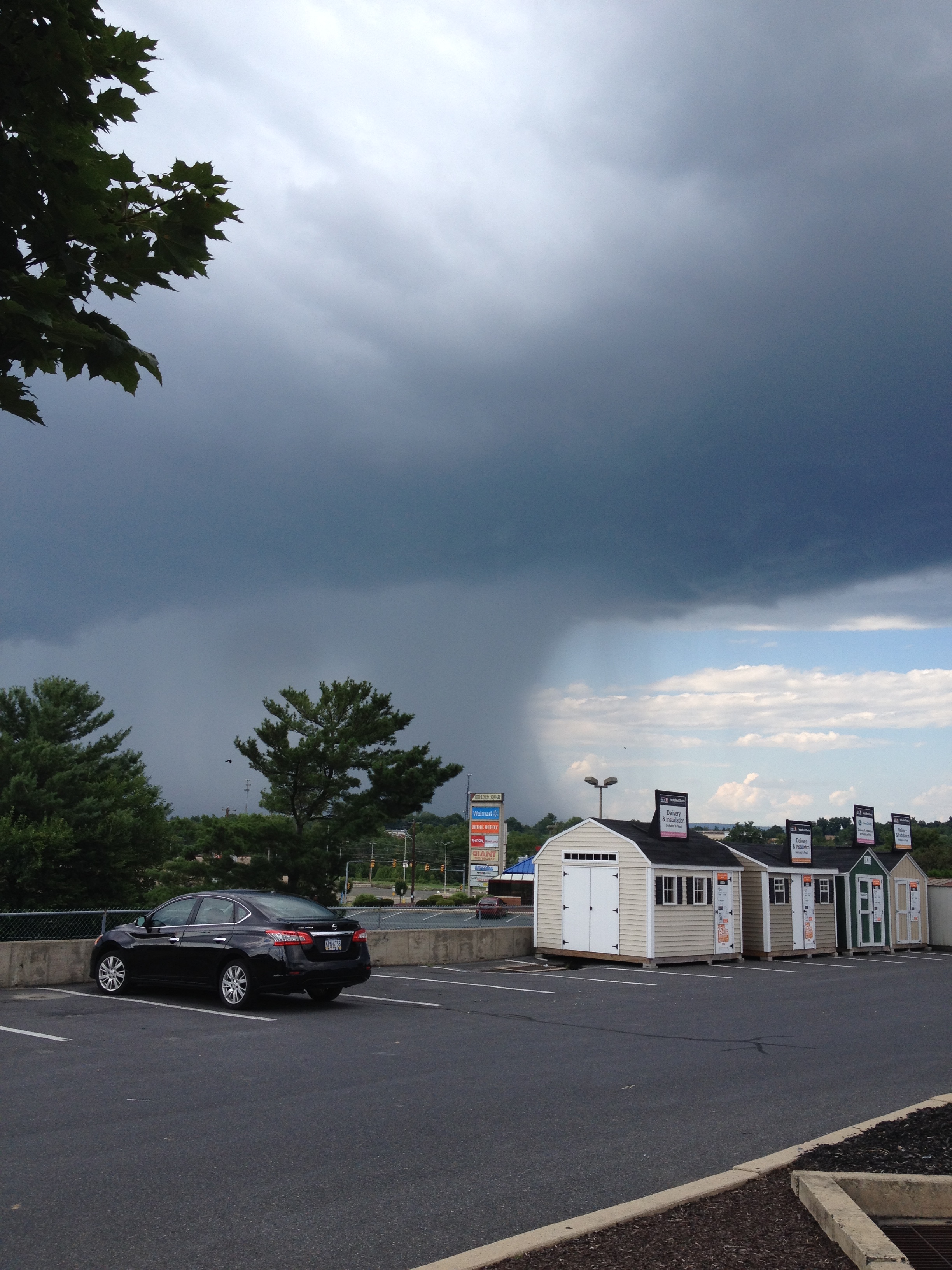
Weather still has a tremendous, if incremental, effect on life.  Patterns where a repeating weather cycle seems stuck in place are a good example.  While not exactly uncommon in summer around here, thunderstorms develop during the hot and humid days.  Our current pattern is that thunderstorms arrive in the middle of the night.  For days in a row.  We had a few days in our current series.  Some of us can’t sleep through thunderstorms, not least because we have to get up and close the windows, pulling fans out, so that the water doesn’t invade.  This means several nights of interrupted sleep and rather unforgiving work schedules the next day.  Companies don’t often take this fact of the weather into consideration.  I’m not the only one yawning all day.

Of course, other things interrupt sleep as well.  Any parent of a newborn has those perpetually baggy eyes that we’ve come to associate with trying to get an infant to sleep through the night.  Work doesn’t smile on that kindly either.  Both of these (and many others) are very real human concerns regarding slumber.  HR, on the other hand, looks at the clock with a frown.  This sort of work ethic is particularly bad in America where work is a kind of sacred obligation (unless you’re a minor, rich, or retired).  You owe that time, no matter how sleepy you are or sloppily you may work because of it.  In my case it’s the weather that’s been causing my drowsy days.  I guess I shouldn’t have given up caffeine a few years back.

Weather, although it’s treated as a “neutral” subject, affects everything.  There are deniers, but climate change is real.  It’s measured across centuries and millennia, however, and our point of view spans only the few decades of our own lifetimes.  We come again and again to the myth that this planet was created for us rather than the more factual realization that we grew organically out of it.  Our civilization is complex and grows more so all the time, requiring less and less time in nature.  Nature isn’t predisposed to be nice to us, or to any species.  It’s a matter of balance.  So it is with the weather.  This massive atmosphere above us seeks to balance itself out but we’re making it hotter than it should be.  Many suppose that God will sort it all out, if, indeed, forcing a crisis won’t compel divine intervention.  I just hope the “man upstairs” has been getting enough sleep.

Weather Vain

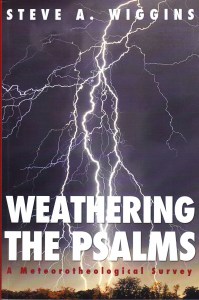
The other day I was awakened by a severe thunderstorm. It’s been quite a while since that’s happened. Unlike when we lived in the Midwest, thunderstorms in New Jersey tend to be widely scattered and somewhat uncommon. (It’s all a matter of perspective, I know.) My basis of comparison is how often I notice such storms. I’ve never been able to sleep through one. Thankfully this one came at around 4:30 a.m., past when I’m usually awake on a weekend. I’d forgotten the raw power of just how loud and bright such a storm can be. Danger seems all around. The feeling is primal and urgent. As I got out of bed and walked into the dark kitchen, windows filled with electric blue followed by and tremendous blast, I thought once again of Weathering the Psalms and the story behind it.

By the way, when I speak to young scholars about publishing I tell them this isn’t the way to go about finding a topic. That having been said, my book was born in the Midwest. Life at Nashotah House revolves around required chapel twice daily. Weather does not stop it. In fact, holding the daily office by candlelight because a storm had knocked out the power was not uncommon. Morning and evening prayer—indeed, all of the canonical offices—are built around the recitation of the Psalms. Reading the Psalter in slow, stately tones while thunder raged outside, rattling the ill-fitting stained-glass windows, left an indelible impression. It was only natural in such circumstances to notice how often the Psalms mention the weather. Thus a book was born.

I’m currently at work on a new book. I can’t say the topic just yet because someone might be able to beat me to it. (Knowing the way I come up with book ideas, however, I doubt it.) Sitting in my darkened living room, in my writing chair with the fury just outside, I was strangely inspired by the storm. Then it was over. Silence followed by birds singing, just like in Beethoven’s sixth symphony. The thunderstorm is one of nature’s psalms. As at Nashotah House, in the Midwest we had perhaps too many of that particular kind of psalm. Nevertheless, in the silence that followed I was left strongly in touch with my muse. These are the states that lead to poetry and song. Every great once in a while they might even lead to a book idea. As I tell students, just don’t expect that anyone else will get it.


Weather the Psalms

Among the academic detritus cluttering my desktop is a book I wrote while employed at Nashotah House. Not being a native Midwesterner and finding myself where severe thunderstorms are a blasé fact of life for much of the year, I was captivated by and terrified of the weather. At the same time, daily recitation of the Psalms was a major part of our required, twice daily worship. With the thunder louder than I could ever imagine it outside, we’d calmly read the Psalms, at our stately pace, confident that he who rides upon the clouds could protect us, his humble servants. After many years of recitatio continua I noticed the plenitudinous mentions of the weather in the Psalms. After a painstaking five years of reading and rereading the entire Psalter, I had translated every verse with a weather reference and had written commentary on them.

Publishers showed no interest, this despite the enormous success of Sebastian Junger’s The Perfect Storm, and Erik Larson’s Isaac’s Storm (both of which I eagerly read) and the recent release of Twister. One publisher deigned to make comments as to the great problems of my thesis, so I sat down to revise this behemoth of a book. The very day I was called into the Dean’s office and fired was the last time I looked at the material. I had been revising the book that very morning. The one sad aspect of this entire episode is that every colleague to whom I mentioned the book was excited to read it when it came out. There was a real interest, but no publisher willing to take on the project, this side of vanity publishing.

Some days I think I may go back to that dead beast of a project and try to resurrect it. My academic publishing has slowed to a tortoisene pace without full-time institution support or interest (independent scholars are not worth investing in, I have learned), especially under the weight of teaching nearly a dozen classes a year. Nevertheless, the idea seems sound to me. I keep a weather-eye on the academic horizon and I have yet to spot a book like mine anywhere within the publication catalogues. Considering the importance of storm gods in the ancient world, perhaps we’ve simply moved beyond this interest, tucked away in our interior settings. Nevertheless, when a rare thunderstorm comes to New Jersey, I still remember the majesty of the weather and a forgotten book on the Psalms.

Even the NWS recognizes Noah