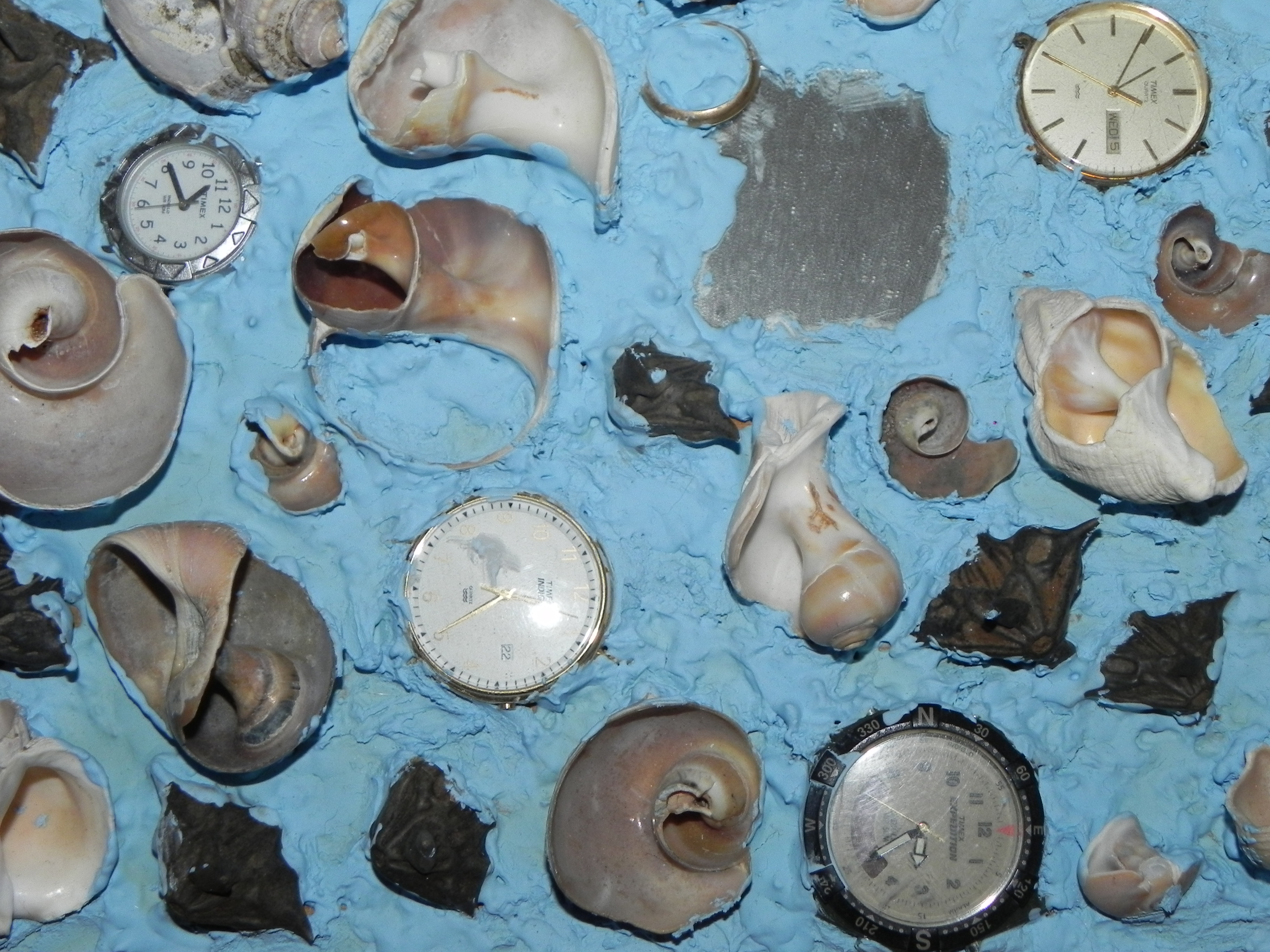
Eve of Winter

“You must live like a monk!”  These were the words of one of my bosses.  I really couldn’t deny it.  I try to lead a quiet life of reading and writing and I do try to avoid extravagances.  My contemplative life suits me.  Every now and again, however, busy stretches come and distort my perspective.  Thinking back over this autumn on the eve of December, that season has been one of those times.  So much so that I haven’t been able to watch much horror, which is one of my usual seasonal avocations.  I suppose it started when a scammer emptied out our bank account in early September.  That entire month is a blur of fear, depression, and anxiety.  Those emotions have settled down, but the trauma and financial loss have remained.  
Toward the end of the month, my daughter moved.  Thankfully not too far away, but parents often feel the need to help when their only child is not yet well established in a new area.  October grew so busy that we had no time to decorate for Halloween.  We did manage to carve some pumpkins, but the weekends—the only time anything for real life actually gets done—were all eaten up and I entered November with that crowded head space that accompanies a monk lost in the secular world.  Looking back, I finished fewer books than usual and I’ve already mentioned about the movies.  This year I was pretty sure I’d be attending the American Academy of Religion and Society of Biblical Literature annual meeting in November.  I had missed the past two years, not really mourning the loss, but preparing for the trip occupied part of October.  Halloween came and went, taking the first weekend of November with it.

In November we had guests come and the second weekend disappeared.  The next weekend I had to get into high gear for my trip to Boston.  That was when I had the flu shot that wiped out a weekend.  I awoke groggily on Monday realizing that Friday I’d be on Amtrak’s Northeast Regional.  I’d never been to Metropark before and the conference itself ate up the fourth weekend in November.  After that, we turned around and spent Thanksgiving with some longtime friends in New Jersey.  Then we learned a Pennsylvania friend had spent the holiday alone and decided to make a celebration for them yesterday.  So here I find myself on the eve of winter with a fall that somehow disappeared.  Busy spells can be refreshing, even for the monkish.  But tomorrow is back to work as usual as December sets in.


Sleeping Below

I’m not sure how I missed What Sleeps Beneath.  I suppose it’s a matter of being time-starved in a world with so many websites.  That, and I’m only now starting to get integrated into the horror community.  A comment on this blog brought What Sleeps Beneath to my awareness.  A horror review site—they feature both books and movies—it’s based in that epicenter of weird (at least in my experience) of Pittsburgh.  I lived in the city for a couple of summers and grew up between it and Erie.  And, of course, Pittsburgh is George Romero territory, the birthplace of the modern zombie.  I often reflect on it.  Growing up in a small town north of there, I was fascinated by large cities.  When I was in high school, Pittsburgh was the 16th largest city in the country, now it’s down in the 200s somewhere.  That’s what happens when a big industry packs its bags.

In any case, I haven’t been able to keep up with all the horror websites.  Again, it’s a matter of time. One reason is reasonable precaution.  I believe in vaccines.  I hate being sick in any way, and I’m of an age that I’d probably have been long dead without the many sticks I’ve had in my life.  However, time is precious and I’ve lost two weekends this year just to vaccine recovery.  Keenly aware that I no longer have all the time in the world—this dawns on you with a kind of horror fierceness as you read obituaries of friends who seemed so much better adjusted than you—the loss of a weekend is a kind of major deficit.  It’s sort of a sloppy reboot.  You enter a weekend with anticipation of how much you can get accomplished without the 9-2-5, but instead you have a day or two as groggy as your computer is when you first turn it on.

I say all this because I’d been planning to explore What Sleeps Beneath then I lost this past weekend to recovery.  Pittsburgh, like most places, has an identity to it.  And like most places that identity evolves over time.  Tomorrow I head to Boston, a city I used to know, for the American Academy of Religion and Society of Biblical Literature conference.  I’ll also be visiting, I hope, the Poe Returning to Boston statue in Edgar Allan Poe Square.  What with Boston making a belated overture to Poe and Pittsburgh embracing its zombies, maybe horror is starting to become mainstream after all.  Now I just need to get the time to explore What Sleeps Beneath.


Mighty Mouse

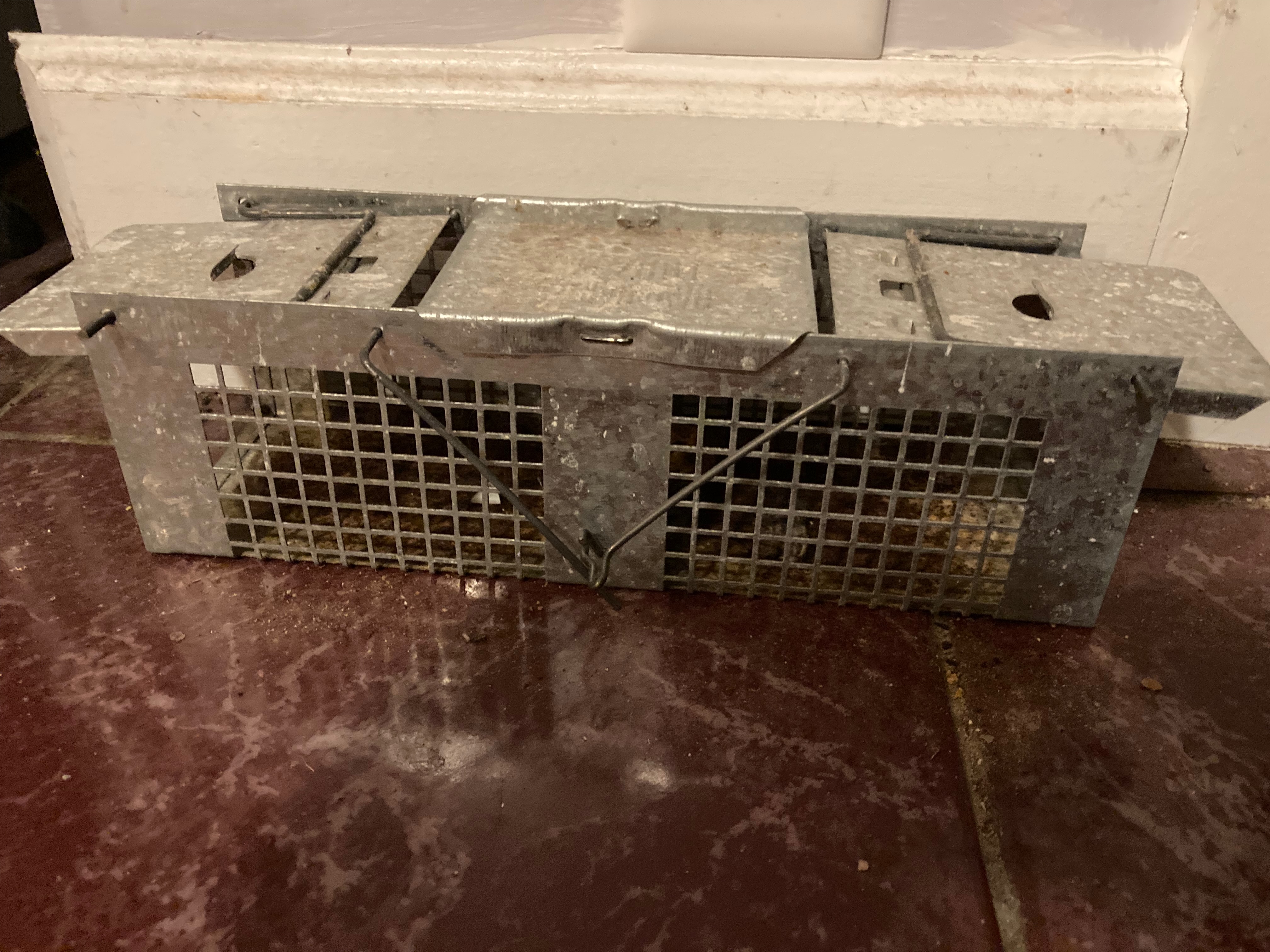
The only way I write my books is by living a regimented life.  It’s front loaded too.  Most of the work is done sometime between two and seven a.m., before starting work.  Disruptions to that time aren’t welcome, but then, many things in life aren’t.  Perhaps the most disruptive weekday event is when a mouse makes its way into the house.  We live in an old house and mice find their way into even more recent structures.  I can’t see killing them for doing what they’re evolved to do—we began using a humane trap when I found a mouse trapped by its paw back at Nashotah House.  I couldn’t stand seeing its distress, so we bought a cage trap that works pretty well.  Fortunately, we don’t get many rodentine visitors, but when we do, my crowded morning becomes even more busy.

I jog at first light and this time of year it’s straight to work after that.  I like to take our mice into the woods, far enough away that they’re not likely to find their way back.  Ideally that means driving, but since my wallet’s in the bedroom where my wife’s still asleep, during weekdays it generally means somewhere along the jogging path.  The trap is probably on the scale of a room at the Ritz for a mouse, and I don’t want to be scolded if I choose to release them in the wrong place.  I put the trap into a bag, for privacy.  Now, I normally jog to the trail but the trap rattles and I can’t imagine how horror movie this must be for a mouse.  Besides, running down the street with a bag in your hand in the dark isn’t at all suspicious.  Why not just paint a dollar sign on the outside of it and be done with it?

 I try to make sure the release spot is across a big road or a river.  There are places like that on the jogging trail.  But then, with the mouse safely released, I have to find an inconspicuous place to leave the trap in the bag so that early-morning garbage collectors don’t take it.  Jogging with a rattling trap is just a bit too strange for even me.  Although I’m an early jogger, I’m seldom the only one on the trail just as it’s light enough to see.  All of this adds up to considerable time carved out of my usual writing period.  And all because of a mouse.  The small can be significant.  Maybe I should write a book about it. 


Unwritten

It has been clear to me for some time now that I won’t live long enough to finish all the books I’m writing in my head.  A good number of them have a head start on my hard disc, but as Morpheus says, “Time is always against us.”  The largest culprit in the 9-2-5 job.  Eight hours is a huge amount of time to devote each day, no matter how you slice it.  Since eight hours are required for sleep, or trying to sleep, that means work is half of each day’s waking hours.  The other half includes things like making meals, washing clothes, family time, paying bills, running the vacuum, exercising because you sit in front of a screen all day, and, of course, yard work.  Plants don’t have the same constraints that humans do and can get to the business of growing larger 24/7, as long as the weather cooperates.

Some days I grow reflective about this.  My daughter often asks why I don’t draw or paint more.  I love doing both.  The answer is time.  Even weekends are eaten up with shopping for the food you need to get through the week, and yes, the yard was bigger than I realized, and the house needed more repair work than anticipated.  You see, writing well requires a lot of practice.  And even more reading.  Any successful writer (which I am not yet) will tell you that reading is essential.  I do read a lot.  A friend recently sent me an article about a writer whose heirs calculated he’d read at least 4,000 books.  I know that I’ve read about 1,200 since 2013.  I also know that I can’t count them all before that time.  I went through our living room shelves and counted 500 I’d read there, and that’s only one room.  

Ironically, as a professor reading time is limited.  Unless you have a research only post.  I read a lot as a kid and a ton as a student.  When I started teaching I had less time, except on semester breaks and I tried to read as many books as possible during those interludes.  Then the 9-2-5 began.  My current pace of reading began when trying to live as an adjunct between Rutgers and Montclair State.  Montclair was a 70-mile drive, so between classes I started reading voraciously.  Ironically, the commute to my 9-2-5 spurred me to start writing books again.  By then I was practically fifty.  Since my nonfiction books take about five years to write, well, the math’s not in my favor.  Time to stop my musing, because the 9-2-5 begins shortly.


Horror Time

In case anyone’s wondering (ha!), I haven’t lost interest in horror.  I’ve been discussing quite a few dark academia movies lately since that’s where I seem to be, but what’s really lost is time.  I’m no great consumer of social media.  I spend literally five minutes on Facebook daily.  Less than that on Bluesky and Twitter.  I don’t have time.  I love watching movies, but they take time.  I often discuss this with family—I’m not sure where the time goes.  In my case it’s not social media.  Much of it—the lion’s share—is work.  When a three-day weekend starts to feel like just enough time to get everything done before starting it all over again, I think there’s an elephant in the room.  If I can just squeeze past your trunk (pardon me) I would note that I spend as much time as I can writing and reading, but even that drains too quickly.

I read a lot.  And I read about writing.  Those who do it best have time to put into their craft.  If they’re working long hours, have a family, and weeds that love all the rain we get around here, they’re better than I am.  Home ownership (if you can’t afford to hire groundskeepers) is itself a full-time occupation.  As is writing.  And, of course, work.  What’s been suffering lately has been my time for watching horror.  Part of that’s money too.  I’m not sure if anybody else has noticed, but prices haven’t exactly gone down since January, and movies aren’t always free.  I have a long list of horror films I want to see (quite a long list), but tide, time, and money wait for no-one.  I even had a four-day weekend not long ago during which I had no time to watch horror.  Horrific, isn’t it?

I’m at a stage of life where the shortness of it all stares me in the face.  I was a late bloomer and my career never really took off.  It ended up taking time and not rewarding that time at the usual exchange rate.  I’m watching friends and family retire and some finding too much time on their hands.  Hey, brother, can you spare an hour?  I think of my farming ancestors where every minute was filled trying to stay alive in a world where leisure time really is a luxury.  I have no right to complain, but I do wonder where the time goes.  I suppose if I didn’t blog I’d have a little more time for horror, but I just can’t face giving up all this fame.


More Time

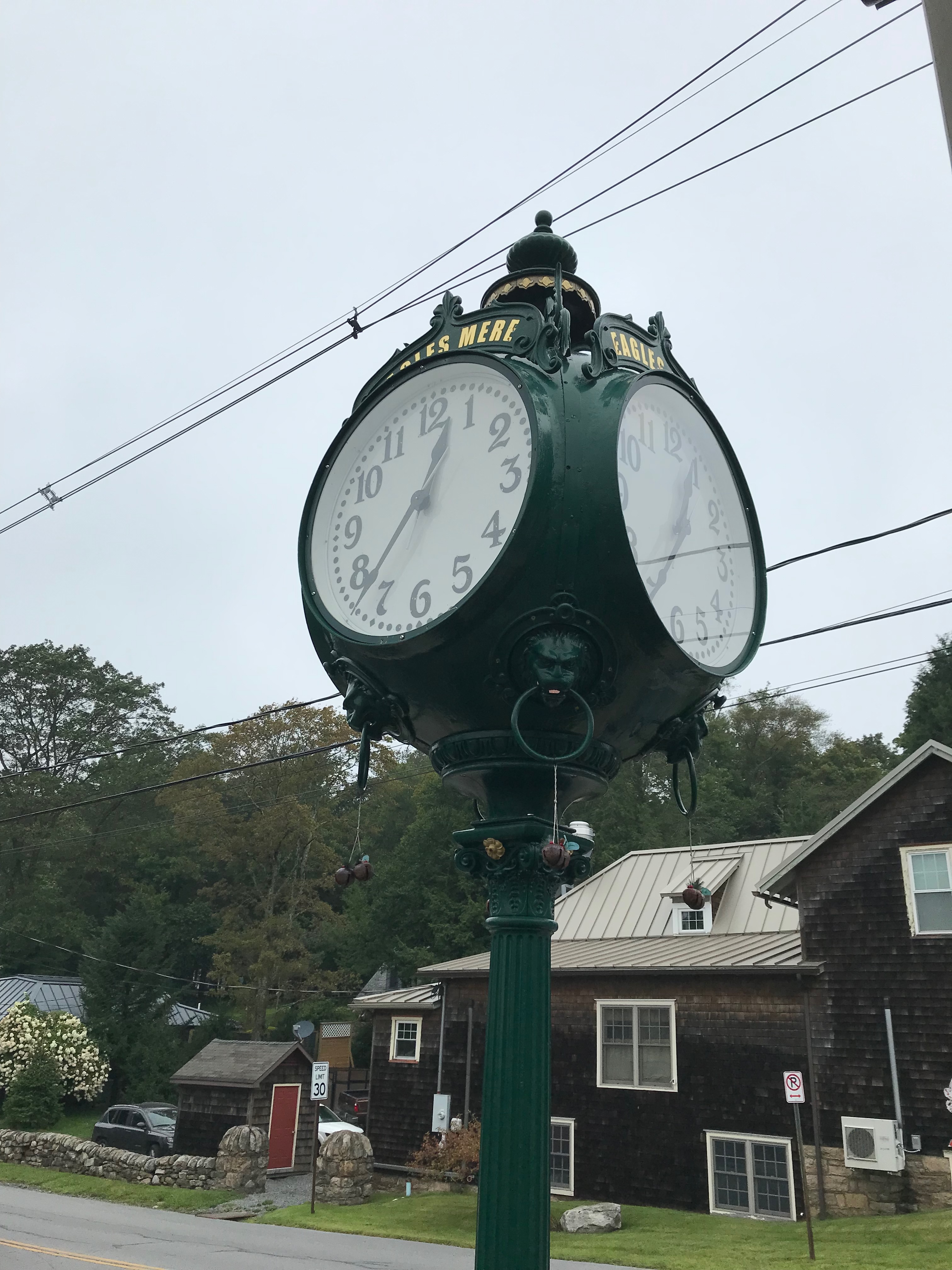
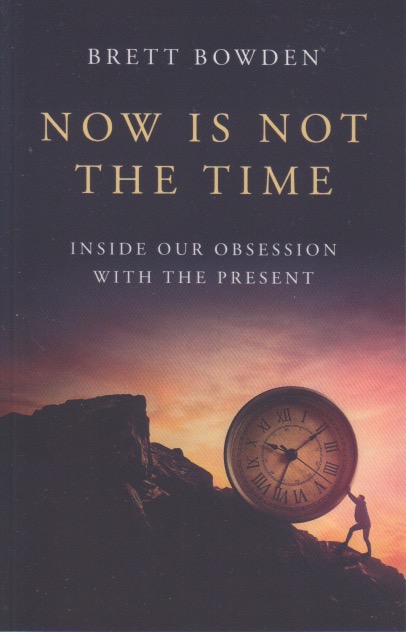
Speaking of time… Time is one of those things that flummoxes me.  A time change, crossing time zones, trying to figure things out on a base-6 system (metric time anyone?).  Confusing.  One thing about time is that we live in it, and so reflecting on it seems a reasonable thing to do.  Brett Bowden does just that in Now Is Not the Time: Inside Our Obsession with the Present.  As an historian, Bowden is experienced at looking back and this brief book is a reflection on why we’re so fixated on now being the most important time ever.  Given recent events, his seems to be a comforting message when looking at the long term of human history, and even longer term of our humble planet’s history.  The present is a blip and the future, at least as far as we know, hasn’t been decided yet.

One of the topics Bowden addresses here is the human propensity to claim and name.  We like to name things and when we do, it implies ownership.  Who but an owner gets to decide on a name?  This leads him to reflect on Eurocentrism, as in the naming of objects, such as Mount Everest, that are very far away and in somebody else’s territory.  We name craters on the moon (which we can’t really just pop over to) and even stars and galaxies.  We’re terribly acquisitive rascals, aren’t we?  We do the same with time—dividing it into eras.  Bowden’s discussion of the Anthropocene debate is quite interesting.  It seems we need a name for the time when people really began changing the planet on a global scale, but geological time ought to hush us up, if we stop and think about it.

As Bowden notes, psychologists and life coaches often encourage us to be in the present.  I think what they mean is that we shouldn’t worry unduly about the future.  That’s good advice.   Something Brett reminded me of is that some cultures, such as those of the Bible writers, view people as moving into the future backward.  It’s like riding on a train facing away from the direction of motion.  We can see the past and we can interpret it.  The future, however, we can’t perceive quite so clearly.  As someone who has studied the history of religions, I tend to agree that looking back is often a source of comfort.  It’s also a source of horror—many bad things have happened, many of them intentionally orchestrated by our species.  But it does serve to ground us in the now.  Even if it’s no more important than what went before or than whatever it may be that will come.


Too Much TMI

Okay, okay.  I admit I get overwhelmed.  There’s just too much stuff to read.  I currently have 25 tabs open on my browser, afraid that I’ll forget about something that seemed so urgent when I opened the URL in the first place.  (Two decades ago that sentence would’ve been nonsense.)  I limit my time on social media.  This can be a death-kiss for a writer, but for sanity’s sake (and work’s), I look at Facebook for literally about five minutes a day.  (If you want to reach me leave a comment on my blog.)  In those five minutes (or less) I often come away with two or three articles that I want to read but don’t have time just now.  I open a tab and hope I’ll get to it before I lose interest.  There’s a lot of information.  Too much.  Too much TMI.

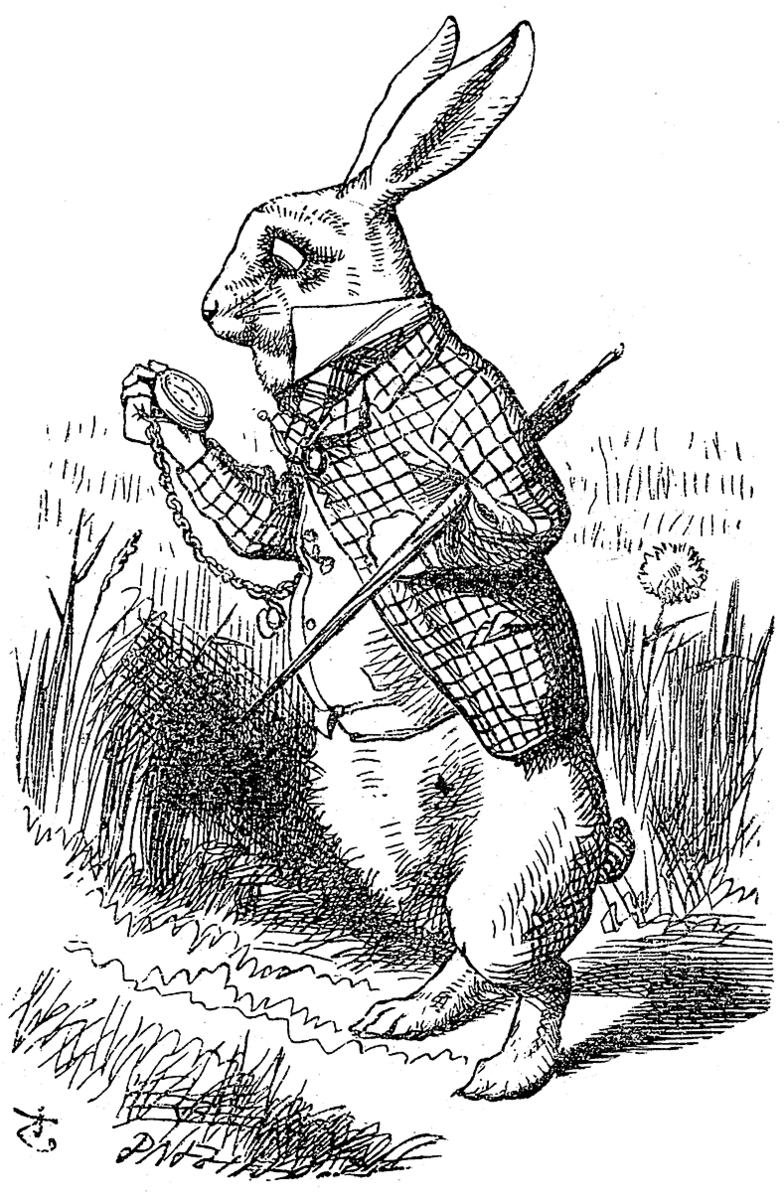
I’m a slow reader.  I sometimes wonder if I have borderline dyslexia—it once happened on a test and led me to phone a professor at night to explain—but dear reader, it slows me down.  And a writer, no matter how obscure, needs time.  I told a friend the other day that I don’t do things I enjoy, such as painting and drawing, because writing takes up so much time.  (And work does too—it gets the lion’s share.)  But those articles!  They look so important!  Some have health implications and, if you lose your health you have even less time.  The internet gives us TMI constantly.  And this field is riddled with rabbit holes.  Just ask the white rabbit about time.

Image credit: John Tenniel, public domain, via Wikimedia Commons

What are the curious to do?  I actually get an insane amount of satisfaction from closing a browser tab.  It’s a sense of accomplishment—I’ve done something that brings closure!  If I do it enough times I’ll get down to the URLs I always keep open lest I forget my place.  Some of these tabs have been open since the Obama administration.  If you’re critical of such as I you might suggest “why don’t you just read an article instead of writing about not having the time to read?”  The interlocutor here is clearly not a writer.  Or at least has different writing habits than me.  There are some non-negotiables in this world of TMI.  I suppose I’m adding to the problem.  At least if anything thinks what I present here is information.  For that I defer to Klima, who, happily, still has some time.


Time Flees

I can’t speak for all early risers, of course, but for me the absolute worst thing about this useless tradition of switching to Daylight Saving Time is the loss of morning light.  I’m in favor of keeping DST all the time, as the US Senate has voted to do.  The only reason this is still an issue is to give the House yet something else to fight about.  How dysfunctional are we, really?  This one’s a no brainer!  Look, I start work early every day.  I jog before work because I’m too tired afterward.  In late February to early March I can get out and back before seven.  (In the summer before six!)  Then DST happens.  I’m plunged into another month of waiting until seven to be able to jog.  DST is just one of those ridiculous things we just keep doing because we don’t have the will to change it.  We’d rather fight.

I’ve been thinking a lot about time lately.  How we think of it, how we divide it.  We sometimes lose sight of the larger picture.  If relativity is right, the stars we see at night are, many of them, long gone.  We’re seeing light trudging through the near vacuum of space, or maybe dark matter, and thinking how we’ve got to get to our meeting on time.  How we need to be at work from 9-2-5.  How somebody with money owns that portion of our time.  There’s a reason that DST starts on a weekend.  Time.  We can’t grasp it but we can waste it.  What are we waiting for?  Some of us are seeking the truth.  Even so we know that Morpheus was right—time is always against us.  It’s a limited commodity, but even that language cheapens it.

Those of us of a philosophical bent allow ourselves time to ponder such things.  We call time a dimension, but what does that really mean?  Theoretically it can be traveled along in either direction (again, pending relativity) but we only experience it in one.  So what do we do?  We interrupt its flow because during a war during the last century it was deemed that industry could be more productive if it were light an hour later.  Maybe we should just all agree to shift our perception of time ahead by an hour permanently.  That’s forward thinking.  And who knows, it might just save us all a lot of time.


Boo-Boo

After an unfortunate encounter with a paper-cutter in which one of my thumbs didn’t fare so well, I sought a bandage.  This led me on a reverie since the bandage I found was in a box that I’d brought home from my mother’s apartment.  Mom was a practical woman and I’m sure she would’ve approved, although the item was selected in a moment of grief that still hasn’t completely dissipated.  As my wife was binding my wound the thought recurred that my mother wouldn’t be needing these physical assuagements any longer.  Like all of us, if cut she bled.  She’s beyond that now.  A person’s affects linger and contain pieces of their memories.  This particular box was plastic and therefore reusable—which is precisely what Mom did.  She taught me how to bandage myself and I’ve used that knowledge many times over the decades.  It’s something I don’t need YouTube to figure out.  Time is a gift.

When writing about recent times, I recently learned new vocabulary regarding decades.  For example, the first two decades when I was culturally aware were the seventies and eighties.  Together they’re known as the xennial period, named, presumably, after “generation X.”  (I’m a very late boomer, as well as a late bloomer.)  I found that fascinating.  Then I was reading something that made reference to the “noughties.”  This delightful word is the British term for “aughts” or “aughties”—the years between ’00 and ’09 of any given century.  We hear plenty about the “twenties,” “thirties,” and so on, so I became curious about the correct term for the second decade of a century.  Either “tens” or “teens” is acceptable, but it seems that in formal writing this should be transcribed by numbers. I guess teen ages are always difficult.

Our divisions of time demonstrate our preoccupation with both mortality and round numbers.  More and more people are living the entire way through a century, from aughties through nineties.  For most of us, however, we can, if things go well, use our birth decade as a rough guide.  I’m not likely to make it through the fifties, but it isn’t impossible.  If I do I guess I’ll need to upgrade my WordPress account because my daily posts will have used up my allotted memory by then.  In the meantime, I do need to buy some new bandages for the time in between.  When I do I’ll put them in a simple plastic box, and I will remember the gift of time I shared with my mother.


I P.M. therefore I A.M.

While I seldom have occasion to count beyond ten, I sometimes think the 24-hour clock would be a better option.  Since we have to face another major time malfunction (AKA switch to Daylight Saving Time) this coming weekend, I’m thinking about time.  That, and I recently had someone ask me to set up a noon Zoom meeting.  A nooner Zoomer is fine with me, but each time I have to ask is it “a.m.” or “p.m.”?  Parsimonious websites rather snarkily (but correctly) say that it’s neither.  It’s that liminal changeover between ante-meridian and post-meridian.  It, along with midnight, stands outside the a.m. and p.m. system.  Thankfully I don’t have many meetings at midnight, but still, a 24-hour clock, such as military folk like to use, makes sense.  A meeting at 12:00 would always be noon, and 24:00 would always be midnight.

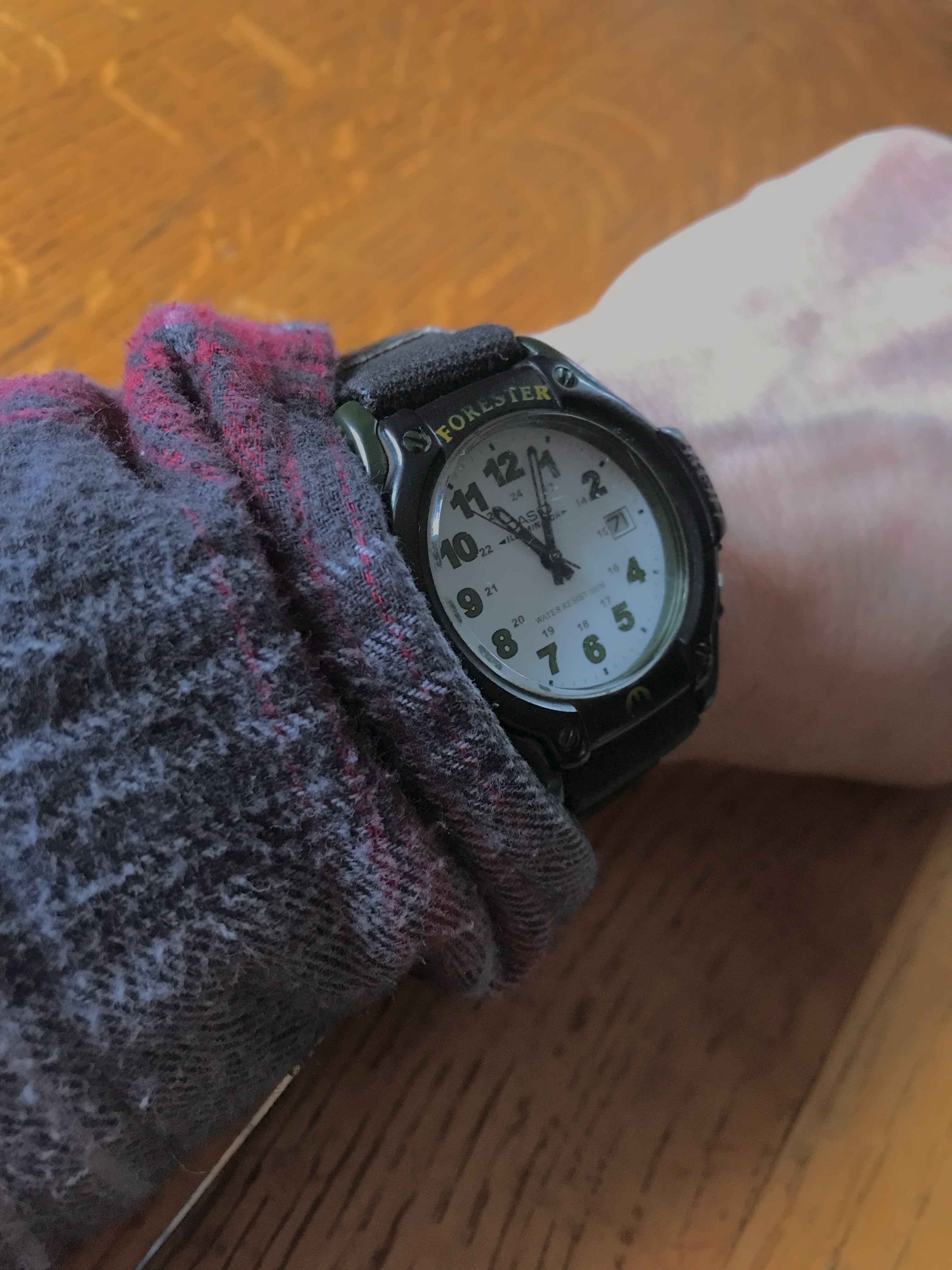
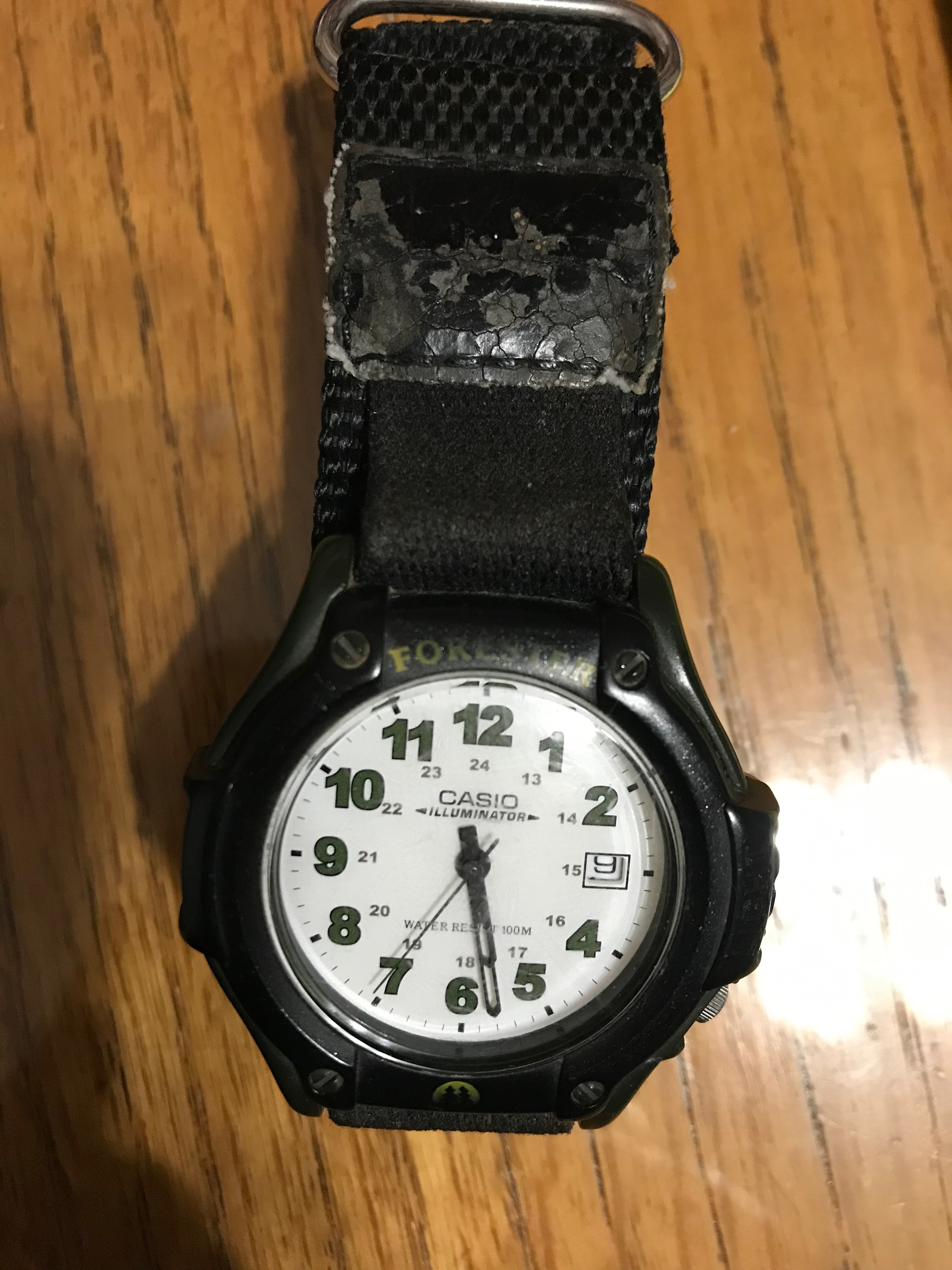
I tend to wake up around 3:00 a.m.  I admit that it’s convenient to mark 3:00 p.m. as the 12-hour awake point in my day.  I could easily adjust to do the same at 15:00.  In fact, my watch—yes, I still use one—has the 24-hour timescale in smaller print just inside the more legible 12-hour one.  I’m sure that we can all count to 24.  Wouldn’t it make sense, in the service of ending confusion about a.m./p.m.?  (Not to mention having to type in all those periods!)  The way we divide time is arbitrary.  The reason that we settled on twelve actually hearkens back to the official title of this blog, namely the ancient world.  The ancient Mesopotamians had a base-6 counting system, unlike our base-10.  When time came to be divided into hours, it was done on a base-6 system, giving us 12 hours of light and 12 hours of night.

Such ancient ideas as these are very difficult to change.  We can’t even seem to agree that if Daylight Saving Time is such a good idea, why don’t we keep it all year round?  I suspect most of us adjust to gradual change more easily than that sudden loss of an hour of sleep.  Even the added hour in the fall doesn’t make up for it.  If we can’t change something that’s obviously that flawed, how can we hope to agree that having 13 to 24 added to our clocks would be better?  Or maybe just round things down to 20, for our base-10 system?  Yes, hours would be longer but maybe we could negotiate fewer of them for work.  But I’m just dreaming here.  And it’s not even p.m. yet.


The Eve before Christmas

Even as we sit here on Christmas Eve, the work week finally over, my thoughts go to those who celebrate different holidays.  Or none at all.  Cultural Christians may find it difficult to believe that some sects—thinking themselves strictly biblical—observe no holidays.  Not even birthdays, some of them.  You may be doubting the accuracy of that statement, but my second college roommate was one of them.  He believed any holiday was idolatrous, and celebrating birthdays self aggrandizing.  Perhaps it’s not surprising that he can’t be found online.  Many of us, some without reflecting much on it, have been preparing for tomorrow for many weeks.  The older I get, for me it’s really the time off work I treasure.  It’s so rare, and more precious than gold, frankincense, and myrrh.

Like many people, I associate Christmas with music.  One of the songs—not really a Christmas carol—that has become seasonal by its inclusion on Pentatonix’s album That’s Christmas to Me, is “White Winter Hymnal.”  The song is a cover of a haunting song by Fleet Foxes, a folk band, who included it on their debut album, the eponymous Fleet Foxes.  If you’re not familiar with it you can find it here, along with the official video.  The claymation short portrays a group of old men outdoors watching time pass.  One of them begins to crank a drive that makes them younger as time reverses.  When he reaches that point (please forgive the sexist language) “when a man becomes a boy once again” (from another winter song), he releases the handle and the men rapidly reach the age they were when the song began.  Time is the greatest gift.

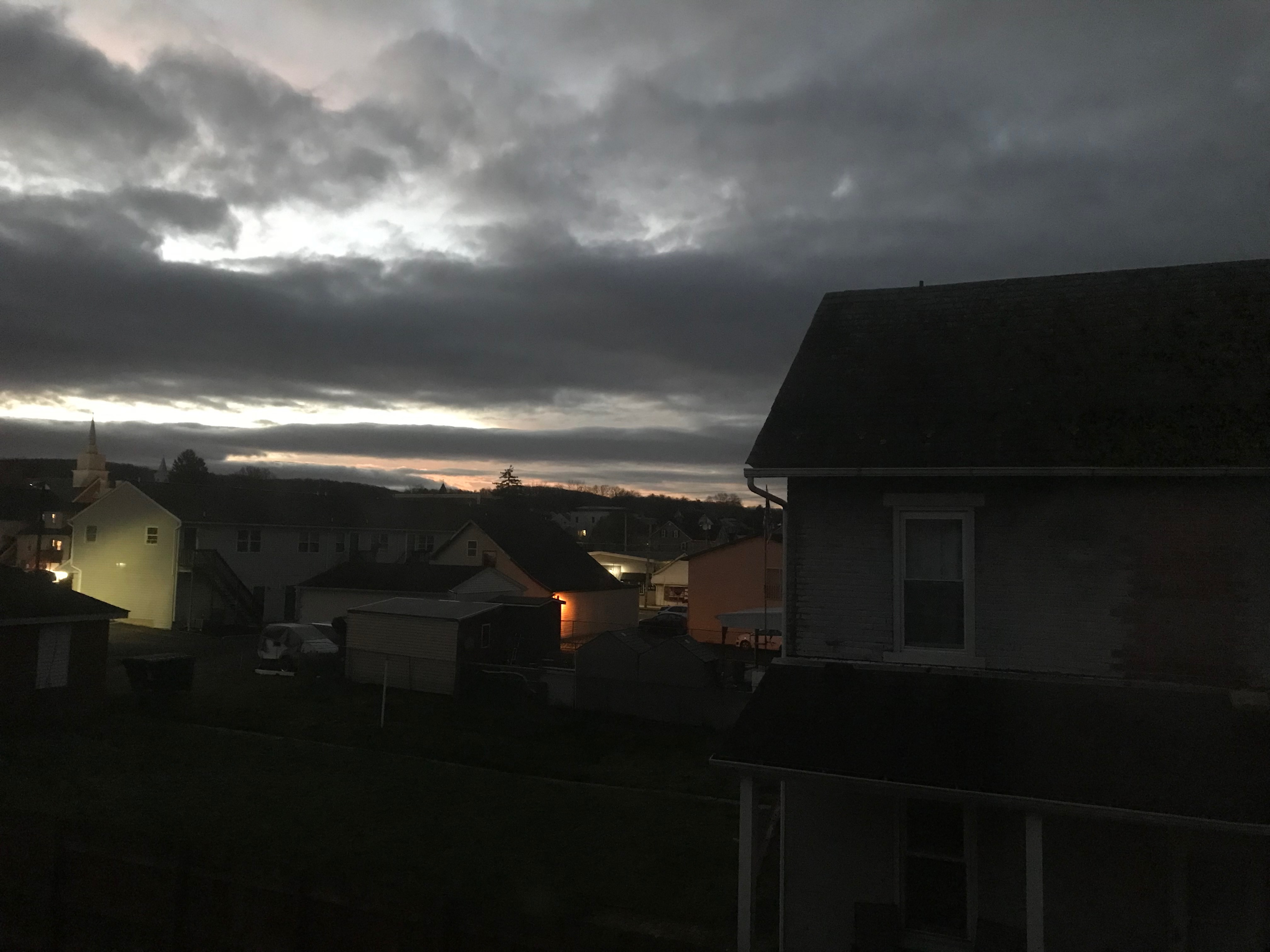
As the decades press on, their weight increases.  Dreams of what, as a young man, I hoped to accomplish slip away facing the grinding reality of capitalism.  The need to have money to spend for Christmas presents.  And food and shelter.  But mostly books.  Writing takes time.  Writing well takes a tremendous amount of time.  Time for reading, reflecting, and even listening to music.  Christmas Eve is all about waiting.  We hope for a quiet, if cold, tomorrow when maybe the phone and email will cease to solicit money and time, if only for a day.  I have to remind myself that not everyone recognizes Christmas.  For some it’s simply the season to make money.  I, weak as I am, cannot imagine life without it.  And so I watch the skies, eagerly straining my eyes for the light.


Dedication

Formulas are convenient, even if they don’t always work.  I’m thinking specifically of areas I know, such as writing.  And I compare this against the advice of those who do it for a living.  How do you know you’ve made it (and it has nothing to do with not being paid for it, although I suspect that’s in the back of everyone’s mind)?  One formula I’ve heard is the hundred-thousand-word rule.  Write a hundred-thousand words then throw them away.  After that you’re a writer.  I passed that particular benchmark decades ago, but it hasn’t really led to any income (so it comes to money again).  Then there’s Malcolm Gladwell’s more stringent hundred-thousand-hour rule.  To be an expert, you need to do the activity (say writing) for a hundred-thousand hours.  

Let’s try to break that down because big numbers can be scary.  Presuming it’s not your job—remember this point—those hours, if you can spend an hour a day on what you really love—translate to twenty-seven years.  You’ve got to add a decade or so for childhood, I suspect, when, in my case, you were simply doing stupid things and being amazed you’d survived them.  There’s a certain amount of maturity required.  So, let’s say you started writing when you were ten.  If you did it an hour a day without fail by the time you’re thirty-seven you should be an expert.  But are you?  What if circumstances dictate that you can’t dedicate a full hour a day?  One of the most influential teachers in my life said that it was a matter of constancy, not duration.  “Write every day,” was his advice, “even if it’s just for fifteen minutes.”  According to the Gladwell formula, that’d take over a century to become an expert.  But it’s more doable.

Life is busy.  Remember work?  It will end up eating up far more than forty hours every week.  And if you’ve decided you’d like to read once in a while—other writers suggest that the key to success in writing is reading—that too will cut into your time.  If you belong to any community organizations, because people like to see other people once in a while, or if you have a family, and if you like to eat and sleep, time soon gets fractured.  What all these formulas have in common is the idea of dedication.  If you want to be an expert, do what you love and do it as much as you can.  Yes, there will be obstacles.  And you might not be able to tell when you’ve arrived.  But at least you’ve enjoyed the time you spent getting there.


Fragmented

The existentialists, remember, used to put scenes in their plays to remind you that you were indeed watching a play.  In keeping with their philosophy, there was no reason to fool yourself.  Meanwhile, movies seldom break the fourth wall, immersing you in a story that, if done right, will keep your eyes firmly on the screen.  With home based media, however, we’ve all become existentialists.  (Of course, some of us had made that move before the internet even began.)  When we watch movies we always have that “pause” button nearby in case an important call, text, or tweet comes through.  We can always rejoin it later.  Life has become so fractured, so busy, that an unbroken two hours is a rarity.  I see the time-stamps on my boss’s emails.

While the existentialist side of me wants to nod approvingly, another part of me says we’ve lost something.  What does it mean to immerse ourselves into a story?  I know that when I put a book down it feels like unraveling threads at the site of a fresh tear in the fabric of consciousness.  Even the short story often has to be finished in pieces.  Poe, who knew much, wrote that short stories should be read in a single sitting.  All of mine have bookmarks tucked into them.  For a fiction-writer-wannabe like me, you need to feed the furnace.  To write short stories, you have to read short stories.  Novels must be spread over several weeks.  Some can take months.  I would like long novels again if time weren’t so short.  Presses are even encouraging authors to write short books.  Readers want things in snippets.

Perhaps all this fragmentation is why I enjoy jigsaw puzzles so much.  Part of the thrill is remembering several places in the picture simultaneously.  Being able to pick up where you left off.  I limit my puzzle work to the period of the holidays when I can take more than one day off work in a row and the lawn doesn’t require attention and those trees that you just can’t seem to get rid of don’t require monitoring.  But puzzles are designed for interruption.  Movies and short stories are intended to engage you for a limited, unbroken period.  The real problem is that we’ve allowed our time to become so fragmented.  A creative life will always leave several things undone by its very nature.  Other forces, mostly economic, will demand more and more time.  The best response, it seems to me, is to be existentialist about it.

Photo by Hans-Peter Gauster on Unsplash

Short-Changed

Time often feels short.  When we back it up against the pencil marks on the doorpost we find it seems to shrink with its own passing.  It is nevertheless relentless.  This shows especially with daily tasks, such as the posts on this blog, which leave enormous piles of writing behind.  I used to print every entry I wrote but I had to stop because there were too many.  There are now well over 4,500 of them and yet time keeps going and each day demands its sacrifice.  It’s that way with other daily tasks too.  It’s staggering, for example, to think of just how much food you eat in a lifetime.  It makes sense of why we struggle against that middle-age bulge.  Little bits add up.  I suspect that’s why the news can feel overwhelming at times.  It just keeps piling on.

If I’d chosen to study journalism—I really didn’t know what it was, despite being co-editor of my high school newspaper—I might’ve reached the point of being paid for my writing by now.  Even with my published fiction stories (and two of my nonfiction books) no money has ever changed hands.  I know from editorial board meetings that journalists expect pay for what many of us give away for free.  Writing is funny that way.  The best way to improve is to practice, and so I spend time each day writing blog posts, as well as content for books and articles and fiction stories.  As I said, there’s quite a pile.

Time is relentless.  It’s also in short supply.  The marking of each passing day with writing is a reminder of just how quickly the sand slips through the glass.  Other tasks go neglected for writers, which is, I expect, why we appreciate being paid for our work.  But just imagine if we were paid for reading.  What if every book read brought in say, in today’s economy, $1,000.  Would we be a more literate society then, valuing the work of writing?  For nonfiction editorial boards note the difference between professors, who are paid to do other things (and paid pretty well, considering), and journalists who live by the pen.  I have another job, helping other writers get published.  I suppose that means I have less time to do my own writing.  Time and writing are engaged in a complex dance which, when viewed from a distance, may look beautiful.  And when the dance is done you’ll find another piece of paper to add to the pile, regardless of whether it has monetary value or not.


925

Sometimes you just know.  One of the things I know is that nine-to-five schedules are killers.  Literally.  I grew my permanent teeth as a teacher.  Before that I had been set on being a minister.  Something they have in common is that neither profession relies on a nine-to-five schedule.  The hours are much longer than a forty-hour work week, but they’re flexible.  If you’re not in class, or in church, or a committee meeting, or your office hours, you can dash out to the store if you need to.  You can shut your eyes for a few minutes if you didn’t sleep well the night before.  As long as you get your work done adequately, nobody really bothers you about your time.  My initiation into the nine-to-five, in my mid-forties, was a shock from which I’ve never quite recovered.

A few years into this unnatural territory, my nine-to-five (925 is quicker to type) evolved into the commuting variety.  I didn’t live terribly near New York City, so that meant catching a very early bus.  I’m a morning person, so that’s not really a concern.  The problem is that my brain’s not a 925 brain.  Like one of my professors, I still awake at 1:30 (having gone to bed about five hours before) with an idea that won’t let me go.  When that happens you have to put on heavy layers of clothes against the night’s low thermostat and make your way downstairs to the computer.  By three a.m. your body’s in the fully awake commute mode.  Thing is, you’ve got a 925 day in front of you.  When I was teaching I’d be able to snooze again before even my eight o’clock class (I was never one to object to the early shift) began.

The idea behind the 925 is an atavistic throwback to pre-internet days.  Pre-pandemic days.  Days when you had to be watched to ensure you were working.  When you had to sit in a cubicle where nobody and everybody can see you.  If you’re not staring at your screen or not in a meeting you’re not working.  So this antiquated thinking goes.  Teachers and ministers don’t hold to regular hours.  They identify with their jobs—the very definition of “professional.”  If it’s what you’re born to do you don’t complain.  And if you happen to awake at 1:30 with an idea that just has to be expressed, those who pay you will understand if you yawn a time or two the next day when, ideally, you won’t be stuck staring at a screen.