Haunting History

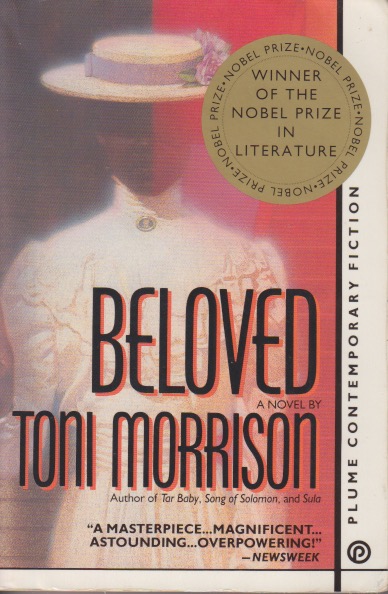
It’s difficult to do without feeling guilty, even if you personally had nothing to do with it.  It does seem that “Whites” have to take the initiative to dismantle systemic racism before any kind of fairness can settle on the world.  Toni Morrison is a great example of why that’s so important.  Beloved is perhaps her best-known work.  Although it involves a ghost it’s not so much a ghost story as it is a haunted story.  Black experience has been one of enforced poverty, after the emancipation proclamation—much like the American Indian experience.  Morrison represents this in a non-accusatory way, but she indicates in her story how the pain and mistreatment persists.  Her work is more important now than ever.  White supremacists are controlling the narrative in much of the country although they are the minority.  They need to read this book.

There will be spoilers here, if you’re even later coming to Beloved than I am.  Sethe was a slave.  The novel is set just after manumission, but she escaped before that.  She had four children and when she was sexually assaulted she realized this could happen to her children and she decided to spare them that fate.  Although she was stopped before she could kill all four, her first daughter, Beloved, was her victim.  This story is about what happens when Beloved returns to live with Sethe and her remaining daughter.  It is a haunting story.  No “boos” or jump startles, it sets up a sad atmosphere of a woman falling apart because of guilt.  Guilt for an event that would’ve never happened if she’d been treated like a human being.

Apart from the schoolteacher and his cohort, the whites in the story are kindly to Sethe.  Her “owner” was a slaveholder who gave his “possessions” respect.  She was saved from hanging after the death of Beloved by a local white man who understood what slavery might do to a person’s mind.  Even so, these kind people think of Blacks as servants rather than as people in their own right.  It’s difficult to read books like this.  That’s one of the reasons that it’s important to do so.  There is a lot to analyze here, much to reflect over.  If we put books like this on reading lists instead of banning them, it would help to bring understanding and sympathy rather than hatred and fear.  The future only improves when we admit our past errors and move to heal the scars we continue to inflict.
Evening Out

It feels like magic.  The morning after staying up late for something special has a transcendent quality to it.  You can almost touch the veil.  Now, for me it’s an admittedly low bar.  I get up around 3:00 a.m. most days, so “late” is when I venture past about 8:00 p.m.  And I don’t mean for a board meeting where you’re trying to solve the problems of the world.  No, I mean staying up for something you anticipate.  Or even if it’s something you experience only by association.  I had to pick somebody up in Easton after an evening event recently.  It wasn’t over until after I’m normally asleep, but I made plans to hole up in Dunkin’ Donuts and perhaps even sip a coffee if I had to, for the drive home.

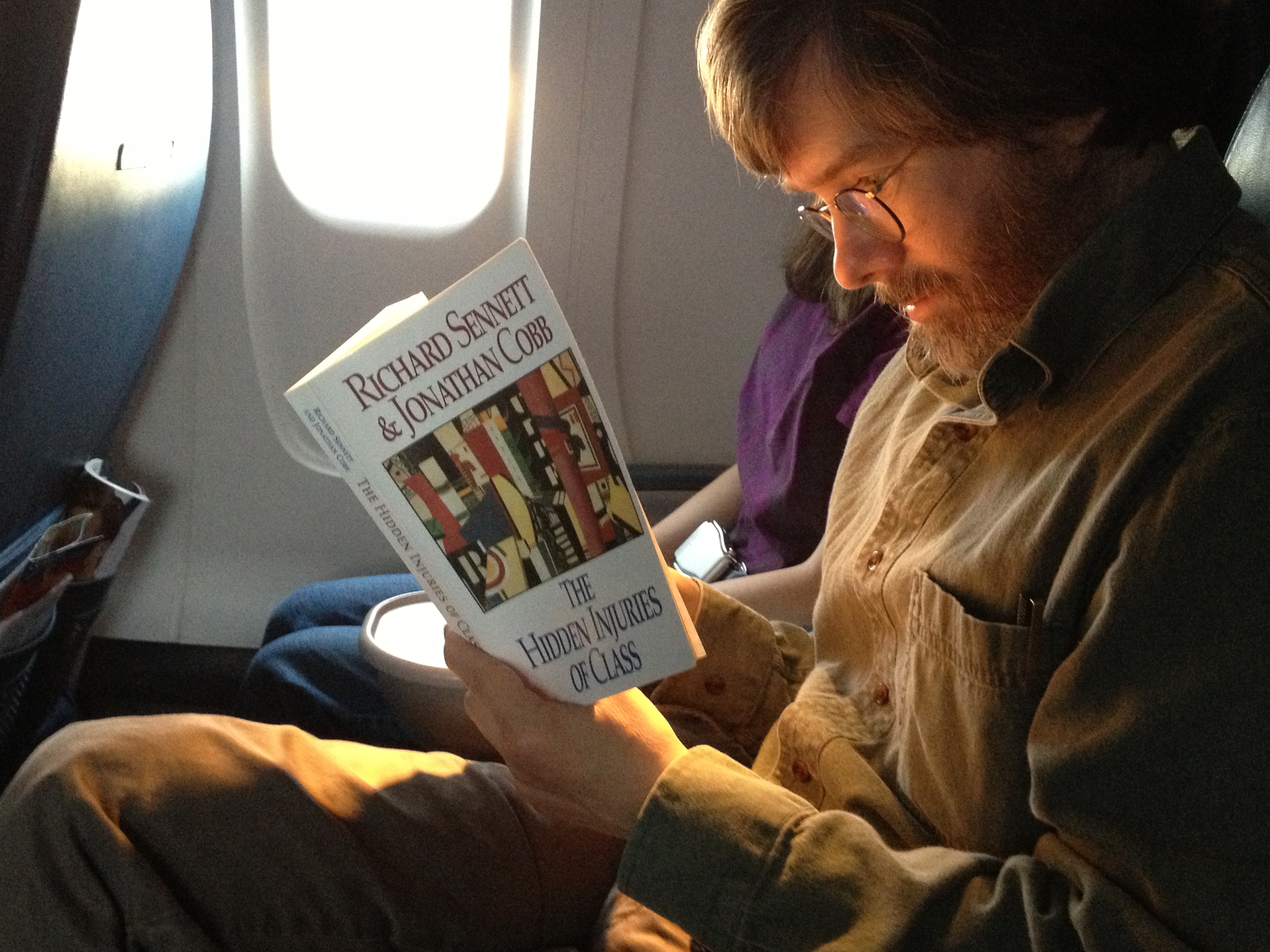
This was a Tuesday night so most businesses were closed.  After parking the car I found out that Dunkin’ wasn’t keeping evening hours either.  I try always to travel with a book.  The one thing I learned from my brief stint in Boy Scouts was “be prepared.”  With no Dunkin’ the only places open were bars and clubs.  Thankfully it was a warm evening, so I found a free bit of curb on which to sit to read my book.  Easton’s a college town so young people were out and about.  It was good to see other folks enjoying life.  Then a woman stopped and leaned down.  She was looking at the cover of my book.  “Just wondering what you’re reading,” she said.  “I’m always on the look out for something good.”

Reading in public

I can’t recall the last time a stranger struck up a conversation with me.  Especially about literature.  I was reading Toni Morrison’s Beloved (more anon) and she asked what it was about.  (You, dear reader, will need to wait a few more days if you don’t already know.)   I told her as best I could in a sentence or two, but I was in shock that someone I didn’t know was taking a moment out of her busy life to ask me about a book.  Her companion was ready to get going, so she left.  Shortly after that the event ended and I picked up my charge and headed home.  The next morning had that magic feeling.  I slept later than normal although it was a work day and when I went for my morning walk a startled bald eagle took off from the ground and flew less than twenty feet over my head.  Staying up late, talking about books, and a dawn-time walk in the morning.  Even everyday life can be magical, when it’s rare enough.


Banned Truth

bluesteyeBanned Book Week is one of my favorite holidays. Don’t worry—you haven’t missed it—it occurs the final week of this month. I’m not very good, however, at guessing how long it will take me to finish a fiction book, so I start early, just in case. My banned book of choice this year was Toni Morrison’s The Bluest Eye. It’s not easy to read a novel which is so close to the truth. As any writer of fiction knows, just because something didn’t happen precisely as described doesn’t mean that it’s false. Indeed, fiction is often factual. It’s not easy to read because the “race”—a dubious distinction at best—to which I belong has often throughout history victimized others. While I’ve never knowingly participated in this criminal action—and despite what politicians might say, it is criminal—it’s never comforting to hear from the victim’s perspective. The Bluest Eye is about African American experience in the land of the free. At least in name.

What becomes clear from the beginning is that the families around which this story revolves are pushed to their limits. In an affluent society they are forced to live with less than their “white” neighbors have. Slavery may have ended, but the superiority mindset that permitted it in the first place hasn’t. I grew up in poverty but I didn’t have the added burden of being treated badly because of my “race.” Stories that remind us of that reality are never comfortable places to be. We’d rather think that since slavery ended prejudice went away with it. In reality, however, it is still here. Interestingly, the culture portrayed so vividly by Morrison is deeply biblical. Indeed, surveys of Bible reading in North America show that African Americans tend to actually read the foundational book more than their oppressors. The biblical worldview spills easily across the page.

Although the Bible made it onto the list of top ten banned books last year, The Bluest Eye was challenged because of its sexuality. That’s another defining aspect of the novel. It’s a frank exploration of the human condition. The protagonists are not only African American, they are also all female. Their perception of sexuality is, in many ways, inherently that of victims. Not that love doesn’t enter it, but rather that poverty often leads to a state where sexual gratification is held up as one of the few positives in a life that includes regular mistreatment, poor pay, and jail time. It isn’t an easy story to read. Morrison’s deft hand, however, prevents the story from becoming gloomy. It is like spending a sunny day knowing there’s something you shouldn’t see in the basement. Banned Book Week may be some time away yet, but it is always the right season to read about the truth.